REVIEW · NEW ORLEANS
New Orleans Street Art and Mural Walk ft. Banksy
Book on Viator →Operated by NOLA Art Walk · Bookable on Viator
Street art in New Orleans is more than decoration. This 2-hour mural walk connects public art to neighborhood history, so you spot what you’d miss on your own. I like that it keeps you moving through real local streets—Bywater, Marigny, and the edge of the French Quarter—instead of circling the same postcard spots. I also love the way the guide turns walls into stories, from mosaics to politically charged murals.
One thing to consider: it’s weather-dependent. If it’s nasty outside, the tour gets rescheduled, so plan your New Orleans days with a little slack.
In This Review
- Key things to know before you go
- Street art in New Orleans: why this walk works
- Meeting at St. Coffee and getting your bearings in Bywater
- St. Roch Market: art talk plus a real break
- Faubourg Marigny and Laurel True: mosaics, murals, and more than two dozen works
- The French Quarter edge and seeing one of Banksy’s remaining works
- Price and logistics: does $40 feel fair?
- What you’ll notice on the sidewalks (and how to get better photos)
- Who this tour is best for
- Should you book New Orleans Street Art and Mural Walk ft. Banksy?
- FAQ
- Where does the tour start?
- Where does the tour end?
- How long is the tour?
- How much does it cost?
- What language is the tour offered in?
- Is it a mobile ticket tour?
- How many people are in a group?
- What neighborhoods and areas do you visit?
- Do you see Banksy artwork?
- Is there a break with food and drinks?
- What happens if the weather is bad?
Key things to know before you go
- Small group size (up to 16) means more back-and-forth questions and tighter pacing.
- Banksy in the French Quarter area: you’ll visit one of the artist’s remaining works and talk about community impact.
- Laurel True mosaic stop in Faubourg Marigny: shimmering public art by an international artist.
- St. Roch Market break: snacks and drinks plus clean bathrooms, which matters on a walking tour.
- Post-tour artist info: you leave with names and places to keep exploring the scene after the walk.
Street art in New Orleans: why this walk works
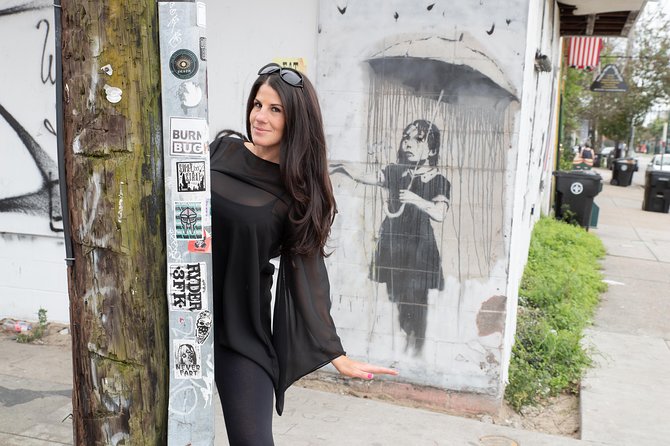
New Orleans mural tours can go two ways. Some point at walls like they’re museum labels. This one does something better: it helps you read the city through who made the art and why it shows up where it does.
You’ll start in the 9th, 8th, and 7th Wards, then wind through Bywater Historic District, St. Roch Historic District, Faubourg Marigny, and end near the French Quarter. The route is designed to get you off the main tourist lanes, so you’re not just seeing famous art—you’re learning how communities shape what gets painted, protected, argued over, and celebrated.
I also like the photography angle. Even if you’re not a serious shutterbug, you’ll get plenty of moments where the art lines up with the street, the light, and the texture of the neighborhood. And because the guide is connected to the scene, you’re not stuck guessing at meanings.
The vibe is street-level. This is a “walk and talk” experience, not a sit-down lecture. Expect stops where you stand close enough to see details, then move on before you get bored.
You can also read our reviews of more walking tours in New Orleans


Meeting at St. Coffee and getting your bearings in Bywater
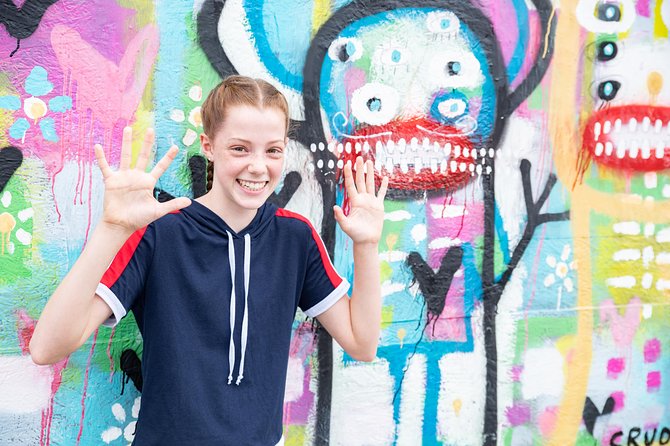
The tour starts at St. Coffee (2718 St Claude Ave). It’s a solid meeting point because it’s easy to find and it sets the tone: local neighborhood energy, not a formal tourist hub.
From there, you head into the Bywater Historic District with a photogenic walk that focuses on hidden street art and local art history. This is one of the best parts of the experience because it trains your eyes fast. The guide points out different mediums and how public art works in New Orleans—whether it’s meant to beautify a block, honor someone, or spark debate.
A lot of the value here is that you’re not just walking past murals. You’re learning what to look for. Reviews from people who booked the walk highlight how guides like Tyler and Dave have a real connection to the artists and can explain why a piece might look simple at first glance, but carry layered meaning once you know the context.
You’ll typically spend about 45 minutes in this first zone. That timing matters. It’s enough to get oriented, build momentum, and start noticing patterns in the neighborhoods—before you hit the stops that feel like “big set pieces.”
Practical tip: wear shoes you can move in for a while. This is an all-street walking tour, and the pacing assumes you can cover blocks comfortably.
St. Roch Market: art talk plus a real break
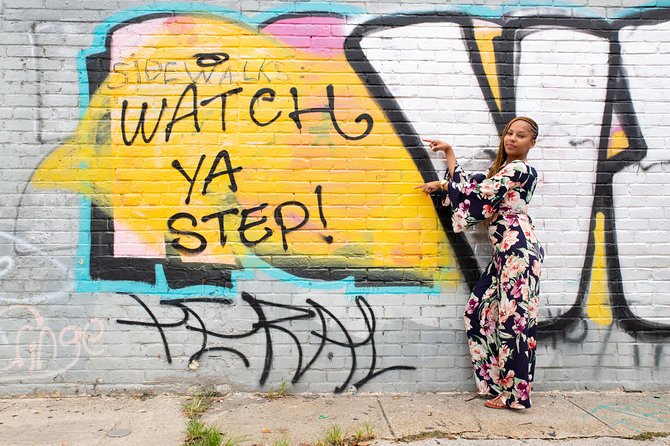
Next comes St. Roch Market, in the St. Roch Historic District. This stop gives you two things at once: a short art-history moment and then a chance to reset.
First, you’ll learn about local art history and interpret a work of art in the area. That “interpretation” part is key. Street art can look playful even when it’s addressing serious events. Having someone guide you through what you’re seeing makes your photos better too, because you’ll know what detail is worth framing.
Then you get a short break at St. Roch Market (about 20 minutes). You’ll have access to gourmet snacks, drinks, including options like craft cocktails, beer, and wine, plus cold water and clean bathrooms.
Why this is a smart design: after the first neighborhood stretch, you don’t want to be stuck hungry or dehydrated. Also, having a bathroom break on a walking tour is a quality-of-life upgrade that can make the whole day feel easier.
One small caution: if you’re sensitive to strong smells or you’re picky about food, remember this is a street-market environment. You might spot odd details on sidewalks along the way—some guides and routes have playful surprises, and one person even mentioned noticing a fish on the sidewalk. If that doesn’t bother you, great. If it would, just keep it in mind.
Faubourg Marigny and Laurel True: mosaics, murals, and more than two dozen works
After your market stop, the walk shifts into Faubourg Marigny. This section is built around visual variety. You’ll spend about 45 minutes here, and it’s the part many people remember first because it feels like a strong “gallery without walls.”
One featured highlight is shimmering mosaic art created by international artist Laurel True. Mosaic work reads differently than spray paint or posters. Up close, you tend to see how the pieces are constructed—how light hits the surface and how color shifts depending on where you stand.
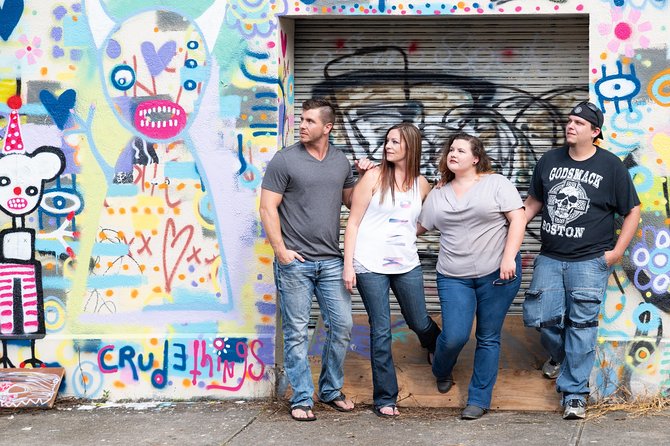
You’ll also see a multitude of murals from some of the city’s well-known street artists. And then there’s a stretch of road that has become the site of more than two dozen public works of art. That density is one of the best reasons to do this particular tour instead of trying to self-tour. Without a guide, you might walk past clusters and only photograph the most obvious pieces. With the guide, you learn how to slow down just enough to catch the smaller stories.
This is also where the walking tour format shines. Street art changes. Walls get painted over. New works appear. The guide helps you understand the art in motion—why the neighborhood’s personality shows up through these public artworks.
If you care about photography, this is likely your peak time. The sidewalks, building textures, and mural scale all give you better compositions than typical street corners in the French Quarter.
The French Quarter edge and seeing one of Banksy’s remaining works
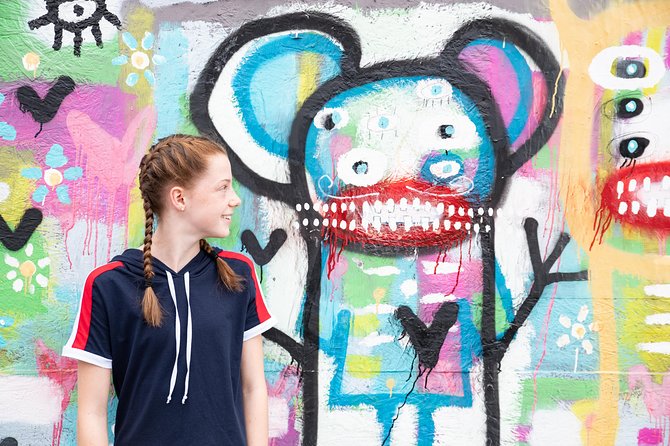
The last major stop is on the edge of the French Quarter. You’ll visit one of Banksy’s remaining works in New Orleans and discuss the impact the art had on the community.
This is a big draw, but it’s also handled in a way that’s more useful than just pointing out a famous name. The guide explains why the community response matters. Street art is rarely only about the image. It’s about the moment it appears, who feels ownership of it, and how people talk about it afterward.
You typically spend about 20 minutes in this area. That’s not a long time, and that’s on purpose. The goal isn’t to linger until you feel museum-fatigue. It’s to give you just enough context so your photos (and your memory) make sense.
Where you finish is also practical: the tour ends at 1700 N Rampart St, across the street from a corner store called The Orange Store, and the French Quarter is only about a block away. So you’re not stuck on the far side of town after the walk. You can keep exploring right after, at your own pace.
You can also read our reviews of more tours and experiences in New Orleans


Price and logistics: does $40 feel fair?
At $40 per person for roughly 2 hours to 2 hours 20 minutes, this isn’t a “cheap and forget it” activity. But it also isn’t overpriced for what you get.
Here’s what you’re really paying for:
- A focused route across multiple neighborhoods that you’d likely skip if you only had a day or two.
- A guide who can connect the art to people, place, and meaning, not just aesthetics.
- Time on foot in the spots where murals are actually concentrated and worth photographing.
- A structured break at St. Roch Market with access to snacks, drinks, water, and bathrooms.
- Post-tour artist information, which helps you keep exploring after you leave.
The small group cap of 16 travelers helps too. More people would make a walking tour harder to manage and less personal at each stop.
It’s also in English, with a mobile ticket. If you’re the type who likes to show up prepared and move fast, this format fits.
What you’ll notice on the sidewalks (and how to get better photos)
Even if you’re not a serious photographer, this tour gives you a better “eye.” Street art is one part image and one part setting. The guide’s job is to help you see both.
Expect to notice:
- How different mediums change the way a mural reads at different distances.
- How neighborhood history shows up in subject matter and style.
- How art can be both public and contested, depending on the message.
- How murals connect to music culture and local identity (a few guides in the same team have been praised for weaving those connections in).
One reason people rate this highly is the storytelling. Multiple guides—especially Tyler and Dave (including David Cooley—as named in one review)—were praised for clear explanations and for giving meaning that changes how you see the same wall.
Also, pace matters. Several people specifically mentioned that the walk kept them engaged the whole time and felt worth the hours.
My photo advice is simple: switch between wide shots (mural + street context) and close shots (details). The mosaic area in Marigny is especially good for close-ups because the surfaces catch light differently.
And bring something to stay comfortable. Even though cold water is available at the market stop, it’s still a walking tour in warm weather much of the year.
Who this tour is best for
This is a great fit if you:
- Want to see New Orleans beyond the usual map dots.
- Like street art but also like the human story behind it.
- Want help interpreting what you see before the photos go into your camera roll with no meaning.
- Enjoy walking tours that mix art, culture, and neighborhood texture.
It’s also a solid choice for couples, solo travelers, and groups, since the route is structured and small enough for interaction. Reviews describe it as personal and attentive—especially on tours guided by Tyler and Dave.
If you only want the most famous single murals and nothing else, you might find some pieces are less instantly recognizable. But that’s also the point. The walk is designed to teach you how to spot talent and meaning on streets that don’t make every postcard list.
Should you book New Orleans Street Art and Mural Walk ft. Banksy?
If your goal is to understand New Orleans street art as part of community life—not just a photo backdrop—then yes, I’d book it.
The strongest reason: you get a guided route through Bywater, St. Roch, Faubourg Marigny, and the French Quarter edge, plus a real featured moment with Banksy. The second reason: the guides have enough connection to the scene that you’re not just hearing general trivia. You’re getting the stories that make the murals hit harder.
Book this tour if you’ll appreciate context, walking time, and storytelling. Skip it only if you dislike walking in multiple neighborhoods, or if you expect a long, slow, “everything inside one mural” style experience. This one is paced for motion and variety.
If you can plan around good weather, you’ll get the full experience. And once you finish near The Orange Store on N Rampart, you’re positioned to keep exploring the French Quarter nearby with fresh eyes.
FAQ
Where does the tour start?
The tour meets at St. Coffee, 2718 St Claude Ave, New Orleans, LA 70117.
Where does the tour end?
The tour ends at 1700 N Rampart St, New Orleans, LA 70116, across the street from The Orange Store.
How long is the tour?
It runs about 2 hours to 2 hours 20 minutes.
How much does it cost?
The price is $40.00 per person.
What language is the tour offered in?
The tour is offered in English.
Is it a mobile ticket tour?
Yes, it uses a mobile ticket.
How many people are in a group?
The maximum group size is 16 travelers.
What neighborhoods and areas do you visit?
You walk through the Bywater Historic District, St. Roch Historic District, Faubourg Marigny, and you end near the edge of the French Quarter.
Do you see Banksy artwork?
Yes. You’ll visit one of Banksy’s remaining works of art in New Orleans.
Is there a break with food and drinks?
At St. Roch Market, you’ll have access to gourmet snacks, drinks (including craft cocktails, beer, and wine), cold water, and clean bathrooms.
What happens if the weather is bad?
This experience requires good weather. If it’s canceled due to poor weather, you’ll be offered a different date or a full refund.