REVIEW · NEW ORLEANS
The Big Easy Insider Tour: The Local’s Experience
Book on Viator →Operated by New Orleans Drunk History Tours • Show Me New Orleans Tours · Bookable on Viator
New Orleans clicks faster on foot. This French Quarter walking tour throws you into the local legends and landmark stops that explain why the Big Easy feels the way it does. I especially like that you’re not just looking at buildings—you’re getting story threads tied to what you see, from voodoo lore to Mardi Gras energy.
Two things I’d bet on: first, the guide-led route covers key sights like the Cabildo and US Mint while giving you context for the city’s French, Spanish, and Creole roots. Second, the narration style is built for laughs and atmosphere, and one guide named Charles Patrick Duffy III has been praised for mixing solid background with humor. One drawback to plan around: this is a moderate-paced walking tour that keeps moving on schedule, so you shouldn’t expect lots of detours or long photo stops.
In This Review
- Key Reasons This Walking Tour Feels Like a Real Local Walk
- Why the French Quarter Tour Works Without Needing a Map
- Lafitte’s Blacksmith Shop Bar Courtyard Gate: The Meet Point That Actually Matters
- Getting Oriented Fast: How the Walk Sets Up the City’s Bigger Story
- Cabildo and the US Mint: Louisiana Purchase to Street-Level Reality
- Royal Street Architecture and Iron-Lace Balconies You Can Actually Notice
- Bourbon Street and Frenchmen Street: Mardi Gras Hot Spots With Explanations
- Voodoo, Pirates, and Haunted Legends: Fun Lore With Ground Rules
- Hollywood Filming Locations and Celebrity Homes: A Different Kind of Tourist Hook
- Time on the Clock: What 1–2 Hours Means in Real Life
- Price, Value, and What You Get for $55
- Who This Tour Fits Best (And Who Should Skip It)
- Practical Tips So Your Walk Goes Smooth
- Should You Book This Tour?
- FAQ
- Where do I meet the tour?
- How long does the walking tour last?
- What’s included in the price?
- What isn’t included?
- Is the tour offered only in the morning?
- What if it rains?
Key Reasons This Walking Tour Feels Like a Real Local Walk
- You start right in the action at 941 Bourbon St with a clear meet point by Lafitte’s Blacksmith Shop Bar’s courtyard gate
- Major French Quarter landmarks stay in focus as you walk, not as a checklist you rush through
- Stories go beyond facts with tales of piracy, voodoo practitioners, and haunted legends
- Bourbon and Frenchmen get explained alongside the Mardi Gras traditions people actually talk about
- Royal Street architecture is part of the lesson, including iron-lace balconies and classic home styles
- Hollywood connections add a fun layer as you pass filming locations and well-known celebrity homes
Why the French Quarter Tour Works Without Needing a Map
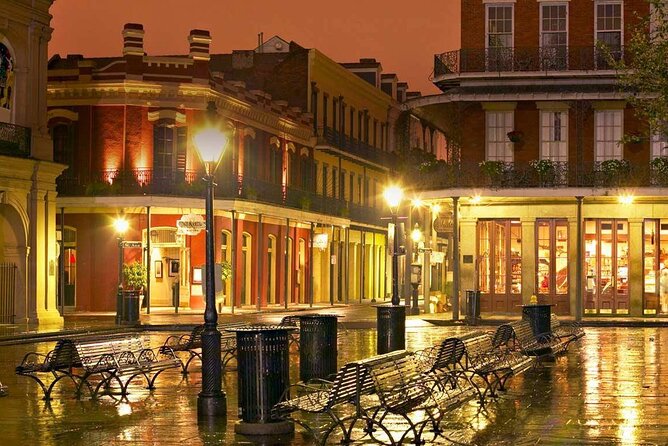
The French Quarter can feel like sensory overload. You’ve got loud music, street performers, crowds, and alleyways that look the same until you know what you’re looking for. This tour helps you get your bearings fast by organizing the area into a logical walk with a guide who ties sights to meaning.
I also like that the tour aims at first-time visitors, but it still gives you payoff beyond the basics. You’ll hear how New Orleans culture grew from different influences, then watch that story show up in architecture and street life as you move through the neighborhood.
And yes, it leans into the fun side: piracy stories, haunted legends, and voodoo lore aren’t treated like homework. They’re told as part of the city’s identity—so you leave with a feel for the Big Easy, not just a stack of names.
You can also read our reviews of more tours and experiences in New Orleans.


Lafitte’s Blacksmith Shop Bar Courtyard Gate: The Meet Point That Actually Matters
Your meeting place is specific: 941 Bourbon St, at the gate of the courtyard attached to Lafitte’s Blacksmith Shop Bar. Important detail: tours do not meet inside the bar, and they do not meet at the corner of the streets. This matters because late or unclear arrivals can mean you miss the group.
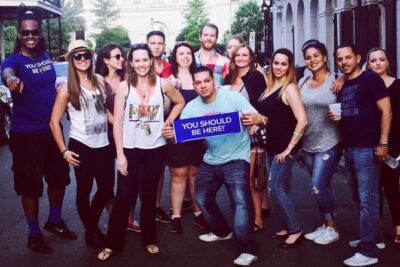
Arrive a few minutes early so you can check in and fall into the starting rhythm. The tour also notes that time-stamped photos are taken at the meeting location at the start of each tour, so don’t be surprised if the guide handles that quickly before walking begins.
If you’re the type who wants to linger and sip your drink before you move, plan to do that after the tour. The walk starts at the scheduled time, and the guide can’t wait while you browse one more storefront.
Getting Oriented Fast: How the Walk Sets Up the City’s Bigger Story
Once you start, the tour is essentially a guided “how New Orleans became New Orleans” storyline. You’ll learn about the city’s multicultural founding—French, Spanish, and Creole heritage—then see how that background shows up in daily life.
This is where I think the tour gives real value. Instead of bouncing between random highlights, you follow a route where each stop tees up what you’ll notice next: architecture changes, street styles shift, and the mood of the neighborhood makes more sense as you go.
You’ll also hear tales of famous former residents. That blend of ordinary life details plus larger-than-life characters is a good way to understand why the French Quarter runs on legend as much as history.
Cabildo and the US Mint: Louisiana Purchase to Street-Level Reality
Two of the most important named stops are the Cabildo and the US Mint. The Cabildo is especially tied to the Louisiana Purchase, signed in 1803. That connection anchors why this corner of the U.S. has always had a complicated, international flavor.
On a walking tour like this, the payoff is practical. Instead of the Louisiana Purchase being a distant classroom fact, you connect it to the physical space and the city’s later evolution. You’ll hear stories designed to help you visualize what was happening around these buildings and why the French Quarter became the stage for so much culture.
The US Mint is another smart inclusion. It’s not just a photo stop—it’s a reminder that this was a city where power, commerce, and identity kept shifting hands and influences. You’ll likely finish that part of the walk with a better sense of the city’s timeline.
Royal Street Architecture and Iron-Lace Balconies You Can Actually Notice
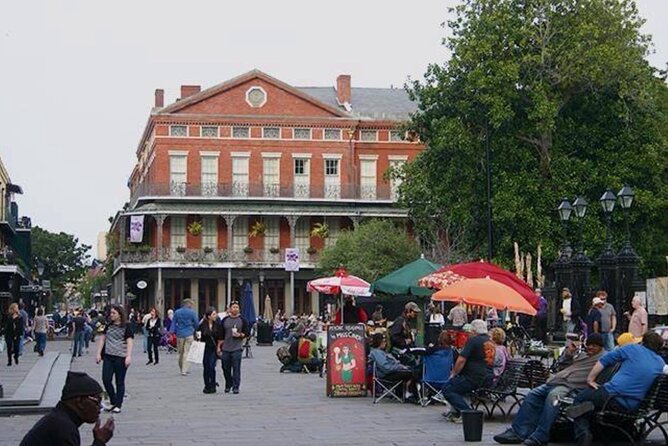
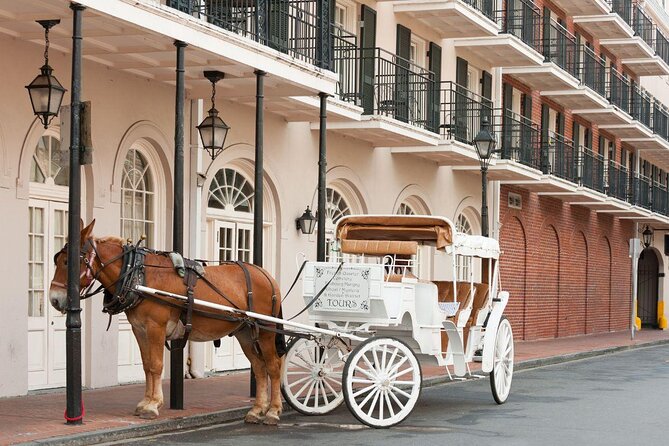
As you move through the French Quarter toward Royal Street, the guide points out architectural details so you can see what’s special without needing expert training. Look for iron lace balconies, classic home layouts, and the distinctive styles New Orleans is known for.
You may also hear references to traditional shotgun homes, Creole cottages, and Southern-style mansions. These terms are easy to gloss over if you’re just sightseeing, but on a guided walk they start to make sense because the guide connects them to how people lived and why structures took on certain forms.
Royal Street also gets framed around the vibe: antique shops and art galleries. Even if you don’t buy anything, you’ll understand why this stretch developed a reputation for style and display.
One small consideration: the walk is moderate paced, and the guide has to keep the group moving. That means you can take photos, but don’t plan on slowing down for every window. The idea is “walk, learn, then explore later.”






Bourbon Street and Frenchmen Street: Mardi Gras Hot Spots With Explanations
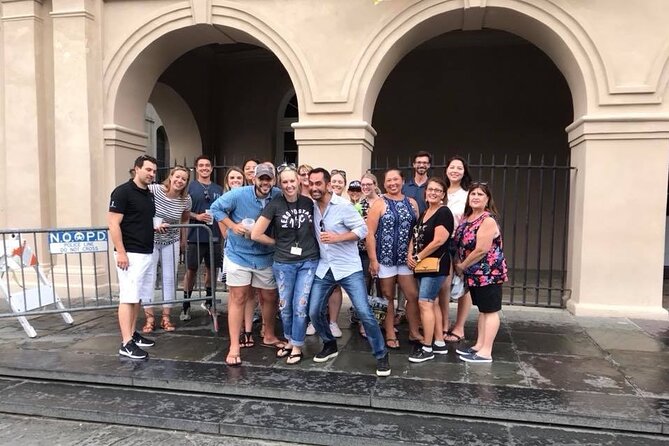
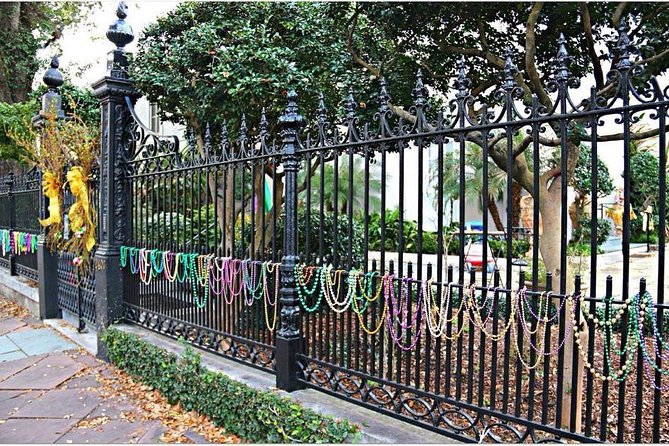
No French Quarter intro feels complete without Bourbon Street and Frenchmen Street. This tour doesn’t treat them as just nightlife streets; it explains why they matter and how Mardi Gras traditions became part of the area’s identity.
Bourbon Street is where the famous nightlife energy lives—bars, clubs, and that constant feeling that something is happening even when it’s not. The guide’s job here is to keep you from seeing only the spectacle, and instead connect what you’re observing to the city’s longer-running traditions.
Frenchmen Street gives you a different flavor of the same theme. You’re still in the zone where music and local culture matter, but the mood can feel more connected to the day-to-day rhythm of New Orleans.
If you’re going in hungry for party energy, this is the right kind of tour. It won’t turn you into a local overnight, but it will help you understand what you’re walking through so you can make better choices later.
Voodoo, Pirates, and Haunted Legends: Fun Lore With Ground Rules
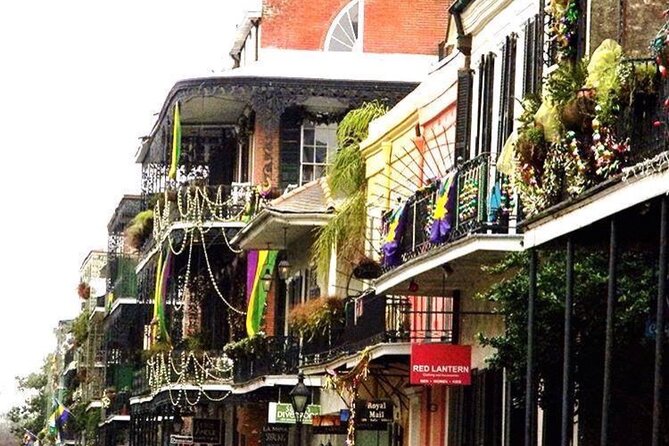
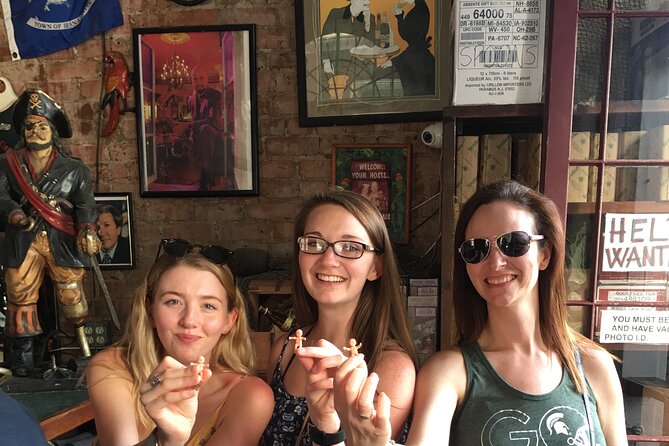
You’ll hear tales of voodoo practitioners, piracy, and haunted legends. This is the “Big Easy stories” side of New Orleans—where the city’s past shows up in jokes, cautionary tales, and legends told with a wink.
What I like about this approach is that it’s not random horror-story dumping. The tour frames supernatural themes as part of the broader cultural storytelling that locals repeat—so it feels like folklore rather than a gimmick.
There’s also a practical note if you’re into the paranormal angle: the tour says you can use paranormal equipment, but it must be checked out at the beginning and returned before you leave. Lost or damaged equipment carries a steep fee, so treat that part seriously.
Also, the tour explicitly aims for realistic storytelling. If you expect guaranteed paranormal sightings, you’re setting yourself up for disappointment. The goal is entertainment and local lore, not a guaranteed ghost encounter.
Hollywood Filming Locations and Celebrity Homes: A Different Kind of Tourist Hook
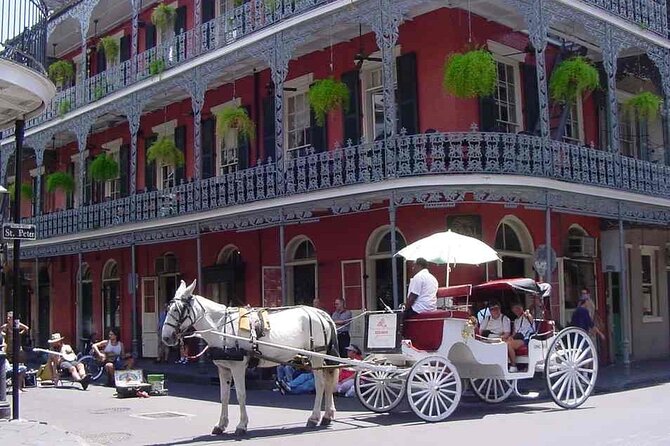
New Orleans has been a filming favorite for years, and this tour includes that layer. You’ll pass famous filming locations and homes of Hollywood celebrities, including the Jolie-Pitt family.
This is a smart addition because it gives you another way to experience the city. Even if you’re not chasing movies, it helps you notice how recognizable certain streets and facades can be. And it keeps the tour moving with variety—history, architecture, then pop culture.
Don’t expect a celebrity spotting guarantee. Instead, think of it as a playful lens for seeing familiar streets in a new way.
Time on the Clock: What 1–2 Hours Means in Real Life
The tour typically runs 1 to 2 hours at a moderate pace. In practice, the time can stretch a bit, especially if the route includes bar stops where wait time can matter.
You’ll also be walking on older, uneven streets. The tour notes you should expect that and keep your attention on your footing, not your phone. The group is expected to stay together—no walking off the route for long photo hunts.
Photos are encouraged, though. Just remember the guide can’t stop the group to accommodate one person’s detour. If you want a deeper pause for photos, plan to do that after the tour ends in the heart of the French Quarter.
End point: you’re dropped in the center of the French Quarter, which is great because it leaves you close to follow-up exploring, coffee, and dinner.
Price, Value, and What You Get for $55
At $55 per person, you’re paying for the structure: a local guide, a guided walk, and a story-focused route that compresses a lot into a short time window. This isn’t the cheapest way to see the French Quarter, but it’s also not priced like a private guide with door-to-door logistics.
The tour includes a professional guide and a local guide. That dual-guide approach can matter because one person can handle narrative flow while the other supports context and local details.
What’s not included: no hotel pickup or drop-off, and you’ll want to budget for drinks if you choose to buy them. Gratuity isn’t included either, and it’s a normal part of guide-led tours in the U.S.
One more value point: the tour is designed to help you feel comfortable navigating the French Quarter. That’s huge if you’re staying for a short time and don’t want to spend hours figuring out where to start.
Who This Tour Fits Best (And Who Should Skip It)
This tour is a strong match if you want:
- A first-time French Quarter orientation with meaningful stories
- A guide who keeps things entertaining, including humor and legend
- An efficient way to see core landmarks like the Cabildo and US Mint
- A mix of history, architecture, nightlife context, and pop culture
It may be less ideal if you:
- Want a slow, unstructured wander with lots of unscheduled stops
- Prefer to visit landmarks on your own without a group pace
- Need lots of time indoors at multiple venues (this is still a walking experience)
Families can go, but note the tour rules say children under 18 aren’t admitted without a parent or guardian unless authorized by a tour guide. Also, not all bars allow children, so expect that to affect what you can do during any bar-adjacent portions of the route.
Practical Tips So Your Walk Goes Smooth
Bring shoes you don’t mind breaking in. The streets are old, and the pace is steady.
Since it’s rain or shine, pack for weather swings. New Orleans can be hot and sticky, and it can also feel cold depending on timing.
Plan your schedule so you don’t feel rushed afterward. The tour ends in the heart of the French Quarter, so it’s a natural launch point for dinner or a self-guided browse.
If you’re the kind of person who likes to record everything, note that audio or video recording devices are not allowed during the tour. Photos are encouraged, so use your camera for still shots and enjoy being present.
Should You Book This Tour?
I’d book it if you’re trying to understand the French Quarter quickly and you like your sightseeing with stories. For $55, you’re buying time-saving structure, a guided route through the city’s signature sights, and a “local perspective” style that mixes history with legends and humor.
Skip it only if your ideal day is slow, independent roaming or if you strongly prefer landmarks with zero talk and zero group pacing. This tour is built for movement and narration. Done right, that turns the French Quarter from chaos into a story you can follow.
If you decide to go, plan to arrive a few minutes early at the courtyard gate at 941 Bourbon St. That small detail is the difference between a smooth start and a stressful scramble.
FAQ
Where do I meet the tour?
Meet on the sidewalk at the gate of the courtyard attached to Lafitte’s Blacksmith Shop Bar at 941 Bourbon St, New Orleans, LA 70116. Tours do not meet inside the bar and do not meet at the corner of the streets.
How long does the walking tour last?
The tour lasts about 1 to 2 hours, and it can run longer depending on wait time inside bars.
What’s included in the price?
The price includes an admission ticket and guided services with a professional guide and local guide for the walking tour.
What isn’t included?
Hotel pickup or drop-off is not included. Tips (gratuities) and drinks you purchase along the route are not included.
Is the tour offered only in the morning?
You can choose a morning or afternoon tour.
What if it rains?
The tour is rain-or-shine. You should prepare for New Orleans weather, and the tour does not provide refunds for weather-related issues.