REVIEW · NEW ORLEANS
The French Quarter History Tour
Book on Viator →Operated by Spectral City Tours · Bookable on Viator
Stepping into the French Quarter feels like a movie set. This History Tour gives you the script, with stops tied to the people, scandals, and odd twists that built New Orleans. I like how it keeps things small-group and discussion-friendly, and I also like that you get local perspective instead of a generic checklist.
One thing to keep in mind: the timing is tight and some details depend on what’s open that day. You’ll still hit the big landmarks, but certain quick peeks (like inside the Cathedral) are only possible when conditions cooperate.
In This Review
- Key Highlights You’ll Actually Feel on the Walk
- A Two-Hour Loop Through the French Quarter’s Backstories
- Cuban Creations Cigar Bar: The Only Smoking Spot and a Great Start Point
- Washington Artillery Park: The River, the Mudline, and 1718 French Oddballs
- Cafe du Monde: Passing the Oldest Coffee House and the Beignet Backstory
- St. Louis Cathedral: Pirates, Dueling Grounds, and a Quick Peek Inside
- Pontalba Buildings and Jackson Square: Baroness Power and Spiteful Statues
- French Quarter Mini-Stops and Lafitte’s Blacksmith Shop: Smugglers, Pirates, and Tennessee Williams
- Louis Armstrong Park: Jazz Origin Stories and Your End Point Near St. Ann
- Price and Value: Getting More Than a Walk for $35
- Practical Tips for Your 10:30 Morning (and How to Avoid the Usual Friction)
- Should You Book This French Quarter History Tour?
- FAQ
- How long is the French Quarter History Tour?
- How much does the tour cost?
- Where does the tour start and end?
- Is this tour offered in English?
- How many people are in the group?
- Is the Cathedral admission included?
- What if the weather is bad?
Key Highlights You’ll Actually Feel on the Walk
- A short, focused 2-hour loop that gets you oriented fast in the French Quarter
- Iconic stops with dark-and-weird details, including pirate prisons and dueling grounds
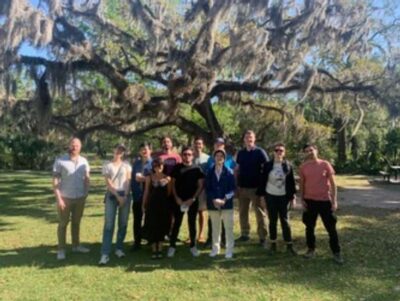
- A human-scale pace with a maximum of 16 people
- Real personalities in the story, from early Chitimacha settlers to Baroness Pontalba
- Great “in-between” moments, like Pirate’s Alley and the stop-and-stare energy around Jackson Square
- You end at Louis Armstrong Park, tying the Quarter’s past to its jazz-born future
A Two-Hour Loop Through the French Quarter’s Backstories
This is a walking tour built for first-timers and repeaters alike. The goal isn’t to make you memorize dates. It’s to help you see how New Orleans’ early mix of Indigenous peoples, French colonists, and later newcomers turned into a city where rumors, power, and street-level survival became culture.
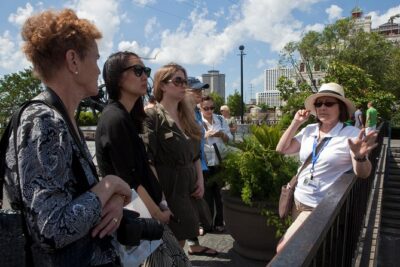
At about two hours, you get a concentrated walk through the French Quarter’s core. The group stays small—up to 16—so your guide can keep the stories coming without sounding like they’re rushing a busload. On one run of this tour, the guide named Tracy was singled out for covering the key sites and keeping the vibe lively without losing the facts.
If you’re the type who likes your history with names attached, this tour fits. You’ll hear about founders and characters, not just monuments.
You can also read our reviews of more historical tours in New Orleans


Cuban Creations Cigar Bar: The Only Smoking Spot and a Great Start Point
You kick things off at Cuban Creations Cigar Bar on Toulouse Street. It’s the sort of place that makes you feel like you’re already inside the Quarter’s social life—comfortable indoor seating, plus outdoor space when the weather behaves.
Two practical reasons this opening stop works:
- You get a sense of how locals and visitors mix here, with a more relaxed setting than the sidewalk-only vibe.
- You start with something New Orleans-specific: this is described as the only smoking bar in the French Quarter, which immediately sets the tone for a tour that likes to be honest about how the Quarter actually works.
The bar also serves excellent cocktails, and there’s an easy flow into the walk right after. If you’re sensitive to smoke, just plan accordingly. You’re not stuck there for long, but it’s still a cigar bar.
Washington Artillery Park: The River, the Mudline, and 1718 French Oddballs
Next you’re in Washington Artillery Park, one of the scenic spots that makes the French Quarter feel less crowded—even though you’re still right in the middle of everything.
This stop gives you the environmental foundation of the city. You’ll hear how the city rests on the river’s bed and the bed of mud underneath it. It’s the kind of detail that changes how you understand everything you’ll see later, because New Orleans is less “built on solid ground” and more “constructed with constant negotiation.”
Then your guide shifts to early inhabitants and early politics. You’ll learn about the Chitimacha tribe who settled the area, and you’ll also hear about the French colonists who founded New Orleans in 1718—along with the odd personalities your guide thinks you should meet early in the story.
Even if you’ve read about the city before, I like starting with this. It gives the later landmarks extra weight.
Cafe du Monde: Passing the Oldest Coffee House and the Beignet Backstory
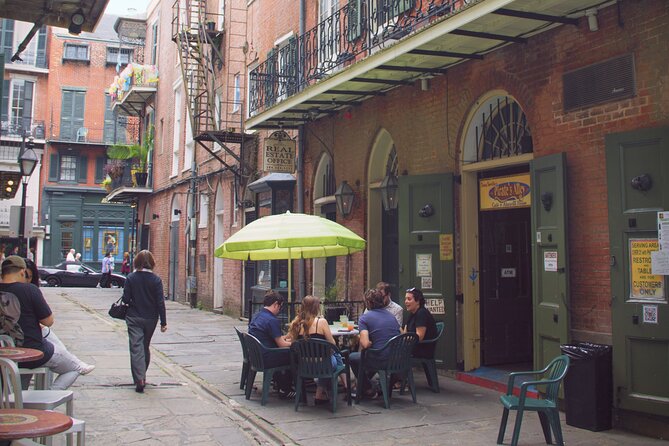
From there, you pass Cafe du Monde—not just a coffee shop stop, but the kind of place that anchors New Orleans in your mind. You’ll hear that it’s the oldest coffee house in the city, and the tour connects it to the sweeter side of the Quarter: the history of beignets.
This is a short stop by design. You’re not getting a food festival here. You’re getting the context that makes the pastries part of the city’s culture, not just a photo opportunity.
A quick note for planning: if you want to buy something, build in time for that on your own after the tour. This moment is more about the story than the snack line.
St. Louis Cathedral: Pirates, Dueling Grounds, and a Quick Peek Inside
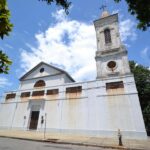
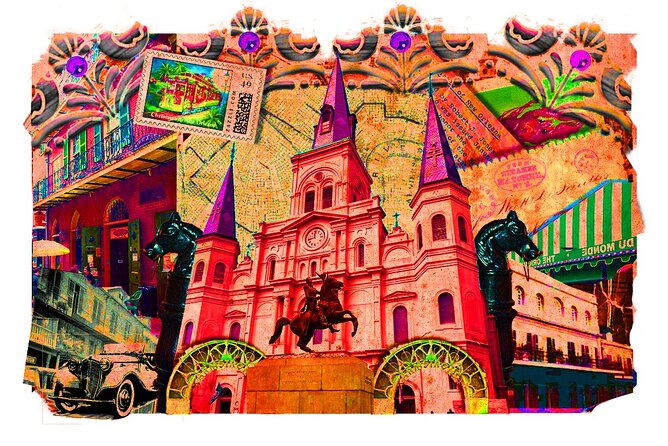
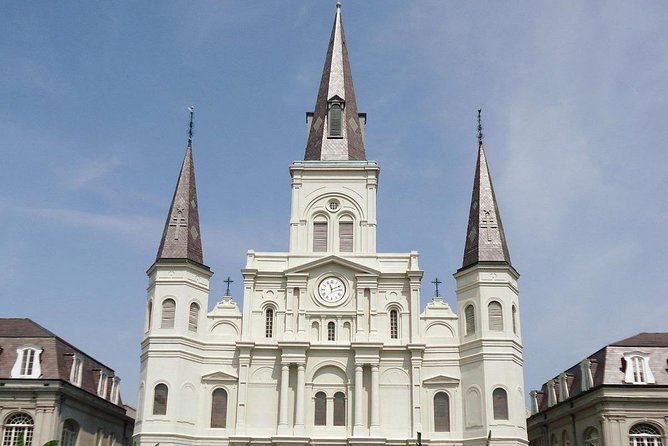
The tour’s next big landmark is the St. Louis Cathedral, and it’s the kind of site you can’t fake. It looks iconic because it is.
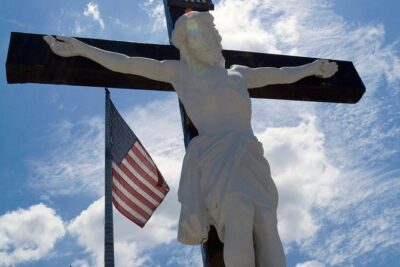
Your guide shares history you can actually picture. You’ll hear about pirate prisons and dueling grounds, plus more color in the in-between streets leading to the cathedral. One of the named areas is Pirate’s Alley—worth mentally tagging as you move around, because once you hear the story, the alley starts to feel like it has plot.
The Cathedral is also described as the oldest in the country. That matters for how you interpret the street life around it. The building wasn’t just a church. It was a backdrop to commerce, punishment, and power plays.
If the Cathedral is open, you’ll get a quick peek inside. Don’t assume it’s always accessible, but the plan is there. If you can’t go in, the exterior viewing plus the story is still the payoff.





Pontalba Buildings and Jackson Square: Baroness Power and Spiteful Statues
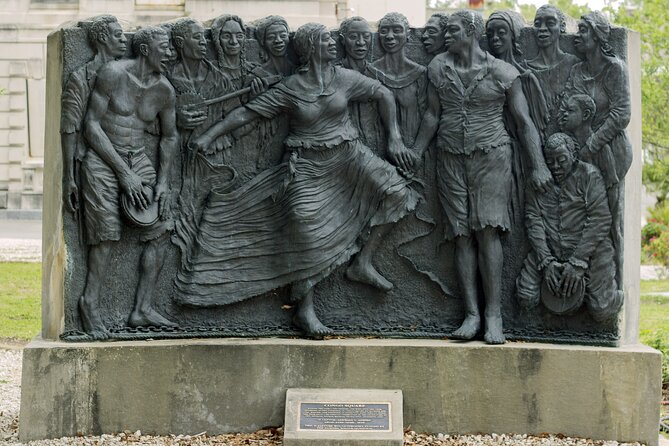
Now you move into the visual heart of the Quarter: Pontalba Buildings and Jackson Square.
At the Pontalba Buildings, you’ll hear the story of the Baroness Pontalba. The tour frames it as more than architecture—almost a real-life psychological thriller. You’ll also learn that Spanish nobles paid for construction of the Jackson Square-area buildings, giving the whole scene an added layer of political and cultural power.
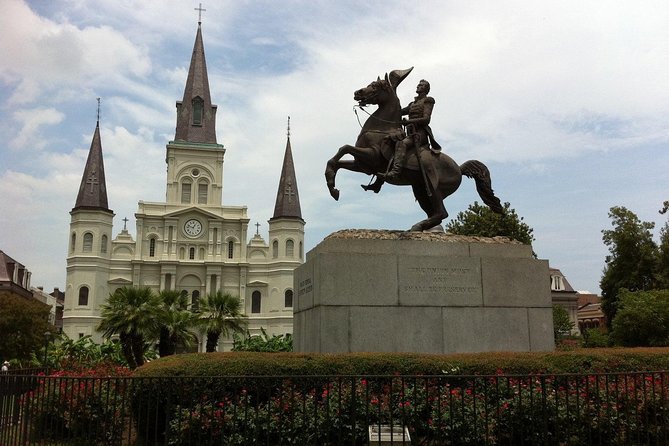
Then you land at Jackson Square, where your guide ties the space to stories of punishment and public behavior. You’ll hear about the statue of Andrew Jackson, including the unusual detail that it’s the only statue in the city said to have been erected out of spite. That one tidbit is the kind of “wait, what?” fact that makes you look at the plaza differently.
The tour also mentions that during the French colonial period, this area was used for bizarre punishments. I like how these details stay grounded in the geography: a square isn’t just a pretty open space. In New Orleans, it can be part of the city’s social control system.
At this point in the walk, you’ll feel your brain start connecting the dots: buildings to power, plazas to conflict, and street layouts to survival.
French Quarter Mini-Stops and Lafitte’s Blacksmith Shop: Smugglers, Pirates, and Tennessee Williams
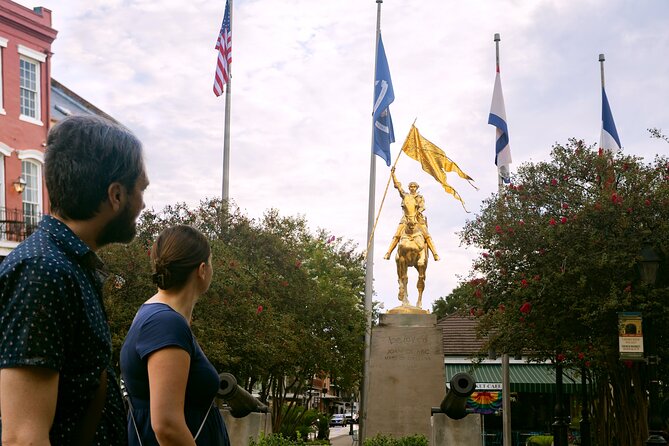
After the square, the tour keeps moving with mini-stops in the French Quarter. These are the moments where your guide uses the streets themselves as the “textbook”—pointing out how people would have flowed through the neighborhood and how the stories connect across blocks.
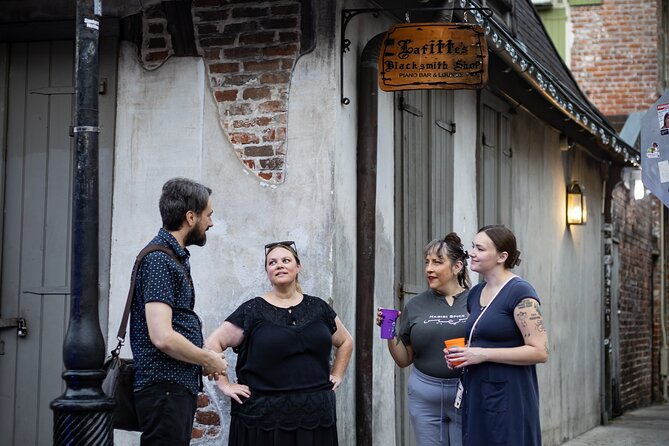
Then you hit Lafitte’s Blacksmith Shop Bar, an instantly memorable spot because it looks like it has always been there. The building is described as dating to the 1780s, and the tour explains it as a popular dead-end-of-Bourbon Street location that once functioned as a business front for smugglers and pirates.
One of the more fun-and-weird bits: the pirates tied to these stories also enlisted to fight in the War of 1812. That detail lands differently once you’ve been walking long enough to feel the Quarter’s contradictions. New Orleans has always been a place where history doesn’t behave neatly.
The tour also connects the present-day vibe to the past. You’ll hear that some men who re-enact the war come to drink afterward, which is a nice reminder that the city’s mythology isn’t just museum stuff—it’s social life.
There’s also a later layer, too. In the 1960s, Lafitte’s was described as the site of a popular gay bar called Cafe Lafitte, frequented by Tennessee Williams. That adds a second kind of history to the stop: not only the pirate era, but also the creative, human stories that shaped modern New Orleans identity.
Louis Armstrong Park: Jazz Origin Stories and Your End Point Near St. Ann
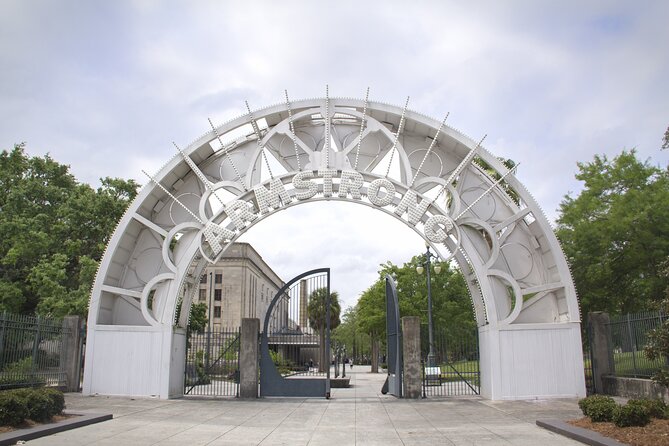
The tour finishes with a stroll through Louis Armstrong Park, starting the final segment in the Treme area just outside the French Quarter.
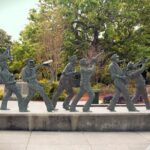
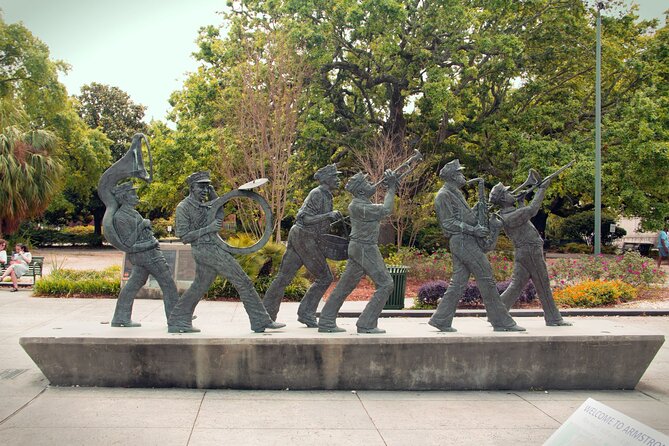
This isn’t random. The park is described as the birthplace of jazz music, and the guide uses that idea to talk about how New Orleans got started and how the city’s identity shifted over time. You also get more “juicy” stories before heading into the area around the French Quarter again in spirit—then you physically step out of the loop near the jazz statue on St. Ann Street.
This ending point is actually useful for logistics. You’re not ending deep in the middle of the most chaotic streets. You’re ending near a clear marker, so it’s easier to continue your day with a plan—whether that’s wandering, grabbing dinner, or heading to another neighborhood.
Price and Value: Getting More Than a Walk for $35
At $35 per person for about two hours, this tour sits in the sweet spot between a “quick orientation” and a “serious history outing.”
Here’s why the value feels real:
- Most stops have free admission, meaning you’re paying mostly for the guide and the story glue.
- The St. Louis Cathedral admission is included, so you’re not forced to decide on the spot whether it’s worth paying extra.
- The pacing and small size (up to 16 people) mean you’re more likely to actually follow the story instead of just listening from the back of a crowd.
Also, your money buys something hard to measure: context. When you can connect a statue to spite, a park to the mudline under the city, and a bar to smugglers and playwrights, the Quarter stops being just scenery. It becomes a living narrative you can read as you walk.
Practical Tips for Your 10:30 Morning (and How to Avoid the Usual Friction)
The tour starts at 10:30 am at Cuban Creations Cigar Bar (533 Toulouse St). You’ll end near the jazz statue at 1298-1100 St Ann St.
A few practical moves that make the experience smoother:
- Wear shoes you trust. You’re covering multiple stops in a compact area.
- Bring water, especially if you’re traveling in hotter months. Even with short stops, you’ll still be outside for stretches.
- If you care about the inside peek at the St. Louis Cathedral, plan your expectations with flexibility. The tour is set up for it when possible.
- If you’re sensitive to cigar smoke, be aware the first stop is a cigar bar and the tour starts there.
Weather matters. The experience is described as requiring good weather, and if it’s canceled for poor weather, you should expect a reschedule offer or a full refund.
Should You Book This French Quarter History Tour?
I think you should book it if you want New Orleans history you can actually carry in your head while you walk the streets. It’s ideal for:
- first-time visitors who want orientation plus real stories,
- people who like character-driven history (not just dates),
- anyone trying to understand why the French Quarter feels theatrical and slightly scandalous.
I’d hesitate if you hate short stops and prefer slower, museum-style sightseeing. This tour is designed for movement and quick storytelling beats. And since it starts at a cigar bar, smoke sensitivity is the main “before you go” consideration.
If you match the tour’s style, you’ll leave with something better than photos: you’ll leave with explanations.
FAQ
How long is the French Quarter History Tour?
It lasts about 2 hours.
How much does the tour cost?
The price is $35.00 per person.
Where does the tour start and end?
It starts at Cuban Creations Cigar Bar, 533 Toulouse St, New Orleans, LA 70130 and ends near the Jazz Statue, 1298-1100 St Ann St, New Orleans, LA 70116.
Is this tour offered in English?
Yes, the tour is offered in English.
How many people are in the group?
The tour has a maximum of 16 travelers.
Is the Cathedral admission included?
Yes. St. Louis Cathedral admission is included. Other stops on the tour are listed with free admission.
What if the weather is bad?
The experience requires good weather. If it’s canceled due to poor weather, you’ll be offered a different date or a full refund.
If you’d like, tell me your travel month and whether you prefer morning or afternoon tours, and I’ll help you plan the rest of your French Quarter day around this 10:30 start.