REVIEW · NEW ORLEANS
5 Cemeteries of New Orleans – Anne Rice’s & other famous graves
Book on Viator →Operated by Wow Tours of New Orleans · Bookable on Viator
Death has a voice in New Orleans. This 2-hour morning tour strings together landmark graveyards and famous tombs, while your guide explains how New Orleans burial traditions work in ways you won’t find elsewhere in the US. I especially love the guide-led stories that turn stone and symbolism into something you can actually understand, and I love that you get a strong hit list of names in a short time, including Anne Rice.
There’s one drawback: you’re outside and walking between sites, so the pace is steady and the topics are not light. Expect serious subjects, including yellow fever burials and Katrina losses, and plan to dress for weather.
In This Review
- Key highlights you’ll notice fast
- A morning route built for serious storytelling
- Stop 1: Greenwood, Cypress Grove, and Gates of Juhad
- Stop 2: Lake Lawn Metairie and Anne Rice’s grave
- Stop 3: St. Patrick #1, St. Patrick #2, and Charity Hospital Cemetery
- Stop 4: Hurricane Katrina Memorial and the missing-then-found story
- Why this guided route beats wandering
- Price and value: $29 for five landmark graveyards
- Who should book this tour (and who might not)
- Quick tips so your visit feels smooth
- Should you book this one?
- FAQ
- FAQ
- How much does the 5 Cemeteries of New Orleans tour cost?
- How long is the tour?
- What time does the tour start, and where does it meet?
- Is the tour offered in English, and do I get a ticket on my phone?
- How many people are in the group?
- Is admission included for the cemetery stops?
- What isn’t included in the price?
- Can I cancel for a full refund?
Key highlights you’ll notice fast
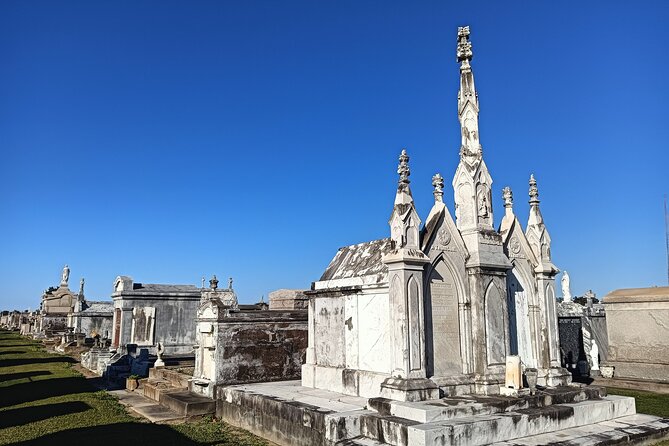
- Five landmark cemeteries plus major sections: you’ll hit iconic graveyards tied to different faiths and immigrant communities
- Greenwood and Cypress Grove with celebrity tombs: imposing statuary and big-name graves in an impressively compact route
- Jewish and Protestant burial contrasts: Gates of Juhad and the Protestant cemeteries show different traditions
- Metairie’s famous names: Anne Rice, Louie Prima, actors, and other notable figures
- Irish community history in St. Patrick areas: from famine-era modest graves to later ornate monuments
- A Katrina memorial with a mystery-story element: a story of disappearance, rediscovery, and dignified reburial
A morning route built for serious storytelling
This tour is scheduled as a morning walk, starting at 10:00 am from Morning Call Coffee Stand, 5101 Canal Blvd. It ends back at the same meeting point, which makes it easier to roll right into more sightseeing afterward without hunting down transit or directions.
You’re paying $29 per person, and you’re getting a guided experience that includes the key context you’d miss if you showed up alone. The group is limited to 22 people, which keeps things conversational and gives you time to ask questions as you go. You’ll also receive a mobile ticket, and the tour runs in English.
One practical note: even though the stops are spaced out (about 30 minutes per main section), the day still feels like a walking tour. Wear comfortable shoes and dress for the weather, since cemeteries are open-air and the atmosphere can shift quickly.
You can also read our reviews of more tours and experiences in New Orleans.


Stop 1: Greenwood, Cypress Grove, and Gates of Juhad
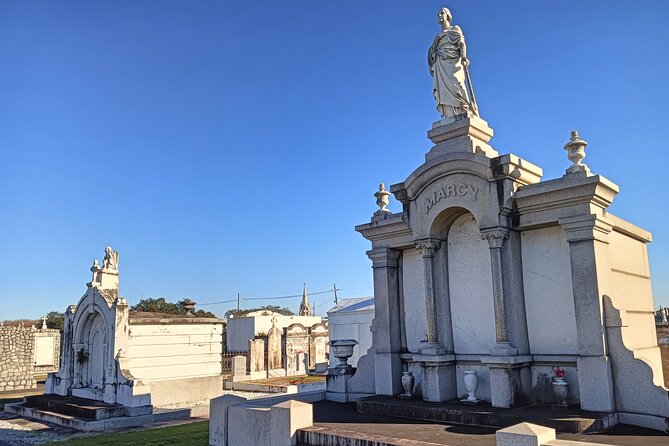
The first stop is a cluster of cemeteries that lets you see New Orleans at the level of religion, class, and custom. You start in Greenwood Cemetery, known for imposing graves and statues that look almost built for drama. It’s also where you’ll hear stories tied to how burial procedures in New Orleans differ from elsewhere in the US, and you’ll see several celebrity graves along the way.
After Greenwood, the route moves to Cypress Grove Cemetery, a Protestant cemetery with some of the most monumental tombs in New Orleans. This is where the tour leans into one of its best-known story modes: a feud between two families who built these huge graves. The “why” is what makes it stick—how status, rivalry, and community identity could show up in what looks like pure stone art.
Then you head to Gates of Juhad Cemetery, a Jewish cemetery stop that adds another layer to the burial-practice story. This portion is built to show how Jewish burial practices in New Orleans can differ from Catholic and Protestant ones, so you’re not just looking at old structures—you’re learning the rules behind them.
Why this stop matters for you: it sets up the entire city. New Orleans is famous for its architecture, but cemeteries are where you see the city’s social logic written in stone—who got what, why it changed, and how faith shaped the process.
What to watch for: keep an eye on the visual differences your guide points out. If you’re the kind of traveler who remembers details by comparing them, this start gives you lots of side-by-side moments.
Stop 2: Lake Lawn Metairie and Anne Rice’s grave
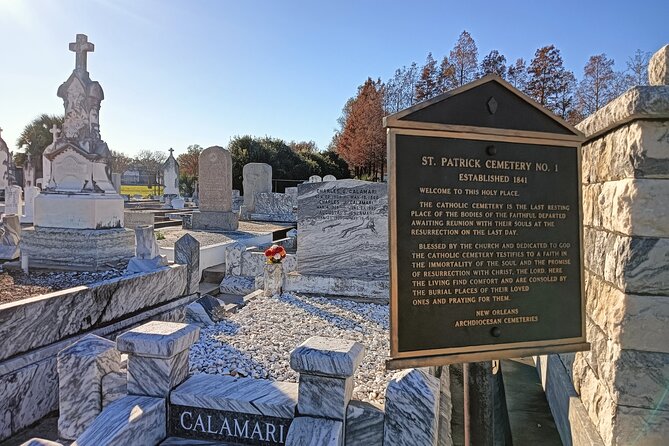
Next comes Lake Lawn Metairie, which many people also call Metairie Cemetery. It’s often described as one of the most beautiful cemetery settings in the US, and the tour uses that beauty in a practical way: it gives you room to slow down and absorb what you’re seeing without losing momentum.
This is also the stop most people want for the famous-name payoff. You’ll see Anne Rice’s grave—author of Interview with the Vampire—along with the grave of Louie Prima and the tombs of actors. The tour also mentions some notorious figures tied to the city, giving you a sense that New Orleans fame isn’t limited to one lane.
For me, what makes this stop more than a celebrity checklist is the way it balances tone. The earlier cemeteries emphasize tradition and community identity; Metairie turns that into something more personal and pop-cultural. You’re looking at the same idea—how people are remembered—but through the lens of modern fame.
If you like your history with recognizable anchors, this part helps you connect faster. And since it’s still guided, you won’t have to guess what you’re seeing or which tombs matter most.
Stop 3: St. Patrick #1, St. Patrick #2, and Charity Hospital Cemetery
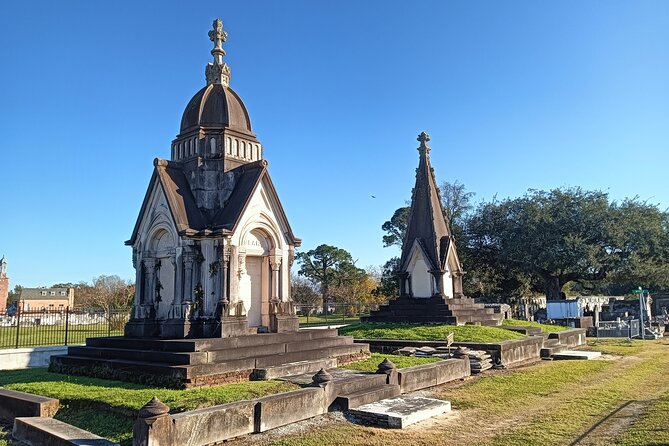
The St. Patrick area isn’t one cemetery stop—it’s actually three, and the contrast between them is the point. You begin at Saint Patrick #1 Cemetery, described as the oldest Irish Catholic cemetery in the city. This is tied to Irish immigrants who escaped the Irish Potato Famine, and the early graves are portrayed as modest—reflecting how families were surviving, not showing off.
Across the way, you move to Saint Patrick #2 Cemetery, built a generation later. Here the tour frames what “new money” meant in Irish-American life, and the monuments shift toward something imposing and ornate. The story connects the cemetery look to changes in economic stability and social standing.
Next door, you visit Charity Hospital Cemetery, which functions as a mass burial ground used in the past for yellow fever victims. This is one of the tour’s darker segments, but it’s also one of the most meaningful for understanding why epidemics shaped New Orleans life. You’ll hear the sinister and macabre history of how and why yellow fever was so prevalent, and the guide’s job is to keep it factual and understandable rather than sensational.
How this stop works for you: the tour doesn’t treat cemeteries as generic “scenery.” It shows how a community moved from survival to stability, and how tragedy could overwhelm even organized systems. If you’ve ever wondered why New Orleans buildings and neighborhoods feel like they hold stories in layers, this part is where that feeling gets explained.
Stop 4: Hurricane Katrina Memorial and the missing-then-found story
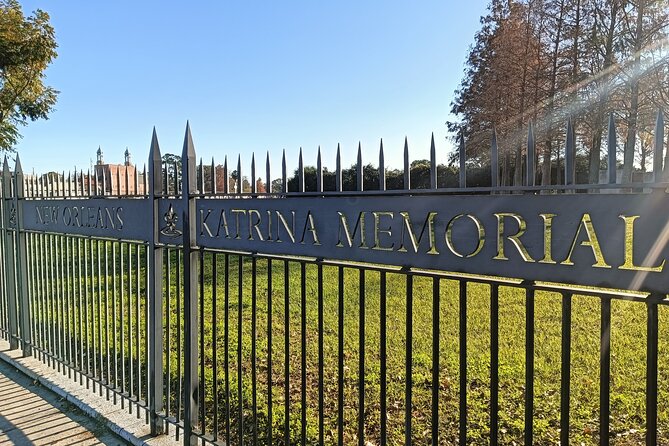
The final stop is the Hurricane Katrina Memorial, which serves two roles: it’s a memorial for victims of the hurricane and also functions as a cemetery for 80 locals who died in 2005. This isn’t just about looking at names. It’s built around a human story and a detective-style mystery about what happened to bodies and how they were eventually identified and reburied.
You’ll hear the touching outline of individual lives, and you’ll also hear the more unsettling part—how their remains were described as lost by local authorities, then rediscovered years later in an obscure massive freezer. The tour emphasizes the outcome: a beautiful burial with dignity, which is what makes the story land emotionally instead of just tragically.
Why it belongs on a cemetery tour: because it connects the city’s past traditions to a modern disaster. Cemeteries in New Orleans aren’t frozen in time. They absorb what happens, including what’s recent enough to still hurt.
If you’re worried that this will be too heavy, remember that the tour is short and structured. The guide keeps the rhythm moving, which gives you moments of reflection without turning it into a long, exhausting vigil.





Why this guided route beats wandering
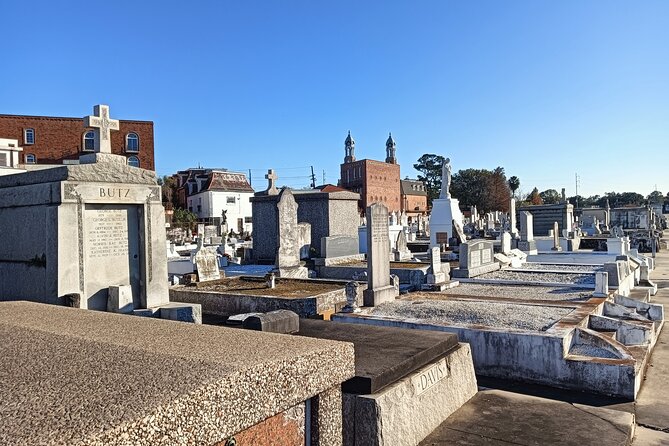
Cemeteries are quiet places, and that’s exactly why a guide helps. You’re surrounded by symbolism—names, shapes, materials, and layout—and without context it’s easy to miss the “why” behind what you’re seeing.
This tour is designed so you don’t have to piece everything together yourself. The guide ties each stop to a theme: burial procedures and differences by faith, community history through monuments, and how major tragedies shaped remembrance. You also get real-time answers to questions as they come up, which is a big deal when you’re trying to understand what each cemetery is trying to say.
The small group size also matters. When I look for tours like this, I want a leader who can keep the pace comfortable and still field questions. In past experiences with this operator, guides such as Bobby and Christopher have been singled out for being prompt, friendly, and good at pacing—so you’re not shoved through like a checklist.
And yes, weather can happen. One earlier departure was affected by extreme rain and thunderstorm conditions, and the tour still ran in a way that felt like it matched the mood instead of fighting it. The takeaway for you is simple: bring a rain layer and be ready for the outdoors to change fast.
Price and value: $29 for five landmark graveyards
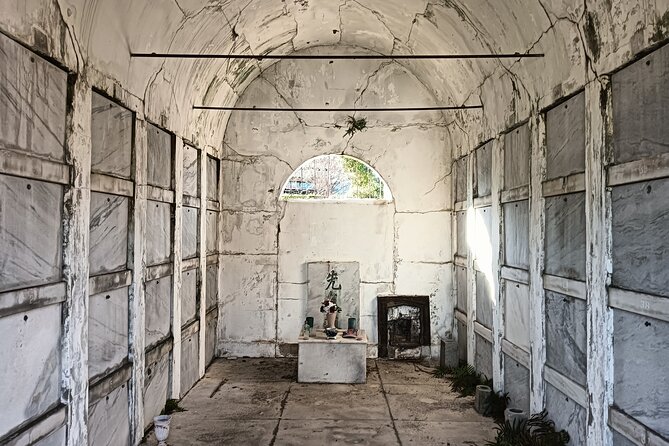
At $29 per person for roughly two hours, the value is in what you get per minute: multiple major cemetery sections, a full guide, and context you can’t pull from looking at stone alone. The stops are also marked as having free admission tickets, so you’re not hit with a pile of extra entrance fees on top of the tour cost.
You’re also not spending your whole day navigating. The route starts at Morning Call Coffee Stand and comes back there, which is handy when you want to keep your itinerary intact. For visitors who want a morning activity that doesn’t swallow the rest of the day, this is a practical slot.
Language is another value piece. The tour is offered in English, and that matters in places where the site information you might read on your own could be incomplete or too hard to interpret quickly.
Who should book this tour (and who might not)
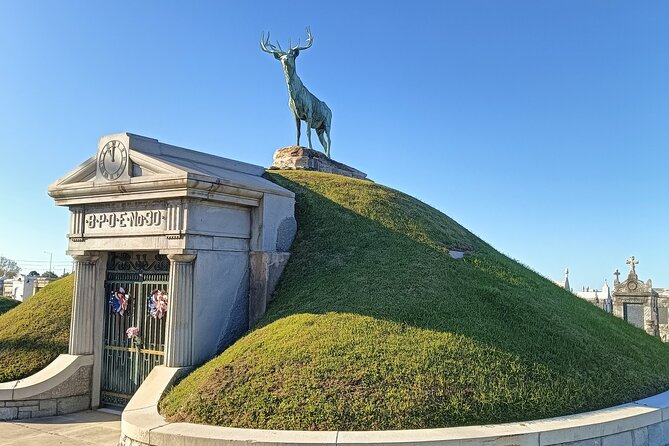
I think this tour fits best if you want New Orleans to make sense at the human level. If you like history with stories—especially ones tied to faith, immigrant communities, and real names—this is a strong match. It also works well if you’re short on time and you want to see multiple landmark cemeteries without building your own route.
It’s less ideal if you want a light, casual outing. Cemeteries are serious spaces, and this tour includes topics like yellow fever and Katrina losses. If that kind of material makes you shut down, you might prefer a different theme for the day.
Quick tips so your visit feels smooth
- Dress in layers. You’ll be outside between sites and the weather can shift in New Orleans.
- Keep your questions handy. The tour is structured for Q and A, and the guide’s job is to connect what you see to what it means.
- Be respectful with photos and your voice. These are burial places, not museum sets.
- If you’re sensitive to darker topics, decide how much you want to learn before you go. The tour doesn’t shy away from serious parts of local life.
Should you book this one?
If you’re curious about what makes New Orleans burial practices different, I’d book this. The route packs major cemeteries into a tight morning and gives you interpretive help, so you’re not staring at stone wondering what to look for next. It’s also a strong value: guide included, free admission marked for the stops, and a group size that supports real conversation.
If you only want a quick list of famous graves with minimal context, you might find the deeper stories feel heavy. In that case, you could choose a lighter sightseeing plan instead.
FAQ
FAQ
How much does the 5 Cemeteries of New Orleans tour cost?
It costs $29.00 per person.
How long is the tour?
The duration is about 2 hours.
What time does the tour start, and where does it meet?
The tour starts at 10:00 am at Morning Call Coffee Stand, 5101 Canal Blvd, New Orleans, LA 70124. It ends back at the meeting point.
Is the tour offered in English, and do I get a ticket on my phone?
Yes. The tour is offered in English, and it includes a mobile ticket.
How many people are in the group?
The tour has a maximum of 22 travelers.
Is admission included for the cemetery stops?
The itinerary lists cemetery stops with Admission Ticket Free.
What isn’t included in the price?
Alcoholic beverages and lunch are not included.
Can I cancel for a full refund?
Yes. You can cancel for a full refund if you cancel at least 24 hours before the experience’s start time.