REVIEW · NEW ORLEANS
New Orleans Demonstration Cooking Class with Meal
Book on Viator →Operated by New Orleans School of Cooking · Bookable on Viator
A good gumbo lesson should come with lunch. This New Orleans cooking demonstration pairs a lively chef show with big samples of classic Creole dishes in a converted 19th-century molasses warehouse. You get the why behind the flavors, not just a list of ingredients.
I love how the format feels like a performance you can actually follow. The chef explains Louisiana cooking as it happens, then you sit down right after to enjoy generous portions of what you just watched—gumbo, jambalaya, etouffée, and more, plus local beer, coffee, and iced tea. I also like getting a copy of the recipes and even a chance to earn a diploma by submitting photos of what you cook back home.
One thing to consider: this is a demonstration class with a max group size of 68. That means the room can feel big, and if you’re hard to hear or you dislike crowded seating, you’ll want to grab a spot near the front.
In This Review
- Key things I’d plan around
- Creole classics in a show setting at New Orleans School of Cooking
- Stop 1: 524 St Louis St and the demo-meets-lunch rhythm
- What you learn about roux, spices, and Cajun vs Creole
- The menu: sampling a real New Orleans multi-course meal
- Starter: Corn and crab bisque
- Mains: gumbo, jambalaya, Creole classics, and etouffée
- Drinks that make the meal feel complete
- Dessert lineup: bread pudding, bananas foster, pralines, and pecan pie
- Stop 2: a French Quarter connection that helps you read the city
- Price and value: why $43 can feel fair in New Orleans
- Dietary restrictions: what vegan and gluten-free substitutions really mean
- Should you book this New Orleans cooking demonstration class?
- FAQ
- How long is the New Orleans cooking demonstration?
- Where does the class start?
- Is this hands-on cooking or a demonstration?
- What’s included with the meal?
- Do I receive recipes to take home?
- Can dietary restrictions be accommodated?
- What vegan, gluten-free, and nut-free option is offered?
- What dishes are typically on the menu?
- Is alcohol included?
- What’s the cancellation window?
Key things I’d plan around
- Converted 19th-century molasses warehouse setting makes it feel like real New Orleans food culture, not a textbook.
- Live cooking only (no hands-on), so you’re there to watch, learn, and eat right after.
- Roux + spice technique focus is the practical backbone behind gumbo and the other staples.
- A full multi-course meal is built in, with samples across mains and desserts.
- Chef-led history and Cajun vs Creole context keeps the food from feeling random.
- Dietary replacements exist (with a small upcharge), but the exact dishes being demonstrated can’t be swapped.
Creole classics in a show setting at New Orleans School of Cooking
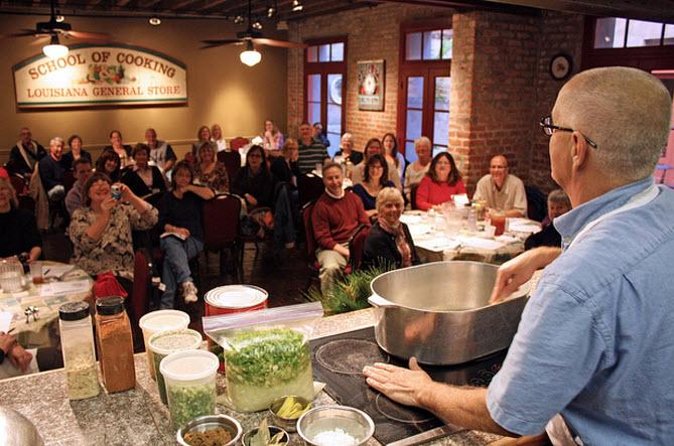
This class is designed for one goal: turn Louisiana food into something you understand and can repeat. You’re not asked to cook. Instead, you watch the chef build flavors step by step—especially the foundations like a good roux—while the session fills out with cooking history and cultural context. It’s a smart match for travelers who want a hands-on vibe without the mess.
The venue matters, too. You’ll be seated in a converted 19th-century molasses warehouse, which gives the whole thing a warm, old-New-Orleans mood. Even if you’ve never cooked gumbo before, the room layout and the live timing make it easy to stay focused: watch, ask questions when there’s room, then eat.
Most classes run about 2 hours, and you’ll do it with a mobile ticket in English. Since the average booking happens roughly 24 days in advance, I’d plan to reserve early rather than hoping for a last-minute slot.
You can also read our reviews of more cooking classes in New Orleans
Stop 1: 524 St Louis St and the demo-meets-lunch rhythm
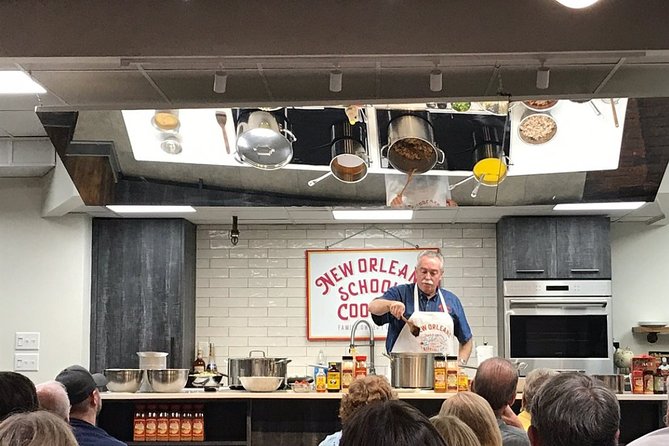
The experience starts at New Orleans School of Cooking, 524 St Louis St. When you arrive, the biggest thing to know is that the class is built like a seated show. You’re among other food lovers, and the chef directs attention to what’s cooking and why it matters.
Because this is a demonstration-only format, you’ll want to listen for the technique cues. The instructor’s commentary is part of the meal value: you’re learning how the dishes are constructed, not just tasting the finished result. That’s also why the recipes home are so useful—you’re getting written backup for whatever the chef teaches live.
Group size is maxed at 68, and that can affect comfort more than people expect. In a larger room, sound and visibility depend on where you sit. If you’re the type who struggles with hearing in a crowd, I’d arrive a few minutes early and aim for a front or center position. It’s the difference between catching every roux detail and missing the key timing.
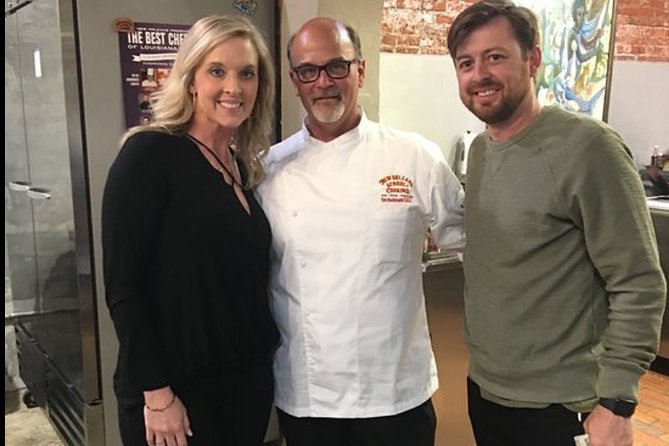
You’ll also get to meet a local chef who brings personality and local storytelling into the cooking. On different days, you might encounter chefs such as Lynn, Eric, Dianne, Viviane, Terri, Austin, Rene, or Chef Faucheaux, and the consistent thread is the same: step-by-step cooking plus Louisiana context.
What you learn about roux, spices, and Cajun vs Creole
If you only take one thing away from this class, make it the method. Louisiana cooking has shortcuts people advertise online, but gumbo and jambalaya are really about build order and seasoning logic. The chef specifically highlights the importance of roux—that moment when flour and fat are cooked into a thickening base that shapes both flavor and texture.
You’ll also hear about the melting pot that separates and connects Cajun and Creole cooking. The terms can be confusing at first, but this class treats the subject as a practical conversation. You learn that the difference isn’t just marketing; it’s tied to ingredients, technique traditions, and regional influences. If that’s your first time sorting the categories, this is a friendly place to ask questions, because the chef frames it around what ends up on the plate.
The other learning lane is spice. You’ll watch dishes come together and learn how spice variety (and timing) creates that distinctive Louisiana profile. Even if you’re not trying to cook with the same herbs and blends at home, you’ll get a better sense of how to balance heat, salt, and depth so the food tastes intentional instead of generic.
The menu: sampling a real New Orleans multi-course meal

This is not a tiny tasting. After the demo, you sit down for generous samples of multiple dishes, paired with drinks. The menu can vary, but the typical lineup includes a starter, multiple mains, and several desserts.
Starter: Corn and crab bisque
You may start with corn and crab bisque. It’s the kind of dish that teaches you a lot about Louisiana comfort food: creamy body, sweet corn balance, and that seafood depth that feels both hearty and elegant.
You can also read our reviews of more tours and experiences in New Orleans



Mains: gumbo, jambalaya, Creole classics, and etouffée
For the main portion, the session commonly includes:
- Gumbo
- Jambalaya
- Shrimp or chicken creole
- Crawfish etouffée
This is where the class earns its keep. You’re tasting the results right after watching. That timing helps you connect technique to outcome. Gumbo tends to feel like the lesson in roux and patience—thickening plus seasoning over time. Jambalaya gives you the “rice as structure” idea, where flavors build through layers rather than just seasoning at the end. Etouffée is its own style of richness, with a sauce approach that coats and clings.
You’ll also learn how the chef navigates differences between dishes that sound similar on paper. Cajun and Creole cooking can overlap, but the class keeps pointing you back to what changes: spice approach, base sauce, and how the dish is assembled.
Drinks that make the meal feel complete
Meals come with coffee, iced tea, water, and one local beer. That matters because the flavors in this food can be bold, and iced tea is a classic pairing for a reason. If you’re drinking alcohol, you’re doing it as part of a full meal, not just a token sip.
Dessert lineup: bread pudding, bananas foster, pralines, and pecan pie
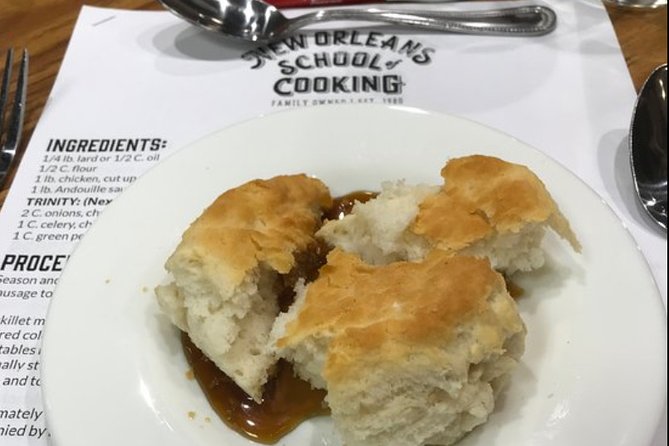
Dessert is the part that turns a cooking class into a full-on New Orleans meal. You’ll commonly sample:
- Bread pudding
- Bananas Foster
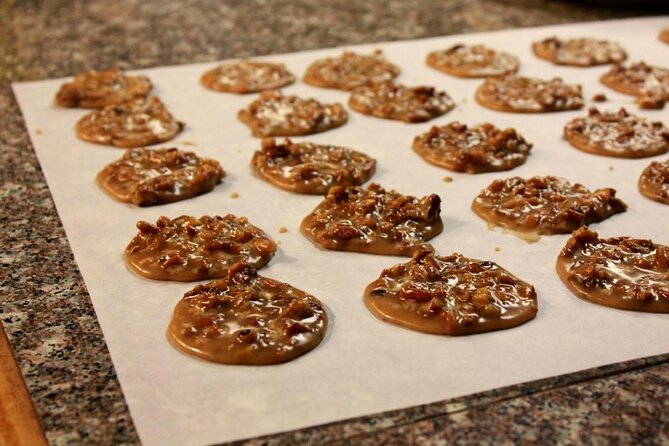
- Pralines
- Pecan pie
Bread pudding is comforting and forgiving, but it also teaches technique. It’s a dessert built on soaking, texture, and the right level of sweetness. Bananas Foster brings a more dramatic finish, and pralines add that sugar-and-nut style you only really understand after tasting it in context. Pecan pie closes with a classic Southern finish: rich filling and a crust that holds up to a meal that’s already been heavy and satisfying.
The key detail for your planning: these are samples across multiple desserts, not just one cookie. So come hungry. You’ll leave full, which is part of why this class feels like strong value rather than a paid lecture.
Stop 2: a French Quarter connection that helps you read the city
After the cooking portion, there’s also time in the French Quarter. This isn’t just a random add-on. The goal is to connect what you tasted with where the culture shows up around you. In practice, that means you get a small change of pace and a chance to connect food talk to streets, landmarks, and the neighborhood energy.
Even if you don’t treat this as a deep walking tour, it’s useful for orienting yourself. When you later grab gumbo, beignets, or a slice of pie on your own, you’ll have a better sense of the food vocabulary you learned in the class.
Price and value: why $43 can feel fair in New Orleans
At $43 per person for about 2 hours, the math is mainly about what’s included. You’re getting:
- A live chef demonstration
- A full meal with generous samples across multiple mains and desserts
- Coffee, iced tea, water, and one local beer
- A copy of the class recipes
- A diploma process based on cooking at home (photos submitted)
In other words, you’re paying for a multi-course meal plus a guided explanation, not choosing between eating well and learning well. In a city where one decent lunch can add up fast, having the education and recipes included makes the price feel more reasonable.
Also, the booking pattern is a clue. If it’s averaging being booked 24 days in advance, it’s popular for a reason: it’s a structured plan that keeps you fed and informed without taking over an entire afternoon.
Two practical notes:
- Gratuity isn’t included, and 15–20% is recommended.
- Wear clothing you can sit in comfortably for a while. Even though it’s short, you’ll be seated and listening, then eating.
Dietary restrictions: what vegan and gluten-free substitutions really mean
If you have dietary needs, this class can work well, but you need to understand the limits. The program can accommodate dietary restrictions, and there’s a specific option for vegan, gluten-free, and nut-free replacements:
- For a $5 upcharge at check-in, you receive gumbo z’herbes (soup) and creole z’herbes (entree).
Important detail: these substitutions are not the dishes demonstrated live. The chef will discuss and describe them, and you still get a recipe copy, but the exact demo items can’t be swapped. That means depending on your restrictions, you might end up taking the soup replacement but not the entree replacement if you need the demo to match what you’re able to eat. You can also ask the stewards what will work best for your situation when you check in.
To set yourself up for success, you’ll want to inform the stewards upon check-in and follow up after booking if the operator asks you to call their reservations line.
Should you book this New Orleans cooking demonstration class?
Book it if you want:
- A 2-hour plan that feeds you across multiple classic dishes
- A clear explanation of why things work, especially roux and Louisiana spice logic
- Recipes you can actually take home and cook from
- A fun, talkative show format with local chef storytelling (chefs like Lynn or Eric often bring a mix of humor and history into the lesson)
Skip it or adjust your expectations if:
- You want true hands-on cooking. This is demonstration only.
- You’re sensitive to crowd noise. With up to 68 people, you’ll get the learning best by sitting where you can hear.
- You’re looking for a quiet, minimalist meal. This is designed to be social and lively.
One last practical check: the experience requires good weather. If it’s canceled due to poor weather, you’ll be offered a different date or a full refund. And since cancellation is free up to 24 hours before, you have flexibility if your plans shift.
If you’re coming to New Orleans to eat your way through the city and you’d like the story behind the flavors, this class is a solid choice.
FAQ
How long is the New Orleans cooking demonstration?
It’s about 2 hours.
Where does the class start?
The meeting point is 524 St Louis St, New Orleans, LA 70130 at the New Orleans School of Cooking.
Is this hands-on cooking or a demonstration?
It’s a demonstration class only. There is no hands-on training.
What’s included with the meal?
You get a full meal with generous samples of what’s prepared, plus coffee, iced tea, water, and one local beer.
Do I receive recipes to take home?
Yes. You receive a copy of the class recipes.
Can dietary restrictions be accommodated?
Yes. Dietary restrictions can be accommodated, and you’ll need to contact the reservations line after booking and also inform stewards at check-in.
What vegan, gluten-free, and nut-free option is offered?
For a $5 upcharge at check-in, you receive gumbo z’herbes (soup) and creole z’herbes (entree). These substitutes are discussed and provided in written form, but not demonstrated live.
What dishes are typically on the menu?
Menu items may include gumbo, jambalaya, crawfish etouffée, shrimp or chicken creole, corn and crab bisque, bread pudding, bananas foster, pralines, and pecan pie.
Is alcohol included?
Yes, the meal includes one local beer.
What’s the cancellation window?
You can cancel for a full refund up to 24 hours before the experience starts. If it’s canceled due to poor weather, you’ll be offered a different date or a full refund.