REVIEW · NEW ORLEANS
Jewish History Tour of New Orleans
Book on Viator →Operated by NOLA Tours · Bookable on Viator
Jewish New Orleans history is hiding in plain sight. In this 2-hour guided walk, you’ll connect landmarks like the Holocaust Memorial to stories of Jewish life, music, and power that shaped the city.
I especially like two things: the way the guide makes the Holocaust Memorial’s design make sense, and the fact that this is a relaxed small-group stroll you can actually enjoy. If you get motion-sick or hate walking, the outdoor pace may be a dealbreaker.
One thing to plan for: there’s no air-conditioned vehicle, and it depends on good weather.
In This Review
- Key Highlights You’ll Notice Right Away
- A Two-Hour French Quarter Walk With Real Stories
- Meeting at PJ’s Coffee and Getting Comfortable Fast
- Stop 1: Woldenberg Riverfront Park and the Agam Holocaust Memorial
- Stop 2: Jackson Square and Early Colony Tensions
- Stop 3: Madame John’s Legacy and a Jewish Philanthropist’s Connection
- Stop 4: Royal Street to Pirates Alley and Jewish Pirate Stories
- Stop 5: Preservation Hall and How Jewish Preservationists Saved the Music
- Stop 6: Omni Royal Orleans and Judah Benjamin’s Shadow Over the Civil War
- Price and Value: Why $40 Works for This Format
- Who Should Book This Jewish History Tour?
- Small Details That Make the Tour Better
- Should You Book This Tour?
- FAQ
- How long is the Jewish History Tour of New Orleans?
- How much does the tour cost?
- Where does the tour start and end?
- What time does the tour begin?
- Is the tour walking or does it include transportation?
- What language is the tour offered in?
- How many people are in the group?
- Do I need to pay admission fees at the stops?
- Is a mobile ticket provided?
- What if the weather is bad?
Key Highlights You’ll Notice Right Away
- Agam Holocaust Memorial at Woldenberg Riverfront Park, explained clearly on the spot
- Royal Street to Pirates Alley stories that include Jewish connections
- Madame John’s Legacy and a building tied to a Jewish philanthropist
- Preservation Hall and how Jewish preservationists helped protect the music
- Judah Benjamin and the Confederate cabinet context, including slavery in the state
A Two-Hour French Quarter Walk With Real Stories
This tour is a straight-to-the-point way to understand Jewish New Orleans, without drowning you in trivia. You start at PJ’s Coffee (333 Canal St) at 10:00 am, then end at St. Louis Cathedral (615 Pere Antoine Alley). Most of the route sits in the French Quarter, so you can often join from nearby hotels by walking rather than hunting for a complicated transfer.
The price is $40 per person for about two hours with a licensed, insured local guide. What makes it feel worth it isn’t the number of stops. It’s the guide’s job: turning familiar streets into context, and helping you connect what you see with what it meant.
You’ll also want to treat this like an outdoor walking experience, not a museum tour. It’s free to enter the featured stops listed on the route, but you still pay for the guide’s time, storytelling, and local perspective.
You can also read our reviews of more historical tours in New Orleans



Meeting at PJ’s Coffee and Getting Comfortable Fast
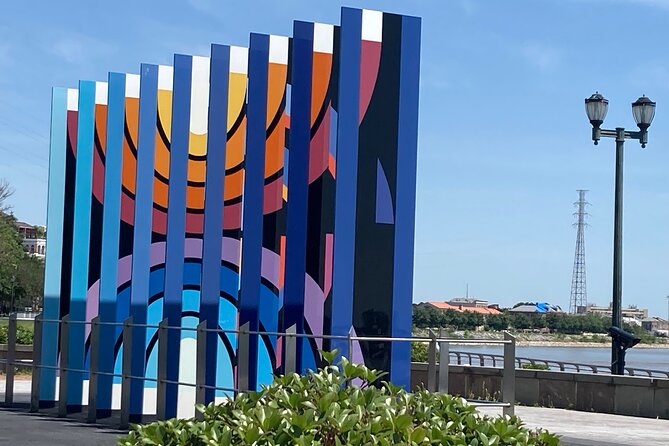
The meeting point is easy: PJ’s Coffee on Canal Street. You’ll get a mobile ticket, and the group stays small, with a maximum of 14 travelers. Small matters here. It keeps questions from getting lost and helps the guide manage the pace.
The tour is designed for real walking, not shuffle-and-wait tourism. In practice, that means a comfortable pair of shoes and a bit of patience with New Orleans sidewalk life. Because it’s all outdoors, plan for sun or drizzle. And yes, there’s no air-conditioned vehicle, so you’re relying on the day’s weather.
If you prefer a structured walk with short stops, you’ll like this format. The featured segments are brief at each location, so you’re never stuck in one spot for ages.
Stop 1: Woldenberg Riverfront Park and the Agam Holocaust Memorial
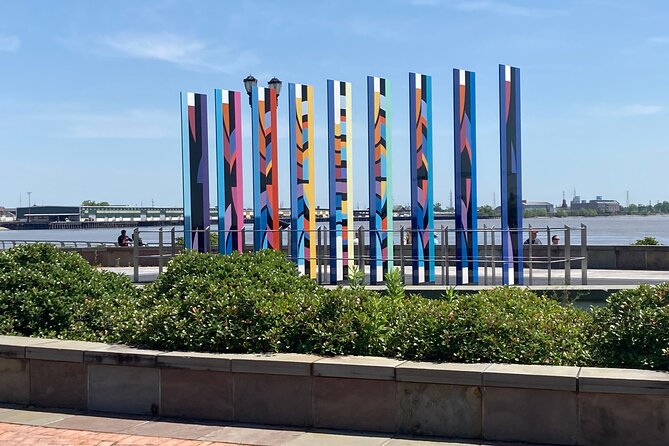
Your first big moment lands at Woldenberg Riverfront Park along the river. This is where the tour’s tone clicks into place: you’re not just seeing a monument, you’re learning how to read it.
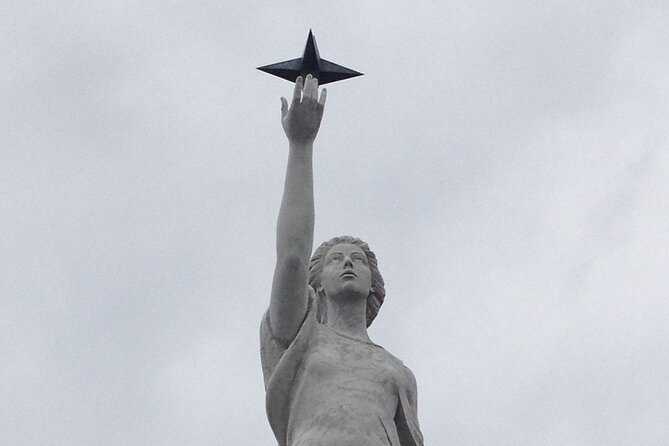
You’ll have a chance to see the Holocaust Memorial and the statue of Malcolm Woldenburg. The guide also explains the Holocaust Memorial with extra attention to how it was built and why its design matters. One guide on this route, Janet, is noted for making the Agam artwork feel understandable from multiple angles. That matters, because Holocaust memorials can look abstract until someone helps you slow down and interpret.
This stop is short, but it’s the kind that changes how you view the rest of the walk. The memorial sits right by the river, and you’ll feel that contrast: everyday city movement on one side, and a serious historical weight on the other.
What to do here: give yourself a minute to look before you start listening hard. If you can, pause at the angles the guide points out. It makes the explanation land faster.
Stop 2: Jackson Square and Early Colony Tensions
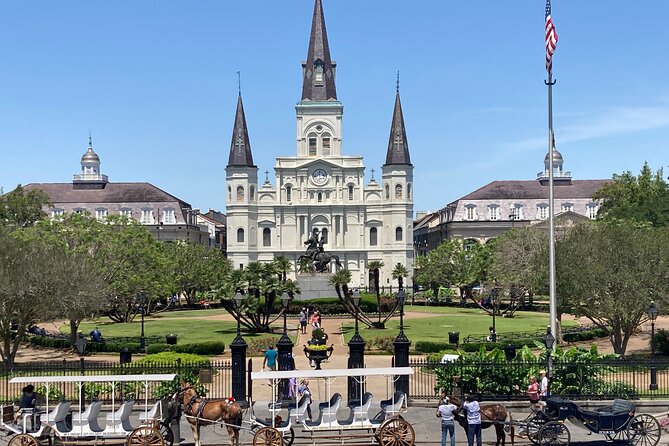
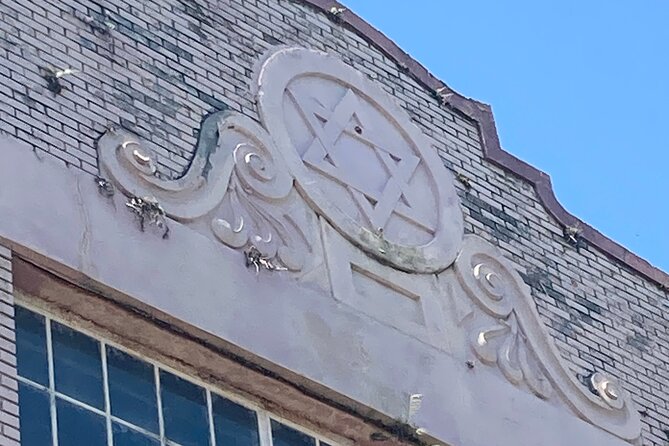
Next you head to Jackson Square, one of the easiest places in the French Quarter to orient yourself. The guide uses this area as a starting point for New Orleans’s early colonial story, including the threat of inquisition in those earliest days.
This stop is only around 15 minutes, so it’s not a full lecture. Instead, it’s a quick setup for the rest of the tour: why religious identity and community presence weren’t simple in the city’s early life. You’ll walk away with a clearer sense of the pressures that shaped who could live here openly—and how Jewish life developed in spite of those pressures.
Practical tip: Jackson Square can be busy. If the crowd makes it hard to hear, step to the side and give the guide a clear line. The route is planned to keep things moving, so don’t get trapped in the densest tourist traffic.
Stop 3: Madame John’s Legacy and a Jewish Philanthropist’s Connection
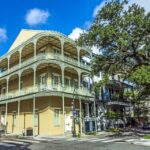
Then you move to Madame John’s Legacy, an old building with a story that reaches beyond architecture. The key detail you get here is that the building was owned by a Jewish philanthropist.
This is the kind of stop that changes how you “read” a city. At first glance, it’s just another historic structure in the Quarter. With the guide’s context, it becomes evidence—of real people with money, influence, and motives for helping others.
Because the time is tight (around 12 minutes), you won’t get a long biography. But you’ll understand the bigger point: Jewish presence in New Orleans isn’t only about churches, cemeteries, or written records. It’s also in buildings, patronage, and community-level support.
What to watch for: pay attention to the guide’s explanation of ownership and role. That’s what turns a photo stop into something worth remembering.





Stop 4: Royal Street to Pirates Alley and Jewish Pirate Stories
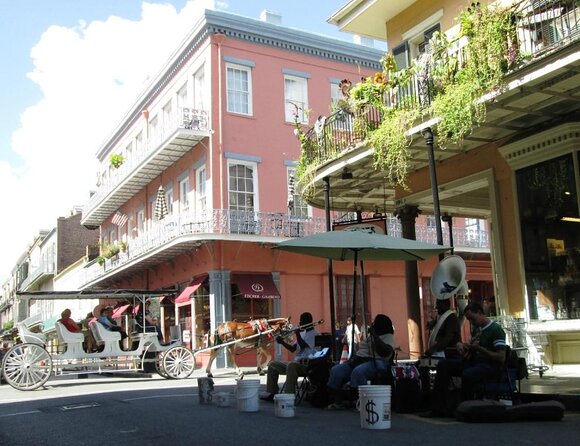
Now the walk turns into the part many people enjoy most: Royal Street, with stories that stretch toward Pirates Alley. The guide takes you from Dumaine toward Pirates Alley, sharing New Orleans pirate lore that includes some Jewish connections.
This isn’t a lecture in shipbuilding history. It’s street-level storytelling, the kind that makes the French Quarter feel like it has a pulse. It also shows how Jewish New Orleans history didn’t live only behind closed doors. It moved through public life in unexpected ways—sometimes in ways people didn’t label as Jewish at the time.
One thing to keep in mind: pirate stories can blur fact and legend in many cities. Here, what matters is how the guide frames the narratives as part of New Orleans’s broader storytelling tradition, with Jewish involvement woven into the mix.
How to enjoy it: listen for names and themes, not just details. You’ll walk away with a sharper sense of how history and myth mix on these streets.
Stop 5: Preservation Hall and How Jewish Preservationists Saved the Music
From pirates to jazz, you stop near Preservation Hall. The guide sets the scene outside the venue and explains how music was saved by Jewish preservationists.
This is a big deal, because it reframes the story people tell about New Orleans music. Jazz didn’t survive just by luck or talent. It took people paying attention, protecting traditions, and making sure the music wasn’t erased by changing times.
That’s why this stop works even if you’re not a hardcore jazz fan. You’re not just hearing “music is important.” You’re learning that specific groups helped protect it, and that Jewish community involvement mattered in the city’s cultural survival.
Expect a short segment (around 10 minutes), but the point sticks. After this, you’ll likely look at Preservation Hall and see it less like a stop on a bar crawl map, and more like a symbol of someone choosing to keep something alive.
Stop 6: Omni Royal Orleans and Judah Benjamin’s Shadow Over the Civil War
The final stop is at Omni Royal Orleans, where the discussion shifts to politics and the difficult history around slavery. You’ll hear about Judah Benjamin, a U.S. Senator and a cabinet member for the Confederate government.
The guide also connects this to slavery in the state before the Civil War. This is one of the heavier parts of the walk, and it’s also one of the most useful, because it gives you an honest sense that Jewish American history in New Orleans isn’t only about community hardship or cultural contributions. It also includes people inside major political systems, including systems tied to slavery.
This last segment is around 15 minutes, so it’s not meant to replace classroom learning. But it gives you a map of the names and the stakes, which is exactly what a guided walk should do.
How to process it: when the conversation gets uncomfortable, stay with it. That’s how the tour becomes more than sightseeing.
Price and Value: Why $40 Works for This Format
Let’s talk about the cost: $40 for about two hours. At first glance, that’s not “cheap.” But the value comes from what you’re paying for:
- A licensed, insured local guide with extensive knowledge
- A structured walk that ties together multiple sites you’d otherwise see separately
- Free access to the stop locations listed (so you’re not paying museum fees on top)
- A maximum group size of 14, which keeps it conversational rather than crowded
You’re not buying comfort like an air-conditioned bus ride. This is an outdoor walking tour. You are buying context.
If your goal is to take in the French Quarter and learn what’s behind the façades, this hits a sweet spot. If you only want pretty views, you can spend less. If you want meaning, $40 doesn’t feel out of line for what you get.
Who Should Book This Jewish History Tour?
This is a good match if you:
- Want Jewish history that’s grounded in places you can actually see
- Like walking tours that move at a steady, not exhausting pace
- Appreciate guides who connect past and present
- Prefer a small group where you can ask questions
It’s also a smart choice if you’re a New Orleans local. One guide-led experience described the surprise of learning things you’d never heard even growing up here. Another highlighted Suzanne’s knowledge not only of New Orleans history, but also of the modern Jewish community.
Language is English, and most travelers can participate. Service animals are allowed too.
If you’re traveling with kids or anyone who gets bored with short explanations, it could still work, but you’ll want to gauge attention spans. The stops are short and varied, which helps.
Small Details That Make the Tour Better
These are the kinds of things that improve the experience more than you might think:
- The tour segments are broken into short stops, so you get movement and variety.
- The guides (including Janet and Suzanne, depending on the day) are known for making the material feel understandable, not distant.
- You’ll likely appreciate leaving with a summary or recap of what was covered, which helps you remember the names and themes after you’ve moved on.
And because the route centers on French Quarter landmarks, you can often pair it with other nearby plans. You’re not stuck across town for the whole day.
Should You Book This Tour?
If you care about understanding New Orleans beyond postcard photos, I’d book it. The Holocaust Memorial explanation alone is worth the guided time. Then you layer in Royal Street stories, a philanthropic building connection, music preservation, and the ending conversation about Judah Benjamin and slavery—without pretending the city’s past is simple.
Skip it only if you:
- Hate walking in outdoor heat or weather
- Want an air-conditioned ride
- Prefer purely light topics and zero historical heaviness
Otherwise, this is a practical, high-impact way to see the French Quarter with sharper eyes. You’ll leave with locations you can name, and with stories that make those locations feel real.
FAQ
How long is the Jewish History Tour of New Orleans?
It runs for about 2 hours.
How much does the tour cost?
The price is $40.00 per person.
Where does the tour start and end?
It starts at PJ’s Coffee, 333 Canal St, New Orleans, LA 70130 and ends at St. Louis Cathedral, 615 Pere Antoine Alley, New Orleans, LA 70116.
What time does the tour begin?
The start time listed is 10:00 am.
Is the tour walking or does it include transportation?
This is a walking tour, and no air-conditioned vehicle is included.
What language is the tour offered in?
The tour is offered in English.
How many people are in the group?
The maximum group size is 14 travelers.
Do I need to pay admission fees at the stops?
The listed stops are shown as admission-free for this experience.
Is a mobile ticket provided?
Yes, the tour includes a mobile ticket.
What if the weather is bad?
The experience requires good weather. If it’s canceled due to poor weather, you’ll be offered a different date or a full refund.