REVIEW · NEW ORLEANS
Ghosts, Gods, & Gangsters of New Orleans
Book on Viator →Operated by Spirit Empire Tours · Bookable on Viator
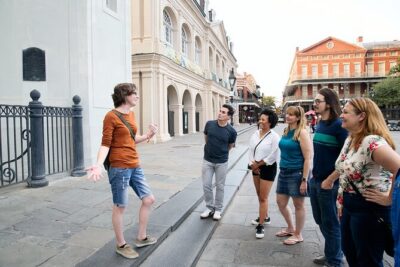
A good scare starts with real streets. This tour strings together New Orleans’ paranormal lore and true-crime history at famous (and famously uncomfortable) spots around the French Quarter and beyond, guided by Dr. Edward Simmons. I like how the stories stay fact-forward and grounded, and I also like the small-group feel that keeps the pace conversational. One downside: it’s entirely outdoors and you won’t go inside the stops, so weather and brief pauses matter.
You’ll walk past some of the city’s most notorious names—casket girls, Madame Delphine Lalaurie, Gallatin Street, public executions at Jackson Square, plague-year pharmacy rumors, and even a hotel tied to tragedy. The mix of ghost talk, gangster history, and grim public events isn’t just spooky theater; it’s a guided way to understand why these legends stuck to New Orleans in the first place—and why they still draw a crowd.
In This Review
- Key things to know before you go
- A night walk with French Quarter teeth
- Cost and time: is $34 worth 1 hour 45 minutes?
- Getting oriented: the meeting point and how the walk flows
- Stop 1: Old Ursuline Convent Museum and the casket girls myth
- Stop 2: BK Historic House and Gardens—Beauregard, authors, and a mafia hit
- Stop 3: Lalaurie Mansion and Madame Delphine Lalaurie’s legacy
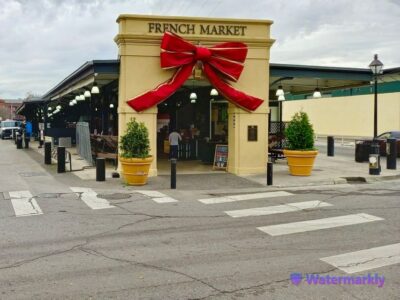
- Stop 4: French Market and Gallatin Street’s red-light edge
- Stop 5: Jackson Square—public executions under the cathedral glow
- Stop 6: New Orleans Pharmacy Museum and plague-year rumors
- Stop 7: Omni Royal Orleans and tragedy behind the polished front
- The guide factor: why Dr. Edward Simmons fits this kind of tour
- What to bring (and what to wear) for an outdoor dark-night walk
- Who this tour is for (and who should skip it)
- Should you book Ghosts, Gods, & Gangsters of New Orleans?
- FAQ
- How long is the tour?
- What does it cost?
- Where does the tour start?
- Does the tour go inside buildings?
- What language is the tour offered in?
- Is alcohol included?
- How big are the groups?
- Who can join?
- Do admission tickets cost extra?
- Is the tour outdoors, and what if the weather is bad?
- Do I need a printed ticket?
Key things to know before you go
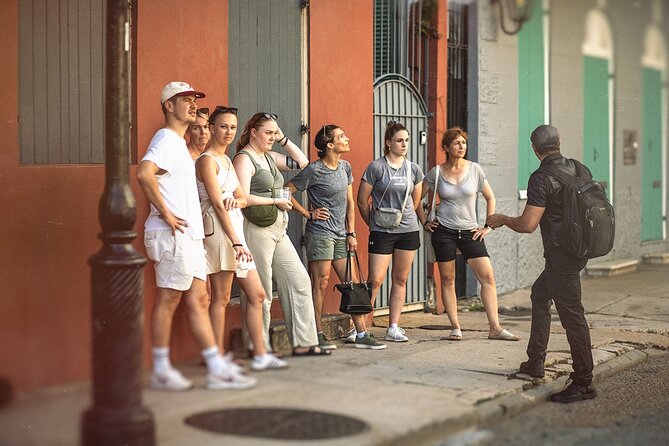
- Dr. Edward Simmons storytelling style: sharp voice, humor, and suspense, with an effort to keep details tied to sources
- Small group size (max 20): you get more personal pacing instead of being shuttled like luggage
- Mostly stop-and-pause format: about 10 minutes at each location, so you’ll cover a lot without long waits
- No private building entry: you’ll view sites from the street or exterior points, not tour interiors
- Season/weather dependent: it requires good weather, and since it’s an outdoor walk, plan accordingly
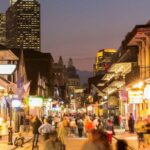
A night walk with French Quarter teeth
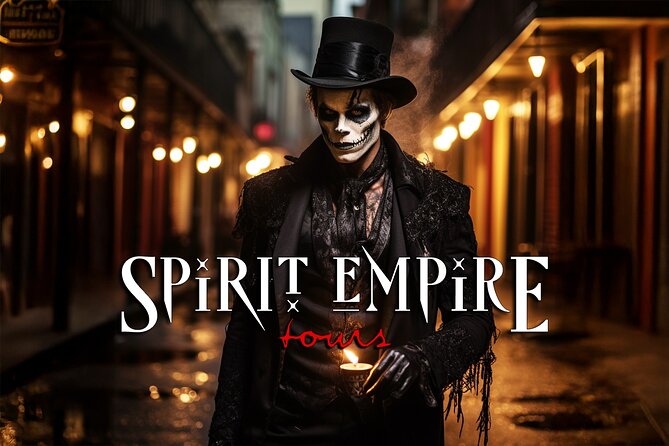
This is the kind of New Orleans tour that doesn’t just say haunted— it points you at the actual addresses, the landmarks people recognize, and the darker threads that run beneath them. The “Ghosts, Gods, & Gangsters” theme works because New Orleans history really did grow in layers: religious power and folk beliefs, public punishment and private corruption, elite society and street-level violence.
You also get a guide who knows how to hold attention. In the many experiences I’ve read about this tour, one theme repeats: Dr. Edward Simmons mixes entertainment with a focus on what’s historically attached to each location, not just vague “it’s said” rumors. That’s a good fit if you like spooky stories but don’t want the whole thing to turn into pure myth.
Here’s the reality check: every stop is short—around 10 minutes—and you’re viewing from outside. If you’re hoping for long Q&A inside a mansion or museum, this isn’t that. If you want a tight, atmospheric sampler of New Orleans’ darker reputation, it’s built for you.
You can also read our reviews of more tours and experiences in New Orleans.
Cost and time: is $34 worth 1 hour 45 minutes?
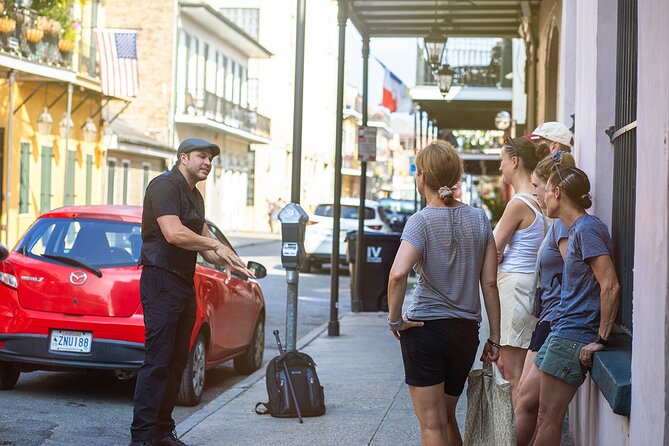
At $34 per person for about 1 hour 45 minutes, the value mainly comes from coverage and guide-led storytelling. You’re not paying for transportation (there’s no private transport), and you’re not paying for building tickets (some stop admissions aren’t included). Instead, you’re paying for a licensed guide, a route that hits multiple iconic points, and a narrative thread that connects them.
The small-group cap helps too. With a maximum of 20 travelers, the tour doesn’t feel like a production line. It also explains why many people come away saying it feels personal: short stops + a tighter group usually means the guide can keep everyone oriented and engaged.
Two practical notes for your planning:
- You’ll move on foot throughout the night, so comfortable shoes matter more than style.
- Some stops are exterior pauses with “listen closely” energy—meaning you’ll get atmosphere from timing and location, not from indoor sets.
Getting oriented: the meeting point and how the walk flows
The tour starts at 916 Dutch Aly, New Orleans, LA 70116. You’ll want to arrive 30 minutes early for check-in, because tours depart on schedule and they can’t accommodate late arrivals. The format also matters: it ends at a different location than it begins, so don’t plan your next dinner reservation right at the start point.
This is an easy tour to pair with a broader evening plan. Think of it as your “dark history primer” before you wander on your own. You’ll leave with names to look up, streets to trace, and a better sense of why the French Quarter has those sharp edges.
Stop 1: Old Ursuline Convent Museum and the casket girls myth
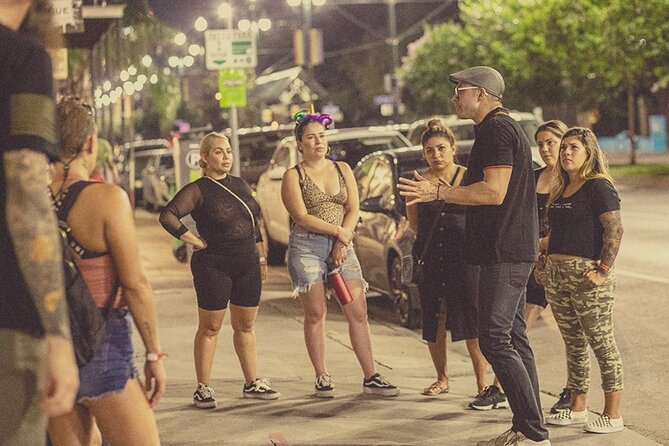
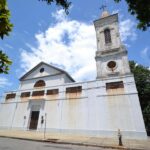
Your first big stop is outside the Old Ursuline Convent Museum, a site tied to the city’s early founding era. The guide pauses at the gates and brings up the legend of the casket girls—young women said to arrive with peculiar chests, with lore claiming unholy stowaways and a haunting presence still lingering around the convent and nearby streets.
This is where the tour earns its “paranormal” label, because the story is presented as folklore tied to a real historic anchor. You’re not just hearing ghost tales in the abstract—you’re being shown where the story “lives” in the city.
What you’ll like here:
- A clear start that sets the tour’s tone quickly
- The way the legend is framed as something local people repeat and reshape over time
What to consider:
- There’s no guarantee you’ll see anything supernatural. The value is the story + the atmosphere + the historical setting.
- Admission isn’t included for this stop, so if you’re curious about going inside, you may want to budget separately.
Stop 2: BK Historic House and Gardens—Beauregard, authors, and a mafia hit
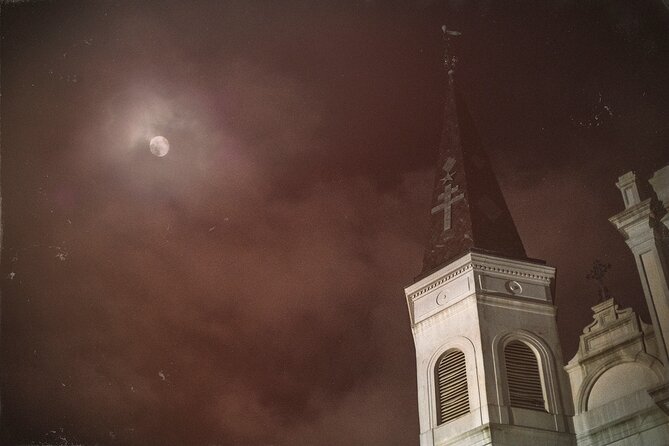
Next you approach the BK Historic House and Gardens, connected to P.T. Beauregard before it housed bestselling author Frances Parkinson Keyes. That upper-tier history sits right beside something much uglier: an old, infamous mafia hit that happened there.
The tour doesn’t only swap in gangster stories as filler. It treats the building as a “memory box,” with the idea that power and violence can occupy the same rooms and reputation. When night falls, you may feel the tension of “phantom feud” talk in the windows and echoes the guide describes.
What makes this stop work:
- You get a bridge from supernatural lore into criminal history
- The setting helps explain why New Orleans stories jump between saints, monsters, and gangsters with no pause
What to know:
- It’s an exterior pause, about 10 minutes. If you want deep architectural photos or interior details, you’ll likely need separate plans.




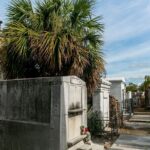
Stop 3: Lalaurie Mansion and Madame Delphine Lalaurie’s legacy
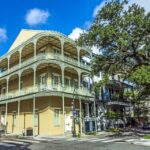
Outside the imposing façade of the Lalaurie Mansion, the tour turns sharply toward cruelty. The guide recounts the story of Madame Delphine Lalaurie, an influential figure whose secrets supposedly surfaced after a fateful day. The balcony and façade become the backdrop for tales of experiments and severe suffering.
This stop has a different mood than the casket girls story. Instead of “mystery you can’t prove,” it’s “a name that still carries horror.” Even if you don’t lean supernatural, the historical framing is disturbing enough to stick.
Your best approach here:
- Keep an open mind about the role of reputation in legend-building. People mythologize what society wants to forget.
- Listen for the way the guide separates what’s attached to the place from what’s just added over time.
Consideration:
- Admission isn’t included here, so you’re seeing it from outside. The tour’s goal is not comfort—it’s context.
Stop 4: French Market and Gallatin Street’s red-light edge
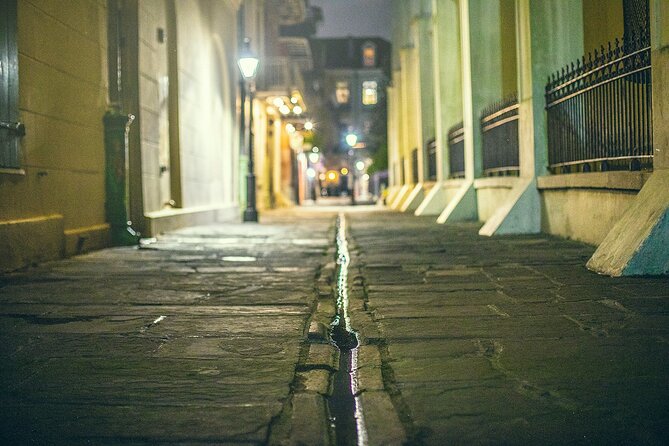
At the French Market, the tour pauses near the mouth of what used to be Gallatin Street. The guide frames late-1800s life as a mix of sailors, nightlife, and predation, with the promise of every illicit desire—and the danger that came with it.
This is a smart stop because it connects story to street geography. When the guide points out where things were, you start imagining the old flow of foot traffic and the kinds of corners that create opportunity for manipulation. The tour leans into sensory rumor too: laughter that turns, perfume that hides something worse.
What to expect:
- Nighttime atmosphere at street level
- A gangster-and-ghost vibe, focused on how vice districts create their own myth
What you might not get:
- You won’t be touring an actual brothel or underground space. The impact comes from narrative + location.
Stop 5: Jackson Square—public executions under the cathedral glow
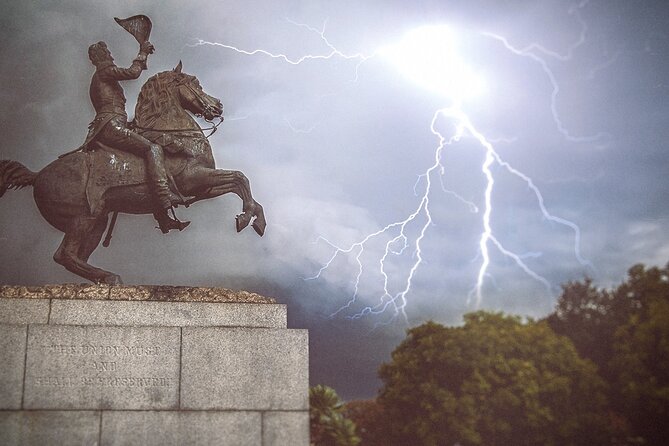
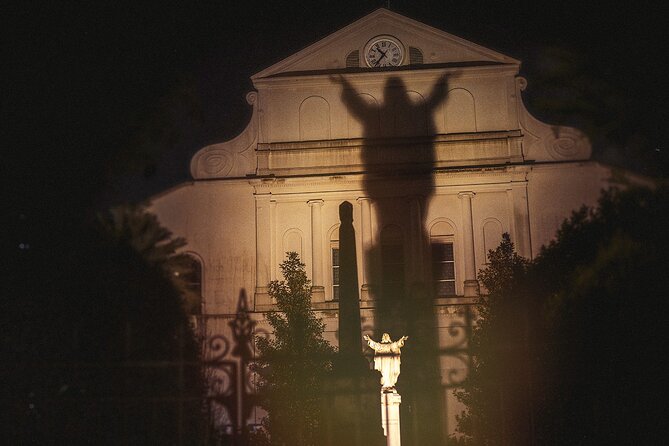
Then comes the contrast stop: Jackson Square. The guide explains that before the green space we know today took shape, these grounds were part of the city’s public execution history—prisoners facing hanging from crude structures or other brutal ends, watched by armed guards and jeering crowds.
Today, the square feels carnival-friendly. That’s exactly why this pause lands: you’re being asked to hold two realities in your head at once. The guide doesn’t try to erase the present. Instead, the tour makes you notice the way places can host both laughter and terror, depending on era.
Why this stop is one of the strongest:
- It gives you a “historical gravity” moment—how public punishment shaped social control
- It helps explain why New Orleans has a taste for dark stories that don’t fully fade
Consideration:
- You’ll feel the subject matter is heavy. It’s best if you’re okay with real crime and real cruelty being part of the evening.
Stop 6: New Orleans Pharmacy Museum and plague-year rumors
After Jackson Square, you’ll pass by the New Orleans Pharmacy Museum, and the guide ties the building to plague-year stories. The tone here is rumor-heavy: accounts passed down about fringe doctors, questionable experiments, and a missing ledger of who suffered and why.
This stop is interesting because it shows how communities handle fear. During epidemics, people want answers fast. When medicine can’t explain everything, rumor fills gaps—and those rumors stick to institutions. Even if the museum today is about pharmacy and public history, the stories attached to the site can still feel unsettling.
What you’ll get from this pause:
- A look at how conspiracy and ethics get intertwined in crisis
- The “lost souls” theme, but anchored to the idea of missing details
What to consider:
- The tour shares disturbing tales, and the facts may stay elusive. If you prefer fully documented history at every turn, you may find this section more unsettling than satisfying.
Stop 7: Omni Royal Orleans and tragedy behind the polished front
The final named pause is outside Omni Royal Orleans (the former Royal Orleans Hotel). Here, the tour points to a history of misfortune, including references to fiery disasters and alleged mafia underworld dealings. Most chilling is a mention of a recent suicide plunge and speculation about deeper anguish tied to a shocking murder.
The takeaway isn’t “this hotel is haunted.” The takeaway is “tragedy leaves residue,” and respectable façades can hide unfinished pain. You might also hear that the guide has personal observations from nights spent wandering the area—another reason this stop feels lived-in rather than purely scripted.
What makes this a fitting closer:
- It brings the tour from centuries-old lore into more modern shadows
- It lands on the theme of dual identity: bright lobby, dark backstory
Consideration:
- This stop leans heavier on tragic modern events. If you want lighter spooky stories, you may want to mentally pace yourself through the last 10 minutes.
The guide factor: why Dr. Edward Simmons fits this kind of tour
Across the reviews I’ve seen, one consistent point is that Dr. Edward Simmons keeps the storytelling tight. People point out a few traits:
- He’s animated and funny without turning the content into a joke
- He’s able to connect supernatural talk and criminal history into one storyline
- The pacing works: people often say the tour feels just the right length for the number of stops
- He appears to avoid excessive myth-bending, leaning on sources and historical grounding
You can feel the “one guide, one voice” approach too. Instead of rotating narrators, you get consistency in tone and timing, which matters on a short walking tour where attention spans are tested.
What to bring (and what to wear) for an outdoor dark-night walk
This tour runs outdoors and requires good weather. Even if you get rain-friendly stories like one review noted, it’s still smart to plan for wet sidewalks and chilly air.
Bring:
- Comfortable shoes with grip
- A layer you can adjust as temperatures change
- A rain jacket if your forecast shows any chance of storms
- A charged phone (mobile ticket)
Also, since this is a night walk with stops outdoors, think about wind. The tour encourages you to listen closely at at least one point near the convent gates, so headphones are not the move.
Who this tour is for (and who should skip it)
This tour fits best if you want:
- True-crime and historical context mixed with paranormal legend
- A guided route that helps you learn the French Quarter faster than wandering aimlessly
- A small-group atmosphere, not a bus-load experience
- A guide who can keep suspense going without turning everything into silly camp
Skip it if:
- You dislike darker topics like executions and historical cruelty
- You’re expecting interior access to mansions or museums (the tour does not go inside private buildings)
- You want a long, museum-style experience rather than short exterior story stops
Should you book Ghosts, Gods, & Gangsters of New Orleans?
I’d book it if you’re the type who likes your New Orleans with sharp corners. For $34 and about 1 hour 45 minutes, you get a compact route through multiple sites that shaped the city’s reputation—plus a guide (Dr. Edward Simmons) who has a knack for pacing, humor, and historical grounding.
But be honest about the format. This isn’t a “walk in spooky rooms” tour. It’s an outdoors, street-level storytelling route that depends on weather and on you being okay with heavy stories.
If that sounds like your kind of evening, this is a strong choice.
FAQ
How long is the tour?
It runs about 1 hour 45 minutes (approximately).
What does it cost?
The price is $34.00 per person.
Where does the tour start?
The meeting point is 916 Dutch Aly, New Orleans, LA 70116, USA.
Does the tour go inside buildings?
No. The tour does not go inside private buildings. Stops are based on exterior pauses.
What language is the tour offered in?
The tour is offered in English.
Is alcohol included?
No. Drinks are not provided. Alcoholic beverages aren’t provided on the tour, even though responsible moderation is mentioned.
How big are the groups?
The tour has a maximum of 20 travelers.
Who can join?
This is adults only (17+).
Do admission tickets cost extra?
Some stops list admission as not included (like the Old Ursuline Convent Museum, Lalaurie Mansion, and the New Orleans Pharmacy Museum), while others are shown as free for that stop.
Is the tour outdoors, and what if the weather is bad?
It requires good weather. If it’s canceled due to poor weather, you’ll be offered a different date or a full refund. The tour is outdoors, so plan for conditions.
Do I need a printed ticket?
You’ll receive a mobile ticket.