REVIEW · NEW ORLEANS
New Orleans: Unveiling Voodoo 2 Hour Walking Tour
Book on GetYourGuide →Operated by Tours by Foot · Bookable on GetYourGuide
French Quarter streets hide darker stories than you expect. This New Orleans voodoo walking tour tackles myths pumped up by Hollywood and replaces them with local history, religion, and real people. I especially like the licensed guide-led stories that connect major places in the French Quarter and Tremé to African roots, slavery laws, and spiritual life. I also like the hands-on ending, with a stop inside a voodoo temple where you can pick up New Orleans gris-gris. One heads-up: parts of the story touch slavery under Code Noir, so this isn’t a light-and-funny stroll.
In practice, I like that it’s guided in a way that treats voodoo as culture and practice, not costume drama. The guide I saw highlighted—Evian—was described as funny, friendly, and packed with detailed New Orleans connections, from Congo Square to Marie Laveau’s legend. If you want only spooky props and quick scare-factor, you may find the tone more historical and respectful than you expected.
You’ll cover a lot in 1.5 hours, with photo stops, guided segments, and short walks between key sites. The tour starts at the Archway to Armstrong Park on Rampart Street and ends at Voodoo Authentica for modern practice and souvenirs you can take home.
In This Review
- Key Things That Make This Tour Worth It
- Entering the Real Story: Voodoo Without the Movie Script
- $39 and 1.5 Hours: How This Works as Value
- Rampart Street Start at Armstrong Park: Getting Oriented Fast
- French Quarter Stops: Old Homes, Real Links, and Photo Breaks
- Tremé / Lafitte: Where Cultural Change Has Room to Breathe
- Congo Square: The Gathering Roots Behind Modern Voodoo Traditions
- Code Noir and Slavery: How Law Fueled Spiritual Survival
- Marie Laveau: Legend, Place, and What the Tour Discourages
- The New Orleans Historic Voodoo Museum: Another Layer of the Story
- Inside a Temple at Voodoo Authentica: Gris-Gris and Modern Practice
- What You Learn Beyond Voodoo: Haitian Rebellions, Holidays, and Symbols
- Who This Tour Suits Best (and Who Might Want Something Else)
- Should You Book This Voodoo Walking Tour?
- FAQ
- FAQ
- How long is the New Orleans voodoo walking tour?
- How much does the tour cost?
- Where does the tour start?
- Where does the tour end?
- Is there a guide, or is it self-guided?
- What will I see during the tour?
- Can I pick up souvenirs like gris-gris?
- Does the tour visit St. Louis #1 Cemetery?
- Are gratuities included in the ticket price?
- Can I cancel or change plans?
Key Things That Make This Tour Worth It
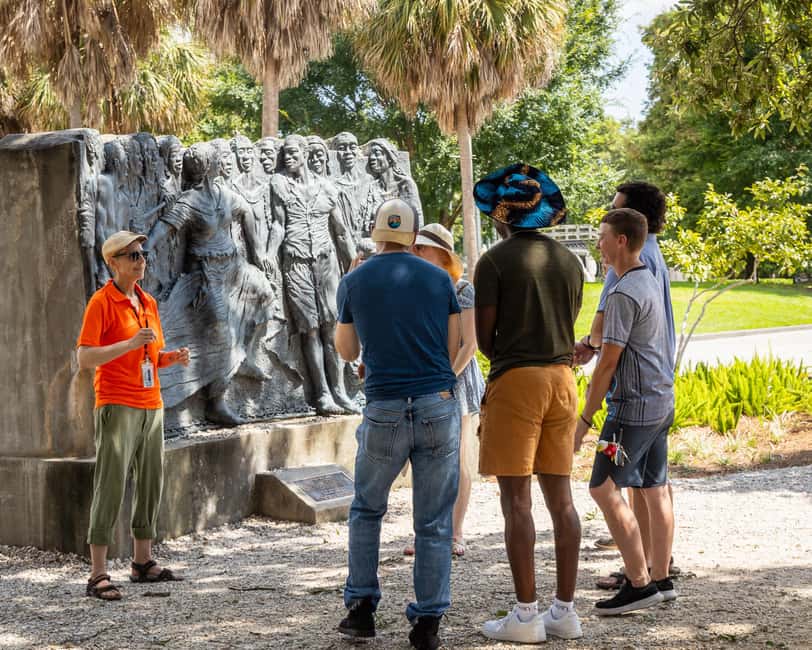
- French Quarter + Tremé context: you don’t just hear voodoo stories, you learn how the city’s neighborhoods shaped them
- Code Noir and slavery’s impact: the tour connects oppressive law to spirituality and cultural survival
- Congo Square walk-through: you get the African gathering roots behind New Orleans traditions
- Marie Laveau realism: you’ll learn the legend, plus what the tour avoids due to security rules
- Temple stop and gris-gris: you see modern practice and have a chance to take something home
- Evian-style guide energy: humor plus clear explanations, in plain language
Entering the Real Story: Voodoo Without the Movie Script
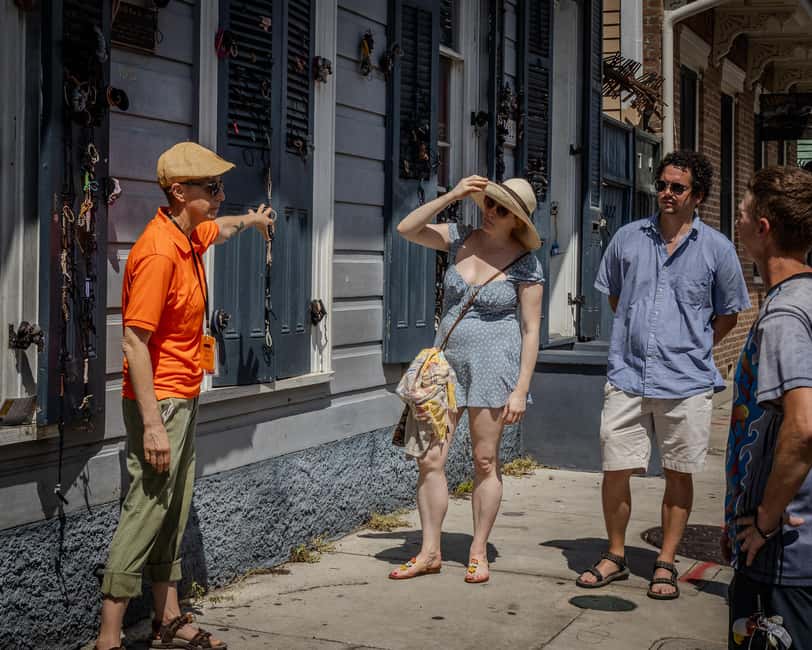
New Orleans has a way of taking simple words and turning them into big myths. Voodoo is one of the most misunderstood. Hollywood loves the spectacle: curses, rituals that look like horror-movie theater, and instant results. This tour gives you the opposite: voodoo as it’s been practiced, adapted, and protected across centuries in Louisiana.
The best part is the balance. The tour doesn’t pretend the history is gentle. It also doesn’t reduce voodoo to “dark magic” for entertainment. Instead, you’ll hear explanations of what rituals and symbols mean, with talk that separates superstition from lived tradition.
You’ll also learn why the city’s spiritual culture is tied to specific places. In New Orleans, belief isn’t an abstract concept. It’s on street corners, in temples, in community gatherings, and in stories people still repeat because they still feel true.
You can also read our reviews of more walking tours in New Orleans


$39 and 1.5 Hours: How This Works as Value
At $39 per person for about 1.5 hours, the value comes from how concentrated the experience is. You’re paying for a professional licensed guide, multiple stops, and a guided walk through a major historical site (Congo Square). You’re also paying for the one thing most “just drive-by” tours can’t offer: a final stop inside a voodoo temple where you can take home gris-gris.
This is not a whole-day deep-course. It’s a focused primer. If you want a quick but meaningful orientation to New Orleans spirituality and its history—without spending hours hunting locations yourself—this hits the sweet spot.
One practical note: there’s no mention of transportation being included. You’re doing a walking route, with photo stops and guided segments. Wear comfortable shoes and plan to move at a city pace.
Rampart Street Start at Armstrong Park: Getting Oriented Fast
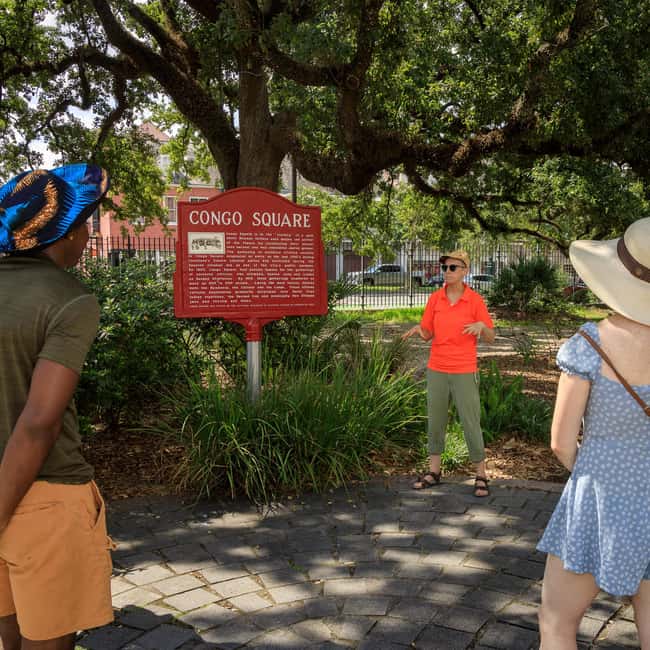
The tour begins at the Archway to Armstrong Park on Rampart Street. This is a smart starting point because it puts you on a main corridor where you can quickly orient yourself. You’ll be ready to understand the city’s layout as the walk moves into the French Quarter and beyond.
In the early minutes, expect the guide to set expectations: what voodoo is (and isn’t), why the city’s version is shaped by forced migration and historical upheaval, and how the tour will connect legend to geography. This matters. If you show up knowing only the stereotypes, the first stop works like a decoder ring.
French Quarter Stops: Old Homes, Real Links, and Photo Breaks
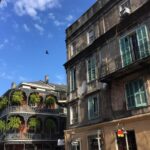
Once you’re in the French Quarter, the tour turns from orientation into storytelling. You’ll have time for photo stops and guided walking segments, including a stop connected to one of the oldest homes in the French Quarter and its ties to voodoo traditions.
This is where the tour helps you see the Quarter in a new light. Many visitors treat the Quarter like scenery. Here, you’ll connect buildings and streets to lived history—who lived there, what people practiced, and how religion and survival intertwined.
If you like walking tours that feel like a guided conversation rather than a lecture, this part tends to land well. The guide’s style (including the humor and friendliness people specifically mentioned for Evian) helps the heavy topics stay understandable rather than overwhelming.
Tremé / Lafitte: Where Cultural Change Has Room to Breathe
The route also includes Tremé / Lafitte, with photo stops and guided segments as you move through the neighborhood. This is a key ingredient because voodoo in New Orleans isn’t only a French Quarter story. It’s a city-wide story shaped by community spaces, music, and ongoing practice.
This part is especially useful if you want to understand why New Orleans traditions keep showing up in everyday life—not just in big monuments. Tremé is often where you can feel the continuity, even when the city changes around it.
In practical terms, this segment helps you pace the tour. After the French Quarter’s dense tourist energy, a neighborhood stop makes the tour feel more grounded.
You can also read our reviews of more tours and experiences in New Orleans




Congo Square: The Gathering Roots Behind Modern Voodoo Traditions
One of the tour’s strongest stops is Congo Square. You’ll do a photo stop plus a guided visit, and the tour also explicitly includes walking through Congo Square.
This is the part that most clearly connects practice to place. The tour explains how enslaved Africans once gathered there to practice cultural rituals and music—foundations that helped shape later New Orleans voodoo traditions.
Even if you’ve heard of Congo Square before, a guided explanation is the difference between “a name on a map” and something you can actually picture in your mind. The guide’s job here is to help you understand what these gatherings meant: not just entertainment, but identity, continuity, and survival.
If you care about cultural roots—music, community life, and how traditions survive coercion—this stop is worth the price by itself.
Code Noir and Slavery: How Law Fueled Spiritual Survival
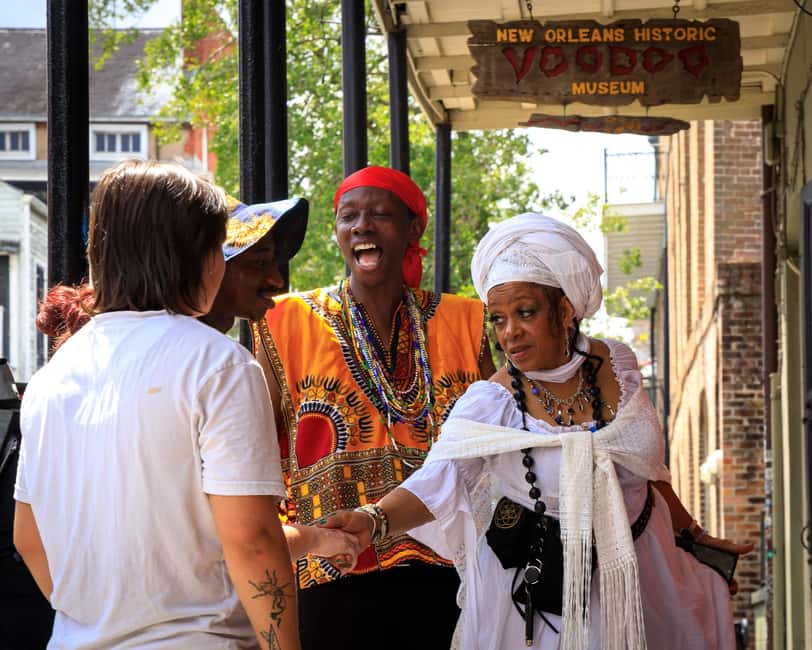
The tour doesn’t shy away from the dark side. It covers the history of slavery under Code Noir and the impact it had on the city’s culture and spirituality.
This is a crucial context point. Without it, voodoo can get reduced to “mystery.” With it, you understand why spiritual practice could be both personal comfort and community memory in a system designed to control people.
One thing to consider: if you prefer tours that stay light, this portion may feel heavy. But it also makes the rest of the tour make sense. You’ll come away with a more honest understanding of how New Orleans spirituality developed under pressure.
Marie Laveau: Legend, Place, and What the Tour Discourages
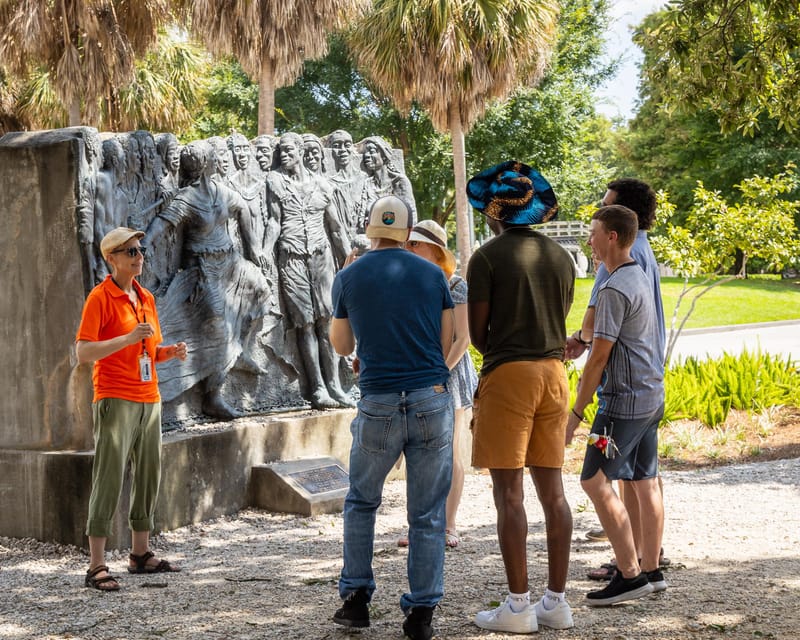
You’ll get an outdoor photo stop at the original spot of the home of Marie Laveau. Marie Laveau is often described as the voodoo figure New Orleans is most famous for, and this tour gives you both legend and context around her place in the city’s story.
Two important details are built into the experience:
- The tour notes that due to new security regulations by the Archdiocese of New Orleans pilgrimages, it does not visit St. Louis #1 Cemetery.
- The tour also discourages offerings to Marie Laveau’s tomb.
That may sound like small logistics, but it actually says a lot about the tour’s approach. It’s not trying to turn sacred history into a vending machine of photo ops. It’s trying to keep the experience respectful and realistic.
If your goal is to understand who Marie Laveau was in the city’s imagination—and how stories of her became part of New Orleans identity—this stop is one of the anchors.
The New Orleans Historic Voodoo Museum: Another Layer of the Story
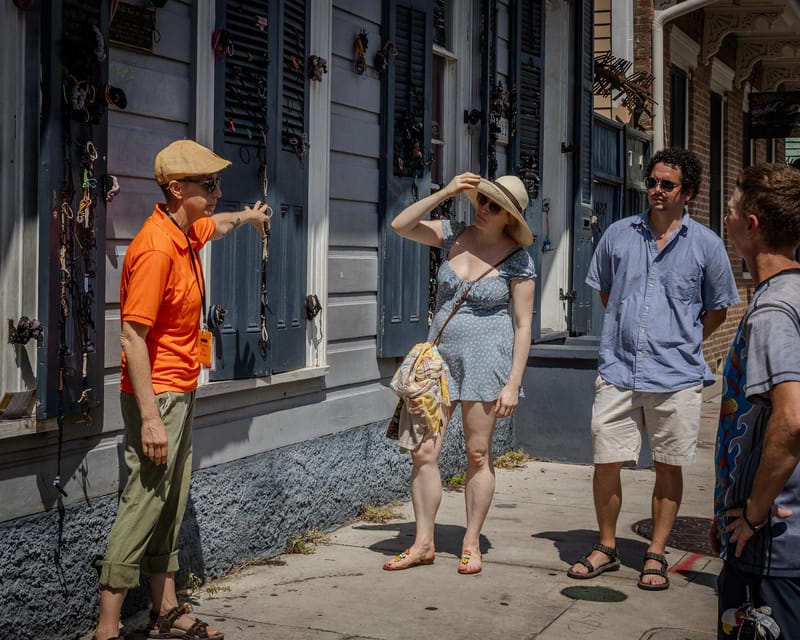
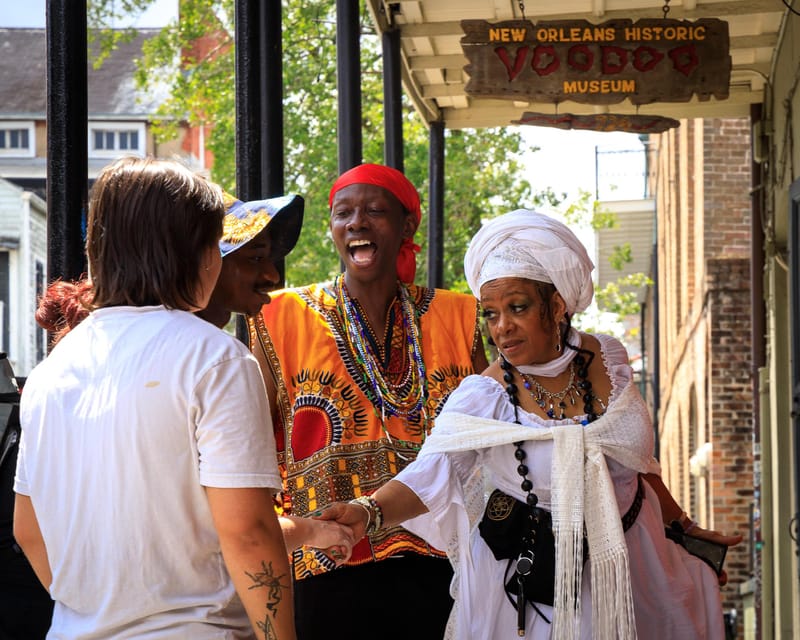
The route includes a stop connected with the New Orleans Historic Voodoo Museum, again with a photo stop as part of the walk.
Even if you don’t plan to spend long inside museums on a trip, this sort of stop matters. It helps you frame what you’ll see later: that voodoo artifacts and stories aren’t just legends people tell. They’re objects, systems of meaning, and documentation of how people have preserved tradition.
This is also a good time to reset your brain. After slavery history and neighborhood context, the museum-area pause gives you a chance to absorb the thread and prepare for the modern ending.
Inside a Temple at Voodoo Authentica: Gris-Gris and Modern Practice
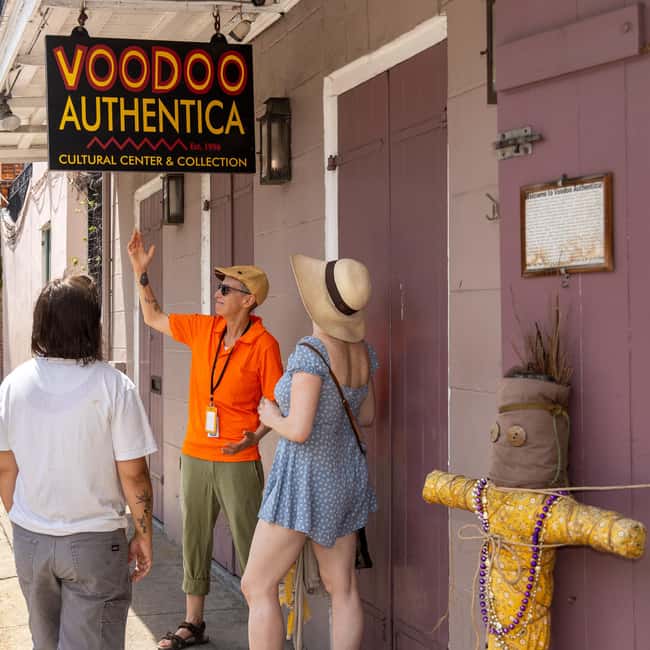
The tour ends at Voodoo Authentica Inc, where you stop inside a voodoo temple. This is the part that turns information into something tangible.
The tour specifically includes a chance to pick up New Orleans gris-gris to take home. It also covers voodoo artifacts and symbols such as voodoo dolls, vevers, and gris-gris bags, with meanings and uses explained by the guide.
To me, this is a meaningful contrast point. You’ll have spent much of the tour on history—Congo Square, Code Noir, Haitian rebellions and their influence on how voodoo practices spread through New Orleans. Then you end at a modern temple so you can see that the tradition didn’t freeze in the past. It kept living, changing, and practicing.
It’s also a good moment to think about your own mindset. If you treat the temple stop like a souvenir stop only, you’ll miss the point. But if you go curious—open to learning what these items mean—you’ll likely come away with a clearer picture of voodoo as a living culture.
What You Learn Beyond Voodoo: Haitian Rebellions, Holidays, and Symbols
The tour doesn’t limit itself to one famous person or one neighborhood. It covers:
- Haitian rebellions and how they influenced the spread of voodoo practices in New Orleans
- Saint John’s Eve and other voodoo holidays, which shape New Orleans culture
- Modern temples and what current practice can look like
- Ritual symbols and artifacts, including dolls, vevers, and gris-gris bags
This matters because voodoo in New Orleans is not a single straight line. It’s an evolving mix shaped by migration, oppression, and community networks.
Who This Tour Suits Best (and Who Might Want Something Else)
This New Orleans voodoo walking tour is a great match if you want:
- A guide-led way to connect voodoo to real New Orleans places
- History with context, including Code Noir and the impact of slavery on spirituality
- A hands-on ending with gris-gris and a stop inside a modern temple
It may be less ideal if you:
- Want a purely spooky experience with minimal historical context
- Prefer to avoid topics related to slavery and oppressive law
- Expect the tour to include St. Louis #1 Cemetery (it doesn’t, due to stated security regulations)
If you’re the type of traveler who likes learning the “why” behind local traditions, you’ll likely appreciate how organized the story is.
Should You Book This Voodoo Walking Tour?
If your goal is to understand New Orleans voodoo as history, belief, and community practice—not as a Halloween costume—this tour is a strong choice for the time and price. The combination of Congo Square context, Marie Laveau location storytelling, and a real temple stop at Voodoo Authentica makes it feel like more than just a set of photos.
Book it if you’re curious and respectful. Skip it if you want only spooky theater or if you’re not prepared for the tour to address slavery under Code Noir.
FAQ
FAQ
How long is the New Orleans voodoo walking tour?
The tour lasts about 1.5 hours.
How much does the tour cost?
It costs $39 per person.
Where does the tour start?
The meeting point is the Archway to Armstrong Park on Rampart Street.
Where does the tour end?
The tour finishes at Voodoo Authentica Inc, and it’s described as ending back at the meeting point.
Is there a guide, or is it self-guided?
You’ll have a live tour guide, in English, and the guide is described as professional and licensed.
What will I see during the tour?
You’ll have at least 6+ stops discussing voodoo history and culture, including French Quarter and Tremé/Lafitte photo stops, Congo Square, the New Orleans Historic Voodoo Museum area, and a final temple stop at Voodoo Authentica.
Can I pick up souvenirs like gris-gris?
Yes. The tour includes a stop inside a voodoo temple where you can pick up New Orleans gris-gris to take home.
Does the tour visit St. Louis #1 Cemetery?
No. Due to new security regulations by the Archdiocese of New Orleans pilgrimages, this tour does not visit St. Louis #1 Cemetery.
Are gratuities included in the ticket price?
No. Gratuity is not included.
Can I cancel or change plans?
There is free cancellation up to 24 hours in advance for a full refund, and it’s also offered as reserve now & pay later.