REVIEW · NEW ORLEANS
Historic French Quarter Segway Tour
Book on Viator →Operated by Segway Tours New Orleans · Bookable on Viator
Two wheels, one classic New Orleans loop. This Historic French Quarter Segway Tour turns the Quarter into a rideable storybook, with the guide pointing out the architecture and the legends behind names like Jackson Square, Bourbon Street, voodoo, jazz, and Mardi Gras.
What I like most is the on-site Segway training that helps first-timers feel steady fast, plus the smart pace that lets you cover key sights like Jackson Square and the riverfront without spending the whole trip stuck walking. One thing to keep in mind: this is a street-and-traffic experience, and the tour depends on good weather, so plan for a day that’s cooperative.
In This Review
- Key Things I’d Prioritize Before You Go
- First Glide: Segway Training and Staying Comfortable in the French Quarter
- Where You’ll Start and How the Tour Finishes: 1024 Elysian Fields Ave
- Jackson Square and St. Louis Cathedral: The View Worth the First Stop
- Royal Street to Bourbon Street: Architecture by Day, Neon by Night
- The Mississippi Riverfront Stretch: Steamboats and Real-World Scale
- St. Louis Cemetery No. 1: Above-Ground Tombs and the Marie Laveau Connection
- Frenchmen Street: Jazz Where It Still Lives
- The French Market (1791): Souvenirs, Spices, and the Trading Story
- Price and Value: Why $79 Can Work (If This Is Your Style of Touring)
- Best Time to Go and What to Wear for Easy Riding
- Who This Tour Suits Best (And Who Should Skip It)
- Should You Book the Historic French Quarter Segway Tour?
- FAQ
- How long is the Historic French Quarter Segway Tour?
- What does the tour cost?
- Where does the tour start?
- What’s included in the price?
- Do I need to speak a specific language?
- How old do you need to be to participate?
- What group size should I expect?
- Is there a mobile ticket?
- Is the tour only available in certain weather?
- Can I cancel for a refund?
Key Things I’d Prioritize Before You Go
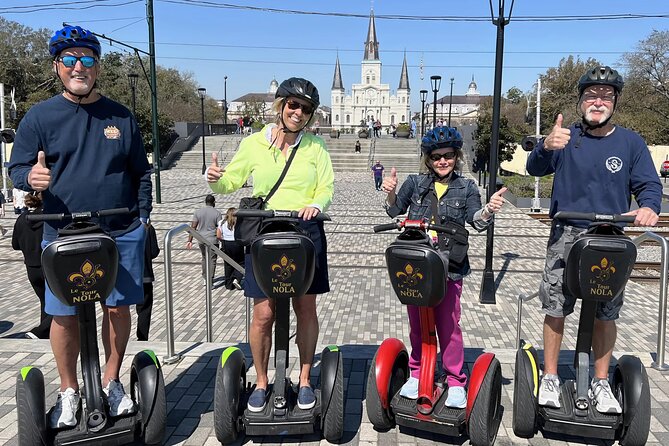
- Segway training included: You get instruction on-site and a helmet before you head into the Quarter.
- Small group size (max 6): More time for questions and less time waiting in the line shuffle.
- A tight sights list, not random stops: Jackson Square, St. Louis Cathedral, Bourbon Street, a major cemetery, Frenchmen Street, and the French Market.
- Your guide sets the tone: Expect history plus colorful stories—pirates, voodoo, jazz, and Mardi Gras traditions.
- Good weather matters: The tour runs best when the streets are dry and comfortable for riding.
First Glide: Segway Training and Staying Comfortable in the French Quarter

This is not a jump-on-and-go situation. You start with on-site training and use a Segway 1 Segway PT plus a helmet. That matters because the French Quarter is not wide, smooth, and empty. You’ll be riding on real city streets where other pedestrians, tour crowds, and general New Orleans motion all factor in.
The best part is how the training sets you up for confidence. In the experience I’m reading into, the guide (often listed as Ren) is patient with nervous riders and will coach you step by step. That sounds small, but it’s a big deal in the Quarter, where it’s easy to overthink your first minute on a Segway. You get the basics so you can focus on where you’re going.
Also, with a maximum of 6 people, you’re not trying to ride around a dozen machines at once. That keeps the route more manageable and helps the guide maintain a safer flow through busier sections.
One practical note: if you’ve already ridden a Segway, you’ll likely adapt faster. But even if you haven’t, the setup here is designed for people who can learn the controls quickly—just don’t schedule it as a last-minute, no-sleep decision. Your body needs a minute to get comfortable.
You can also read our reviews of more historical tours in New Orleans



Where You’ll Start and How the Tour Finishes: 1024 Elysian Fields Ave
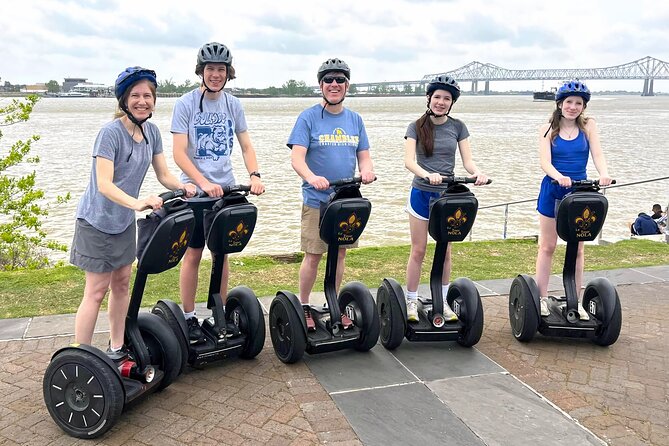
The tour starts at 1024 Elysian Fields Ave, New Orleans, LA 70116, and it ends back at the meeting point. That round-trip convenience matters. After two hours of riding and photo stops, you don’t want to hunt down your car, a rideshare, or your next plan in an unfamiliar neighborhood.
It also helps you plan dinner. Since you return to the same area, you can pivot quickly afterward—whether you’re aiming for a classic meal, a late drink, or another short walk.
The tour is offered in English, uses a mobile ticket, and you’ll want your phone charged. Confirmation comes within 48 hours of booking (as long as there’s availability), so keep an eye on your email or app notifications.
Jackson Square and St. Louis Cathedral: The View Worth the First Stop
A good French Quarter tour needs a strong anchor point, and this one uses Jackson Square as the center of gravity. From there, the star of the show is the St. Louis Cathedral. The triple spires are impossible to miss, and they’re right where the Quarter’s energy collects.
You’ll also get a clear sense of why this space is so photographed. The cathedral is described as the oldest continuously active Roman Catholic cathedral in the United States, built in the 1700s and reconstructed in 1850. Even if you’re not a church-architecture fanatic, it gives you a sense of what the Quarter has meant over time—and why people still gather here.
Here’s what you should pay attention to as you ride past: the way the square feels open compared with the tight streets around it. The Segway makes that contrast easier to enjoy, because you can reposition quickly and take in sightlines without burning your legs early.
Royal Street to Bourbon Street: Architecture by Day, Neon by Night
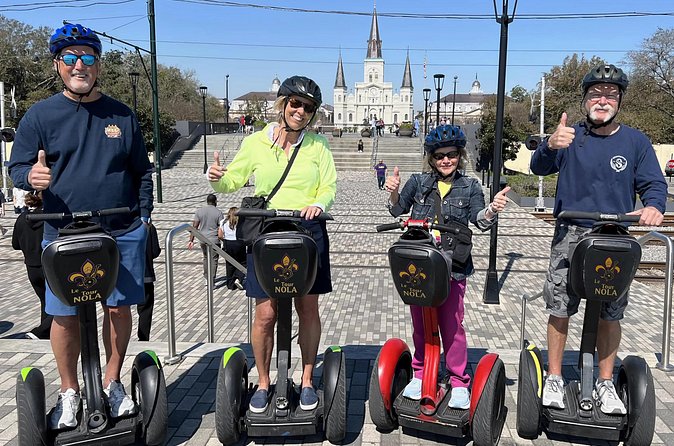
The route doesn’t just bounce between landmarks. It connects them in a way that highlights the Quarter’s contradictions.
You’ll glide along Royal Street, where the vibe shifts toward art galleries and antique shops. That’s a different New Orleans mood than the nightlife section most people picture first, so it’s a smart way to avoid the feeling of only seeing the loudest part of town.
Then the tour heads to Bourbon Street, the world-famous street for neon lights, live jazz, and bars. By day, it’s still the same street with the same identity, but you’ll catch something many people miss: the historic French and Spanish colonial architecture, including wrought-iron balconies that are draped with beads.
One reason I like this format: it doesn’t pretend the Quarter is only one thing. Bourbon is the headline, but Royal is the supporting cast that makes the headline make more sense.
If you’re sensitive to noise or crowds, I’d suggest leaning into the earlier parts of the route. Morning tends to be easier on both comfort and traffic flow, and that’s where Segways can feel especially smooth.
The Mississippi Riverfront Stretch: Steamboats and Real-World Scale
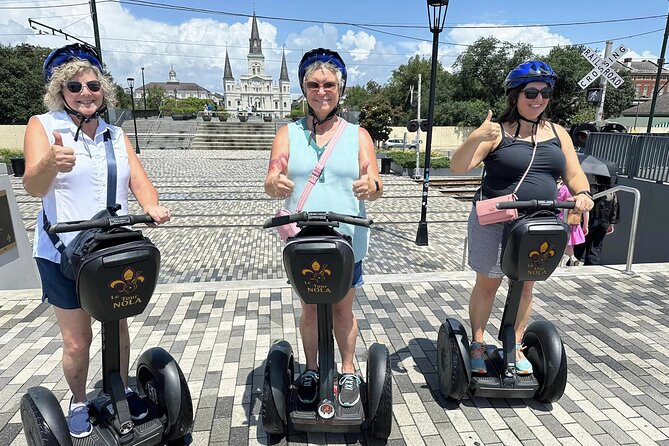
At some point, you get to the Mississippi Riverfront, where the city suddenly feels bigger. You’ll pass with views of steamboats and the lively riverwalk. This is a helpful change of pace because it gives your brain a wider frame after the tight streets and dense architecture.
This section is also a reminder of why New Orleans behaves the way it does—river energy, shipping history, and all the trade movement that fed the Quarter’s growth. Even if your main goal is sightseeing, the riverfront gives you context without turning the tour into a lecture.
From a practical standpoint, it’s also a nice stretch for catching photos from an angle that’s harder to get when you’re zigzagging on foot through the densest blocks.






St. Louis Cemetery No. 1: Above-Ground Tombs and the Marie Laveau Connection
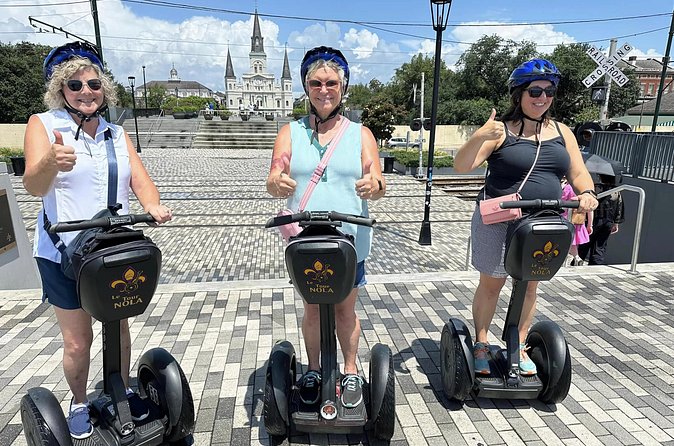
Cemeteries in New Orleans aren’t like most places. Here, you’re looking at above-ground tombs, often called cities of the dead. The explanation you’ll hear is practical as well as historical: it’s built this way because of the high water table.
The tour includes time at St. Louis Cemetery No. 1, which is noted as the most visited. You’ll see the ornate family mausoleums—structures that feel more like architecture than a typical burial ground. And this is where the guide’s storytelling really matters, because the cemetery is tied into living cultural memory.
One name that comes up is Voodoo Queen Marie Laveau, whose resting place is mentioned as a major draw. Whether you’re deeply into local spiritual traditions or just curious, it adds a layer of meaning to what you see—these aren’t just old stones. They’re part of the city’s ongoing mythology.
Important consideration: cemeteries can be hot, humid, or simply uncomfortable on the wrong day. Since this tour depends on weather, you’ll want to dress for the conditions and keep water nearby if you’re going in warmer months.
Frenchmen Street: Jazz Where It Still Lives

After the cemetery stop, the route shifts into the realm of sound and street culture with Frenchmen Street. This is one of the best choices for visitors who want New Orleans music without spending the whole trip searching for a venue that might be closed or too hard to access.
Frenchmen Street is described as a taste of the true New Orleans music culture—where jazz was born and still thrives today. That phrase matters because it helps you see the Quarter beyond architecture and nightlife branding. The street’s identity is tied to ongoing music, not only to famous names on posters.
Even if you don’t plan to sit in a club, getting oriented here helps. You’ll understand where the energy comes from and why local music scenes feel different than the tourist version of nightlife.
The French Market (1791): Souvenirs, Spices, and the Trading Story

The tour finishes with a stop at the French Market, described as the oldest marketplace in New Orleans, dating back to 1791. This is the kind of stop that feels useful because it matches the way locals actually move through the city: shopping, eating, and browsing in a single loop.
It’s an open-air market along the Mississippi River, with local crafts, art, souvenirs, spices, and fresh produce. You’ll also find food stalls—from beignets to Cajun specialties—which makes it easy to turn your last stop into either a snack or a small treat.
What I like about ending here: it gives you something concrete to do after the history and street viewing. If you want to pick up a spice mix, a gift, or something edible for later, you don’t need to hunt for a market that’s convenient to your route.
Price and Value: Why $79 Can Work (If This Is Your Style of Touring)
At $79 per person for about 2 hours, the real question is value for your travel style. This isn’t a museum with a single ticket line. You’re paying for several things at once:
- A guide handling route flow and the stories
- Training and safety coaching on-site
- Equipment (Segway plus helmet)
- A route that strings together major sights across the Quarter without exhausting your legs
The fact that the group is capped at 6 people helps the value feel more personal. Plus, one review notes it as roughly a 5-mile tour, which is the kind of distance that would be tiring on foot but feels manageable on a Segway.
If you’re the type who likes to see a lot without turning every moment into a long walk, this price can make sense fast. If you prefer to wander slowly and control every stop, then the structure might feel limiting. But if you want an efficient, guided orientation to the Quarter’s best-known places, this is priced in a way that can feel fair.
Best Time to Go and What to Wear for Easy Riding
The tour depends on good weather, so plan for a day when the streets aren’t slick or miserable. You’ll also have a better experience if you can choose a time that avoids the worst heat and traffic.
One practical tip from the experience shared here: morning times can be less sweaty and have less traffic. That’s a big deal for Segways, because your comfort affects your confidence. Dry pavement, lighter crowds, and cooler air make learning and riding easier.
For clothing, keep it simple: comfortable shoes (even though you’re not walking much), breathable layers if it’s warm, and a light rain option if weather is a question mark. Bring sunglasses if you’re sensitive to bright reflection off buildings and the river.
Who This Tour Suits Best (And Who Should Skip It)
This is ideal if you:
- Want a guided way to see the Quarter’s major landmarks
- Have limited time and still want broad coverage
- Like history stories tied to what you’re actually seeing
- Want to reduce walking distance while getting around efficiently
The tour fits many people because it notes that most people can participate, with a minimum age of 14. If you’re a teen with good balance, this can be a fun step toward independence and a memorable way to see the city.
It may be less ideal if:
- You can’t ride in a busy street environment
- You’re uncomfortable with the idea of standing on a moving platform
- Weather is likely to be bad, because the tour requires good conditions
If you’re unsure, focus on the training. This experience is built around helping you get comfortable, not around throwing you into the deep end.
Should You Book the Historic French Quarter Segway Tour?
Yes—if your goal is an efficient, guided sweep of the French Quarter that still hits the stops with real meaning. For around $79 and about two hours, you get a lot: Jackson Square and St. Louis Cathedral, Bourbon Street and Royal Street, a major cemetery stop, Frenchmen Street, and the French Market.
I’d book it especially if you want the Quarter’s big-picture orientation and you like guides who tell the story while you move through the neighborhood. If you’re wary of traffic, start with the idea that on-site training is part of the deal—and that a patient guide approach, including support for first-time riders, is a key part of why this tour works.
If the forecast looks rough, wait or pick another day. This is the kind of tour that feels best when the streets are dry and your ride is smooth.
FAQ
How long is the Historic French Quarter Segway Tour?
It runs for about 2 hours.
What does the tour cost?
The price is $79.00 per person.
Where does the tour start?
The meeting point is 1024 Elysian Fields Ave, New Orleans, LA 70116, USA. The tour ends back at the meeting point.
What’s included in the price?
You get use of a Segway 1 Segway PT, on-site training, a helmet, and a tour guide.
Do I need to speak a specific language?
The tour is offered in English.
How old do you need to be to participate?
You must be at least 14 years old.
What group size should I expect?
The tour has a maximum of 6 travelers.
Is there a mobile ticket?
Yes, you’ll use a mobile ticket.
Is the tour only available in certain weather?
The experience requires good weather. If it’s canceled due to poor weather, you’ll be offered a different date or a full refund.
Can I cancel for a refund?
Yes. You can cancel up to 24 hours in advance for a full refund, and cancellations made within 24 hours are not refunded.