REVIEW · NEW ORLEANS
Whitney Plantation and Soul of New Orleans City Tour Combo
Book on Viator →Operated by 2nd Line Tours/Experience · Bookable on Viator
Two worlds, one hard lesson. This combo tour pairs Whitney Plantation’s respectful, self-guided audio exhibits with a city ride from Soul of New Orleans that connects plantation slavery to what shaped real neighborhoods. I love the chance to slow down at the Wall of Honor and memorial artwork, and I love that the urban half is guided by New Orleans locals who tell the story from street level.
One possible drawback: at Whitney, you’re on an audio track instead of a live docent, and there’s no restroom on board. Still, the trade-off is control—your pace, your stops, and that round-trip transportation that keeps the day simple.
In This Review
- Key highlights I’d plan around
- How the Whitney + Soul of New Orleans combo fits together
- Whitney Plantation: a self-guided audio visit that asks you to slow down
- The city half: comparing plantation slavery with life in urban New Orleans
- Studio BE in 15 minutes: why the arts stop is brief but meaningful
- Congo Square: jazz origins you can actually stand on
- What the guides do (and why local names matter)
- Transportation, timing, and what can trip you up
- Price and value: is $129 a smart deal?
- Who this tour is best for (and who should reconsider)
- Should you book this Whitney + Soul of New Orleans combo?
- FAQ
- What time does pickup start?
- How long is the total tour?
- Where do I meet if my hotel pickup isn’t available?
- Is Whitney Plantation admission included?
- What language is the tour offered in?
- Is the transportation air-conditioned?
- Is there a restroom on board?
- How big is the group?
- Can I cancel for a full refund?
- Is there a mobile ticket?
Key highlights I’d plan around
- Wall of Honor personalization: Names of more than 350 enslaved people, so the history isn’t just dates and numbers.
- Field of Angels context: The sculpture represents an estimated 2,200 enslaved children who died in St. John the Baptist Parish.
- Two-part slavery comparison: The city portion explicitly contrasts plantation slavery with what happened in urban settings.
- Katrina aftermath stops: You’ll see the damage in areas devastated during Hurricane Katrina, not just talk about it.
- Congo Square jazz origins: A guided moment at the birthplace of jazz where enslaved Africans gathered to celebrate heritage.
- Small group and long-day planning: Maximum of 24 travelers, with air-conditioned bus transport and a full 8 to 9 hour day.
How the Whitney + Soul of New Orleans combo fits together
This is built as a full-day pairing: start with the city, then head out to Whitney Plantation, then circle back for a couple of meaningful stops in town. The format matters. When you do Whitney first, the stories can feel sealed in time; here, you get the city context first, so the plantation visit lands with more weight.
The day runs about 8 to 9 hours, and the vibe is serious but not rushed. You’ll get round-trip transportation in an air-conditioned vehicle, and admission for Whitney is included. That’s a big value point because it removes the need to coordinate a separate day trip on your own.
The group is kept small—up to 24 travelers—which helps with pacing and makes it less chaotic when you’re stepping off the bus for key stops. You’ll also have a mobile ticket, and the tour runs in English.
You can also read our reviews of more city tours in New Orleans


Whitney Plantation: a self-guided audio visit that asks you to slow down
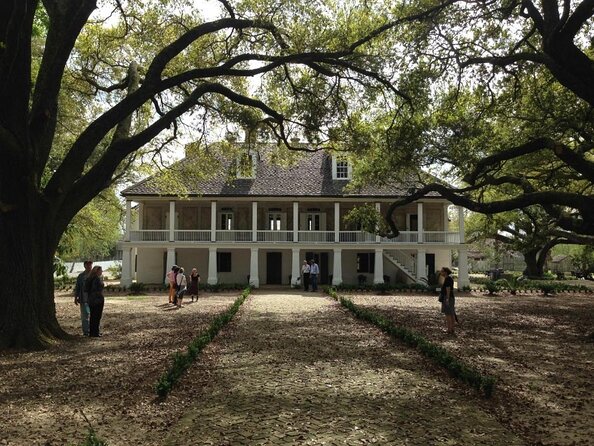
Whitney Plantation is where this combo becomes more than a tour. It’s set up around the lives of the enslaved people who lived and worked on the plantation, with original structures and exhibits focused on what they endured rather than turning everything into a backdrop.
You’ll spend about 2 hours there with a self-guided audio tour. That means you control the pace. You can sit longer at the memorials, back up for details, or keep moving when you’re ready. It also means you’re responsible for your own questions. If you prefer a conversation with a guide rather than an audio track, this is the one part that may feel less personal.
Here’s what you can expect to encounter:
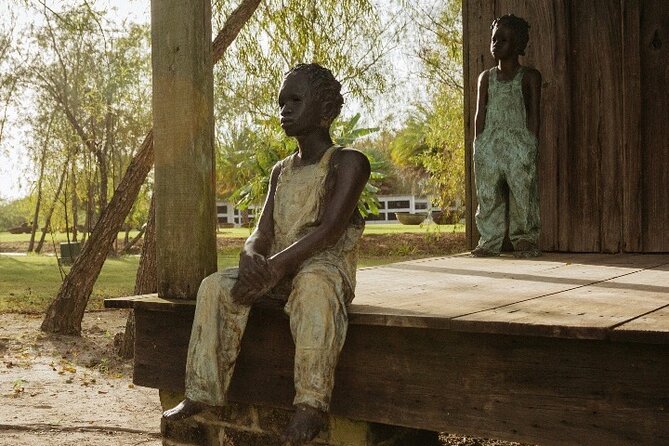
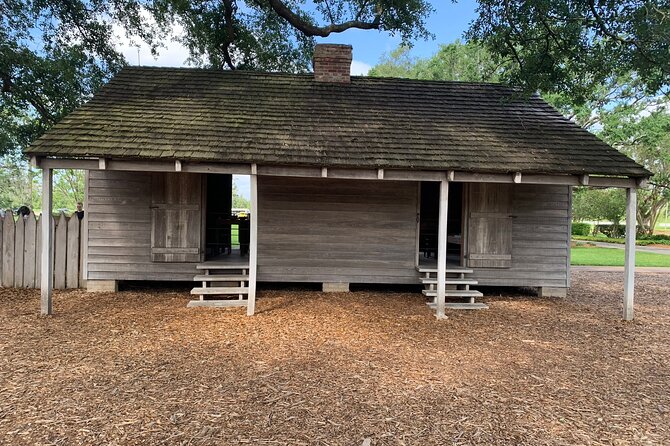
- Original buildings and slave cabins, plus memorials and artwork designed to show harsh realities of slavery.
- The Wall of Honor, which lists the names of more than 350 enslaved individuals connected to the plantation. This detail is powerful because it turns abstract numbers into real identities.
- Field of Angels, a memorial sculpture representing an estimated 2,200 enslaved children who died in St. John the Baptist Parish.
The “self-guided” format isn’t a gimmick here—it’s part of the respect. You’re given space to absorb the material at your speed. Just know what you’re choosing: less live interpretation, more quiet time and personal reflection.
Practical note: the day is long. Since the listing says there is no restroom on board, plan restroom breaks before you board and time your needs around Whitney.
The city half: comparing plantation slavery with life in urban New Orleans
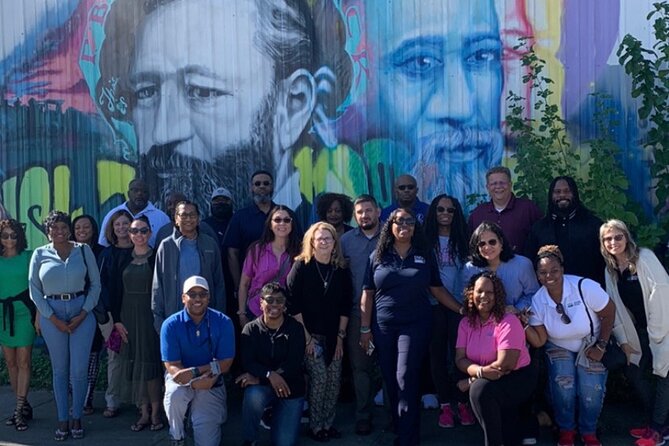
The city portion is about more than sightseeing. It’s built to show differences between plantation slavery and urban slavery, and to connect that history to places you can still recognize.
You start with about 2 hours devoted to New Orleans, guided in a way that aims for true local understanding. This is where a local perspective matters most. In real life, plantation history often gets flattened into one story. Here, you’re pushed to see how power and exploitation played out differently in a city.
A major theme is Hurricane Katrina’s aftermath. The tour includes seeing areas where neighborhoods were devastated. This is not a distant, “and then it happened” kind of stop. You’ll look at damage that shaped the city’s path forward, and it becomes part of the broader conversation about systems, vulnerability, and displacement.
You may also get stops that connect slavery-era and post-slavery history to education and civil rights. For example, one guide experience included pointing out the Ninth Ward and showing where the levee wall broke, plus a stop near McDonogh No. 19, linked to the story of three girls who desegregated elementary schools. In that same spirit, it was possible to speak with a curator connected to the Leona Tate foundation. If your guide covers similar stops, it’s a strong reminder that history is not just behind glass.
Value tip: before you go, skim a few basics about New Orleans’ racial history so you can follow the arc faster once you’re on the bus. The tour moves through multiple layers, and it’s easier to catch the connections if you show up with a little context.
Studio BE in 15 minutes: why the arts stop is brief but meaningful
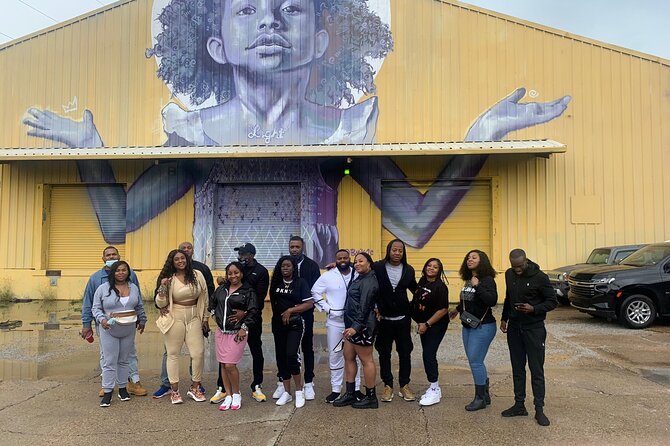
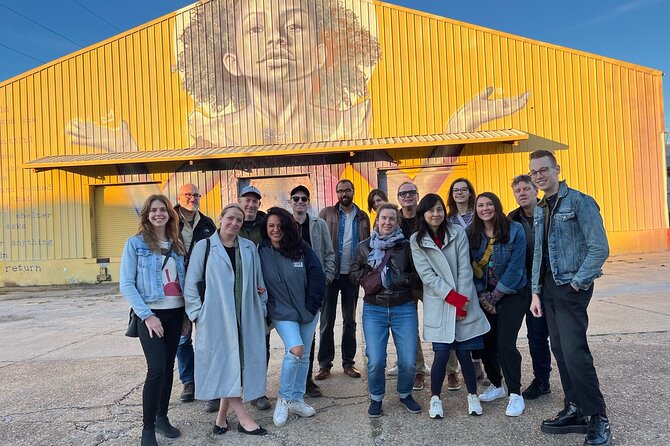
After the serious content, you get a short detour: Studio BE for about 15 minutes. It’s described as a cultural destination and a space for artists and the local community. The idea is simple: people create here, and the voices that shape the future are the voices that are present today.
This stop can be a mental reset. You’re going from memorial and devastation to creativity and community space, which helps balance the emotional load of the day.
Is 15 minutes enough to understand a place fully? Not really. But it’s enough time to orient yourself: see what Studio BE is, notice how it’s used, and then decide if you want to return later during your own time.
Congo Square: jazz origins you can actually stand on
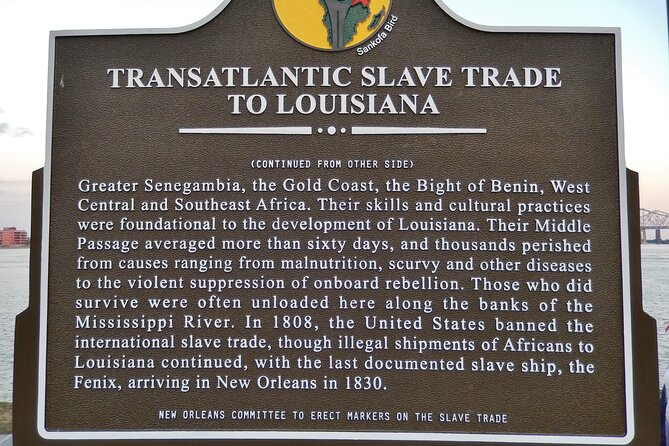
One of the best parts of the urban half is the moment at Congo Square. This is tied directly to the birthplace of jazz story. You’re meant to understand the site as something more than a landmark sign.
Congo Square is described as ground where enslaved Africans gathered to celebrate heritage through music, dance, and storytelling. The tour frames it as the rhythmic foundation that later echoed across the world through jazz.
This stop works well after the city context on slavery and after Katrina’s aftermath, because it reminds you that cultural survival and creativity were never separate from history. Even in a system designed to control people, community traditions found a way to live on.
If you’re a music person, this is the kind of place where the story clicks. If you’re not, it still lands because it’s about human agency: gathering, celebrating, and keeping identity intact.




What the guides do (and why local names matter)
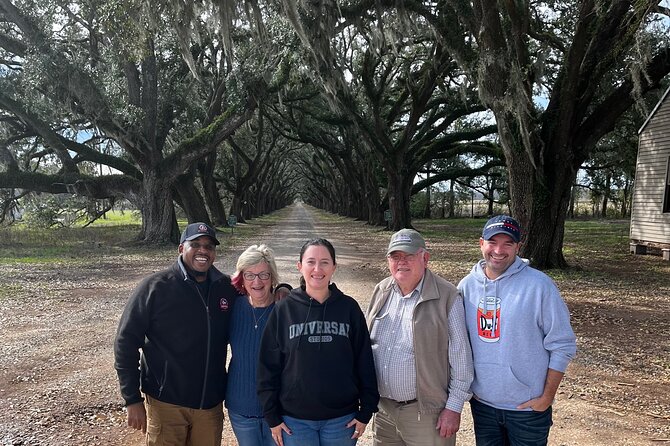
This combo is most successful when the guide makes the city feel like a living map, not just a list of stops. The experiences you’ll get hinge on that. In real examples, guides like Jay and Jeremy have been described as New Orleans locals with the energy to explain history in plain language and answer questions.
That matters because the day moves between emotional memorial sites and city locations that can be easy to overlook without interpretation. A local guide helps connect the dots: why a neighborhood looks the way it does now, what Katrina changed, and how earlier systems set the stage for later events.
One thing I like about this structure is that the Whitney part is audio-based and the city part is guided. You get both tools:
- audio at Whitney for quiet processing,
- conversation in town for explanation and navigation.
If you want the best shot at a highly satisfying day, plan to arrive with questions in mind—about plantation versus urban slavery, or about how the city’s story got shaped after Katrina.
Transportation, timing, and what can trip you up
This is a pickup-and-go tour, and that’s part of the appeal. Pickup runs between 8:00 AM and 8:30 AM, and you need to be ready outside your hotel by 8:00 AM. Pickup times can vary because there are multiple hotel stops.
The bus is a white bus with the company logo, and you should allow up to 30 minutes for it to arrive. If pickup is after 8:35 AM and you aren’t picked up, the instruction is to call the company.
Central meeting point, if you’re not doing hotel pickup: the parking lot at 414 Canal Street, New Orleans, LA 70130. If you use it, search for parking lot in the pickup option so you end up in the correct spot.
One practical caution: the tour notes there is no restroom on board. That’s a small line item, but it can affect comfort during an 8 to 9 hour day. Use hotel or nearby facilities before boarding and build in time around stops.
Also, the tour includes air-conditioned transport. In Louisiana heat, that is not a minor detail.
Price and value: is $129 a smart deal?
At $129 per person, this combo is priced like a serious day, not a bargain. The question is whether you get enough included value to justify it.
You do:
- Air-conditioned transportation for the full day.
- All fees and taxes included.
- Whitney Plantation admission included, plus Whitney’s self-guided audio experience built into your time there.
- Round-trip city convenience (the day trip planning is handled).
Then there’s the “value beyond the math”: the way the tour is structured. You’re not just visiting one major site. You’re pairing it with an urban context tour that covers slavery’s different expressions and then ties in Katrina aftermath and Congo Square’s jazz origins.
If you’re a first-timer to New Orleans and you want one efficient day that connects the dots, this pricing makes sense. If you already know the city’s history and only want one site, the value might feel less compelling. But for most people trying to understand the city, it’s a strong use of a limited vacation day.
Who this tour is best for (and who should reconsider)
This combo is a good fit if you:
- want a structured day that covers both a major memorial site and key city landmarks,
- like guided interpretation in the city portion,
- prefer control and pacing at Whitney through a self-guided audio tour,
- want small-group comfort (maximum 24).
You may reconsider if you:
- strongly prefer a live guide at Whitney instead of audio,
- need frequent breaks that include restroom access on transport (since there’s no restroom on board),
- are very sensitive to emotionally heavy memorial content and would rather spread it into shorter visits.
For solo travelers or couples, the small group and pickup convenience are especially helpful. For families, it depends on comfort level with the subject matter; the tour is designed to be respectful and direct.
Should you book this Whitney + Soul of New Orleans combo?
If you want one day that takes New Orleans history seriously—plantation-era truths, the urban comparison, Katrina’s impact, and the cultural roots that shaped jazz—this is a solid booking.
I’d book it if you have limited time and you like a plan that covers both hard history and cultural grounding without requiring you to piece together multiple outings. I’d also book it if you appreciate memorial spaces where you can pause and take the story in at your own tempo.
Skip it only if you know you strongly dislike audio-led touring at major sites, or if the thought of an 8 to 9 hour day with no onboard restroom will make you uncomfortable.
FAQ
What time does pickup start?
Pickup happens between 8:00 AM and 8:30 AM. You should be ready outside your hotel by 8:00 AM.
How long is the total tour?
It runs about 8 to 9 hours.
Where do I meet if my hotel pickup isn’t available?
You can use the central meeting point at the parking lot, 414 Canal Street, New Orleans, LA 70130.
Is Whitney Plantation admission included?
Yes. Whitney Plantation admission is included in the tour price.
What language is the tour offered in?
The tour is offered in English.
Is the transportation air-conditioned?
Yes. The tour includes air-conditioned vehicle transportation.
Is there a restroom on board?
No. A restroom on board is not included.
How big is the group?
The maximum group size is 24 travelers.
Can I cancel for a full refund?
Yes, free cancellation is available. You must cancel at least 24 hours before the experience’s start time for a full refund.
Is there a mobile ticket?
Yes. A mobile ticket is provided.