REVIEW · NEW ORLEANS
New Orleans Jazz History and Music Walking Tour
Book on Viator →Operated by Intrepid Urban Adventures - USA · Bookable on Viator
Jazz in New Orleans starts here. This 2.5-hour walk strings together the roots of jazz in Tremé and Congo Square, then steers you through the French Quarter to catch live sets in the places that keep the tradition going. Guides like Kristi and Adam (both named in recent tour notes) set the pace and choose a route meant for hearing real music, not just looking at it.
I love the small-group feel, max 12, which keeps the chatter easy and the stops actually useful. I also love that you get more than stories: you’ll step into a live jazz or music venue, and you even get a complimentary drink at a music stop.
One drawback: it’s still a walking tour. Plan on about 1.5 miles total and comfy shoes, and be ready for the fact that some venues expect at least one drink purchase.
In This Review
- Key things that make this walk worth it
- Tremé’s starting point: Louis Armstrong Park sets the tone fast
- Why this works for your first evening
- French Quarter streets: from old neighborhood roots to the “where to listen” question
- Bourbon Street versus the “real music” streets
- Frenchmen Street and French Quarter clubs: hearing jazz, not just talking about it
- Plan for one drink at the music stop
- What you’ll learn inside those clubs
- The complimentary drink and personalized next-night plans
- Preservation Hall: a pass by a guardian of traditional New Orleans jazz
- Congo Square: where the culture mix that birthed jazz shows up in the streets
- Pace, walking distance, and comfort: how the 2.5 hours actually feels
- One more practical note: good weather helps
- The guides make or break it: what to expect from Kristi and Adam-style hosting
- A balanced caution: you may get more context than pure song talk
- Price and value: is $60.56 a good deal?
- Who should book this jazz history walking tour?
- FAQ
- How long is the New Orleans Jazz History and Music Walking Tour?
- Where is the tour meeting point, and where does it end?
- How far will I walk during the tour?
- How big is the group?
- What’s included in the price?
- Is the tour appropriate for anyone under 21?
- Does it run in any weather?
- Can I cancel and get a full refund?
- Final call: should you book?
Key things that make this walk worth it
- Louis Armstrong Park start: a smart first stop that frames jazz’s origins before you hit the streets
- Route flexibility: your guide picks a path for the best music you can hear that evening
- Live set time: you don’t just pass by clubs; you actually go inside and listen
- Congo Square context: the story includes the early gathering of enslaved and free people of color
- Small group size: max 12 keeps the night from feeling like a school field trip
Tremé’s starting point: Louis Armstrong Park sets the tone fast
You kick things off just outside the French Quarter at Louis Armstrong Park in Tremé. It’s a calm, historic base to begin with, and it matters because it puts jazz into context before you’re jostling through nightlife streets.
Inside the park, you’ll hear about the roots of jazz and one of its biggest names—Louis Armstrong. You’ll also pass the Mahalia Jackson Theater of the Performing Arts, named for the gospel singer who was born in New Orleans. That quick connection between jazz and other New Orleans music traditions helps you hear the city’s sound as one connected story instead of separate genres.
This first stretch is also your chance to reset. The tour includes about 35 minutes here, with free entry, so you’re not rushing while your guide sets up the night.
You can also read our reviews of more walking tours in New Orleans


Why this works for your first evening
If you’re trying to understand New Orleans music without doing homework, this start does the heavy lifting. By the time you reach the French Quarter, you already know what you’re looking for: the mix of people, rhythms, and communities that shaped jazz.
French Quarter streets: from old neighborhood roots to the “where to listen” question
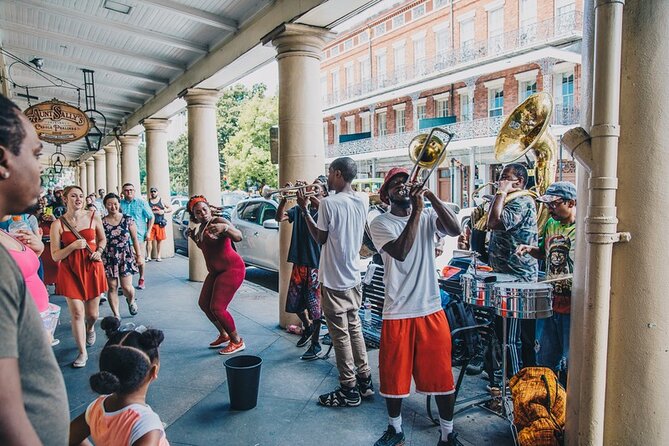
After Tremé, the walk moves into the Vieux Carre, the French Quarter. This part is short—about 10 minutes of guided wandering—but it’s packed with direction. Your guide explains how jazz culture developed right where you’re standing, and you’ll see notable historic sites along the way.
A key detail: your guide chooses a special route for that evening so you can hear better music. That means you’re not stuck following a rigid checklist. You’re being led toward the clubs and performances that fit the time and energy of the night.
Bourbon Street versus the “real music” streets
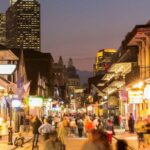
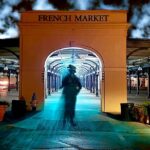
Depending on the route, you’ll spend time along Bourbon Street (about 30 minutes). Here, the guide ties the street’s history to the places where blues and jazz collaborators came to make music. If the timing lines up, you might even catch a busker performing around the French Market area—exactly the kind of spontaneous sound that makes the Quarter feel alive.
Then there’s the other path your guide might take: Frenchmen Street (also about 30 minutes). Frenchmen is famous for live music density, and the tour leans into that. The goal isn’t just to say you were there—it’s to get you into a venue where the music is actually happening.
Frenchmen Street and French Quarter clubs: hearing jazz, not just talking about it
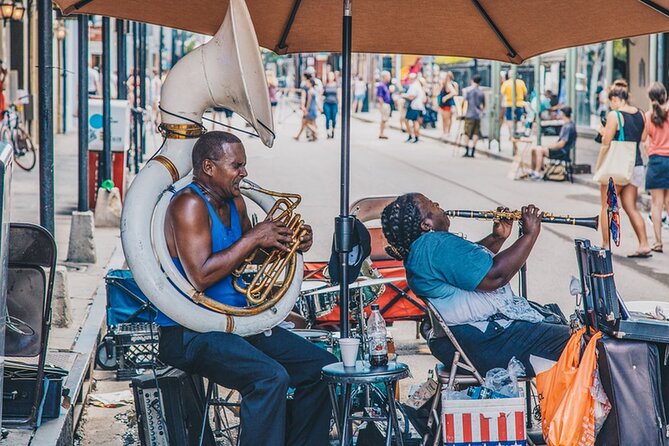
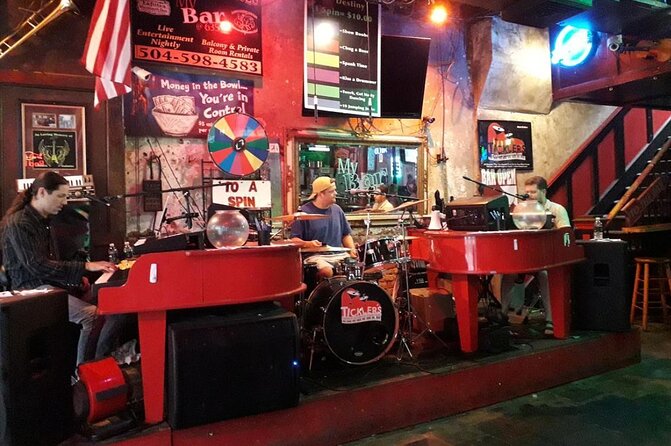
This is the part most people come for: live music chosen with intention. The tour includes one live jazz or music venue selected by your guide, and the day is designed to get you inside at the right time.
In practice, that can mean you hear a full set, then possibly move to another stop depending on how the night is working. Some tour notes highlight that the timing can be spot-on, letting you catch one set at the first club and then continue to another venue.
You can also read our reviews of more historical tours in New Orleans


Plan for one drink at the music stop
One heads-up from tour experiences: some venues have a one-drink expectation. In other words, even though you get a complimentary drink included in the price, you should be ready to order at least one drink while you’re inside. The included drink helps cover that expectation, and you can always buy more only if you want to.
What you’ll learn inside those clubs
Your guide doesn’t just drop you at the door. They explain how music culture works in New Orleans clubs—how the scene runs, what to look for, and how to make smart choices with your remaining time. Some guides also share tips on how to use listings and when to show up for the next set, which is the kind of practical advice that pays off long after the tour ends.
The complimentary drink and personalized next-night plans
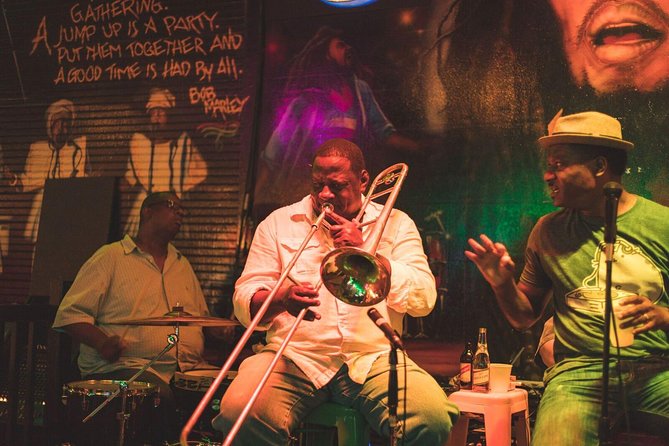
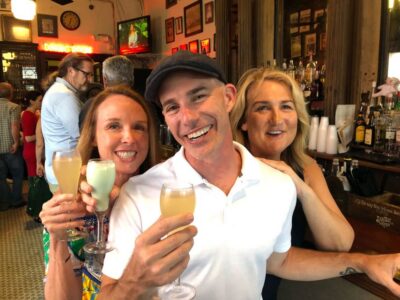
You’ll receive a drink on us at one of the music stops. It’s included in the tour price, and it’s meant to help you settle in without instantly adding costs. Additional beverages aren’t included, so you control the rest of your tab.
Just as important, you’ll get personalized recommendations for continuing your night. That can mean pointing you to more music venues nearby, and explaining how to find what’s playing when. If you’ve ever wondered why some people seem to stumble into great performances while others wander around looking at closed doors, this kind of guidance helps.
Preservation Hall: a pass by a guardian of traditional New Orleans jazz
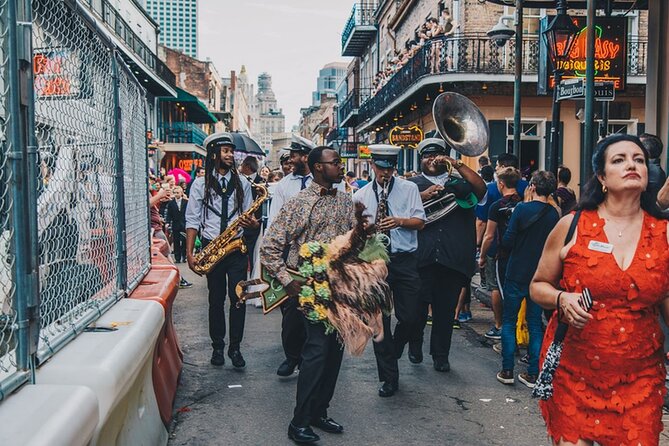
Depending on the route, you’ll pass Preservation Hall in the French Quarter. The tour uses this as a moment to talk about the importance of protecting and perpetuating traditional New Orleans jazz.
You don’t have to be a jazz purist to appreciate the point. This stop frames jazz as something living and protected by institutions, not just something you find in a museum-like story.
Congo Square: where the culture mix that birthed jazz shows up in the streets
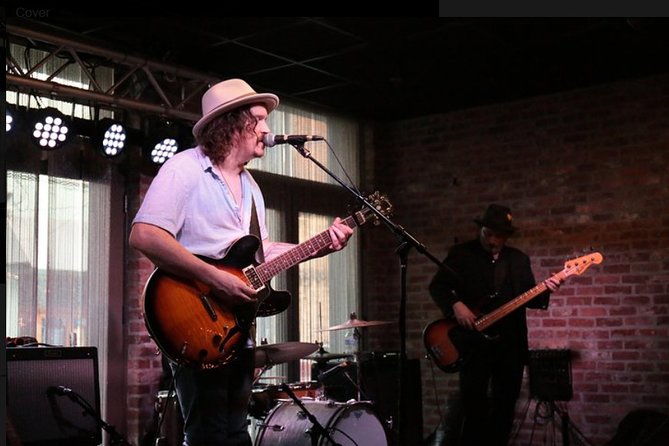
The final major stop takes you to Congo Square. This is one of the earliest places in the city where enslaved people and free people of color were allowed to gather and socialize. It’s not just a historical footnote—it’s a key piece of how New Orleans music grew from cultural mixing.
Here you’ll hear about jazz’s origins as a result of a mix of West African and Caribbean sounds with European musical influences. That blend created something uniquely American, and Congo Square is treated as a starting point for understanding how that mix took shape in daily life, not just in recordings.
This stop is shorter—about 15 minutes—but it tends to land emotionally. The walking tour gives you enough time to absorb the story without dragging, and it’s a strong way to end on meaning, not just noise.
Pace, walking distance, and comfort: how the 2.5 hours actually feels
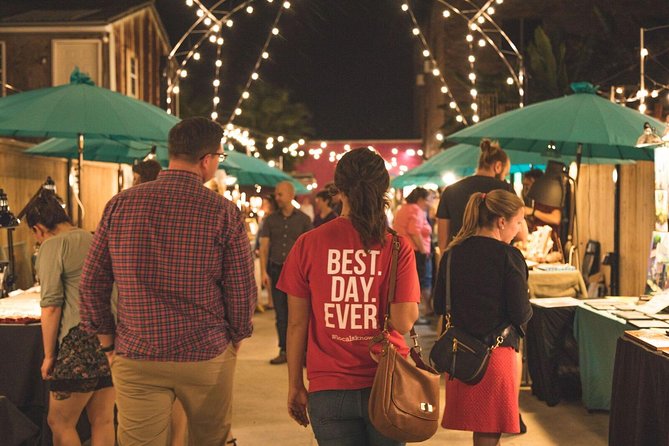
This is a walking tour covering about 14 blocks, roughly 1.5 miles. That’s not huge, but the time adds up because you’re stopping often, taking in short guided talks, and transitioning between neighborhoods and venues.
The tour runs around 2 hours 30 minutes. If you’re the kind of person who loves to sit and people-watch, you might still feel the pace as active, since the goal is live music. Bring comfy shoes and expect a mix of sidewalk walking and short city stretches.
One more practical note: good weather helps
The experience requires good weather. If conditions are bad, you’ll be offered a different date or a full refund. So on days when rain clouds look serious, check your plans early.
The guides make or break it: what to expect from Kristi and Adam-style hosting
The strongest praise in tour notes centers on the guides. Guides like Kristi and Adam are described as passionate, personable, and deeply connected to the city. You’ll see that in the way the tour is explained: jazz and street history are tied together with real-world context.
That guide choice also shows up in route selection. Since your guide picks the route to help you hear the best music that evening, you’re getting a kind of local problem-solving. They’re deciding where to go next based on timing, venue schedules, and the group’s needs.
A balanced caution: you may get more context than pure song talk
One unhappy note flags that the tone can tilt toward political and socioeconomic context, and that the person wanted more direct talk about musicians and the jazz genre itself. So if your idea of a perfect night is only musicians, styles, and recordings, you should know the tour also focuses on cultural roots and how communities shaped the music.
Price and value: is $60.56 a good deal?
At $60.56 per person for about 2.5 hours, this tour isn’t “cheap,” but it’s not overpriced for what you get. You’re paying for a local guide who connects history to what’s happening right now, plus access to live music venues and a complimentary drink.
Value drivers:
- Live venue time (not just passing by clubs)
- Small group size (max 12 keeps the experience personal)
- Practical next-night recommendations
- A route designed around what you can hear
Also, the tour explicitly supports local jazz musicians and venues. Even if you don’t care about the nonprofit angle, it’s part of the reason you’re going inside working music spaces rather than only sightseeing.
If you were going to the French Quarter anyway, this is the difference between wandering and getting a guided map to the music scene.
Who should book this jazz history walking tour?
Book it if you want:
- jazz history tied to real places like Louis Armstrong Park and Congo Square
- a plan for where to listen, with live music included
- a local guide to help you make decisions once you’re out on your own
Skip it if:
- you hate walking and don’t want about 1.5 miles on city sidewalks
- you’re mainly after a strict musician-and-recordings focus, with minimal social and cultural context
It’s also a good match for your first day in New Orleans. The tour ends in the French Quarter and gives you recommendations so you can turn the rest of the night into a smarter, more intentional music hunt.
FAQ
How long is the New Orleans Jazz History and Music Walking Tour?
It runs about 2 hours 30 minutes.
Where is the tour meeting point, and where does it end?
It starts at 701 N Rampart St, New Orleans, LA 70116, and ends in the French Quarter.
How far will I walk during the tour?
You’ll cover approximately 14 blocks, about 1.5 miles.
How big is the group?
The tour has a maximum of 12 travelers.
What’s included in the price?
You get a guided walk through Tremé and the French Quarter areas, visits to Louis Armstrong Park and Congo Square, entry to a live jazz or music venue chosen by your guide, and one complimentary drink at a music stop. You also receive personalized recommendations for continuing your night.
Is the tour appropriate for anyone under 21?
No. Travelers under 21 are not permitted to join this tour.
Does it run in any weather?
It requires good weather. If it’s canceled due to poor weather, you’ll be offered a different date or a full refund.
Can I cancel and get a full refund?
Yes. You can cancel up to 24 hours in advance for a full refund. If you cancel less than 24 hours before the start time, the amount paid won’t be refunded.
Final call: should you book?
Yes—if you want the fast, guided way to connect jazz origins to the streets where people still play it. The mix of Louis Armstrong Park, Congo Square, and a live venue stop is a strong combo for the time and price, especially with the small group size and route choices.
If you’re picky about focus—music theory and artist talk only—then you might feel the tour is also about culture and the city’s social story. Go anyway if you like context that helps you hear the music differently.