REVIEW · NEW ORLEANS
Dark History Tour In New Orleans
Book on Viator →Operated by Jonathan Weiss Tours · Bookable on Viator
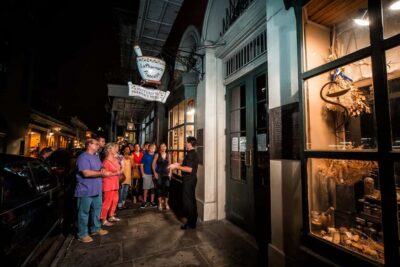
The French Quarter has a darker side. This 2-hour walk turns famous corners into true stories you can follow step by step, and you get free admission at key landmarks along the way. I like how the narration focuses on the darker edges of New Orleans history, not the usual highlight reel.
I also appreciate the tour’s leadership: the guides have been around long enough to be licensed before Hurricane Katrina, and the tone stays human, not gimmicky. One possible drawback to keep in mind: if you prefer a tight, fast pace with minimal tangents, you may find parts of the storytelling run long.
In This Review
- Key highlights I’d put on your radar
- A Dark History Tour That Fits a French Quarter Evening
- Where the Tour Starts (and Why That Corner Matters)
- Guides, Tone, and the Compassion Question
- Stop-by-Stop: What You’ll See and What You’ll Listen For
- Stop 1: St. Louis Cathedral (and the Oldest Church Feel)
- Stop 2: Lafitte’s Blacksmith Shop Bar (Mid-Tour Reset)
- Stop 3: Madame John’s Legacy (French Period Clues in Plain Sight)
- Stop 4: City Hall of the Spanish and Americans (Where Politics Gets Real)
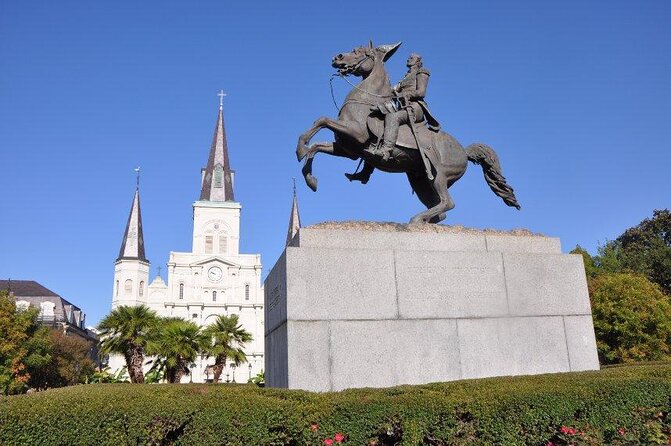
- Stop 5: Jackson Square (Designed by a Woman, Chosen for the Story)
- What Makes This Tour Feel Different from the Usual French Quarter Walk
- Price and Value: Is $30 a Good Deal Here?
- Logistics That Make a Difference (Without Making You Work Too Hard)
- Should You Book the Dark History Tour?
- FAQ
- How long is the Dark History Tour?
- Where does the tour start, and where does it end?
- How much does it cost?
- Is the tour in English, and do I need a physical ticket?
- Are admissions required for the stops?
- What is the group size limit?
Key highlights I’d put on your radar
- Free entry stops that make the walk feel more than just sightseeing
- A small group size capped at 28, which helps with questions and pacing
- Guides with long experience (licensed before Hurricane Katrina)
- Real, darker French Quarter stories you won’t get on every standard tour
- Jackson Square and nearby landmarks used as the backbone for the narrative
- A practical mid-tour break at an old-school Quarter tavern
A Dark History Tour That Fits a French Quarter Evening

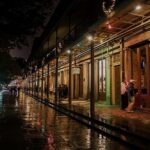
This is the kind of New Orleans tour that makes the streets feel connected instead of random. At 5:00 pm, you’re walking through the French Quarter when the light softens and the mood matches the theme. The timing also works well if you want something educational after a day of museums, food stops, or a day-trip hangover you did not plan.
The overall duration is about 2 hours, and that matters because it gives you a complete story arc without turning your whole evening into a marathon. The tour runs in English and uses a mobile ticket, so you can keep it simple and move on quickly once you arrive.
Cost-wise, $30 per person is fair for what you’re getting. You’re not just paying for a guide’s time. You’re also getting guided access to major sights where admission is free as part of the experience. In a city where it’s easy to nickel-and-dime your fun, that small detail adds up.
You can also read our reviews of more historical tours in New Orleans



Where the Tour Starts (and Why That Corner Matters)
You’ll begin at Pirate’s Alley Cafe at 622 Pirates Alley. The tour ends at 1035 Chartres St, at the corner of Ursulines and Chartres St.
This meeting point is useful because it keeps you close to the center of the French Quarter action. It also helps you plan the rest of your night: after the tour finishes, you’re already set up for dinner or a walk back through the streets without needing a second round of navigation.
Do yourself a favor and arrive a bit early. With a max group size of 28, the start is usually orderly, but being punctual means you can get oriented fast and avoid that last-minute scramble that everyone pretends not to do.
Also, wear shoes that can handle a lot of pavement. This is a walking tour through old streets, and you’ll appreciate being comfortable from minute one.
Guides, Tone, and the Compassion Question
The biggest quality signal here is the way the guides handle heavy material. The tour is labeled Dark History for a reason, but it doesn’t come off as mean or cruel. I like that the storytelling aims to humanize what happened, rather than turning it into shock value.
Another detail that feels important, not marketing fluff: the guides have long experience, including being licensed before Hurricane Katrina. That kind of background usually shows up in how a guide manages a group, keeps things on track, and knows how to explain without turning every stop into an essay.
In the feedback, the guides are praised by name, including Doug and Jonathon, with the broader team tied to Jonathan Weiss Tours. The common thread across those comments is clear: strong factual storytelling, a friendly approach, and an ability to answer questions without making you feel rushed.
One thing to watch: some people note that a guide can be long-winded. That doesn’t mean the tour is disorganized. It just means your experience may depend on how well you enjoy extended explanations or Q&A. If you love dense detail, you’ll probably be happy. If you want short and punchy, be ready to guide yourself by asking the guide to focus your curiosity.
Stop-by-Stop: What You’ll See and What You’ll Listen For
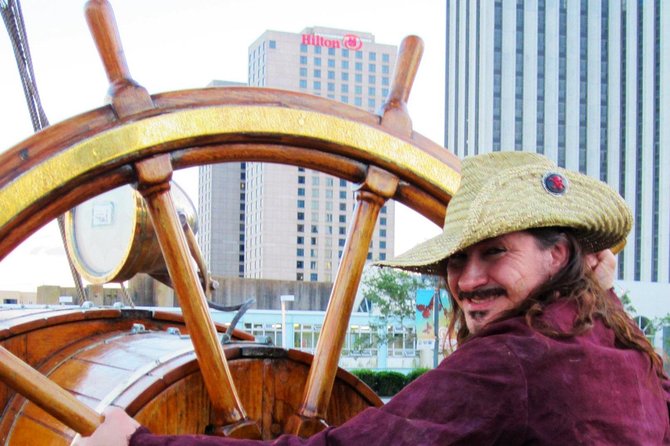
This tour is built around a set of landmarks, and each stop acts like a chapter heading. Here’s what you can expect and what makes each one matter.
Stop 1: St. Louis Cathedral (and the Oldest Church Feel)
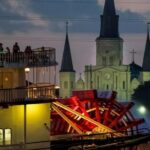
You’ll start at St. Louis Cathedral, described as the oldest cathedral of the United States. The stop is short—about 8 minutes—and admission is free.
What to do here is simple: don’t rush the exterior details. Even if you’ve seen big churches before, this one has a sense of endurance. Your guide ties it into the larger narrative, so stay attentive to how the cathedral connects to power, community, and the era being discussed. Short stops work best when you listen closely instead of scanning endlessly.





Stop 2: Lafitte’s Blacksmith Shop Bar (Mid-Tour Reset)
Next up is Lafitte’s Blacksmith Shop Bar, about 10 minutes, with admission also listed as free. It’s a perfect “breather” stop, and it’s useful that it’s a bar that fits the French Quarter vibe.
This is where you can regroup without breaking the flow of the tour. If you need water, a quick snack, or just a minute to take photos without blocking the walking path, this is that window. The tour keeps moving, but you’re not expected to be a statue.
The guide’s stories will steer you back toward the darker theme, using the tavern as a lens on how people gathered, how rumors traveled, and how everyday life and danger could sit side by side.
Stop 3: Madame John’s Legacy (French Period Clues in Plain Sight)
Your next stop is Madame John’s Legacy, another 10 minutes, also marked as free admission. This is noted as one of the only French buildings in the Quarter and the only residence from the French period.
What I like about this stop is that it gives you something concrete. When history gets vague, buildings help you anchor it. Look for how the structure reads differently than the surrounding architecture. Even if you’re not a history buff, you’ll understand the point: these walls represent a specific slice of time in the French Quarter that doesn’t always show up on mainstream tours.
Stay alert for the guide’s explanation of why this building matters in the story you’re hearing.
Stop 4: City Hall of the Spanish and Americans (Where Politics Gets Real)
There’s also a stop for City Hall of the Spanish and Americans til the Civil War. The provided info doesn’t give a time box here, but the role is clear: it’s a political and civic chapter in the narrative.
This is where you’ll likely hear how control of the city shifted and why that mattered to ordinary people. If your brain wants dates, this is your chance to focus. If your brain prefers cause-and-effect, focus on what changed in daily life when the city’s governance changed.
Stop 5: Jackson Square (Designed by a Woman, Chosen for the Story)
Finally, you end up at Jackson Square for about 8 minutes, with admission listed as free. The square is described as lovely and designed by a woman, but the tour leans into the darker side of what the space has meant.
This is a strong closer because the square is such a recognizable location in the Quarter. Your guide doesn’t treat it as postcard scenery. You’ll listen for how the stories connect to the emotions of place—why the square works as a stage for “absolute horror” in the tour’s telling.
Practical tip: Jackson Square is a people magnet. You’ll get more out of the stop if you position yourself with enough space to hear the guide, rather than drifting into photo-taking chaos.
What Makes This Tour Feel Different from the Usual French Quarter Walk
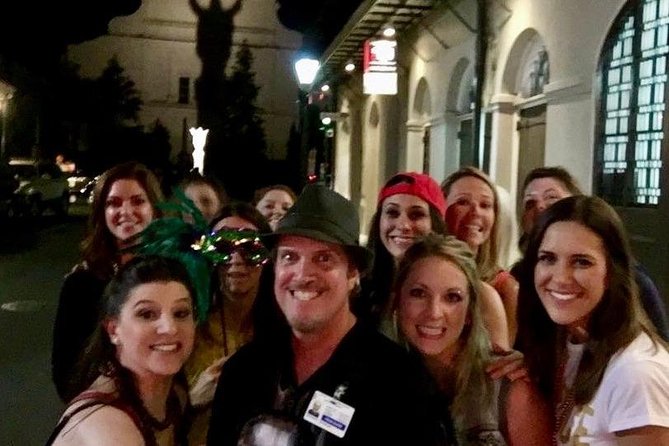
Lots of tours hit the big names and the romantic highlights. This one is built to do the opposite, focusing on the darker side of New Orleans history and the places where the city’s story gets uncomfortable.
Two things help it work:
- The guide uses true stories and aims for detail instead of vague moralizing.
- The tone stays compassionate, so the “dark” label doesn’t turn into theatrical cruelty.
The result is that you finish with more than trivia. You finish with a clearer understanding of how the city’s past shaped what you see today—streets, buildings, gatherings, and the way people have always tried to survive what’s happening around them.
You’ll also notice a focus on pacing that tries to keep you oriented. People describe the pace and facts as strong, and that’s the right combination for a tour like this. If you’re new to the Quarter, it helps you get your bearings fast.
Price and Value: Is $30 a Good Deal Here?
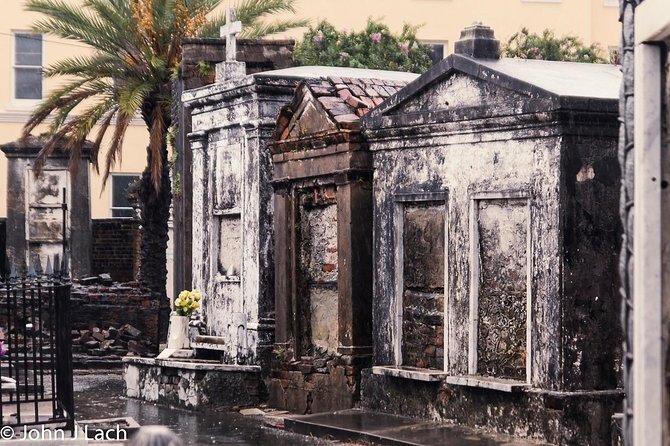
For $30, you’re buying three things: a guide, a walking route across major landmarks, and free admissions at multiple stops.
That admission detail matters. Instead of paying for entry separately, you’re bundling it into the tour experience. It makes the math easier and makes the tour feel “worth it” even if you’re not a collector of museums.
It also helps that the group is capped at 28. Smaller groups tend to keep the flow smoother and make Q&A feel real rather than rushed. If you like asking questions—about the what, the why, and the how—this format supports that.
If you’re tight on time and want one organized evening activity that covers more than just nightlife, this tour is a smart fit.
Logistics That Make a Difference (Without Making You Work Too Hard)
A few practical notes will help you enjoy the tour more:
- Plan for good weather. This experience depends on weather, so it may shift if conditions aren’t ideal.
- Use the mobile ticket and keep it handy on your phone.
- Expect walking through busy areas. Don’t stand in the path. Keep to the side and let the group flow.
- Service animals are allowed. If that applies to you, you can go into the experience without worry.
One more small piece of common sense: because the stories are darker, you’ll get more from the tour if you’re mentally ready to listen. If you’re looking for pure comedy or purely light sightseeing, this is not that.
Should You Book the Dark History Tour?
Book it if you want:
- A French Quarter tour that goes past surface-level storytelling
- A guide who explains the city in a clear, human way
- A 2-hour plan that ends while you still have energy for dinner
Skip it or reconsider if:
- You hate dark themes or get uncomfortable with heavy topics
- You strongly dislike tours where the guide may spend time on extra explanations or answers
My take: this is good value for the time. The combination of free admission stops, strong guide performance, and a narrative that actually connects the landmarks makes it a solid choice for your first (or second) visit to New Orleans.
If you’re the type of traveler who wants to understand a place beyond postcards, this tour is exactly your lane.
FAQ
How long is the Dark History Tour?
It runs for about 2 hours.
Where does the tour start, and where does it end?
It starts at Pirate’s Alley Cafe, 622 Pirates Alley and ends at 1035 Chartres St, at the corner of Ursulines and Chartres St.
How much does it cost?
The price is $30.00 per person.
Is the tour in English, and do I need a physical ticket?
The tour is offered in English and uses a mobile ticket.
Are admissions required for the stops?
At the listed stops, admission ticket is free.
What is the group size limit?
The tour has a maximum of 28 travelers.