
REVIEW · NEW ORLEANS
New Orleans: History, Culture & Architecture Guided Tour
Book on GetYourGuide →Operated by Southern style tours · Bookable on GetYourGuide
New Orleans reveals itself fast. I love how this tour turns the streets into a story, especially along the Esplanade, and I love the human context around Faubourg Treme. One heads-up: food and drinks are not included, so you’ll want to budget if you plan to grab coffee or beignets during the stop.
With hotel pickup and an air-conditioned mini-coach, you’re not stuck bouncing between neighborhoods on foot. You get live English commentary that connects what you see—cathedrals, cemeteries, mansions, and art spaces—to why the city looks the way it does, all in about three hours.
In This Review
- Key highlights at a glance
- The 3-hour route: a practical way to see a lot
- Pickup and timing: set yourself up to not stress
- French Quarter: what to watch for when the guide is talking
- Esplanade and Garden District: mansions, oak shade, and architecture you can read
- City Park break: Besthoff Sculpture Garden or Morning Call beignets
- Warehouse District and art corridors: history with paint on it
- Faubourg Treme: neighborhood history you can feel in the streets
- American Sector: WWII Museum area and the Contemporary Arts Center
- Metairie Cemetery: above-ground tombs and the logic behind them
- Saint Louis Cathedral: seeing North America’s oldest cathedral roots
- Price and value: is $55 worth it for 3 hours?
- Who should book, and who might not
- Should you book this New Orleans history and architecture tour?
- FAQ
- How long is the guided tour?
- What’s included in the price?
- Are food and drinks included?
- Where is hotel pickup available?
- What language is the live guide commentary?
- When should I be ready for pickup?
- What happens if the weather is bad?
- Is there free cancellation?
Key highlights at a glance
- French Quarter to Esplanade: architecture-led explanations that go beyond the usual talking points
- Faubourg Treme: clear, neighborhood-scale history of an area dating back to the 1700s
- City Park stop: choose a break at the Besthoff Sculpture Garden or pick up coffee and beignets at Morning Call
- American Sector + art anchors: you pass the World War II Museum area and the Contemporary Arts Center
- Metairie Cemetery: a quick look at above-ground tombs and how burials connect to local geography
- Saint Louis Cathedral area: see the oldest cathedral roots reaching back to 1720
The 3-hour route: a practical way to see a lot
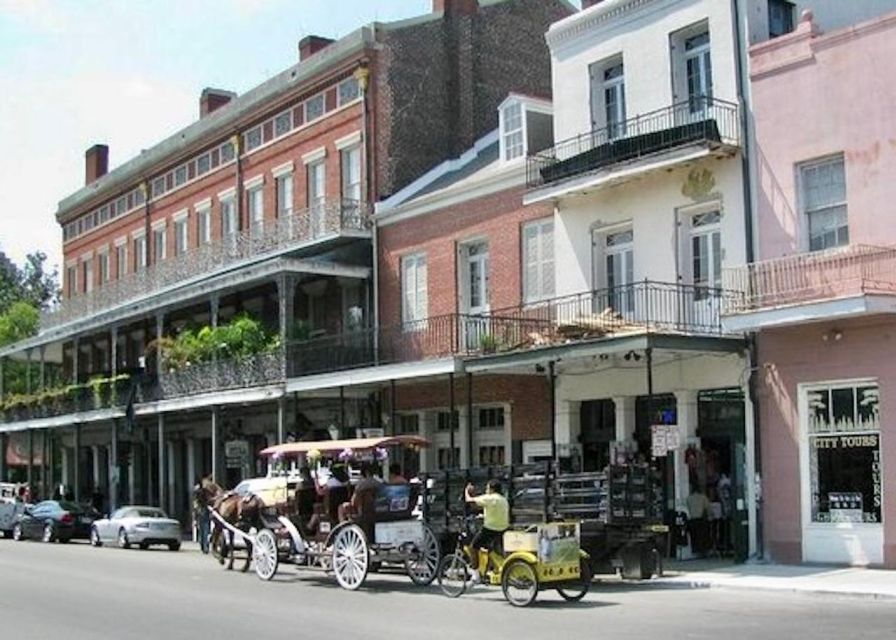
This tour works because it’s built like a guided highlights reel that still makes sense. You cover several districts in a short window: French Quarter, Esplanade, Garden District area, City Park, Warehouse District, Faubourg Treme, the American Sector, Metairie Cemetery, and the Saint Louis Cathedral area. That’s a lot of ground, and the AC mini-coach matters when the weather is hot or sticky.
For first-timers, this is a smart “get your bearings fast” plan. You’ll leave with a mental map of where things are and how the city’s neighborhoods evolved. For repeat visitors, it’s also useful if you want a second layer—architecture plus neighborhood history—without spending a whole day hopping between attractions on your own.
You can also read our reviews of more guided tours in New Orleans



Pickup and timing: set yourself up to not stress
Pickup is included, but only from selected hotels in downtown New Orleans and the French Quarter. Plan on being ready curbside about 30 minutes before the scheduled time, since exact pickup times shift depending on how many stops the driver has.
The good news: you don’t have to figure out parking, curb access, or transport between districts. The tradeoff is that the tour is built around a shared route, so you’ll follow the guide’s timing rather than your own.
If your hotel is outside the pickup zone, you’ll need to arrange your own way to meet the group. And since the tour is about three hours total, you’ll want to treat it as your “main block” for the day rather than squeezing it in around another timed ticket.
French Quarter: what to watch for when the guide is talking
The French Quarter stop is more than a photo loop. The tour uses the area to set context: where the city’s early identity shows up in street patterns and landmark presence, and how later chapters layered on top.
While you’re in this part of town, I recommend slowing down and watching for the details your eyes usually skip when you’re just sightseeing—building textures, street angles, and the way the neighborhood feels intentionally designed rather than accidental. A good guide will tie those visual cues to historical shifts, not just old legends.
One reason this part of the tour tends to click for people: it’s not stuck in the cliché-only version of New Orleans. You can expect commentary that connects past and present events, which helps you understand why the city still feels like itself even after major changes over time.
Esplanade and Garden District: mansions, oak shade, and architecture you can read
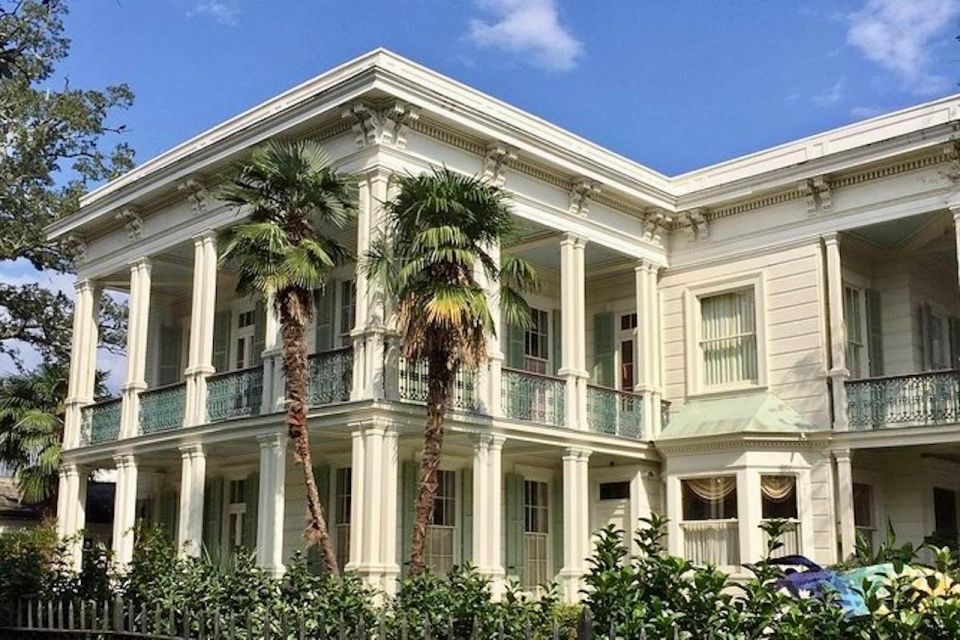
Where the tour really earns its keep is at the neighborhoods where architecture is the main character—especially along the Esplanade and the Garden District area.
You’ll move through oak-lined streets and pass stately homes. The guide explains what makes these buildings stand out: the visual language of wealth and taste, how the street grid and house placement affect the vibe, and why those “grand” views aren’t just pretty—they’re clues about who lived where and how the city’s fortunes shifted.
A practical tip: these areas can feel much calmer than the French Quarter, but you’ll still be walking at least some distance. Wear shoes you can stand in for short stops and short walks. If you’re sensitive to heat, the quick refresh moments at City Park later will be a relief.
If you like architecture, this is your moment. Even if you don’t, it’s still valuable because it helps you stop seeing New Orleans as one big postcard and start seeing it as a patchwork of eras.
City Park break: Besthoff Sculpture Garden or Morning Call beignets
Then you hit City Park, one of the smartest mid-tour pauses. The tour gives you an either/or choice that keeps energy up without forcing you to rush.
Option one is the Besthoff Sculpture Garden. If sculpture and outdoor art make you happy, this stop gives you a different angle on New Orleans—less “street history,” more atmosphere and design.
Option two is a quick food-and-savor stop at Morning Call for coffee and beignets. Since food and drinks are not included, this is the moment to handle your own budget. If you care about keeping the tour schedule comfortable, you’ll want to treat this as your planned snack break rather than sprinting from place to place.
Either way, this stop is a reset. It breaks up the intensity of neighborhood-to-neighborhood storytelling and gives you space to sit with what you just learned.
You can also read our reviews of more historical tours in New Orleans






Warehouse District and art corridors: history with paint on it
After City Park, the tour moves toward the Warehouse District. This part of town is where you can feel the city’s older industrial bones meeting newer creative use.
Even though you’re primarily passing through, the guide’s job is to make the “why” click: how repurposing shapes neighborhoods, and how art and culture help define what a district becomes over time. If you’re the type who likes to understand a place’s transformation, this stop helps you connect the dots.
This is also where the tour’s pacing works. You’re not spending long on a single museum or walking loop, but you are absorbing context that makes later self-guided exploring easier. You’ll know what to look for when you’re back out on your own.
Faubourg Treme: neighborhood history you can feel in the streets
Faubourg Treme is one of the tour’s strongest sections because it doesn’t treat African American neighborhood history as an optional footnote. It’s presented as core city history—dating back to the 1700s—and the guide connects that deep timeline to what you see now.
What I like about this portion is the focus on community and continuity. Instead of presenting history as a set of distant dates, the tour frames it as something that shaped the present neighborhood identity and gave the city part of its backbone.
This stop can also change how you move through the city afterward. When you understand that a place has long roots and a distinct story, you start noticing details you’d miss otherwise—like how architecture, street life, and cultural landmarks all serve as evidence.
If your idea of New Orleans history is mainly about famous buildings, this is the shift that makes the tour feel worth it.
American Sector: WWII Museum area and the Contemporary Arts Center
From Faubourg Treme, the route passes through the American Sector area—where two major anchors shape how many people experience this part of the city: the World War II Museum area and the Contemporary Arts Center.
You’re not necessarily spending extended time inside here, but the passing views matter because the guide uses them to explain what’s happened to the area. World War II remembrance has a particular kind of gravity, and contemporary art institutions bring a different tone. Seeing those side by side helps you understand how New Orleans holds multiple identities at once.
This is also the section where I’ve found the tour can include a case-study moment tied to Hurricane Katrina, depending on guide commentary and route focus. If that’s a theme you’re interested in, ask your guide how the city’s recovery and planning changes show up in what you can see.
Metairie Cemetery: above-ground tombs and the logic behind them
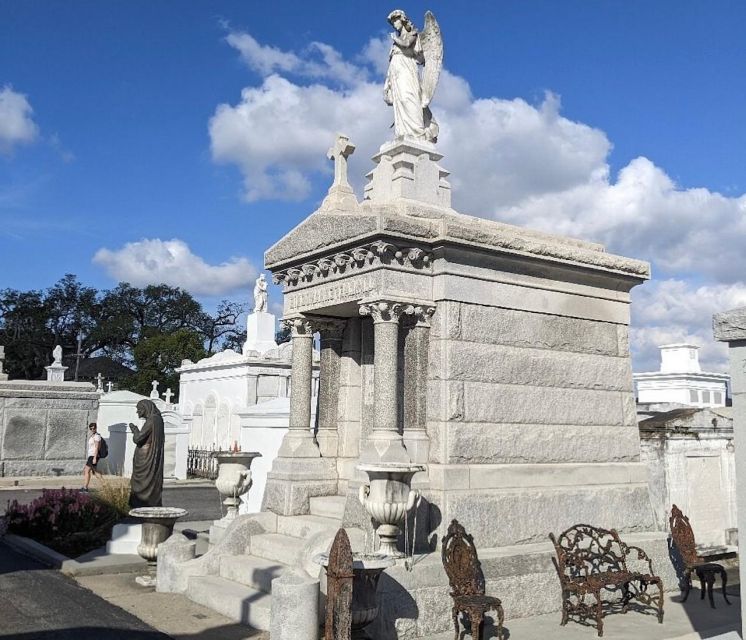
Then you get a brief stop at Metairie Cemetery. The quick format works here because the point isn’t to spend a full afternoon inside—it’s to understand the distinctive structure of above-ground tombs and why the burial tradition developed the way it did.
The guide typically explains how the city’s swamp-land conditions influence burial practices. That connection—the environment affecting choices about how people are laid to rest—makes the whole cemetery stop feel less like a sightseeing checkbox and more like local problem-solving turned tradition.
A practical note: cemeteries can be physically quiet, but you’ll still be standing and looking. Bring water if it’s hot. If you’d rather not be in a cemetery at all, you’ll want to skip this tour and choose something that keeps the whole day secular.
Saint Louis Cathedral: seeing North America’s oldest cathedral roots
Near the end, the tour passes by the Saint Louis Cathedral area. This is where landmark scale matters. The guide ties it to the cathedral’s roots dating back to 1720 along the Mississippi River banks.
Even when you’re only seeing it from outside, commentary helps you read what you’re looking at—how older religious institutions helped shape the city’s identity and how long timelines can coexist with modern life just a few blocks away.
If you’re the type who loves stories about origins, this is a strong finale. It closes the loop between neighborhoods you visited earlier and the deep historical thread running under the city.
Price and value: is $55 worth it for 3 hours?
At $55 per person for about three hours, the price only makes sense if you’re using the included pieces correctly. Here’s where the value comes from:
- Hotel pickup and drop-off: you’re paying for convenience and time you’d spend arranging transport otherwise.
- Air-conditioned mini-coach: you’re covering multiple districts in comfort.
- A live guide with live commentary: you get interpretive explanations, not just drive-by photos.
Food and drinks not being included is the main “gotcha,” especially if you plan to stop at Morning Call or want coffee after. Still, that’s also a plus for flexibility—you can eat light, choose your own pace, or skip the snack if you’re trying to keep the day lean.
Overall, I’d call this a good-value intro tour if your goal is to understand New Orleans quickly and intelligently, especially if it’s your first time in town.
Who should book, and who might not
Book this if:
- You want an organized overview of several key districts in one morning or afternoon.
- You care about architecture and neighborhood history more than clubbing or nightlife.
- You like guides who connect buildings to people, and people to events.
Consider skipping if:
- You want museums and indoor sites to take center stage, since this is structured as a multi-neighborhood route with passing views and brief stops.
- You’d rather avoid cemeteries as part of a tour plan.
- You’re expecting food to be included.
Also, if you’re picky about guides: the tour has included guides such as Joseph and Bob in recent sessions, and both style types can make the stories easier to remember—Joseph with clear, structured connections and Bob with humor and personality.
Should you book this New Orleans history and architecture tour?
I’d book it if you want the best use of a limited time window. Three hours sounds short, but the route is well chosen: it links landmark streets, residential architecture, a major park break, community history, a remembrance-and-art corridor, and a cemetery stop that explains local logic instead of just listing facts.
It’s also a good way to learn how to look at New Orleans. After this, you’ll walk your own hours differently—slower in the right places, with better context in your head, and fewer “wait, what am I actually seeing?” moments.
If you want a history-focused tour that doesn’t stay stuck on stereotypes and also doesn’t demand a full day, this is a solid fit.
FAQ
How long is the guided tour?
The tour lasts about 3 hours.
What’s included in the price?
You get hotel pickup and drop-off, travel in an air-conditioned mini-coach, a guide with live commentary in English.
Are food and drinks included?
No. Food and drinks are not included.
Where is hotel pickup available?
Pickup is available only from selected hotels in downtown New Orleans and the French Quarter.
What language is the live guide commentary?
The tour guide provides live commentary in English.
When should I be ready for pickup?
You should be ready curbside about 30 minutes before the scheduled tour time, since pickup times can vary.
What happens if the weather is bad?
If weather conditions are adverse, you can choose to reschedule for another date or receive a full refund.
Is there free cancellation?
Yes. You can cancel up to 24 hours in advance for a full refund.