REVIEW · NEW ORLEANS
The Soul of New Orleans: Jazz History Private Tour
Book on Viator →Operated by Withlocals · Bookable on Viator
Jazz history, but with street-level meaning. This private tour strings together the city’s jazz origins and the neighborhoods that shaped the sound, from Louis Armstrong Park to Frenchmen Street. I love how the route is built around specific places you can actually stand in. I also like that you get a private guide who can connect the music to Creole culture and the landmarks you pass every day.
The only real drawback to plan for is the walking pace. It’s about 2 hours 30 minutes with short stops, and you’ll want moderate fitness to keep the rhythm without getting cranky.
In This Review
- Key things you’ll notice on this jazz history tour
- Price and value: what $111.20 buys you in New Orleans
- Your 2.5-hour game plan: how the route keeps you moving
- Congo Square at Louis Armstrong Park: where you start hearing the roots
- Saint Ann Street and the Home of the Voodoo Queen: Creole culture in the real street
- Louis Armstrong Park meets Rampart Street: the street-level surprise factor
- Tennessee Williams’ House: when theater people loved music
- St. Mark’s United Methodist Church and the St Pierre Hotel: early jazz institutions
- Place de Henriette Delille and Preservation Hall: why small rooms matter
- Jackson Square: national landmark vibes, used for stories and street energy
- Palm Court Jazz Café at La Maison Perrilliat: elegant music, not just a party
- Louisiana Jazz Museum collections before Frenchmen Street: set your ears before the finale
- Frenchmen Street: finishing with the city’s live-music core
- Tips I’d use to get more out of this tour
- Who this tour is best for
- Should you book this New Orleans jazz history tour?
- FAQ
- How long is the Soul of New Orleans: Jazz History Private Tour?
- Is this tour private?
- Where does the tour start and end?
- Is hotel pickup included?
- Are there admission fees at the stops?
- Do I get a mobile ticket?
Key things you’ll notice on this jazz history tour
- Congo Square and Louis Armstrong Park link early influences to the story of jazz in one logical flow
- Voodoo and Creole culture stops give the context people usually miss while chasing clubs
- Preservation Hall and St. Pierre Hotel show how institutions helped protect the music
- Palm Court Jazz Café and Frenchmen Street steer you toward where the sound lives now
- A guide with city-specific instincts helps you avoid the tourist-shaped detours
Price and value: what $111.20 buys you in New Orleans
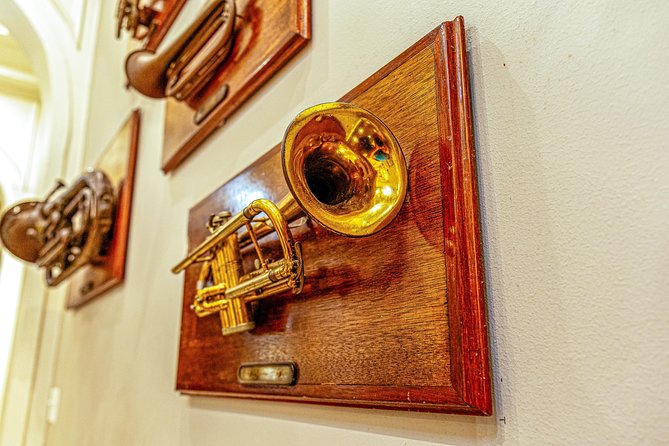
At $111.20 per person for roughly 2.5 hours, the value here isn’t about museum tickets or fancy transportation. It’s about getting a guide with time and attention—your time. Because it’s private, you’re not competing with a crowd for answers when you ask, Wait, how did jazz actually grow from this neighborhood?
The tour also benefits from the fact that the listed stops are handled with free admission on-site. That keeps your budget steadier, especially in the French Quarter where costs can quietly add up. One thing to know: there’s no hotel pick-up or drop-off, so you’ll start at the meeting point and finish near Frenchmen Street.
You can also read our reviews of more private tours in New Orleans

Your 2.5-hour game plan: how the route keeps you moving
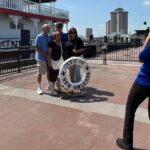
This tour runs about 2 hours 30 minutes and is structured as a sequence of short visits. Each stop is roughly 15 minutes, which means you’ll get enough time to look closely, hear the story, and still have time to walk to the next place.
That format works well if you want context without turning your day into a slog. It’s also ideal for first-timers because you’ll cover major landmarks in the French Quarter area without needing to “figure it out” between stops.
The meeting point is the Best Western Plus French Quarter Courtyard Hotel at 920 N Rampart St. The tour ends on Frenchmen Street, so plan to keep exploring in that area after you finish.
Congo Square at Louis Armstrong Park: where you start hearing the roots
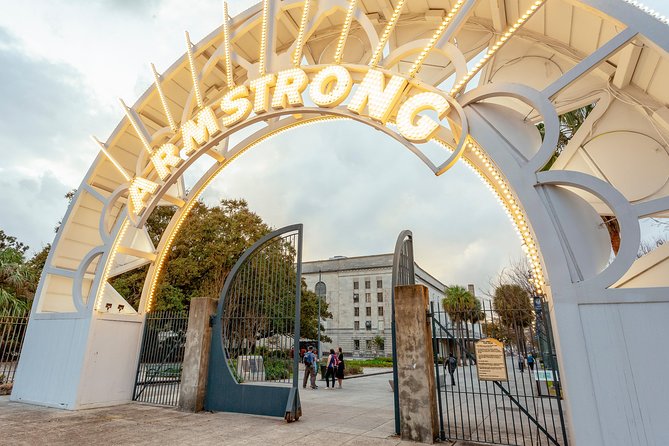
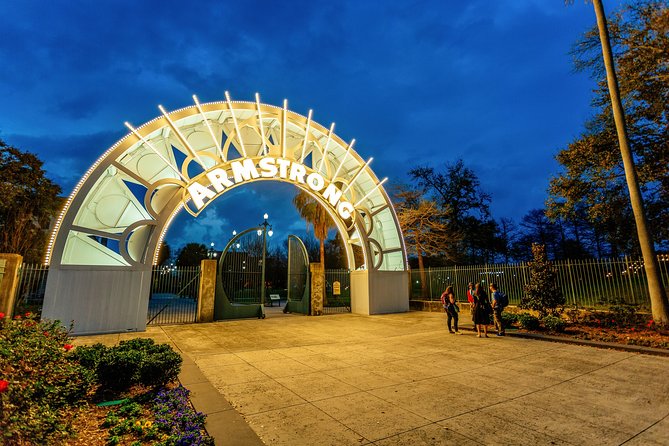
The tour begins at Congo Square near Louis Armstrong Park, and this is a strong choice because it anchors the story at the source. You’re not just hearing jazz history as trivia. You’re starting from a place tied to African cultural presence and community gatherings, which sets a foundation for why New Orleans music sounds the way it does.
You’ll spend about 15 minutes here, free to enter, focused on how the city’s cultural mix helped create a new musical language. It also helps you get your bearings fast for the days after—suddenly the neighborhood makes more sense.
If you like your music history with geography, this first stop does a lot of heavy lifting.
Saint Ann Street and the Home of the Voodoo Queen: Creole culture in the real street
From there, you head to Saint Ann Street, where the theme is Voodoo and Creole culture. This stop matters because it refuses to treat the city’s spiritual traditions like background noise. Instead, you’ll learn how these beliefs and the Creole worldview shaped community life and storytelling.
You’ll also visit the Home of the Voodoo Queen. The point isn’t sensationalism—it’s context. Understanding that New Orleans culture has always mixed music, belief, ceremony, and social life makes the jazz story feel less like a lecture and more like something people lived.
This is a good moment to ask your guide questions, especially if you’re trying to separate myths from history without losing what makes the traditions meaningful to locals.
Louis Armstrong Park meets Rampart Street: the street-level surprise factor
Next up is Louis Armstrong Park again, with attention on nearby Rampart Street. This area is packed with ordinary storefronts, and that’s exactly why the tour works: it shows you the “in-between” spaces where creativity can happen.
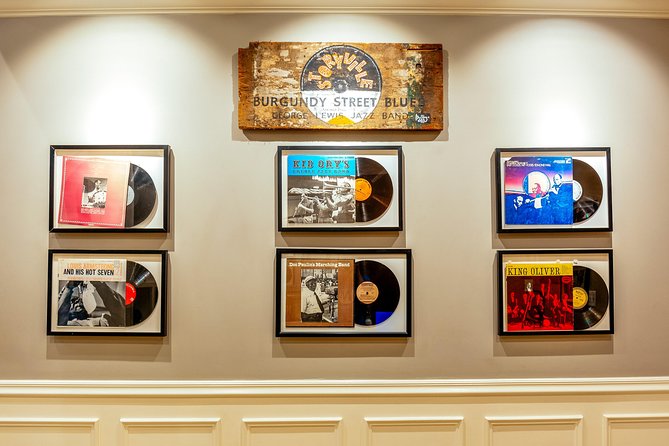
During this stop, you’ll hear about several lesser-known connections along Rampart Street, including a regular-looking laundromat that was once a recording studio for big-name stars. That kind of detail is what turns a famous neighborhood into something you can remember later.
If you’re the type who likes the behind-the-scenes side of famous people, you’ll appreciate how your guide points out connections you would not spot on your own.
You can also read our reviews of more historical tours in New Orleans

Tennessee Williams’ House: when theater people loved music
Then you’ll visit Tennessee Williams’ house, the home of the legendary playwright who was also devoted to music. This stop adds a different angle: not just jazz as a performance culture, but jazz as something that shaped artists who wrote the stories you still read.
It’s only about 15 minutes, and it’s not a deep museum experience. But it helps explain why New Orleans doesn’t treat art as separate boxes. Writers, musicians, and performers were feeding off the same creative atmosphere.
St. Mark’s United Methodist Church and the St Pierre Hotel: early jazz institutions
From there, the tour moves toward St. Mark’s United Methodist Church area, with a look inside the St Pierre Hotel. You’ll learn how it relates to the city’s musical heritage, including the fact that it was described as the world’s first jazz museum.
This is one of those stops that can feel easy to miss if you’re only hunting for the loudest places. But it’s valuable because it shows that preservation mattered early. Jazz wasn’t just entertainment; it was something people tried to document and protect.
Even if you’re not a “museum person,” this moment helps you understand why today’s venues work so hard to keep the tradition alive.
Place de Henriette Delille and Preservation Hall: why small rooms matter
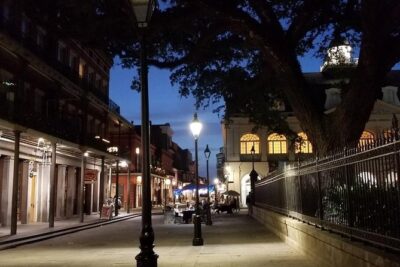
You’ll head to Place de Henriette Delille, and from there you’ll visit Preservation Hall, located in the heart of the French Quarter on St. Peter Street. This is where the tour shifts from history to what jazz looks like in practice today.
The emphasis here is on intimate, acoustic performances and the fact that Preservation Hall has concerts hundreds of nights a year, featuring ensembles from a local collective of master practitioners. In other words, it’s not just a building that honors the past. It’s a working music engine.
If you’ve ever wondered why New Orleans jazz can feel both old and newly alive at the same time, this is the place to understand that contrast.
Jackson Square: national landmark vibes, used for stories and street energy
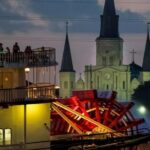
Next is Jackson Square, a historic park in the French Quarter that became a National Historic Landmark in 1960. This stop gives you a real sense of why tourists and artists both orbit this corner of the city.
What I like about stopping here on a jazz history tour is the way it frames the French Quarter as a stage where culture, spectacle, and everyday life collide. Your guide can tie the landmark energy back to the music story, instead of letting Jackson Square become just a photo break.
It’s about 15 minutes and free to enter—perfect for a reset before you lean deeper into live music.
Palm Court Jazz Café at La Maison Perrilliat: elegant music, not just a party
After Jackson Square, the tour connects to the area near La Maison Perrilliat and then focuses on the Palm Court Jazz Café. This is one of the city’s well-known music venues, and it makes a helpful contrast to the smaller, more raw-feeling places you’ll see later.
The stop is short, but the benefit is direction. Your guide’s commentary helps you understand how different venues create different vibes, so you can pick based on what you want to feel—not only what looks famous.
If you care about where to spend your evening time, this kind of venue guidance is gold.
Louisiana Jazz Museum collections before Frenchmen Street: set your ears before the finale
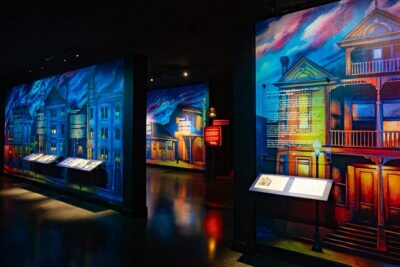
Just before Frenchmen Street, the tour makes a stop at the Louisiana Jazz Museum to view its collections. This is a smart move because it prepares you for what comes next: live music and the day-to-day music culture people actually use.
Even with a limited time window, seeing the collections helps you interpret what you hear later. You’ll pick up a better sense of how recordings, influences, and local practitioners connect to the sound happening tonight.
It’s another free admission moment, about 15 minutes, that makes the last leg feel more intentional.
Frenchmen Street: finishing with the city’s live-music core
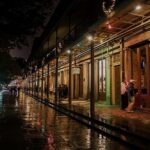
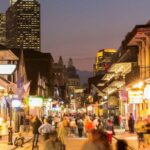
The final stop is Frenchmen Street, and the tone changes into practical music-planning mode. You’ll stroll down the street and get tips on where to listen and how to make the most of the time you have.
Your guide also points you toward places like the Louisiana Music Factory, with shelves of albums from across ages. That matters if you want to take something home that reflects what you heard, not just what was convenient.
Frenchmen Street can be lively, and that’s the point—but your guide helps you navigate it with confidence. Instead of wondering which venue is worth your hour, you’ll leave with a sense of what to choose.
Tips I’d use to get more out of this tour
- Pay attention when your guide ties jazz to daily life, not only famous musicians. That’s where the story starts to make sense.
- If you’re hungry, ask for food suggestions alongside music. One standout feature in this experience is that your guide can steer you toward great local spots, not just sights.
- Bring good walking shoes. Short stops add up to real time on your feet.
Who this tour is best for
This works especially well if you:
- Want a focused overview of how jazz grew from specific New Orleans places
- Prefer a private guide who can answer your questions in context
- Like culture stories that include Creole traditions and the spiritual side of community life
- Plan to spend your evenings on the music side of town and want smart venue guidance
If you’re trying to pack an entire day of nonstop stops, you might find this tour’s walking pace a bit busy. But if you like “look, listen, connect,” it’s a strong match.
Should you book this New Orleans jazz history tour?
I think you should book it if your goal is understanding, not just checking boxes. The value is in the private local guide angle: you get story links that make the French Quarter feel coherent, plus venue tips that help you turn what you learn into your evening plans.
Skip it only if you want a longer, inside-heavy museum experience or you’re not comfortable with about 2.5 hours of walking between multiple stops.
If you’re on the fence, remember this: starting at Congo Square and ending on Frenchmen Street is a clean line through the city’s jazz world. It’s an easy route to trust—especially when you’ve got someone local guiding the connections.
FAQ
How long is the Soul of New Orleans: Jazz History Private Tour?
It runs about 2 hours 30 minutes.
Is this tour private?
Yes. It’s a private tour, and only your group participates.
Where does the tour start and end?
It starts at Best Western Plus French Quarter Courtyard Hotel, 920 N Rampart St, New Orleans, LA 70116. It ends on Frenchmen Street.
Is hotel pickup included?
No. Hotel pickup and drop-off are not included.
Are there admission fees at the stops?
The tour’s listed stops show free admission ticket information for each site.
Do I get a mobile ticket?
Yes, the tour uses a mobile ticket.