REVIEW · NEW ORLEANS
New Orleans Music Heritage Tour
Book on Viator →Operated by New Orleans Music & Heritage Tour · Bookable on Viator
New Orleans music walks fast. This 2-hour guided trek weaves 300 years of jazz, blues, and gospel through the French Quarter, Treme, and beyond, with audio clips you can play on your phone. I like the mix of famous landmarks and practical context from Keith, a Louisiana record man with 20 years in the business. The only catch is it is real walking and the stories can lean adult, so plan accordingly.
You start on Frenchmen Street at Louisiana Music Factory, then end near St. Louis Cathedral with street musicians often performing. The price is just $30, and that feels fair once you add the guided storytelling, the music listening moments, and the fact that several stops are free to enter. If your group needs lots of seated time or quiet history, this tour is probably not the right fit.
In This Review
- Key things I’d circle before you go
- A 2-hour New Orleans music walk that covers 300 years
- Where you meet: Frenchmen Street and Louisiana Music Factory
- Stop-by-stop: how the route tells the New Orleans sound story
- French Quarter highlights: Danny Parker, brass bands, and the Bourbon Street era
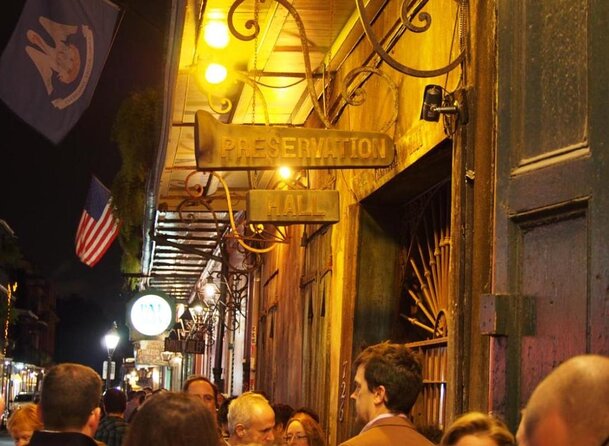
- Preservation Hall: a quick hit at a legendary address
- Louis Armstrong Park and the Treme influence
- Congo Square: where the story keeps going
- The Bluetooth audio piece: why it actually works on the street
- Price and value: $30 for a guided music map
- Who this tour fits best (and who might want to skip)
- Practical details that help you enjoy it more
- Should you book the New Orleans Music Heritage Tour?
- FAQ
- How long is the New Orleans Music Heritage Tour?
- How much does the tour cost?
- Where do I meet the guide?
- Where does the tour end?
- What language is the tour offered in?
- Is there a maximum group size?
- Are service animals allowed?
- Do children need to be accompanied by an adult?
- What happens if the weather is bad?
- What is the cancellation policy?
Key things I’d circle before you go
- Keith at Louisiana Music Factory: you begin with a record-store mindset and a guide who links songs to places
- Bluetooth audio along the route: you get music excerpts right where the story happens
- Stops that match the genres: French Quarter, Preservation Hall, Louis Armstrong Park, and Congo Square
- Small-group feel: capped at 28 travelers, so it stays personal
- Adult-leaning stories: fun and sometimes bawdy, not a kid-only experience
- Ends near buskers: you can keep the music going right after the tour
A 2-hour New Orleans music walk that covers 300 years
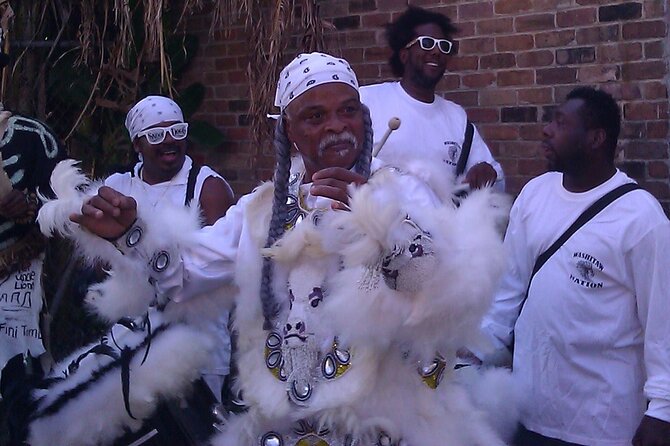
This is the kind of tour that makes New Orleans feel like a playlist with a map. You are not just seeing buildings. You are learning why certain neighborhoods shaped the sound, then hearing clips tied to specific locations as you go.
At about 2 hours long, it fits well as a first-night activity or a morning plan before dinner. You walk enough to earn a good appetite, but you also get frequent enough stop-points that it does not feel like a long slog with no payoff.
And yes, the tour is built for music lovers. Expect jazz, blues, gospel, brass band culture, and even rock and roll touchpoints along the route.
You can also read our reviews of more historical tours in New Orleans

Where you meet: Frenchmen Street and Louisiana Music Factory
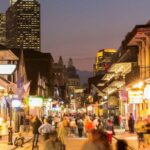
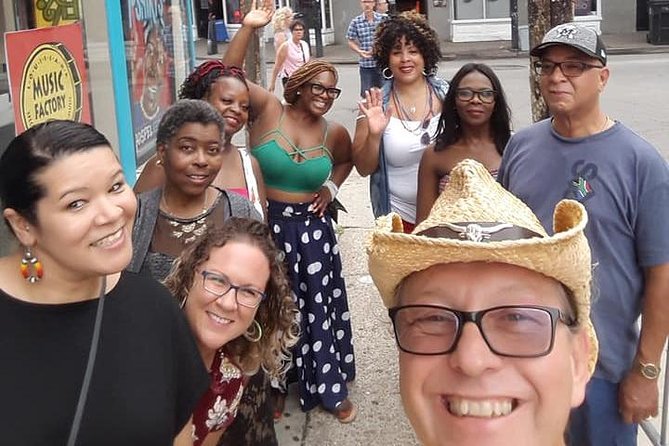
Your day starts at 421 Frenchmen St at Louisiana Music Factory. This matters because Frenchmen Street is one of the best places in town for hearing live music without planning a reservation. Even if you are new to NOLA, the street sets your expectations: music is not an exhibit here. It is part of the neighborhood rhythm.
Keith leads from this record-store base. The tour is arranged so that what you talk about can often be found in the shop itself, which is great if you want to leave with a couple albums or look up a name you heard on the walk.
You get music listening along the way too. The tour includes Bluetooth speaker capability, so the audio accompaniment is meant to float through the street stops, not just play inside your head. If you are the type who learns faster with sound, this format helps.
Stop-by-stop: how the route tells the New Orleans sound story
This route moves through the French Quarter and adjacent neighborhoods with a clear theme: music changes over time, but it keeps local roots.
You also cross key streets as you go, so the walking feels like a guided route through the city’s musical geography rather than a random assortment of photo stops.
French Quarter highlights: Danny Parker, brass bands, and the Bourbon Street era
After you meet, the tour brings you into the French Quarter. The itinerary includes a stop at the boyhood home of Danny Parker, and the story is tied to how New Orleans brass band heritage could be saved by a single determined man. That is the kind of detail that turns a neighborhood from scenery into a cause-and-effect story.
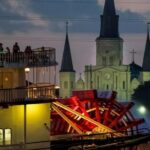
From there you move past major French Quarter landmarks and venues tied to jazz culture, including stops around Place de Armes and Preservation Jazz Hall. Then you stroll down Bourbon Street—the street where, at one time, some of the biggest names were blasting jazz into the night.
It is the ideal spot for a listening moment. The tour frames Basin Street-era vibes through the sound and energy of that time, including references to clarinet-driven blues like Basin Street Blues. You do not have to be a hardcore musician to catch the point: New Orleans music often spreads through public space first, then becomes history.
Later in this stretch you pass Mister New Orleans and J&M Studios, described as the Home of Rock N Roll. That is a useful pivot in the tour, because it reminds you that New Orleans music influence did not stop at jazz and blues. It traveled.
One practical note: Bourbon Street is not a quiet street. If you are sensitive to noise, bring your patience for lively street energy while you listen for what Keith is pointing out.
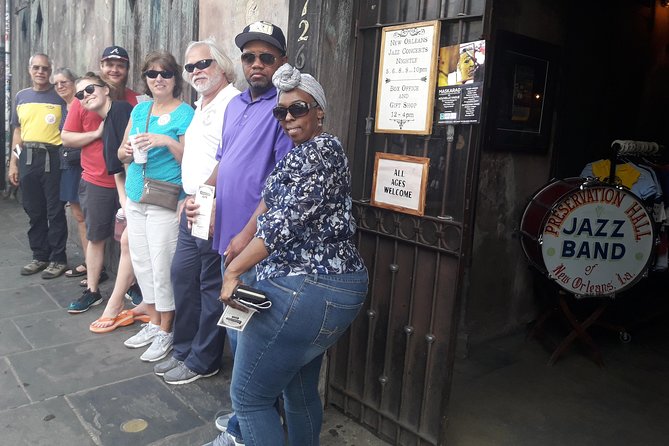
Preservation Hall: a quick hit at a legendary address
Next is Preservation Hall. This stop is short, but it is meaningful because Pres Hall is tightly associated with how jazz performance traditions have survived in New Orleans.
You will visit the gift shop and have time for a photo. That makes this a quick cultural checkpoint: you leave with a tangible reminder without losing time in the middle of the walking rhythm.





Louis Armstrong Park and the Treme influence
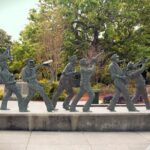
Then you head to Louis Armstrong Park, where you see the Louis Armstrong statue. This is not just a photo moment. The tour ties the park to the Treme, described as America’s first African-American neighborhood, and discusses how those community roots influenced the music.
The guide’s strength here is connecting person, place, and sound. You are not only hearing facts. You are seeing how a neighborhood identity gets carried through artists and audiences.
If you like “why did the sound happen here” questions, this is one of the strongest segments of the walk.
Congo Square: where the story keeps going
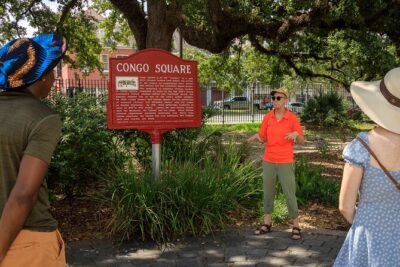
The route also includes Congo Square. The stop is brief, but it is an important part of the overall music-heritage arc.
Even if you already know the headline about Congo Square, the way the tour threads it into the larger jazz and gospel timeline is useful. It helps you connect early cultural gathering spaces with later musical forms you hear across the city.
The Bluetooth audio piece: why it actually works on the street
Lots of walking tours say they will play music. This one includes Bluetooth speaker capability, which changes how you experience the stops.
When the audio syncs to the location, you start hearing the city differently. A street corner is suddenly not just a landmark. It is a cue for what was happening there sonically—blues, jazz, or gospel rhythms tied to the setting.
If you show up with headphones already loaded, you can still use that for your own listening. But the tour’s goal is simpler: use short clips and a local guide’s context so you understand what you are hearing while you are standing in the place.
Practical tip: if you plan to connect your phone for audio, arrive with Bluetooth working. Old batteries and shaky settings are the easiest way to ruin a good music moment.
Price and value: $30 for a guided music map
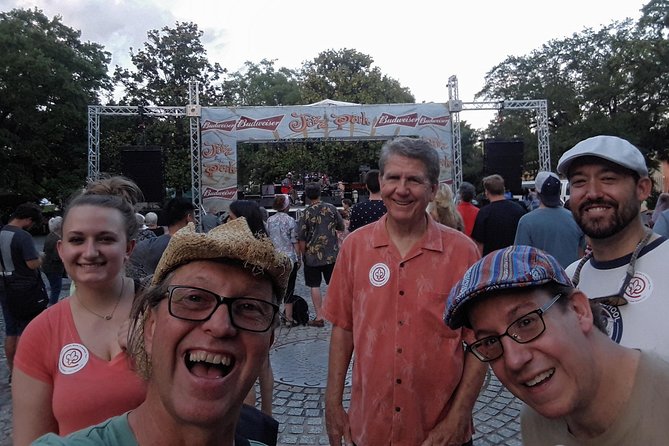
At $30 per person for about 2 hours, this tour is priced like an affordable intro, not a premium production. Several stops are noted as admission-ticket free, so you are mostly paying for the guide and the format: walking route + stories + audio.
Here is why that feels like good value for the right person:
- You get an industry-experienced guide (Keith, with 20+ years in record business)
- You get context tied to specific neighborhoods, not just general facts
- You get music clips as you move, which makes the experience more than a slideshow walk
If you are the type who likes to wander on your own, you might skip tours and just listen to buskers. But if you want the connections—how Danny Parker ties into brass band heritage, how Pres Hall fits into the survival of tradition, how Congo Square and the Treme fit into the bigger story—this is the quicker path.
Who this tour fits best (and who might want to skip)
This tour is a great match if you:
- Love jazz and want the city’s music story without reading a book first
- Prefer guided walking with short stop-points instead of long museum time
- Enjoy hearing music tied to places, not just dates
It may be less ideal if you:
- Need a mostly seated experience
- Are traveling with kids who get cranky with steady walking or may not handle adult-leaning stories
- Expect a quiet, hushed lecture
Also, the tour is capped at 28 travelers, which keeps the vibe more human-sized. It is not a cattle-car approach.
Practical details that help you enjoy it more
Bring comfortable shoes. You are walking through multiple French Quarter and neighborhood pockets, and the fun depends on keeping your feet happy.
The tour is listed as offered in English and you receive a mobile ticket. Service animals are allowed, and it is described as near public transportation, so you do not have to stress too hard about getting there by foot alone.
One more small reality check: the tour is weather-dependent and is described as requiring good weather. New Orleans weather can change fast, so if you are planning your schedule tightly, keep a little flexibility.
Should you book the New Orleans Music Heritage Tour?
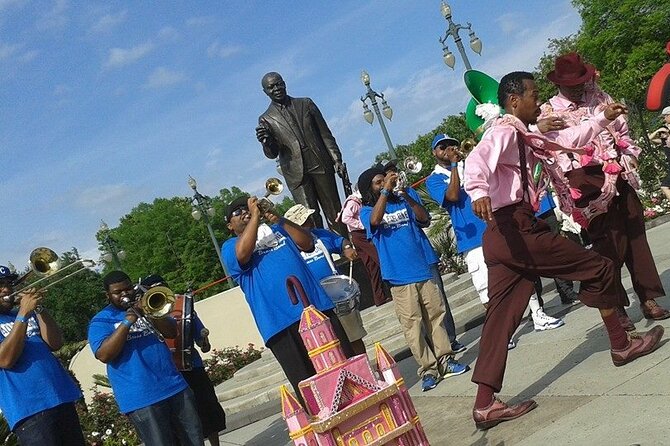
If you care about New Orleans music as a living story—jazz, blues, gospel, brass bands, and how it all connects to neighborhoods—this is an easy yes. At $30 for about two hours, you get a guided route that points you to the right places and helps you hear what you are seeing.
I would book it early in your trip, because it gives you a soundtrack for later wandering. If you want a simple itinerary where you just follow a guide to icons, this delivers. If you want history that feels attached to sound and streets, this delivers that too.
If your group includes kids, I would think twice and plan on adult companionship and patience. If you want quiet, go find a museum day instead. Otherwise, get ready for a walking music map that feels like New Orleans is talking back.
FAQ
How long is the New Orleans Music Heritage Tour?
It is about 2 hours.
How much does the tour cost?
The price is $30.00 per person.
Where do I meet the guide?
Meet at Louisiana Music Factory, 421 Frenchmen St, New Orleans, LA 70116.
Where does the tour end?
The tour ends at 712 Royal St, New Orleans, LA 70116, near St. Louis Cathedral.
What language is the tour offered in?
The tour is offered in English.
Is there a maximum group size?
Yes. The tour lists a maximum of 28 travelers.
Are service animals allowed?
Yes, service animals are allowed.
Do children need to be accompanied by an adult?
Yes. Children must be accompanied by an adult.
What happens if the weather is bad?
The experience requires good weather. If canceled due to poor weather, you are offered a different date or a full refund.
What is the cancellation policy?
You can cancel up to 24 hours in advance for a full refund. Canceling less than 24 hours before start time is not refunded.