REVIEW · NEW ORLEANS
New Orleans: French Quarter Sightseeing Carriage Ride
Book on GetYourGuide →Operated by Royal Carriages · Bookable on GetYourGuide
A mule and carriage tour beats the French Quarter shuffle. You sit back, relax, and get a guide’s running commentary as you glide past some of New Orleans’ most famous stops.
What I really like is the easy pace—it’s an off-your-feet way to see the area without fighting crowded sidewalks. I also enjoy how the live narration brings streets and buildings to life, with stories that connect Jackson Square, Bourbon Street, and the Marigny’s live-music side.
One thing to consider: it’s a moving ride, so you might find it a little hard to hear from farther back, and photo chances can feel brief since you’re mostly passing landmarks.
In This Review
- Key things that make this ride worth your time
- Why a mule carriage is a smart way to see the French Quarter
- Where the ride starts: Jackson Square red umbrella meets Decatur at St Peter
- Jackson Square to St. Louis Cathedral: your first big anchors
- Napoleon House and the French Market: history you can picture
- Bourbon Street without the crush
- Faubourg Marigny guided stretch: architecture and the local music side
- Price and comfort: does $65 for one hour make sense?
- Your guide matters: humor, real stories, and hearing the narration
- Practical tips for a smoother ride
- Who this tour suits best in New Orleans
- Should you book this French Quarter mule carriage ride?
- FAQ
- How long is the French Quarter sightseeing mule and carriage ride?
- How much does the tour cost?
- Where do I meet for the tour?
- Is hotel pickup and drop-off included?
- Can I bring luggage or large bags?
- Are children allowed, and do toddlers pay?
- Is the tour wheelchair friendly?
- Are pets allowed?
- Does the carriage ride run in bad weather?
- Is food or drink included?
Key things that make this ride worth your time
- Licensed local guide storytelling that turns famous landmarks into real scenes and characters
- Covered seating so the ride stays comfortable in typical rain-or-shine New Orleans weather
- A practical overview of the French Quarter’s layout, not just a list of stops
- Faubourg Marigny time to see architecture and the local live-music area
- Mule personality factor, with many guides building a light, fun vibe around their animal partner
- A calmer way through narrow streets, where walking can be slow and crowded
Why a mule carriage is a smart way to see the French Quarter
If you’ve ever tried walking the French Quarter in peak hours, you already know the problem: it’s narrow, busy, and it’s easy to get sidetracked. This ride solves that by trading walking for motion. You can watch street life glide by while your guide points out what matters.
The tour also gives you a real “first pass” through the neighborhood. In one hour you’ll get the big landmarks lined up in your head, plus the context for what you’re looking at—so later, when you’re on your own, you move faster and you notice more.
And yes, it’s fun. The carriage setup feels old-school in a good way, and the mules are part of the charm. Several guides make a point of connecting the ride with their animal, and the result is a tour that feels human, not just educational.
You can also read our reviews of more tours and experiences in New Orleans.

Where the ride starts: Jackson Square red umbrella meets Decatur at St Peter
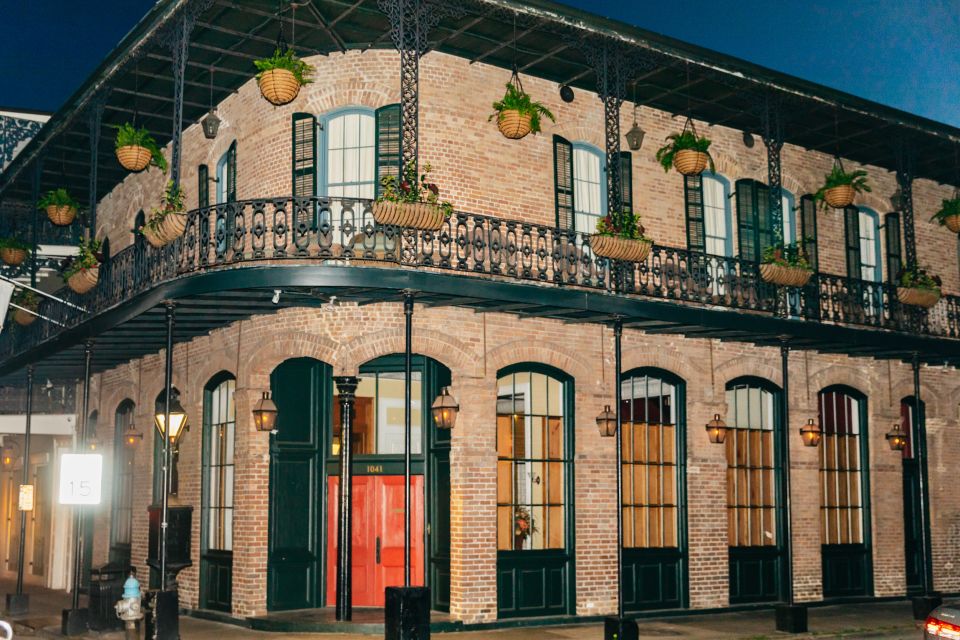
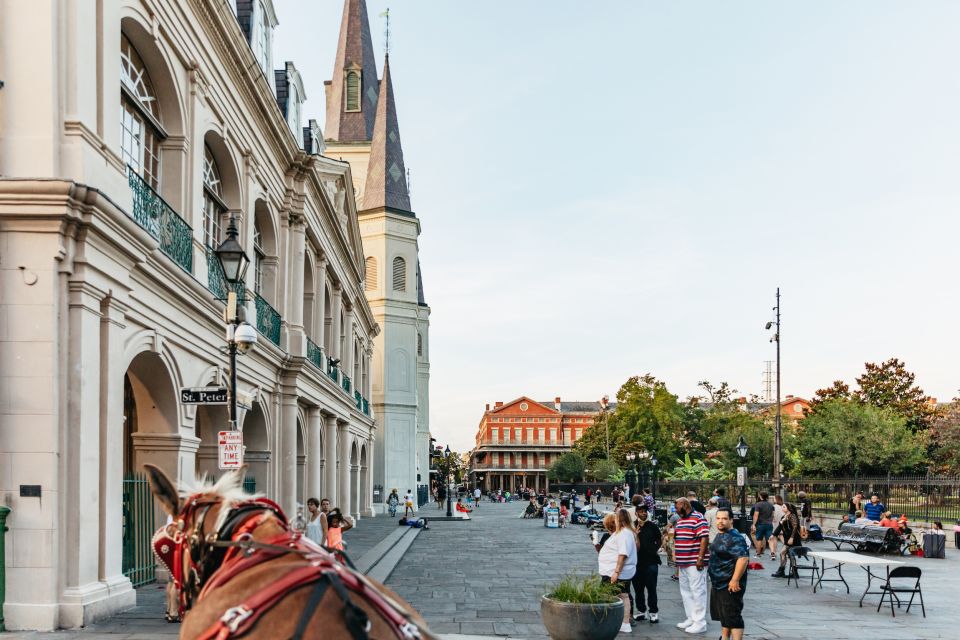
You meet at the red umbrella in front of Jackson Square, normally near St Peter Street. The staff from Royal Carriages wear red shirts, which makes it easier to find once you’re there.
Plan to arrive early, because if you show up after your start time you’re considered a no-show. Also note that meeting points and routes can shift during festivals and parades due to street closures—so if you’re in town around a big event, give yourself a little extra buffer.
This is also a good place to set expectations. The French Quarter is a walking neighborhood with constant traffic and crowd flow, so you’ll want to treat the meeting area like a queue, not like a casual hangout.
Jackson Square to St. Louis Cathedral: your first big anchors
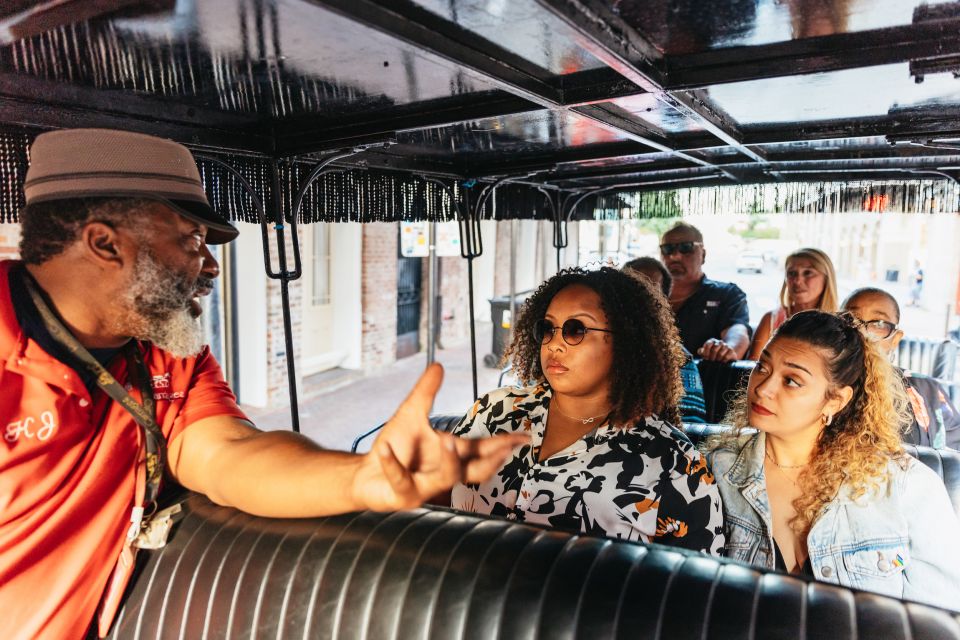
After you start near Jackson Square, the ride loops you through the French Quarter’s key visual anchors. You’ll pass St. Louis Cathedral and then continue toward Jackson Square, both central points people use to orient themselves.
From the carriage, you get a better sense of spacing and sightlines than you would on foot. Cathedral façades and square views can feel like “postcard stops” from sidewalks, but from a moving, slightly elevated viewpoint you notice the surrounding buildings and street geometry.
What makes this section work best is the guide’s commentary. You’re not just seeing the places—you’re hearing how the area developed and why these landmarks became symbols. It’s the kind of context that helps you understand why locals still talk about the French Quarter in specific, personal terms rather than as one uniform tourist zone.
Napoleon House and the French Market: history you can picture
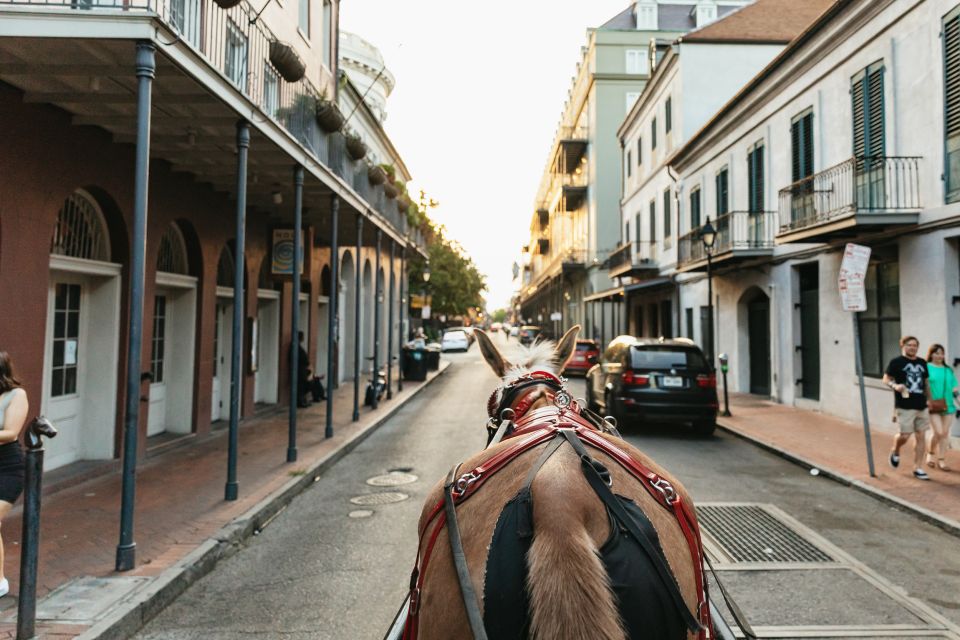
Next you’ll pass Napoleon House and the French Market area. This is where the tour’s narration really earns its keep. Instead of treating buildings like backdrops, you hear what people used them for and how the neighborhood identity took shape.
Napoleon House is one of those stops that’s famous because it’s been there, long enough to collect stories. The French Market brings the “everyday life” side of the Quarter into the mix—traders, commerce, and the sense that this area has always been about more than just nightlife.
A practical thought: since you’re mostly passing, you won’t get an extended stroll inside every spot. But you will get enough direction that if something catches your eye—an architectural detail, a street angle, the feel of the market area—you can follow up later on your own time.
Bourbon Street without the crush
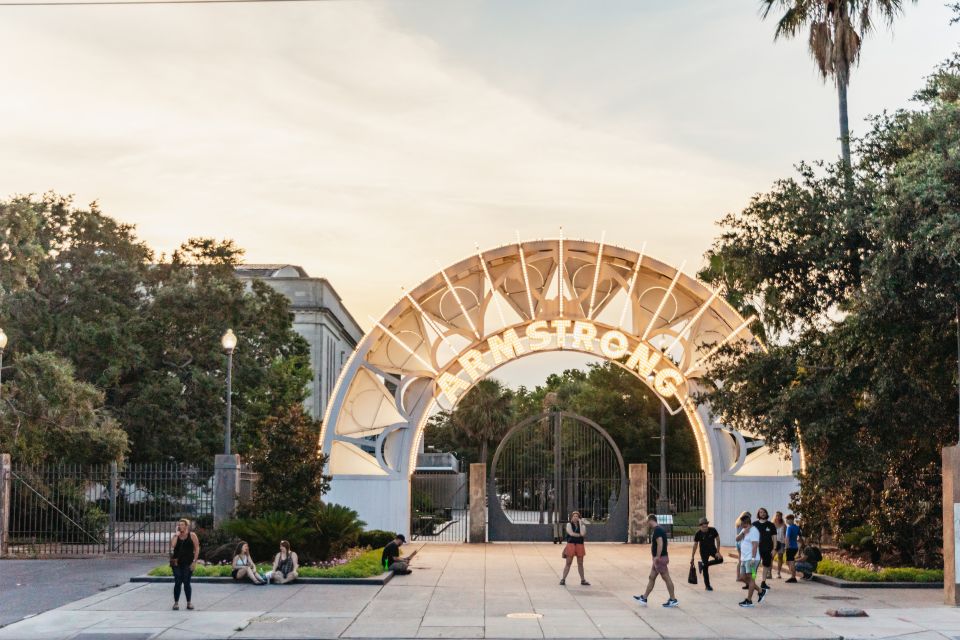
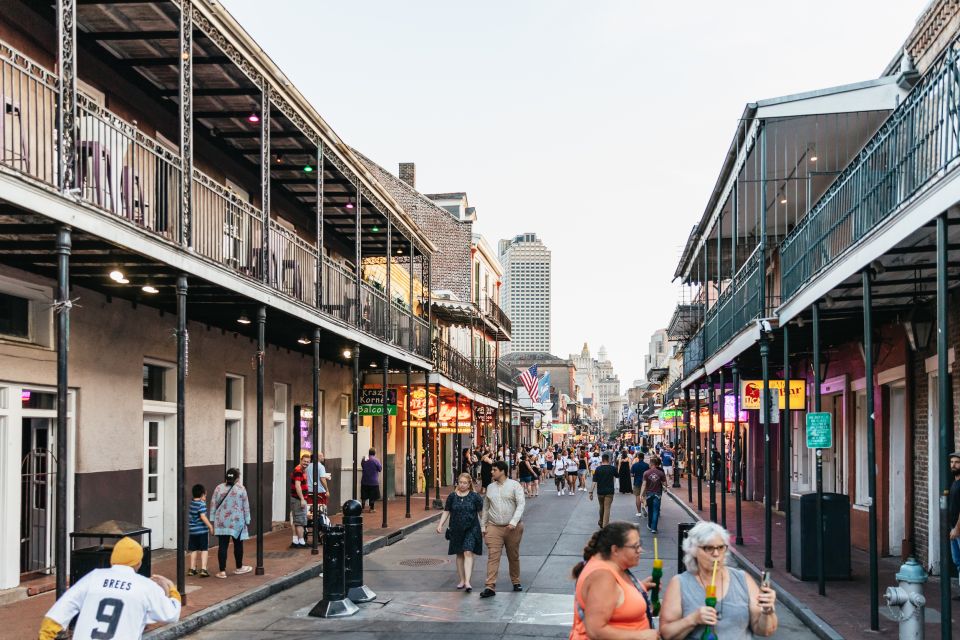
You’ll pass Bourbon Street on the ride. This is exactly the place many people get stuck—too much foot traffic, too much noise, and too many detours. From the carriage, you get the street’s “energy” without being packed in.
The key value here is perspective. You see how Bourbon fits into the Quarter’s tight street network, and your guide helps you connect what you see to the Quarter’s larger story. It’s a useful moment for first-timers because you leave with a mental map.
Do keep one consideration in mind: sound on Bourbon-area streets can be chaotic. A few people noted that hearing the guide can be tougher depending on where you’re sitting and how much street noise surrounds you. If you want the narration more clearly, choose a seat closer to the front when possible.





Faubourg Marigny guided stretch: architecture and the local music side
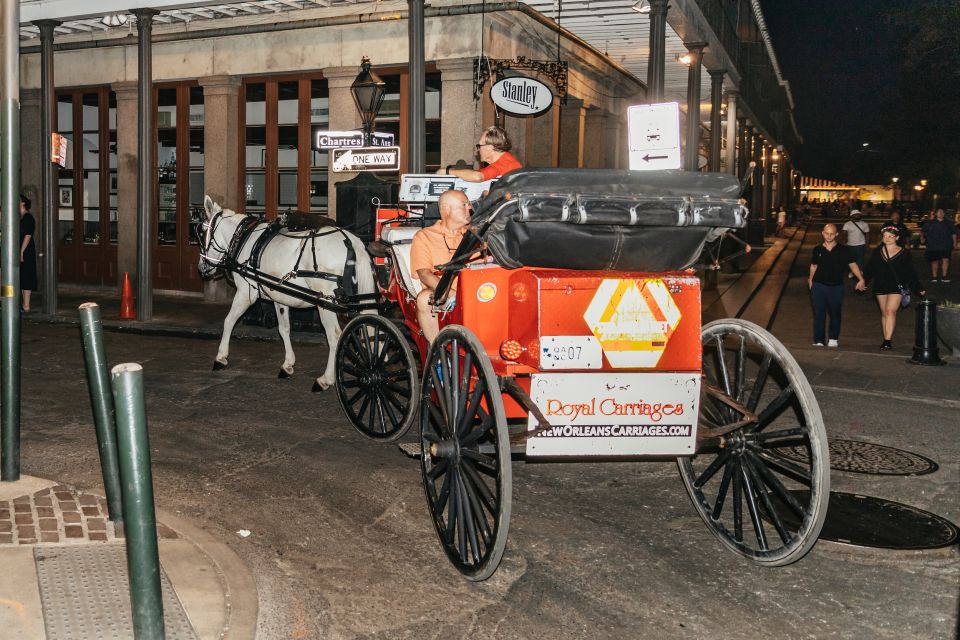
The ride doesn’t stop at the classic Quarter postcard loop. You also go into Faubourg Marigny, including a guided portion (depending on which option you book). This area often feels less like a theme park and more like a real neighborhood with a strong music identity.
Here you’ll see different styles of architecture and a sense of place that’s distinct from the French Quarter’s main lanes. It’s also where the tour’s “stories and scenes” approach pays off, because your guide can explain the character of the streets you’re rolling through.
One of the best parts is that this segment helps you broaden your trip. If all you do is bounce between Jackson Square and Bourbon Street, you’ll miss the quieter architectural texture and the local live-music district energy nearby. This makes the hour feel more like an orientation plus a bonus neighborhood, not a single-strip sightseeing loop.
Price and comfort: does $65 for one hour make sense?
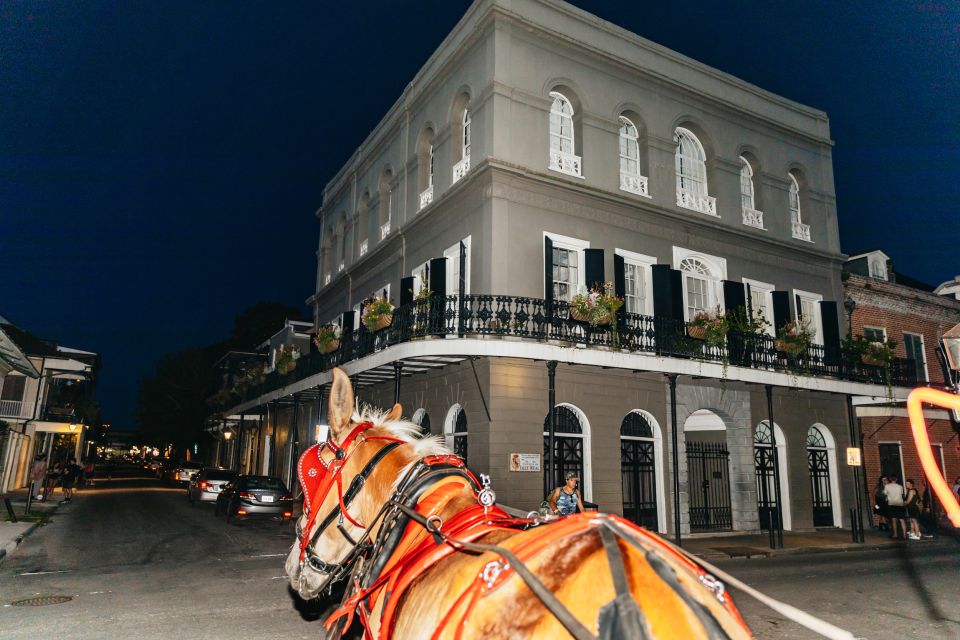
At $65 per person, this isn’t the cheapest way to see New Orleans. But value here comes from what you’re buying: a trained, licensed guide, a relaxed pace, and a mode of transport that works well in a dense, narrow area.
You’re paying for three things that add up quickly if you’d do them another way:
- You avoid the time cost of walking (and the constant crowd slowdowns).
- You get narrative context without having to research every corner.
- You’re on a covered ride that stays comfortable through rain.
If you book private or small-group options, the value can shift even more toward comfort and attention—especially if you’re traveling with kids, want quieter conversation, or simply prefer less “shared” energy.
So is it worth it? For me, it checks out if your goal is an easy, guided overview early in your trip. If you’re already spending plenty of time walking and you want full control over stops and photo time, you might feel the hour passes quickly. But if you’d rather get your bearings fast, this is a solid buy.
Your guide matters: humor, real stories, and hearing the narration
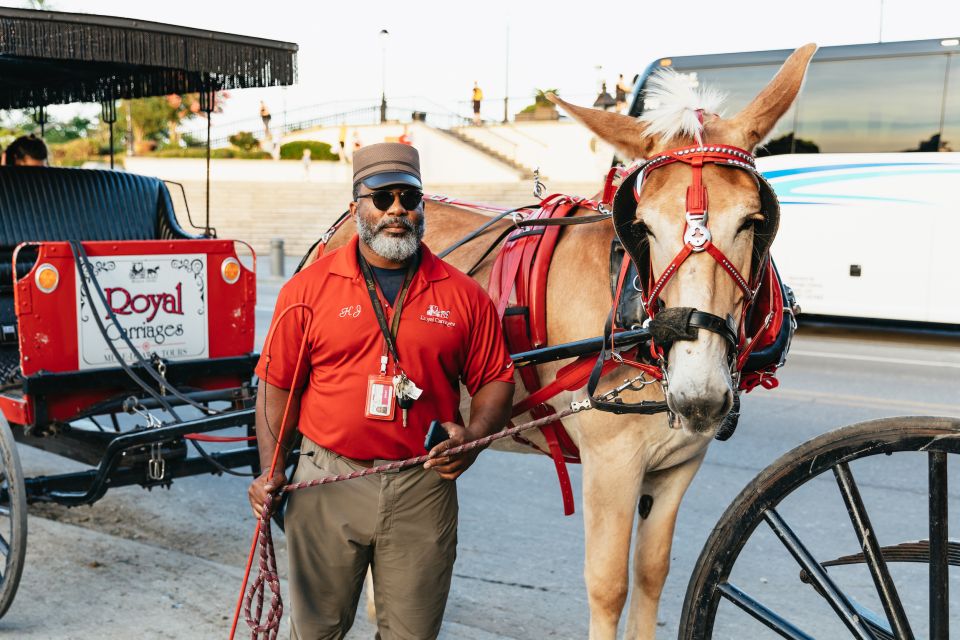
The guide can make or break this kind of tour. The good news: this experience tends to attract guides who mix history with a sense of fun. People have specifically highlighted guides like Mike (with a playful, funny style), Glen, Tony, Amy, Marty, Lucas, and Lucy.
You’ll often notice two threads in their approach:
- They tell stories that connect landmarks to the people who shaped the neighborhood.
- They keep the ride lively, not stiff, so you’re not just listening—you’re reacting.
That said, there’s one real-world challenge: hearing. A couple of riders noted that being farther back made it harder to catch every word, likely because of street noise and the way the carriage moves. If clear narration is your top priority, consider choosing a front-row spot when you can.
Also, one caution from the recorded feedback: language used by guides can vary. If you’re sensitive to inclusive language and historical phrasing, it’s worth trusting your judgment in the moment and focusing on your comfort. Guides differ in style, and that matters.
Practical tips for a smoother ride
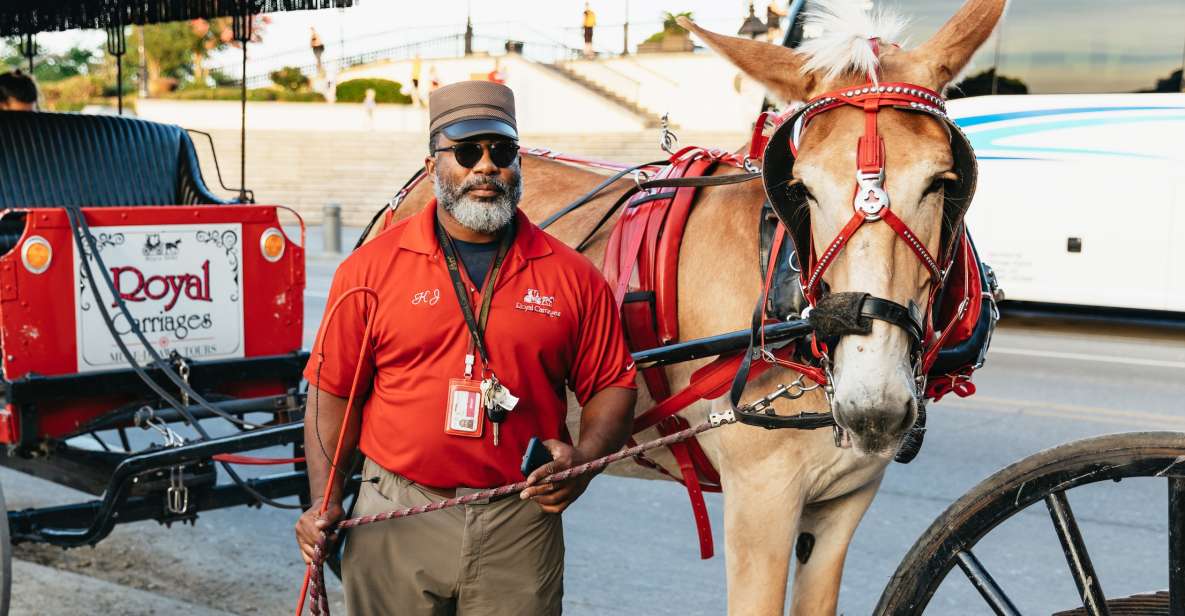
Here’s how to set yourself up so the hour feels easy instead of stressful.
- Skip large bags and luggage. Luggage or large bags aren’t allowed, so travel light.
- Bring a beverage if you want one. Food and drinks aren’t included, but you may bring your own beverage on board.
- Expect street changes. Routes can be affected by parades and festivals due to closures, so don’t be surprised if the area looks different than usual.
- Rain-ready, but don’t gamble with timing. The carriage tours run in rain or shine, and there are no refunds for missed appointments due to rain. In extreme weather, tours might cancel for safety, so watch for updates around your start time.
- Pets and mobility notes. Small pets under 20 lbs are welcome. Wheelchairs can be locked up at the Jackson Square meeting point.
One more small detail that helps: this ride is a “pass-and-learn” format. If you’re hoping for long stops for photos, you might be happier viewing it as a guided circuit that helps you decide what to explore next.
Who this tour suits best in New Orleans
This is a great fit if you’re:
- In the French Quarter for the first time and want a quick, guided orientation
- Tired of negotiating crowds and narrow streets on foot
- Traveling with older kids or teens who can enjoy stories but don’t need a museum stop
- Looking for a comfortable, low-effort outing that still feels distinctly New Orleans
It also works well on a day when you want something planned that doesn’t depend entirely on your energy level. Sitting on covered seating while your guide points out landmarks can be a nice reset in the middle of a busy itinerary.
If you’re a hardcore architecture walker who wants long time on each block, you might feel limited by the one-hour duration and the fact that you’re mostly passing stops. But for most people, the trade-off is worth it.
Should you book this French Quarter mule carriage ride?
I’d book it if your goal is to get your bearings fast, learn the neighborhood story as you go, and enjoy a comfortable ride that’s designed for the French Quarter’s tight streets. The combination of live narration, licensed local guidance, and the chance to see not only the main sights but also Faubourg Marigny makes this feel like more than a novelty.
Skip it if you already know the French Quarter well, you want lots of long photo stops and free roaming, or you’re extremely picky about hearing clarity from your seat. In that case, a walking plan might feel more tailored.
If you’re deciding today, my advice is simple: book it early in your trip. That way the hour works like a map in motion, and everything you do after feels easier.
FAQ
How long is the French Quarter sightseeing mule and carriage ride?
The tour lasts 1 hour.
How much does the tour cost?
The price is $65 per person.
Where do I meet for the tour?
Meet at the red umbrella in front of Jackson Square, normally near St Peter Street (this can change during festivals). Staff wear red shirts.
Is hotel pickup and drop-off included?
No. Hotel pickup and drop-off are not included.
Can I bring luggage or large bags?
No. Luggage or large bags are not allowed.
Are children allowed, and do toddlers pay?
Children 3 and under are free and considered Lap Children.
Is the tour wheelchair friendly?
Wheelchairs can be locked up at the Jackson Square meeting point.
Are pets allowed?
Small pets under 20 lbs are welcome.
Does the carriage ride run in bad weather?
Tours operate in rain or shine. There are no refunds for missed appointments due to rain, and tours might be canceled for safety in extreme inclement weather.
Is food or drink included?
No. Food and drinks aren’t included, but you may bring your own beverage on board.