
REVIEW · NEW ORLEANS
New Orleans Cemetery Walking Tour
Book on Viator →Operated by Haunted History Tours · Bookable on Viator
Iron gates and living history meet here. Step through New Orleans’ oldest cemetery grounds with a licensed local guide and learn how above-ground burial shaped the city’s culture, art, and family pride.
I love the focus on above-ground interment and what it means in a subtropical city where tradition had to adapt. I also like that this is a tight 2-hour, small-group walk (max 28), with a morning or afternoon start so you can pick the light and your energy level.
One thing to plan for: this is a real walking tour. Bring comfortable shoes and dress for hot sun or wet weather, since there’s no chair-and-chat rhythm here.
In This Review
- Key highlights worth your time
- Above-Ground Burials: The Real Reason New Orleans Cemeteries Look the Way They Do
- Meeting at 5101 Canal Blvd: How to Start Smoothly in the French Quarter Area
- Stop One: The Hurricane Katrina Memorial and the Potter’s Field Story
- Cemetery Crossroads: Where Multiple Graveyards Cluster Together
- What You’ll Learn While You Walk: Tomb Symbolism and Family Status
- Not a Ghost Tour: The Macabre Feeling, Without the Frights
- Pace and Comfort: 2 Hours of Real Walking, With Sensible Guidance
- What’s Included (and What You’ll Need to Plan Around)
- Price and Value: Is $30 a Fair Deal for Cemetery District Access?
- Who This Tour Fits Best (and Who Might Prefer Something Else)
- Should You Book It: My Decision Checklist
- FAQ
- How long is the New Orleans Cemetery Walking Tour?
- How much does the tour cost?
- Where do you meet for the tour?
- Does the tour start in the French Quarter?
- What time options are available?
- Is the tour offered in English?
- Is the tour scary, or is it more educational?
- What’s included in the price?
- Is food or hotel pickup included?
- Is it okay to go in bad weather?
- Can I get a refund if I cancel?
Key highlights worth your time

- Licensed access to the cemetery district so you get inside sacred spaces the right way
- Katrina Memorial stop with the story of an old potter’s field turned into remembrance
- Above-ground burial explained clearly, including why families built elaborate tombs
- Small group size (max 28) for a guided, human-scale pace
- French Quarter meeting point and an easy start for your day’s plans
- Mobile ticket and English guide, so you can show up ready and sorted
Above-Ground Burials: The Real Reason New Orleans Cemeteries Look the Way They Do
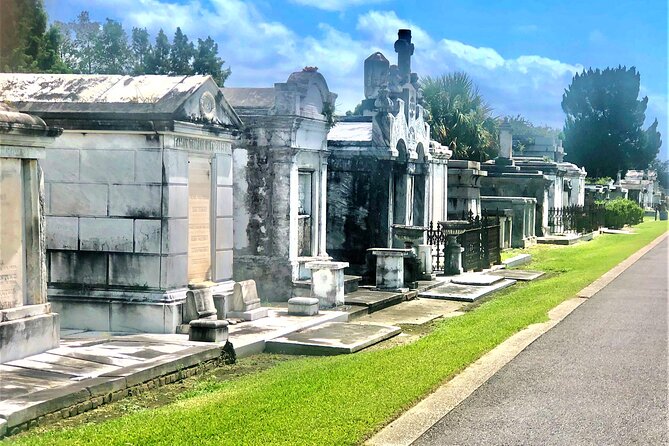
New Orleans cemeteries aren’t just where people are buried. They’re where the city figured out how to grieve—and how to keep those memories visible in a place with hot weather, wet ground, and major storms.
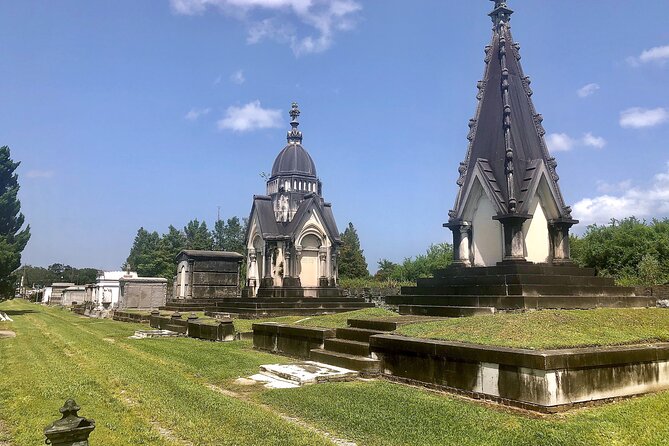
This tour’s big theme is above-ground interment. Your guide explains how and why tombs were built where they could last, and how local burial customs grew into something uniquely New Orleans. You’ll see the result immediately: lots of vaults, tombs, and family structures that rise above street level instead of sinking into the earth like you might expect elsewhere.
The best part is that you’re not left with generalities. Expect a guided explanation of the symbolism and meaning behind these elaborate vaults, including how families used tomb design to communicate status and identity. It’s history you can see in front of you, with context you can understand.
You can also read our reviews of more walking tours in New Orleans



Meeting at 5101 Canal Blvd: How to Start Smoothly in the French Quarter Area

You meet at 5101 Canal Blvd and the tour returns to that same meeting point. That makes it easy to plan: you don’t have to worry about a complicated end location or a second transit step.
Most people do well arriving a few minutes early so you can settle in. The starting area is near public transportation, and one of the most useful tips you’ll hear is that the streetcar line ends very close to the pickup spot. If you’re already riding the streetcar for sightseeing, this tour fits neatly into that flow.
Timing matters, too. You can choose a late morning or an early afternoon departure. If you go later in the day, you may feel more sun and less shade in parts of the route. One reviewer noted a lack of shade on a cool-ish afternoon, and that’s the kind of detail that can change how comfortable you feel. A hat and light layer can make a big difference.
Finally, wear shoes you trust. This is a walking tour, and the sidewalk can be rough in sections. Even if most of it is fairly flat, you’ll be glad you didn’t show up in anything delicate.
Stop One: The Hurricane Katrina Memorial and the Potter’s Field Story

The tour’s first named stop is the Hurricane Katrina Memorial. It’s a short visit—about 10 minutes—and admission here is free.
What makes this stop hit is the specific origin story: an old potter’s field became a memorial for people lost in the storm. Your guide shares that chain of events and helps you understand why remembrance in New Orleans isn’t only about the past. It’s also about responding to catastrophe, then building a public space where names and stories are kept in view.
This is also a good moment to remind yourself what kind of tour you’re on. The tone is respectful and educational. You’re not there for thrills. You’re there to understand how the city handles loss—then and now.
If you’re the type who likes your history with a human spine, this stop gives you that. And if you’re worried it will be too heavy, it’s brief enough that you keep moving while still carrying the meaning.
Cemetery Crossroads: Where Multiple Graveyards Cluster Together
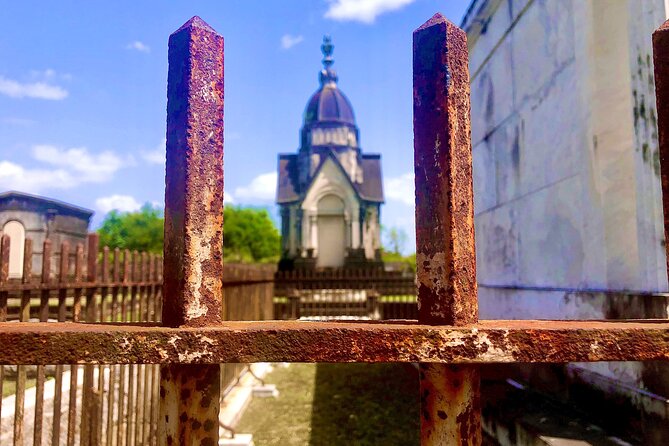
After Katrina, the tour heads to a place in the city where numerous cemeteries meet at the crossroads. The exact vibe is straightforward: you’ll see how the cemetery district is organized spatially and how close different burial grounds sit to one another.
This stop matters because it explains New Orleans’ “map logic.” In some cities, cemeteries feel isolated. In New Orleans, they feel like part of the urban fabric. Once you stand at a crossroads where multiple cemeteries converge, it’s easier to understand why the city’s burial traditions are so visible in everyday life.
Your guide uses this area to connect dots: how burial spaces evolved, how traditions shaped the built environment, and why the cemetery district became a recognizable destination in its own right. Even if you’ve seen cemetery photos before, standing in the real setting changes everything.
What You’ll Learn While You Walk: Tomb Symbolism and Family Status
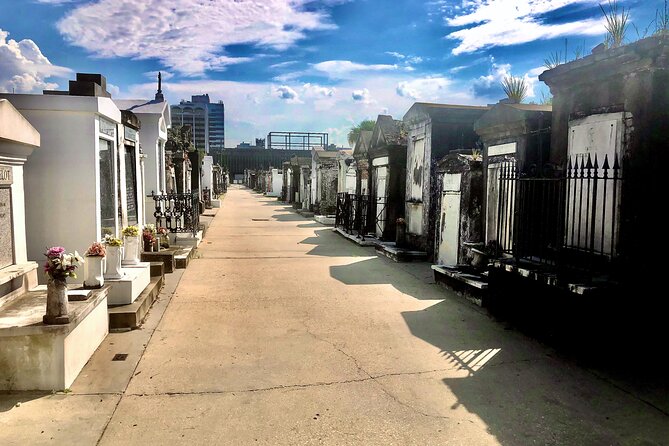
As you move from site to site, the tour is built around reading what’s in front of you. New Orleans tombs and vaults include details that families wanted to last and wanted people to notice. Your guide points out the kinds of symbolism that show up in elaborate designs and explains what those choices meant.
This is where the licensed guide piece becomes more than a technical rule. You’re not just strolling past old stone. You’re getting the explanations that help the structures make sense—why certain forms show up, what you can infer from what’s displayed, and how mourning culture turned architecture into a language.
A theme you’ll likely hear (because it’s central to how the city developed) is that many of these tombs were once designed to showcase a family’s wealth and status. That doesn’t make the tour shallow. It makes it readable. You’ll start noticing how the cemeteries functioned like a public record: identity, lineage, and the social world of the time.
You’ll also pick up a key perspective: this is not a ghost story. One of the standout messages from the experience is that it’s educational, with a bit of dry humor, but firmly rooted in real tradition.




Not a Ghost Tour: The Macabre Feeling, Without the Frights
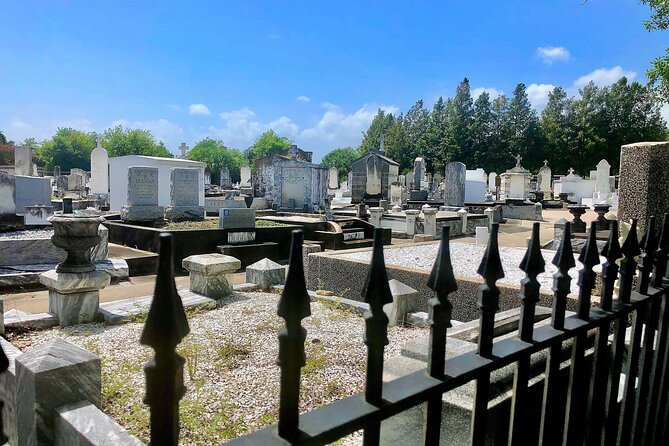
New Orleans is good at spook-adjacent marketing. This one avoids that trap. Expect history and storytelling, not cheap jump-scares.
Guides on this tour are praised for mixing serious explanations with personality. Names that came up in guide reviews include Vee, John, Drew, Thorn, and Christian. The consistent message is that they keep things lively and engaging while staying grounded in the facts—so you get the eerie atmosphere without it turning into a fear-based experience.
So if you’re traveling with kids or you want something that feels slightly spooky in a respectful, academic way, this tour tends to fit. One review specifically noted an 11-year-old enjoying it, which tells you the delivery can work for mixed ages.
If you’re looking for pure entertainment with no gravity, you might find yourself surprisingly moved. But if you like your spooky with context, this is exactly the right lane.
Pace and Comfort: 2 Hours of Real Walking, With Sensible Guidance

The tour lasts about 2 hours and it’s a true walk through the cemetery district. Your physical requirement is listed as moderate, and that tracks with what you’ll feel: steady walking, turning corners, and spending time standing and looking while the guide explains details.
Because it’s max 28 travelers, it generally won’t feel like a school assembly with a megaphone. It’s the kind of size where you can still hear the guide and follow along without feeling lost in the crowd.
You should assume you won’t have a lot of places to pause for long breaks. That shows up in practical advice from reviewers: plan on being on your feet most of the time. Flat sections exist, but you can hit uneven sidewalk. One reviewer mentioned a rougher stretch and also flagged limited shade on part of the afternoon route.
My advice is simple:
- wear shoes with grip
- dress for weather changes
- bring a hat if the sun is strong
That’s how you keep the experience enjoyable instead of just tolerable.
What’s Included (and What You’ll Need to Plan Around)
Included is straightforward: you get a local guide. That guide is the main value driver, since access to these grounds is handled the legally correct way.
Not included is also clear: no food or drinks, and no hotel pickup/drop-off. So if you want a caffeine-and-sweet start, you’ll need to build it into your schedule.
Here’s a very practical local-style tip that came up in guide advice: show up early enough to grab beignets and café au lait nearby. It’s an easy way to make the start of your day feel New Orleans before you even walk through the cemetery gates.
If you’re planning a full morning, treat this as a highlight block, not a quick sidebar. You’ll want time before and after so you don’t feel rushed.
Price and Value: Is $30 a Fair Deal for Cemetery District Access?
At $30 per person for about 2 hours, this tour looks like good value if you care about doing it properly. The big reason: the cost isn’t just paying for information. You’re paying for licensed access to sacred grounds and for a guide to explain above-ground burial traditions and tomb symbolism in a way that makes the architecture meaningful.
You could read about cemeteries on your phone, sure. But without context, many details remain just details. With a guide, you get explanations that turn what you see into something you understand. And with a small-group cap, you can actually hear the story without constantly guessing what you’re looking at.
If your goal is to get in, take photos, and move on fast, this might feel like more time than you want. But if you like guided history and you want to understand why these cemeteries are so distinctive, the price-to-time ratio is solid.
Who This Tour Fits Best (and Who Might Prefer Something Else)
This cemetery walk is ideal if you:
- like history you can see, not just read
- want to understand above-ground burial and what it meant socially and practically
- prefer a calm, educational pace over jumpy entertainment
- enjoy guides who use stories, humor, and clear explanations
It also works well for families. One review highlighted that even a child enjoyed the tour, which suggests the tone is not overly intense.
You might skip this if you:
- hate walking tours
- want lots of seating or frequent rests
- are looking for a pure paranormal experience
The upside is that it hits a balanced middle: spooky vibes through setting, clarity through guidance, and respect throughout.
Should You Book It: My Decision Checklist
I’d book this if you’re the type who wants New Orleans beyond music and street scenes. It’s a chance to understand how the city handles memory, status, and loss through architecture and tradition. And the fact that licensed access is part of the package is key. You’re not just touring scenery—you’re being guided through a living historical practice.
Before you reserve, check your comfort level with a steady walk. If your feet handle city sidewalks well and you’re okay with time outdoors, you’ll get a lot out of it. If you’re tired, sun-sensitive, or expecting lots of stops, pick your departure time carefully and plan your footwear like it’s a real day hike.
FAQ
How long is the New Orleans Cemetery Walking Tour?
It runs for about 2 hours.
How much does the tour cost?
The price is $30.00 per person.
Where do you meet for the tour?
The meeting point is 5101 Canal Blvd, New Orleans, LA 70124, USA.
Does the tour start in the French Quarter?
The tour meets your licensed guide in the French Quarter area.
What time options are available?
You can choose a late morning or an early afternoon departure.
Is the tour offered in English?
Yes, it is offered in English.
Is the tour scary, or is it more educational?
It’s designed to be educational and history-focused, not a ghost tour.
What’s included in the price?
The tour includes a local guide.
Is food or hotel pickup included?
No. Food and drinks are not included, and there is no hotel pickup or drop-off.
Is it okay to go in bad weather?
The tour operates in all weather conditions, but you should dress appropriately. If it’s canceled due to poor weather, you’ll be offered a different date or a full refund.
Can I get a refund if I cancel?
There is free cancellation up to 24 hours in advance for a full refund. If you cancel less than 24 hours before the start time, the amount paid is not refunded.