REVIEW · NEW ORLEANS
Eras of New Orleans: A History Lover’s Walking Tour
Book on Viator →Operated by Witches Brew Tours · Bookable on Viator
New Orleans has layers; this tour maps them. You’ll walk the French Quarter and hear how different eras shaped the city, with stories that don’t show up on every standard sightseeing route. French Quarter landmarks act like anchors, and the guide stitches them into one clear timeline.
Two things I really like: you get a live guide who tells the story like a person, not a slide deck, and you cover major themes people skip, from slavery-era conflict to voodoo culture and architecture. The pacing works for adults who want detail, not just photos.
One drawback to plan for: not every stop includes admission, and the route uses old historic sidewalks with uneven terrain. If you’re sensitive about walking comfort, bring the right shoes and go in with eyes open.
In This Review
- Key highlights worth knowing
- Starting at Jackson Square: the city’s origin stories
- St. Louis Cathedral outside: trade, smuggling, and piracy
- Voodoo Authentica stop: what New Orleans Voodoo is
- Old Ursuline Convent Museum: learning how early community life formed
- 919 Royal St: seeing how Yellow Fever and fires changed the city
- Madame John’s Legacy: using architecture to read the neighborhood
- Lafitte’s Blacksmith Shop Bar finale: an old-school end with BYOB
- Price and logistics: what $27.99 buys you in a 2-hour walk
- Who should book this French Quarter history tour
- Is this tour worth it? The honest decision guide
- FAQ
- How long is the Eras of New Orleans walking tour?
- What is the price per person?
- What language is the tour offered in?
- Where does the tour start and end?
- Is admission included for all the stops?
- Is alcohol included on this tour?
Key highlights worth knowing
- A guide-led timeline through multiple eras makes the French Quarter feel organized, not random.
- Marie Laveau and New Orleans voodoo culture get real context, not spooky-only talk.
- Real disasters and economic change show up at key photo-worthy spots like Royal Street.
- Architecture talk at Madame John’s Legacy helps you read the Quarter as you walk.
- End at Lafitte’s Blacksmith Shop Bar at an easy, iconic finale with BYOB.
Starting at Jackson Square: the city’s origin stories
Your walk kicks off at Jackson Square, one of the easiest places in town to start if you want the big-picture view. From there, the guide frames how New Orleans began, tying early settlement to later conflict, including slave rebellions, and then pushing forward to standout people tied to the city’s growth, including Michaela Almonester.
This stop is valuable because it gives you a mental map. Without that, the French Quarter can feel like a pile of beautiful buildings. With it, you start noticing cause-and-effect: where people lived, what power looked like, and why certain sites mattered.
Timing here is about 30 minutes, so you’ll have enough room to ask questions and let the story settle in. The square is also open and flexible for photos, but you’ll still want to keep moving so you don’t fall behind the group pace.
You can also read our reviews of more walking tours in New Orleans


St. Louis Cathedral outside: trade, smuggling, and piracy
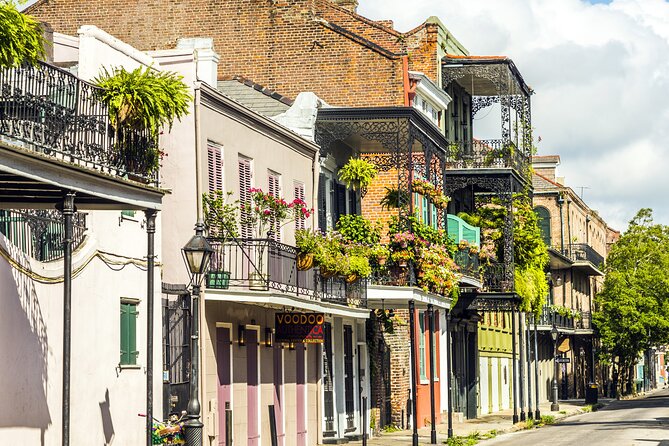
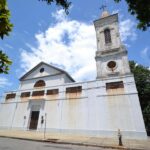
Next, you’ll see St. Louis Cathedral from the outside and learn how early economics shaped the city. The focus isn’t just the building itself. You’ll connect the church setting to the kinds of commerce, smuggling, and piracy that affected daily life.
That outside-only approach can actually be a plus. Even if you don’t go inside, you still get the historical angle and how the neighborhood worked around major institutions.
One practical note: admission for this stop is not included. Since you’re only going by the cathedral exterior, you may not need tickets at all, but if you’re hoping to add time inside, plan on separate entry costs or extra time on your own.
Voodoo Authentica stop: what New Orleans Voodoo is
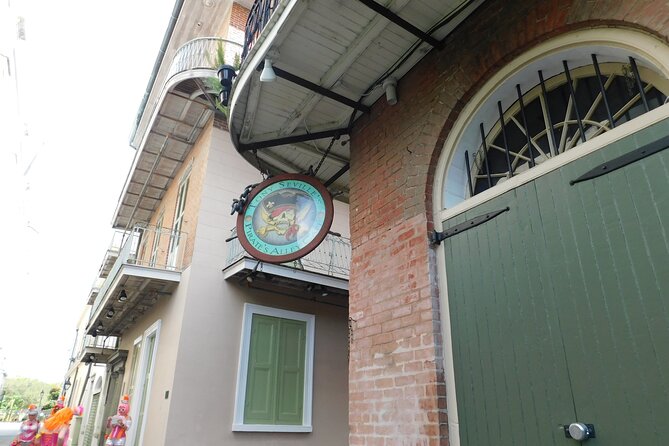
Voodoo shows up in New Orleans for a reason, not as a costume. At the Voodoo Authentica stop, you’ll hear what New Orleans Voodoo is and what it isn’t, plus stories centered on Marie Laveau, often described as a leading Voodoo figure in the city.
I like this kind of stop because it respects the subject while keeping it understandable. You’re not just learning names; you’re learning how beliefs, community, and identity connect in real historical conditions.
This part is shorter, around 10 minutes, so it’s more of a spotlight than a full museum lesson. Also, admission is not included here, so if you want to go deeper on your own, you’ll have that option after the tour.
Old Ursuline Convent Museum: learning how early community life formed
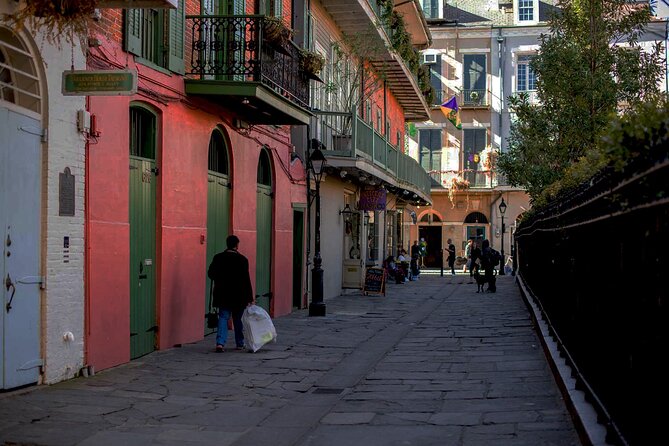
Then you shift from spiritual and economic stories to education and community. You’ll learn about the Ursuline nuns, how they came to New Orleans, and how they impacted early life in the city.
This stop matters because it broadens the usual French Quarter narrative. It’s easy to focus only on politics, religion, and nightlife. Here, you get a thread about schooling and social structure—how communities tried to shape the future.
You’ll also get about 20 minutes here, which is enough time to grasp the main ideas without turning it into a full museum afternoon. Admission is not included, so you’re mostly there for the guided context unless you choose to add your own time later.
919 Royal St: seeing how Yellow Fever and fires changed the city
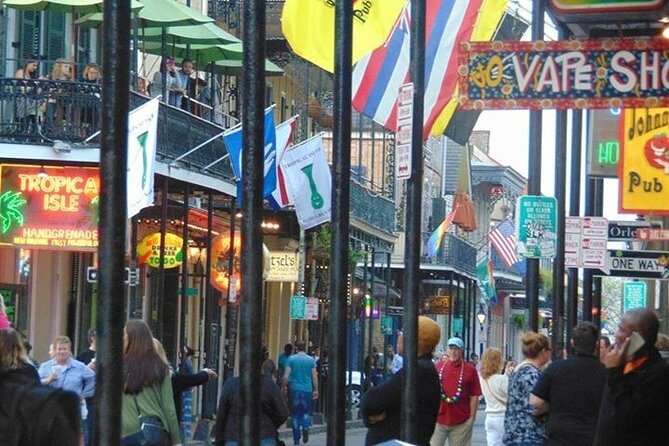
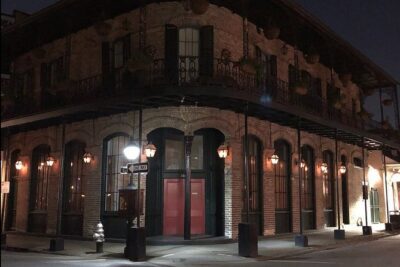
At 919 Royal St, the tour turns to the kind of history you can’t fully appreciate from one postcard. You’ll learn what New Orleans looked like in the 18th and 19th century, and how disasters like Yellow Fever and major fires reshaped the city.
This is a smart stop for first-time visitors because it explains why the Quarter looks the way it does today. Buildings and street patterns aren’t just style; they’re responses to survival, rebuilding, and shifting populations.
Timing is about 15 minutes, and admission is free for this stop. That makes it a low-cost add-on even if you’re being strict with your museum budget.
If you like photography, this is also where you’ll start seeing the Quarter like a timeline, not just a backdrop.
You can also read our reviews of more historical tours in New Orleans




Madame John’s Legacy: using architecture to read the neighborhood
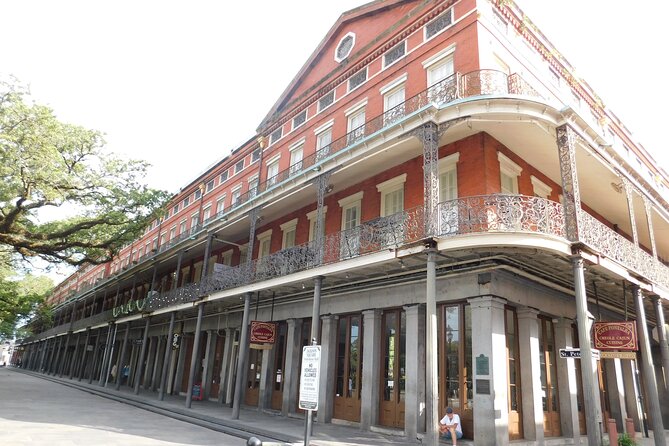
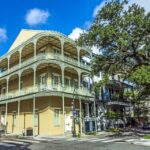
Architecture talk can sound dry until someone connects it to people. At Madame John’s Legacy, you’ll hear about the different types of New Orleans architecture and what makes them unique.
I like this stop because it changes how you walk the neighborhood after the tour. Suddenly you notice details like building shape, layout cues, and how the streets and structures relate. The goal isn’t architectural trivia. It’s learning the language that the city uses.
This is a short stop, about 10 minutes, and admission is not included. So think of it as a guided prompt: the “why” behind the visuals, not a full on-site visit that eats hours.
Lafitte’s Blacksmith Shop Bar finale: an old-school end with BYOB
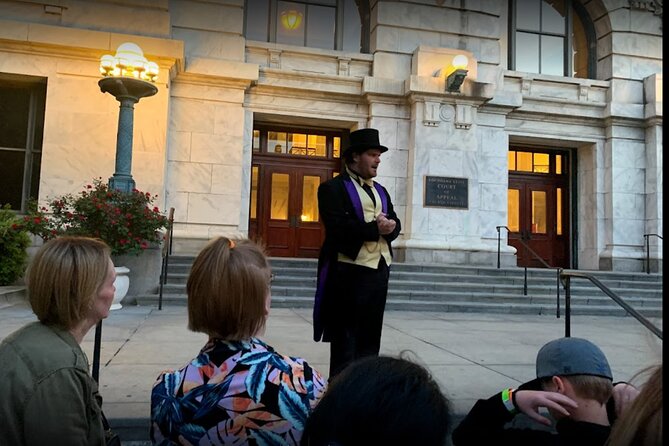
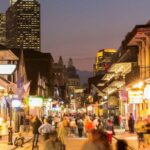
You finish at Lafitte’s Blacksmith Shop Bar, described as one of the oldest operating bars in New Orleans. The stop is brief, around 5 minutes, but it gives you a memorable last beat: a real-world French Quarter ending point that feels tied to the city’s long nightlife story.
Here’s the practical part: the tour is BYOB, meaning alcoholic beverages are not included. If you want a drink, plan to bring what you’ll want to enjoy on your own schedule.
Since this is a bar stop, it’s also a good moment to slow down and look around. Compare the space you started at with the space you end at. You’ll feel the contrast between civic landmarks earlier in the walk and the social stage this bar represents.
Price and logistics: what $27.99 buys you in a 2-hour walk
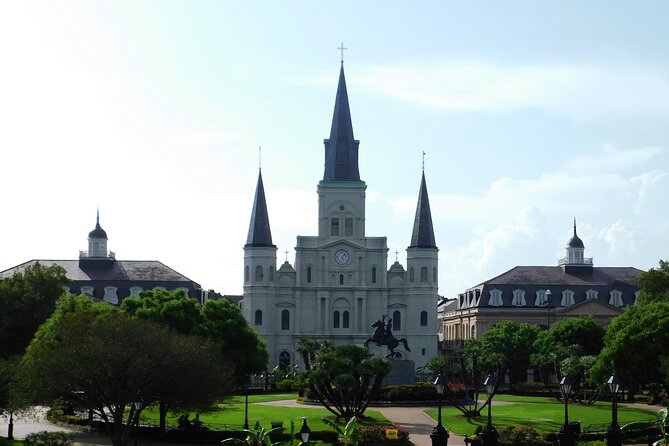
For $27.99 per person and about 2 hours total, you’re paying for a guided story that organizes French Quarter history into a clear sequence. That price makes sense if you’re the type who wants context while walking, rather than spending your limited time bouncing between paid attractions.
A few logistics points that help you plan:
- The tour is in English and uses a mobile ticket.
- It runs with a maximum of 22 travelers, which usually supports a more personal feel.
- You start at Witches Brew Gallery & Haunted Sanctuary on Exchange Place and end at Lafitte’s on Bourbon Street.
- It’s near public transportation, so you can tack it onto other plans easily.
One heads-up: the guide covers several stops where admission is not included. That doesn’t automatically mean you’ll pay for every location, but it does mean you shouldn’t assume everything is covered inside. If you want to enter museums or sites separately, budget for it.
Wear walking shoes. The historic French Quarter terrain can be uneven, and the tour calls for moderate physical fitness. Service animals are allowed, and the overall plan is clearly built around walking, not wheelchairs or long indoor breaks.
Finally, note the timing. The start time listed is 1:30 pm. If you have dinner reservations soon after, you’ll want to account for the fact that you finish on Bourbon, not back at the starting point.
Who should book this French Quarter history tour
I think this one is best for you if:
- you love history and want the French Quarter to make sense as a set of linked eras
- you’re okay with a tour that gives more story detail than it does kid-friendly hands-on stops
- you want a guided walk rather than hopping between attractions alone
The tour also fits serious adults who enjoy sociopolitical angles—how power, culture, and public life shaped the city. If you’re bringing family, I’d treat it like an adult-focused history walk and decide based on your kids’ stamina for heavier topics.
If you want a light, quick stroll for selfies only, this probably won’t be your match. This walk is built for learning and careful listening.
Is this tour worth it? The honest decision guide
If you’re a first-timer in New Orleans and you want a French Quarter walking tour that explains more than the obvious, I’d say this is a strong value. The price is reasonable for a 2-hour guided route, and the stop choices connect big themes—origins, conflict, religion and culture, education, and rebuilding—into one storyline.
The biggest reasons to hesitate are simple: uneven terrain and the fact that some admissions aren’t included. Also, there can be day-of changes if the minimum number of travelers isn’t met. If your schedule is tight, have a backup plan for that afternoon.
FAQ
How long is the Eras of New Orleans walking tour?
It lasts about 2 hours.
What is the price per person?
The price is $27.99 per person.
What language is the tour offered in?
The tour is offered in English.
Where does the tour start and end?
It starts at Witches Brew Gallery & Haunted Sanctuary, 311 Exchange Pl, New Orleans, LA 70130 and ends at Lafitte’s Blacksmith Shop Bar, 941 Bourbon St, New Orleans, LA 70116.
Is admission included for all the stops?
No. Some stops list admission as free, while others list admission as not included.
Is alcohol included on this tour?
Alcoholic beverages are not included, and the tour is BYOB.
If you want, tell me your travel dates and whether you’re entering any sites on your own. I can help you build a smart same-day plan around the tour so you get the most from it.