REVIEW · NEW ORLEANS
Beyond the French Quarter Bike Tour
Book on Viator →Operated by Paved Paradise Bike Tours New Orleans · Bookable on Viator
A long ride can be the best way to see a city. This Beyond the French Quarter bike tour mixes neighborhoods, landmark stops, and real local streets into a smooth 3.5-hour loop. I love that you get exercise without feeling like you’re rushing through New Orleans’ biggest highlights.
Two things I really like: the small group size (up to 10) and the chance to learn the city’s backstory from a licensed guide. If your guide is Tonya, you’ll likely get clear, friendly street-level explanations that make the neighborhoods click fast.
The one thing to plan for is physical effort. The tour is for people with moderate fitness, and while the streets are mostly flat, you’ll still feel the ride length and you’ll want to keep an eye out for potholes.
In This Review
- Key things to know before you pedal out
- A 3.5-hour loop that rides you through New Orleans
- Meeting at 3027 Chartres and what the ride feels like
- Stop-by-stop: Esplanade Avenue, Degas House, and the Faubourgs
- Seventh Ward and St. Louis Cemetery No. 3: history you can ride through
- City Park under live oaks and Spanish moss, plus a Café Du Monde break
- Bayou St. John and Bayou Road: why New Orleans exists
- Price and practical value: what’s included and what to budget
- Who this bike tour is best for
- Should you book Beyond the French Quarter Bike Tour?
- FAQ
- How long is the Beyond the French Quarter Bike Tour?
- About how far do we bike?
- What does the $60 price include?
- What’s not included in the tour price?
- Where do we meet?
- What time does the tour start?
- Is this tour offered in English?
- Is it safe and how physical is it?
- Do they operate in rain?
- How large is the group?
- Are children able to join and will bike sizes be handled?
Key things to know before you pedal out
- Small-group focus (max 10): more time for questions, not just watching from behind a camera roll.
- A ride that goes beyond the postcard route: you’ll see areas that many standard tours don’t touch.
- Flat, bike-friendly pace for most people: the day is built for steady cruising rather than sprinting.
- City Park is a major payoff: live oaks, Spanish moss, and a break for beignets at Café Du Monde.
- Cemetery stop with context: you learn about burial rituals tied to New Orleans’ Cities of the Dead.
- Rain-ready gear included: helmet, water, and a poncho are part of the package.
A 3.5-hour loop that rides you through New Orleans
This is a guided bike tour in New Orleans that runs about 3 hours 30 minutes, starting at 9:30 am. The route is planned as an easygoing city ride, generally around 9 miles total, though some riders report a shorter total depending on how the tour moves that day. Either way, you’re not just rolling past buildings. You’re getting stops that actually explain what you’re seeing.
Price is $60 per person, which is reasonable for a guided ride where a bicycle and safety basics are included. And the included extras matter more than you’d think: you get a helmet, bottled water, and a poncho if the weather turns. That means you’re not scrambling for gear or paying extra just to stay comfortable.
The tour also runs rain or shine. If conditions are dangerous, the provider works on a reschedule or refund. So you can book with confidence that you won’t get shut down at the first hint of clouds.
You can also read our reviews of more cycling tours in New Orleans


Meeting at 3027 Chartres and what the ride feels like
You meet at 3027 Chartres St, New Orleans, LA 70117 and you roll back to the same spot at the end. The meeting area is near public transportation, which helps if you’re building the rest of your day around the tour. You’ll also get a mobile ticket, and you’ll receive confirmation at booking time.
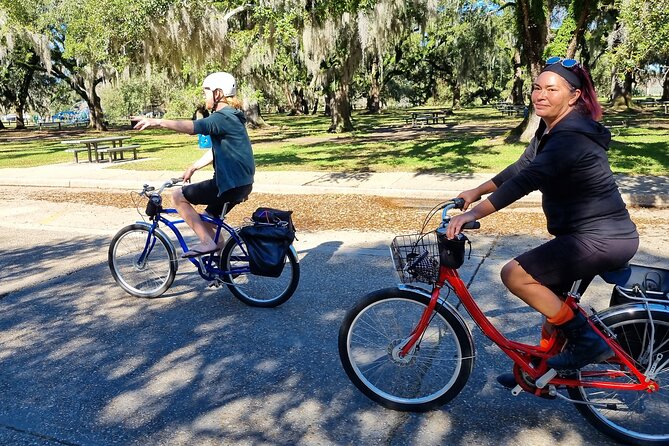
Once you’re on the bikes, the tone is practical. This ride is built for steady movement and clear interpretation from the guide, not chaotic traffic weaving. One review called out that the streets felt safe with a low-traffic feel, and that matches what you’re aiming for on a bike day in New Orleans.
There’s still a real-world bike reality to handle: potholes. Even on a flat route, you’ll want to ride alert, especially when the pavement gets patchy. Helmet on, eyes up, and you’ll be fine.
Stop-by-stop: Esplanade Avenue, Degas House, and the Faubourgs
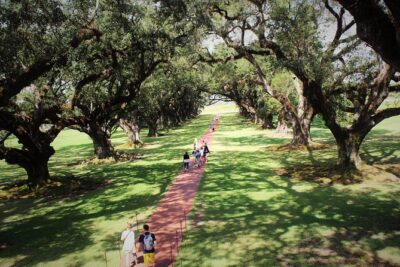
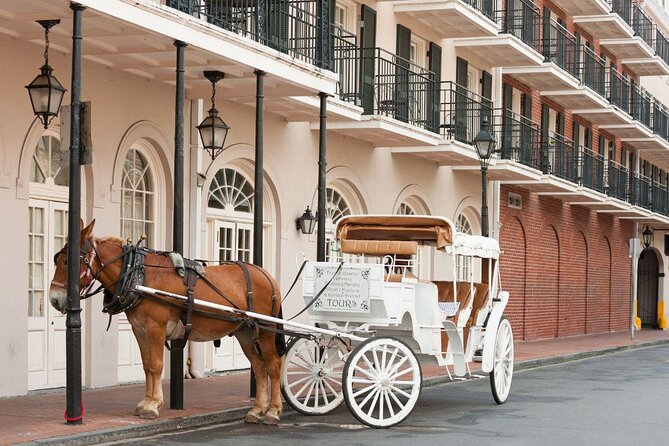
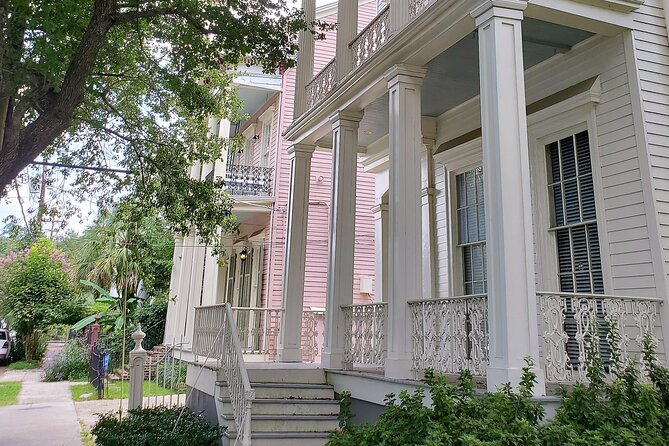
The tour starts with Esplanade Avenue, once known as Creole Millionaires Row. Your guide leads you up the oak-lined stretch, and the point here is simple: this avenue helps you understand how power, wealth, and neighborhood identity shaped New Orleans. As you ride, you’ll pass through areas like Faubourg Treme and into Faubourg St. John, with stories that help you connect the architecture to the people who lived there.
Next comes Degas House and nearby sights, including Luling Mansion. This is one of those “small stop, big payoff” moments. You’re not just pointing at pretty houses. You’re learning how these homes fit into the larger neighborhood story. Even if you’re not a mansion person, the stop is useful for getting your bearings. New Orleans has layers, and this helps you see them without needing a guidebook brain.
Then you’ll head into Seventh Ward while riding through Creole neighborhoods like Faubourg Treme and Faubourg St. John again. The practical value here is that you start noticing patterns in street layout, building types, and local landmarks. The guide’s job is to connect those patterns to real stories, including how older New Orleans developed and what to look for as you ride.
Time-wise, the tour doesn’t hang around too long at each location. That’s a feature, not a bug. You’re getting multiple neighborhood perspectives rather than one deep lecture.
Seventh Ward and St. Louis Cemetery No. 3: history you can ride through
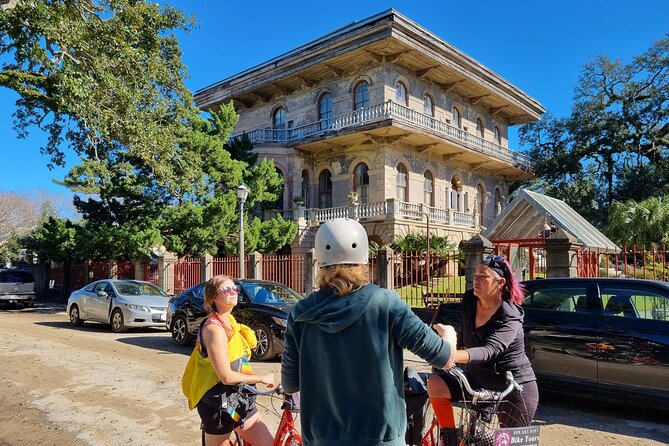
A bike tour makes sense for neighborhoods. You can feel where people might walk, where streets bend, and where life seems to cluster. In Seventh Ward, the guided storytelling helps you understand why certain areas matter, and you also get pointers toward hidden local spots to try. If you like the city as a living place, not just a museum, this is where the tour starts to feel personal.
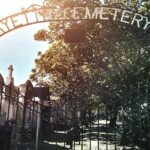
Then comes St. Louis Cemetery No. 3, part of New Orleans’ famous Cities of the Dead. This stop is short, but the format matters. You’re hearing about burial rituals and the cemetery’s role in New Orleans culture while you’re actually nearby it. That’s easier than reading about it later, because your brain is already mapping the setting.
A cemetery stop is always something to approach with the right mindset. The tour keeps it respectful and informational. Plan to be a bit more still here than you were riding, and follow your guide’s pace.
City Park under live oaks and Spanish moss, plus a Café Du Monde break
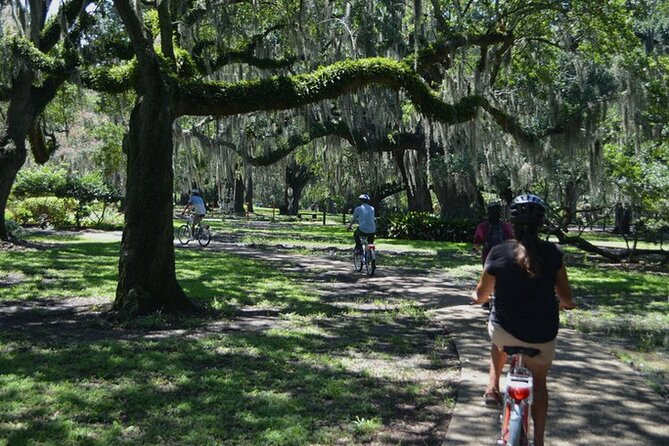
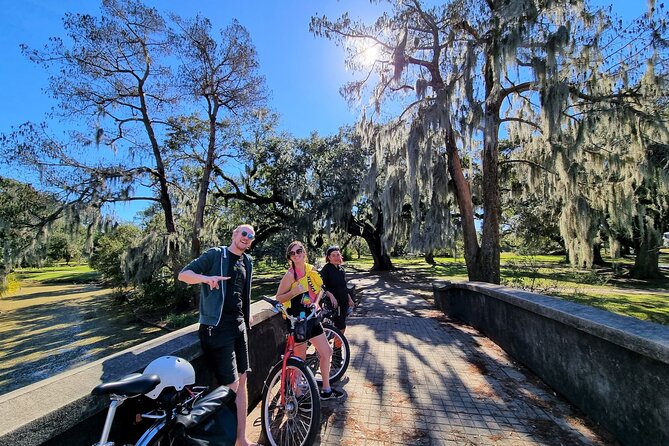
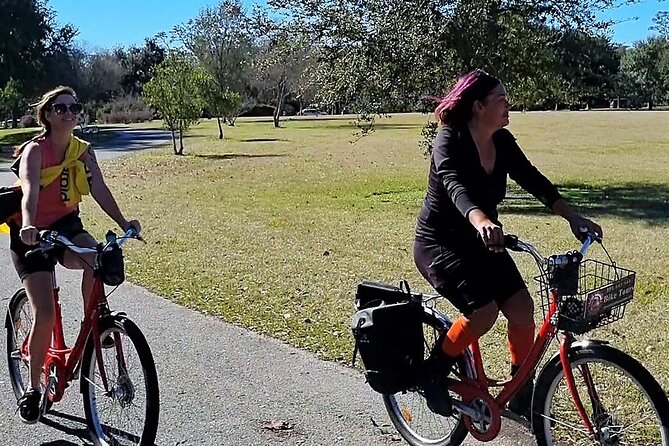
If you only do one “nature-meets-city” stop in New Orleans, City Park is a strong pick. This tour gives you time to pedal through live oak groves and see Spanish moss up close. Even if you’ve seen photos, being on a bike in the shade helps your perception. City Park can feel like its own little world, and that’s the point.
Along the way, your guide points out museums and gardens, plus other attractions. You’re not trying to cram everything into one morning. You’re using the bike tour as a sampler. Then, if something catches your interest, you’ll know where to go next.
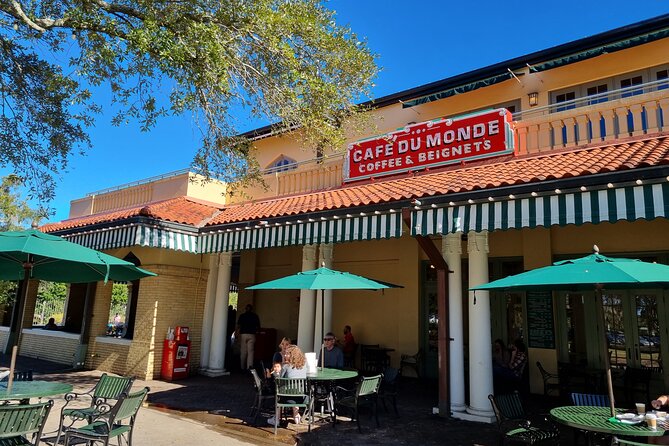
The best part is the break: Café Du Monde in City Park for beignets and café au lait. The food isn’t included, but the timing is smart. You’ve been riding and listening; now you get a chance to sit down, cool off, and refuel.
Be ready for a line vibe at popular places. You don’t have a long snack time window, so it helps to decide what you want quickly. If you’re traveling with someone who needs extra time to eat, agree on a plan before you arrive.




Bayou St. John and Bayou Road: why New Orleans exists
After City Park, you’ll follow the trail of Bayou St. John. Then you ride along Bayou Road, described as one of the oldest roads in the US and tied to why New Orleans exists. This is the tour’s quiet flex: instead of staying stuck in the most tourist-heavy loop, you move back toward the city’s water story.
Riding the bayou corridor gives a different visual rhythm than the dense street grids near the Quarter. You’re still in town, but the perspective changes. It’s the kind of segment that helps you understand New Orleans as a place shaped by water access, not just by architecture.
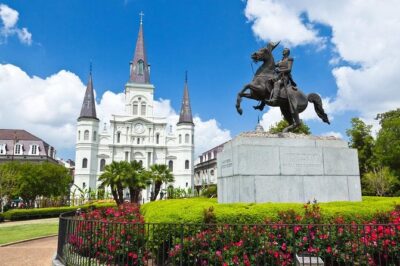
When you roll back toward the end, you pass through the French Quarter and Faubourg Marigny. You’re not stopping for a full Quarter tour. You’re using the bike route to connect the dots from the neighborhoods you just learned about to the most famous tourist district you already know.
Price and practical value: what’s included and what to budget
At $60 per person, this tour stacks up well because most of your key costs are handled upfront. Included are:
- Bicycle use
- Helmet
- Bottled water
- Poncho if it rains
- Local licensed guide
Not included: beignets/snacks at Café Du Monde, plus gratuity for your guide. If you’re the type who likes to show appreciation, plan to tip based on your group experience and your guide’s effort.
Also keep in mind the route can adjust. The tour notes that the itinerary is an overview, so not every tour day will make every exact stop. That’s normal for city tours, and it’s one reason the guide’s approach matters. If your focus is learning and movement over ticking off a perfect checklist, you’ll likely enjoy the flexibility.
Who this bike tour is best for
This is a great fit if you:
- Want to see more parts of New Orleans without doing a full day of constant walking
- Like history told in plain language while you’re moving
- Prefer a small-group setting where your guide can answer questions
It also suits you if you enjoy a mix of exercise and sightseeing at the same time. One review called the ride a mix of exercise, sightseeing, and information, and that’s exactly the balance this tour aims for.
You might want to skip or rethink if:
- You’re not comfortable with a moderate fitness ride length
- You know your tolerance for potholes is low
- You want a long, museum-style time at each stop (this tour is more “ride + explain + move on”)
Should you book Beyond the French Quarter Bike Tour?
I think you should book it if your goal is to understand New Orleans beyond the usual postcard circuit. This tour uses bikes to do what walking alone can’t: it connects multiple neighborhoods in one morning and keeps you oriented to how the city fits together. The high rating and consistent five-star feedback make sense. The combination of steady pace, strong guiding, and well-chosen stops like City Park and the cemetery gives you real variety in a short timeframe.
Book it if you want the city on two wheels: oak-lined avenues, Creole neighborhoods, City Park shade, and a water-history angle on Bayou Road.
FAQ
How long is the Beyond the French Quarter Bike Tour?
The tour lasts about 3 hours 30 minutes.
About how far do we bike?
It’s described as about 9 miles, with some riders reporting a shorter distance depending on the day’s route.
What does the $60 price include?
The price includes bicycle use, bottled water, a helmet, a poncho if it rains, and a local guide.
What’s not included in the tour price?
Beignets and café au lait (snacks) at Café Du Monde are not included, and gratuity is also not included.
Where do we meet?
You meet at 3027 Chartres St, New Orleans, LA 70117, USA.
What time does the tour start?
The start time is 9:30 am.
Is this tour offered in English?
Yes, the tour is offered in English.
Is it safe and how physical is it?
It’s recommended for travelers with moderate physical fitness. The ride is described as having a steady pace, and it’s generally flat, but you should still be prepared for road conditions like potholes.
Do they operate in rain?
The tour operates rain or shine. If dangerous weather makes riding unsafe, they’ll work with you to reschedule or refund.
How large is the group?
The tour has a maximum of 10 travelers.
Are children able to join and will bike sizes be handled?
Children can join, but you should provide the heights of all children so the team can determine the correct bike size.