REVIEW · NEW ORLEANS
Small Group Local’s Guide to the French Quarter Tour
Book on Viator →Operated by Unique NOLA · Bookable on Viator
Neon ends, history begins. This French Quarter on foot tour is a fast, fun way to see the big landmarks while someone explains what you’re actually looking at. I love the simple hit-list of sights—from Jackson Square to Cabildo—and I love the insider stories that turn street corners into real moments in New Orleans.
The one thing to think about: it’s only about two hours, so the depth depends a lot on your guide’s style and how much you ask. If you want a super detailed history lesson for every stop, bring a few questions and plan extra time for follow-up sights after the walk.
I also like the small-group setup (up to 15 people). And if you can choose your time slot, early tours can feel easier on the sidewalks—cooler and less crowded at the start.
In This Review
- Key reasons this walk works
- A 2-Hour French Quarter Tour That Gets You Oriented Fast
- Start at 815 Toulouse St and Get Your Bearings
- Jackson Square: The Heart You Can Actually Understand
- Bourbon Street: Party Energy With Historic Depth
- The French Quarter Walk: It’s More Than a Straight Line
- Royal Street: Where Old Trade Meets Today
- A Quick Pass by the Pharmacy Museum
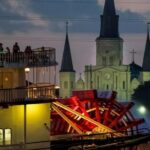
- St. Louis Cathedral: Faith, Community, and American History
- Cabildo: Fire, Rebuilding, and Why It Still Matters
- Pace, Group Size, and What a Walking Tour Actually Feels Like
- Price and Value: $37 for a Guided Quarter Loop
- What You’ll Learn and How It Helps Later
- Practical Tips Before You Go
- Who This Tour Fits Best
- Should You Book This French Quarter Walk?
- FAQ
- FAQ
- How long is the French Quarter tour?
- How much does the tour cost?
- Where does the tour start?
- What language is the tour offered in?
- Is this tour mostly walking?
- How big is the group?
- Are admission tickets required for the stops?
- Will I get a mobile ticket?
- Are service animals allowed?
- What’s the cancellation rule?
Key reasons this walk works
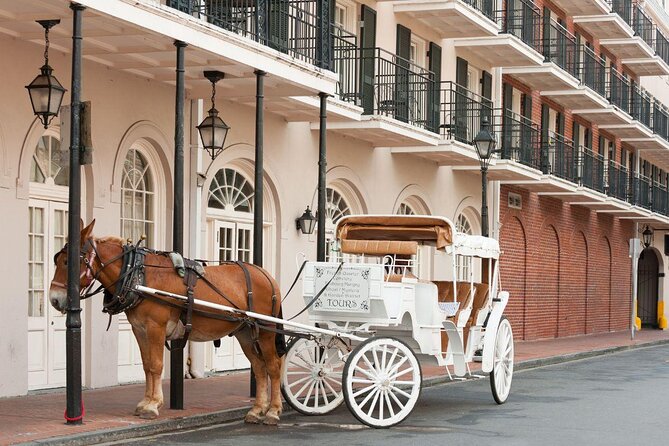
- A tight 2-hour loop that hits the French Quarter’s top landmarks in one go
- Stop-by-stop context that helps you read the neighborhood instead of just pass it
- Small groups (max 15), so you’re not shouting over everyone
- Classic “photo spots” with purpose: Jackson Square, Bourbon Street, Royal Street, and more
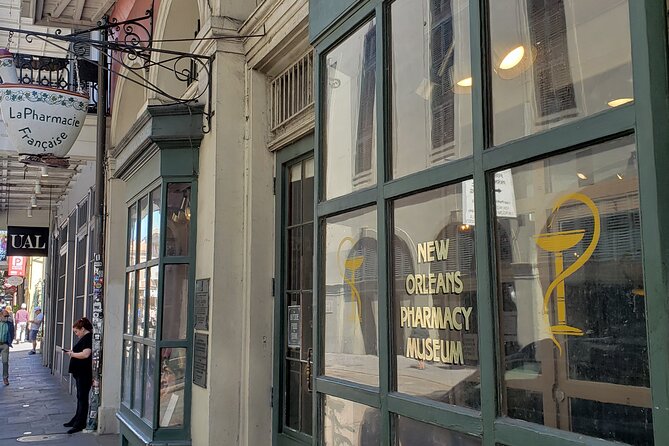
- A medical-history detour with a quick pass by the Pharmacy Museum
A 2-Hour French Quarter Tour That Gets You Oriented Fast
New Orleans has a way of making you feel like you’re in a movie—even when you’re just trying to figure out which street goes where. This tour is designed for that exact moment. In about two hours, you walk key blocks of the French Quarter with a local guide who helps connect architecture, street history, and cultural details into one understandable story.
For me, the value is that you’re not wandering aimlessly. You start with major anchors like Jackson Square, then move through the core of the Quarter—Bourbon Street, French Quarter streets and lanes, Royal Street—and you end at the big institutional stops like St. Louis Cathedral and Cabildo. Even if you plan to do more exploring later, you’ll leave with a map in your head.
It’s also practical. The walking format means you get the vibe right away: the colors, the courtyards you glimpse, the street life, and the way buildings frame the space around you. And because it’s a small group, the walk doesn’t feel like an assembly line.
You can also read our reviews of more guided tours in New Orleans



Start at 815 Toulouse St and Get Your Bearings
You’ll meet at 815 Toulouse St. From there, the tour stays in the Quarter and aims to bring you back to the same starting area when it finishes.
One small tip: be ready at the start. Two hours is not long, and the schedule packs in multiple stops. If you’re running late, you’ll feel it. If you arrive early, you’ll have time to check out the immediate neighborhood first—then the guide’s context makes everything snap into place.
You’ll also use a mobile ticket, so you don’t need to hunt for paperwork. Service animals are allowed, and the meeting location is near public transportation, which helps if you’re not staying within walking distance.
Jackson Square: The Heart You Can Actually Understand
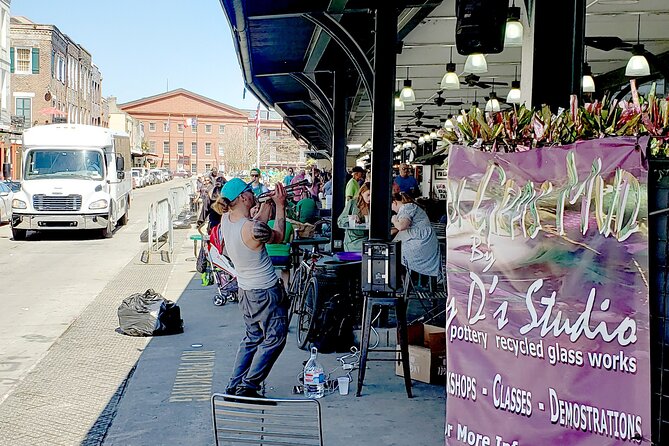
Jackson Square is where a lot of visitors start snapping photos, but it’s also where the Quarter’s story begins to make sense. This stop is about 20 minutes, and it’s timed for you to slow down. You’re not just looking at a landmark—you’re learning why it became a center point for civic life.
Jackson Square also sets your “reading strategy” for the rest of the walk. You’ll start noticing how public spaces work in this neighborhood: the way buildings face outward, how the layout directs foot traffic, and how the area became a gathering spot over time.
What I like about starting here is that it gives you a baseline. Without that, Bourbon Street can feel like all spectacle and no meaning. With it, the Quarter feels connected instead of random.
Bourbon Street: Party Energy With Historic Depth
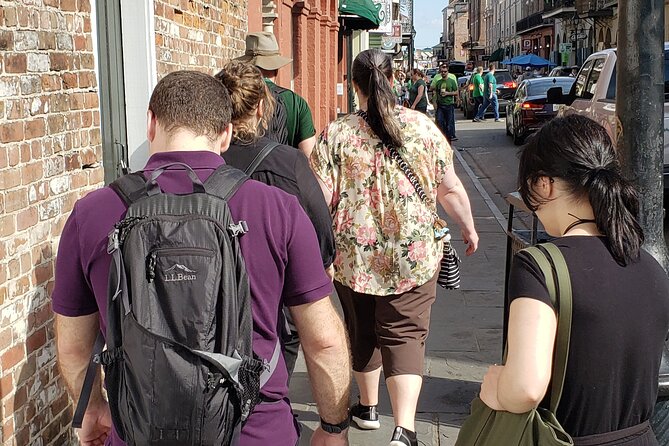
Then you head to Bourbon Street, another 20-minute stop. Yes, it’s famous for nightlife. But this tour frames it as more than noise and neon.
The key benefit is that you get a bigger timeline for what you’re seeing. Bourbon Street isn’t treated like a single-purpose strip. Instead, it’s introduced as part of America’s broader story—so when you’re standing in the middle of the action, it’s easier to understand what made this street matter before it became what it is now.
Practical note: Bourbon Street can be loud and busy, especially if your tour time overlaps with peak foot traffic. If you want photos, you’ll likely get better results during brief moments when the group pauses and you’re not trying to shoot over moving shoulders.
The French Quarter Walk: It’s More Than a Straight Line
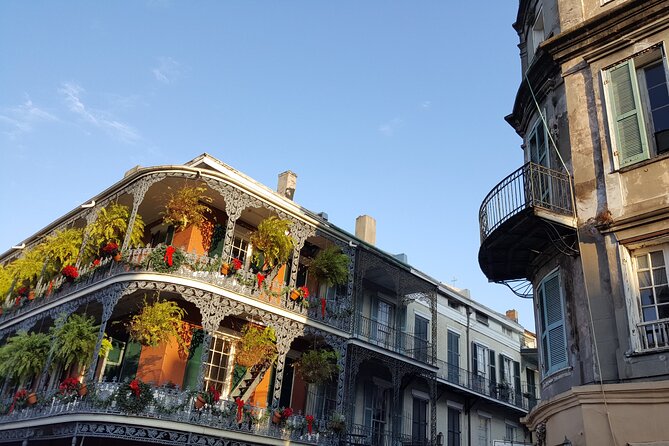
You also spend time exploring the French Quarter itself, with about 30 minutes dedicated to the area as a whole. This is where the tour helps you move from landmark mode to neighborhood mode.
In real terms, this stop is about learning how to see. The guide points out details that help you understand why the Quarter looks the way it does: street rhythm, building edges, and the layout that shapes how you experience the area on foot.
This is also where your guide’s storytelling style matters most. Some guides steer the group with tight explanations; others keep it conversational and answer questions on the move. Either way, you’ll leave with a better sense of how the Quarter functions as a place, not just a list of sights.






Royal Street: Where Old Trade Meets Today
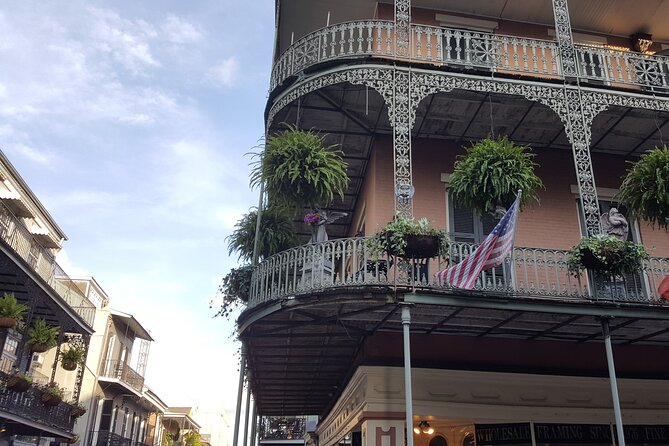
Next up is Royal Street for about 20 minutes. It may not feel off-the-beaten-path, but it works well on a guided walk because the guide connects the street’s past and present in a way that helps you notice what’s changed—and what hasn’t.
Royal Street is often a “shop and stroll” destination for many people. This tour adds a layer: why this street has been important long-term, and what that means for the kind of architecture and street life you see today.
If you enjoy walking while still feeling like you’re learning something, Royal Street is the sweet spot. It’s visible, accessible, and full of small cues that become clearer once you have the backstory.
A Quick Pass by the Pharmacy Museum
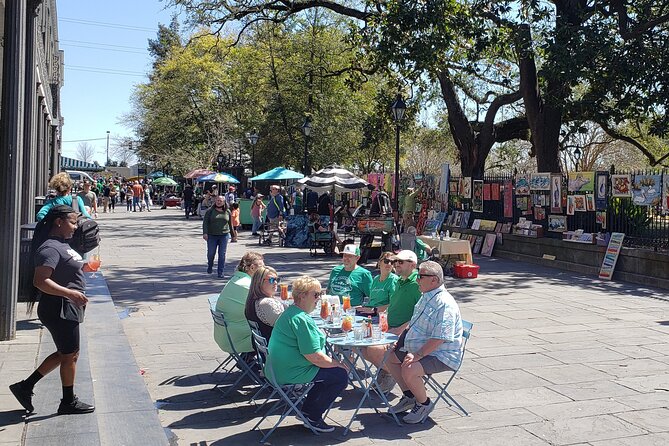
There’s also a stop-or-pass that takes you by the Pharmacy Museum, with a focus on medical history in New Orleans. The tour frames it as one of the favorite quick detours—because medical history sounds dry until you’re looking at how people made health and healing part of everyday life.
This is a smart inclusion if you want more than just the usual political and architectural talking points. It also breaks up the walk, which helps when you’re navigating heat, crowd energy, or that afternoon street shuffle.
Just keep your expectations realistic: this is not presented as a full museum session. It’s a guided moment that points you toward a topic, and if it piques your interest, you can always add more time later on your own.
St. Louis Cathedral: Faith, Community, and American History
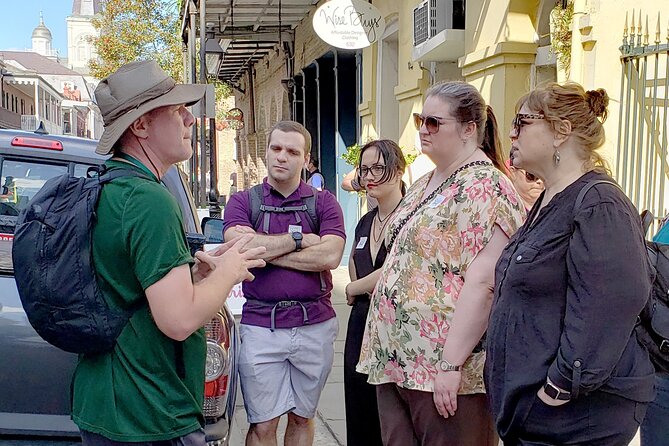
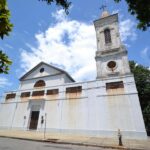
Next comes St. Louis Cathedral, with about 10 minutes. It’s a short stop, but it’s a powerful one because the guide ties religious life into wider New Orleans and American history.
Even if you’re not there for religious reasons, cathedral stops matter in the Quarter because they explain social structure. In places like this, religious institutions weren’t just places to worship—they were anchors for community life, identity, and how people organized the public world.
Because the time here is brief, use it well:
- Look at the building itself first—lines, form, and how it sits in the space.
- Listen for what the guide connects it to.
- If questions pop up, ask them while the group is still there.
Cabildo: Fire, Rebuilding, and Why It Still Matters
Finally, you’ll visit Cabildo, also about 10 minutes. This stop focuses on the fact that Cabildo was destroyed by fire in the 18th century and then rebuilt, with details on how that rebuilding shaped what stands today.
What I like about this ending is that it brings the story forward without pretending the Quarter is frozen in time. Places get damaged. They rebuild. And the result is a living history you can read in the buildings.
Cabildo also pairs nicely with St. Louis Cathedral earlier. Together, they give you two angles on how institutions held weight in the city—faith and civic life—while the rebuilding story adds a layer of resilience.
Pace, Group Size, and What a Walking Tour Actually Feels Like
This is a small-group tour with a maximum of 15 travelers, which is a big deal in a neighborhood that can get crowded fast. You’re not just a number. You’re more likely to hear the guide clearly, and it’s easier to ask questions without turning the walk into a traffic jam.
The pace is steady. With multiple stops totaling about two hours, you’re moving often enough to cover ground but not so fast that you feel like you’re being dragged. Still, if you’re someone who likes to linger for long photo sessions, plan to give yourself extra free time after the tour.
Also, consider the schedule flexibility of outdoor walking tours. Sidewalks, street noise, and crowd density can affect timing. One review-style caution worth taking: double-check that your day doesn’t have a hard clock-based commitment right after the end. The tour is designed to return to the meeting area, but short delays or route adjustments can shift what your next plan needs to handle.
Price and Value: $37 for a Guided Quarter Loop
At $37 per person for about 2 hours, the price is mainly paying for two things: a local guide and a route that keeps you from guessing.
That’s not nothing. In the French Quarter, it’s easy to spend hours walking without really learning why anything matters. A guided tour compresses the learning curve. You’re also getting multiple stops where the listed admission is free, including Jackson Square, Bourbon Street, the French Quarter area, Royal Street, St. Louis Cathedral, and Cabildo. So you’re not budgeting for ticket costs at each named point.
So where does the money go? Mostly into interpretation: the guide’s stories, connections, and explanations that help the neighborhood click for you.
If you’re the kind of traveler who likes to read street-level history while you walk, this value makes sense. If you mainly want scenery and photos and you’re happy DIY-ing everything, you might weigh it against a self-guided plan. But even then, the guide’s ability to point out what to notice is often the difference between seeing the Quarter and understanding it.
What You’ll Learn and How It Helps Later
The tour’s “real win” is that it gives you language for the neighborhood. After you’ve heard the connections between the big civic places, the commercial streets, and the cultural institutions, the French Quarter becomes easier to navigate and more meaningful to revisit later.
You’ll likely come away remembering:
- how Jackson Square functions as a civic starting point,
- how Bourbon Street fits into a larger story beyond nightlife,
- why Royal Street has staying power,
- how St. Louis Cathedral ties into community identity,
- and how Cabildo’s fire and rebuilding shaped what you see now.
And the Pharmacy Museum pass adds a different kind of curiosity—medical history—so the walk doesn’t feel like it only covers the same standard topics.
Practical Tips Before You Go
A few things make this type of walk smoother:
- Wear shoes that can handle uneven sidewalks and long standing moments.
- Bring water, especially if you’re touring during warmer hours.
- Have 1–2 questions ready. Asking one good question can unlock more than hearing everything passively.
- If you’re planning photos, remember the group will pause at key moments—be ready to step in when the guide stops so you’re not left scrambling.
If your main goal is first-time orientation, a mid-morning or earlier slot often feels easier on the streets. A tour earlier in the day can help with comfort and crowd flow.
Who This Tour Fits Best
I’d recommend this tour if you:
- want a first intro to the French Quarter without spending half a day figuring it out,
- like history that’s tied to what you can see right now,
- enjoy walking tours where you can ask questions,
- and would rather get a guided route than rely on a phone map in every turn.
It’s also a decent option for groups of friends and couples. The max group size helps keep things personal and makes it easier to follow along.
If you’re a hardcore historian seeking deep lectures on every stop, you may want to treat this as your “orientation layer,” then build with longer independent visits afterward.
Should You Book This French Quarter Walk?
Book it if you want to see the French Quarter’s greatest hits in a structured way and understand the meaning behind them. $37 for a guided walk that covers Jackson Square, Bourbon Street, Royal Street, St. Louis Cathedral, and Cabildo—plus a stop by the Pharmacy Museum topic—offers strong value for first-timers and busy schedules.
Don’t book it if your idea of fun is mostly strolling without any guiding context and you’re fine building your own map and history timeline. Also, if your day is packed with tight timing after the tour, leave yourself a buffer, because walking tours depend on street conditions and the rhythm of the group.
FAQ
FAQ
How long is the French Quarter tour?
It runs for about 2 hours.
How much does the tour cost?
It costs $37.00 per person.
Where does the tour start?
The meeting point is 815 Toulouse St, New Orleans, LA 70112.
What language is the tour offered in?
The tour is offered in English.
Is this tour mostly walking?
Yes. It’s designed for exploring the French Quarter on foot.
How big is the group?
The tour has a maximum of 15 travelers.
Are admission tickets required for the stops?
The stops listed show admission ticket free, so you won’t be buying tickets for those specific points during the tour.
Will I get a mobile ticket?
Yes, the tour uses a mobile ticket.
Are service animals allowed?
Yes, service animals are allowed.
What’s the cancellation rule?
You can cancel for a full refund up to 24 hours before the experience starts. If you cancel less than 24 hours before, you don’t get a refund.