REVIEW · NEW ORLEANS
Laura Creole Plantation Guided Tour
Book on Viator →Operated by Laura Plantation · Bookable on Viator
A Creole plantation tour with receipts and real stories. Laura Plantation, about an hour from New Orleans along the Great River Road, is built around four generations of family records and memoirs, set in a well-kept 24,000-square-foot main house plus original 1840s slave cabins. I also love the way the tour slows down to connect Creole culture to day-to-day power, work, and life on this sugar plantation, with a small group size that keeps it personal.
The main drawback to flag: if you’re hunting for nonstop, minute-by-minute detail about enslaved people’s everyday routines, this tour may feel too focused on the big picture unless you’re willing to ask your guide targeted questions.
In This Review
- Key things to know before you go
- Why Laura Plantation Works: Creole Identity, Four Generations, Real Documents
- Getting There from New Orleans: Great River Road, Easy Drive, No Hotel Pickup
- What the 1-Hour-10-Minute Tour Covers: Main House, Cabins, Gardens
- Maison Principale: furnished, readable, and central
- Original 1840s slave cabins: the hardest lesson, plainly presented
- Gardens and sugar fields: why the scenery matters
- How the Tour Handles Slavery and Creole Culture (and What to Ask)
- Guides You Might Meet: Amelia, Lee, Pam, Cameron, Joseph, and Caroline
- Price and Value for $32.06: What You’re Really Paying For
- After the Tour: Museum Stops and Planning Your River Road Day
- Who Should Book This Tour (and Who Should Be Cautious)
- Should You Book Laura Plantation?
- FAQ
- How long is the Laura Plantation guided tour?
- Is the tour offered in English?
- Where does the tour start?
- Do I need hotel pickup?
- What’s included in the ticket price?
- Is the tour accessible for people with mobility needs?
- Does the tour run in bad weather?
- What’s the cancellation window?
Key things to know before you go
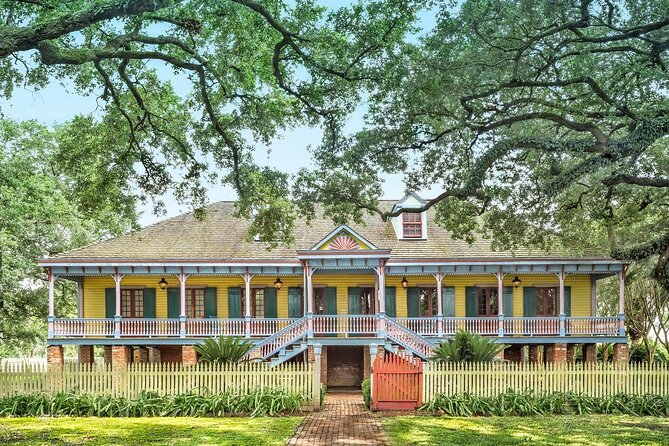
- Well-preserved sites: the furnished main house, slave quarters, gardens, and sugar-field landscape stay legible and easy to follow
- Records-driven storytelling: family memoir plus documents found in the French National Archives shape what you’re told
- A small-group feel: up to 28 travelers means you can actually ask questions
- Frank handling of slavery: the tour addresses difficult history across French colonial and American Louisiana through the end of the 19th century
- Practical outdoor time: some parts are outside, so shoes and weather planning matter
Why Laura Plantation Works: Creole Identity, Four Generations, Real Documents
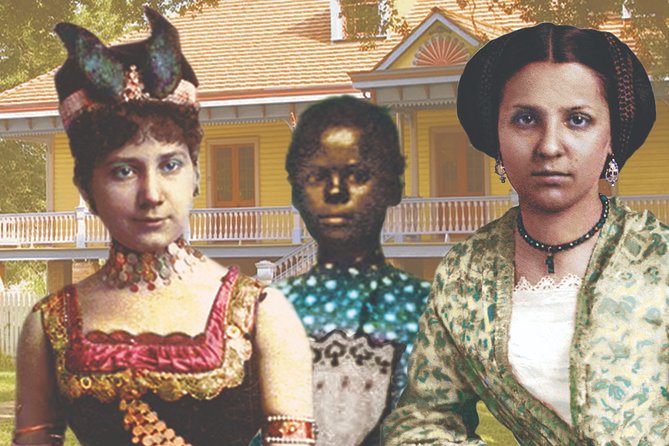
Laura Plantation is not just about pretty buildings. It’s about perspective. The Duparc family founded the plantation in 1804, and the tour threads together multiple generations of one Louisiana Creole family—free and enslaved—using surviving records that the estate’s caretakers preserved over time.
That matters because you’re not just getting generic plantation talk. The tour leans on specific sources tied to the people who lived here, including the memoir of Laura Locoul (a fourth-generation family member) and research drawn from materials located in the French National Archives. You can feel the difference when a guide is pointing to what can be supported by documents, not just repeating old myths.
And you’ll notice the Creole angle throughout. Creole culture in Louisiana wasn’t a footnote—it’s described as something that thrived for more than 200 years, shaped by French influence and local Louisiana realities. On this tour, that shows up in how the plantation functioned, who held authority, and how cultures mixed under a system that still relied on enslavement.
You can also read our reviews of more guided tours in New Orleans



Getting There from New Orleans: Great River Road, Easy Drive, No Hotel Pickup
Start from New Orleans and plan for about a one-hour drive to Vacherie. The route follows the Mississippi on the Great River Road, which is part of the fun if you like window scenery and slower travel rhythms.
You do need to arrange your own ride. There’s no hotel pickup or drop-off. If you can’t self-drive, transportation may be available through partner operators, but costs can vary and can be more than the tour ticket itself. If you’re budgeting tightly, I’d check ride options early so you’re not surprised when you add transport to your total.
Practical tip: aim to arrive a little early. Even with a timed guided experience, it’s worth taking a moment to settle your brain before you step into the house, because the tour packs a lot into roughly 1 hour 10 minutes.
What the 1-Hour-10-Minute Tour Covers: Main House, Cabins, Gardens
This is a guided loop that focuses on a few key spaces, and that’s exactly why it works. You won’t be lost wandering for an hour without context.
Maison Principale: furnished, readable, and central
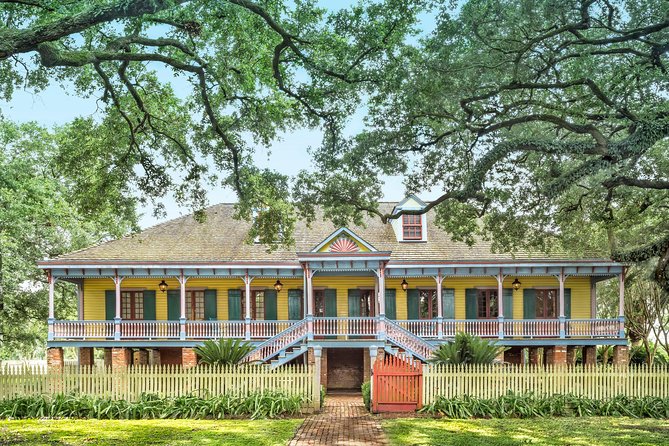
The tour begins in the main house (the Maison Principale), a 24,000-square-foot structure. You’ll see rooms set up to help you picture what life looked like for the people who owned and managed the plantation.
The main value here is structure. A good guide uses the layout like a map—where decisions were made, how servants and workers were positioned in relation to the household, and how the home ties into the plantation’s business.
One logistics note: only the ground floor of the main house is ADA accessible. If mobility is a concern, you should know the tour route is designed around both indoor and outdoor areas.
Original 1840s slave cabins: the hardest lesson, plainly presented
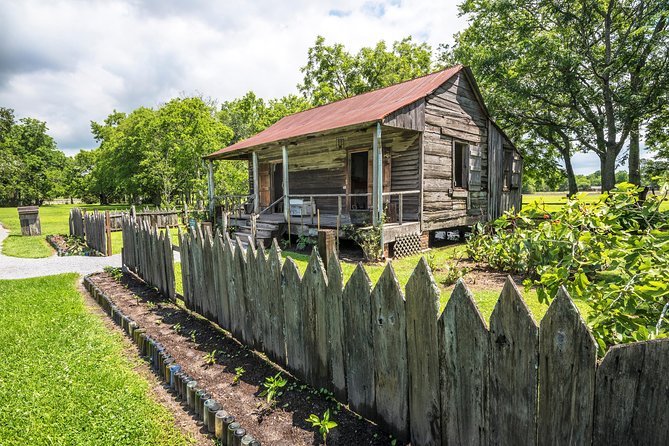
Next comes the slave quarters, including original 1840s cabins. This is where the tour’s honesty becomes unavoidable. You’ll hear stories about enslaved people who lived in the house and in the slave cabins, with the tour explicitly addressing slavery as it operated in French colonial and American Louisiana into the late 1800s.
This part can be emotionally heavy. I suggest you treat it like a learning session, not a quick museum stop. Give yourself the mental space to listen. If you go in expecting only architecture and romance, you’ll miss what the tour is trying to correct.






Gardens and sugar fields: why the scenery matters
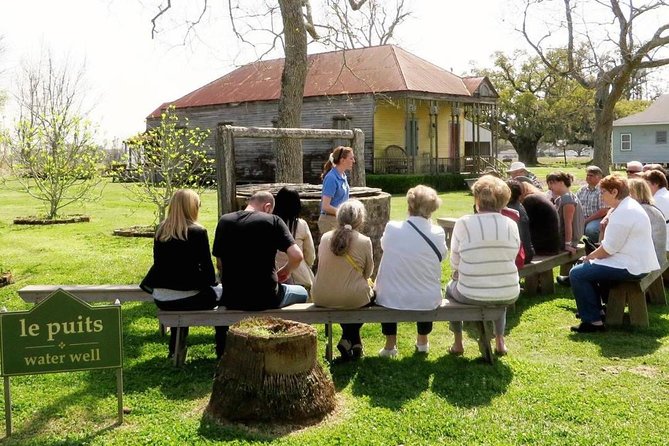
Then you move through gardens and the plantation grounds, including sugar-field context. These areas aren’t filler. They help explain how an estate functioned: how labor, cultivation, and management connected to the household and the family story.
Also, since this time happens outdoors, you’ll want good walking shoes. The tour runs in all weather conditions, but you’ll still be happier if you dress for rain, heat, or wind.
How the Tour Handles Slavery and Creole Culture (and What to Ask)
Laura Plantation aims to balance two things at once: the Creole family’s internal world and the brutal realities of enslavement that powered the plantation economy.
That balance can land well if you’re open to learning in layers. You’ll hear about different personalities of the plantation owners and how Creole culture shaped Louisiana life for more than 200 years. And you’ll also get the direct thread back to enslaved people and the system they were trapped in.
Here’s what I’d do to get the most out of it: ask your guide about the day-to-day life you care about most—food, work rhythms, family separation, or how control was enforced. One common criticism is that some visitors wish the tour went further into daily routines of enslaved people. Guides may cover key points, but a question can pull out the extra detail you’re looking for.
If you’re someone who likes a Q&A style, pick a time when you’re not rushing. A small group size helps a lot, because you’re more likely to get a real answer instead of a quick summary.
Guides You Might Meet: Amelia, Lee, Pam, Cameron, Joseph, and Caroline
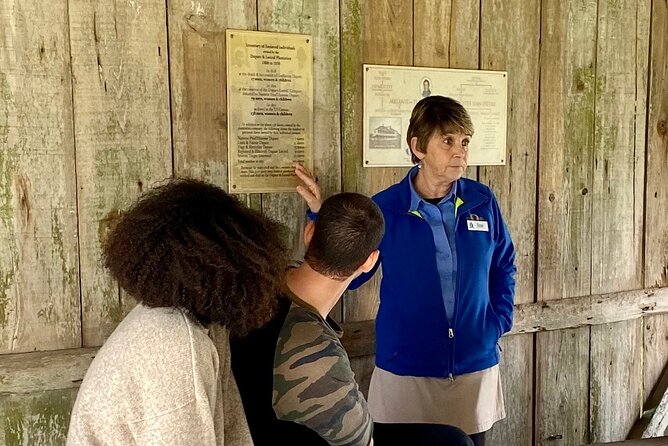
This tour’s quality often comes down to your guide, and the reviews show a consistent theme: strong guides turn the estate into a story you can hold.
You may meet guides like:
- Amelia, noted for connecting history to the era when the plantation was built and the years that followed
- Lee, praised for explaining how the plantation workings fit into the broader story
- Pam, who received both high praise and a few sharper complaints about pacing and friendliness
- Cameron, highlighted for conveying both Creole culture and what life felt like for owners and enslaved people
- Joseph, praised for being both entertaining and highly informed
- Caroline, described as taking time with explanations and making a small group tour feel personal
- Lindie, singled out for standout clarity and impact
What does that mean for you? Choose the day and time that fit your schedule, but also know that you can steer the experience slightly by asking questions. If you arrive ready with one or two topics you care about, you’ll get more value even if your guide keeps the pace moving.
Price and Value for $32.06: What You’re Really Paying For
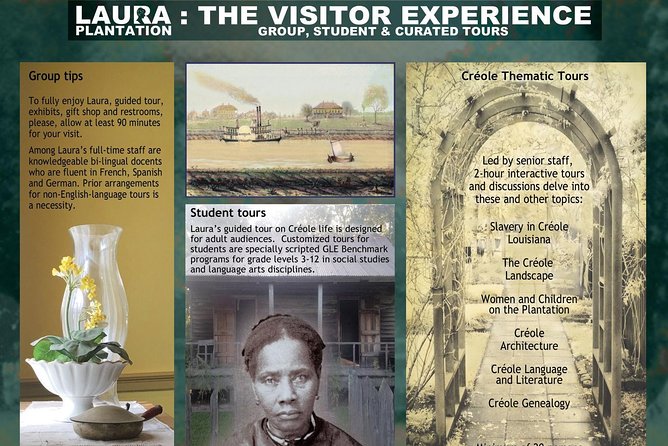
At about $32.06 per person, this isn’t the cheapest activity near New Orleans. But it’s also not trying to be a short, casual experience.
You’re paying for:
- A live guide (not just an audio program)
- Access to multiple key areas—main house, slave cabins, and gardens
- A guided conversation that takes seriously the difficult history
- A compact time window that still covers the essentials (about 70 minutes total)
In plain terms, the value is strongest if you want guided interpretation. If you just want photos of an old building, you’d probably feel under-served. But if you want your brain turned on—how Creole culture and plantation power worked together—this is the kind of ticket that makes the drive feel worth it.
Also, booking ahead helps. The tour is commonly booked around 25 days in advance on average, and planning early is smart if you want a specific date and time.
After the Tour: Museum Stops and Planning Your River Road Day
Once you finish, you’re set up to keep exploring the region on your own. The Great River Road is lined with other plantations, so this tour works well as a starting anchor for a bigger day out.
There’s often time to browse on-site before you leave. Reviews mention a gift shop and a small museum area. I like pairing a guided tour with a self-paced browse afterward, because your brain catches extra details the second time you see the same space.
If you’re pairing Laura Plantation with other stops, give yourself real travel time. This area is spread out. One strong strategy is to do Laura Plantation first while you’re fresh, then use later sites to compare how each place tells its story.
Who Should Book This Tour (and Who Should Be Cautious)
This is a great fit if you:
- Want a guided, records-based Creole plantation story
- Prefer a tight tour (about 1 hour 10 minutes) over an all-day wandering schedule
- Like asking questions and staying engaged with a small group
- Are okay with difficult subject matter and want the tour to address slavery directly
Be a little cautious if:
- You’re specifically looking for ultra-granular, everyday routine detail about enslaved people rather than broader context. You can still learn a lot, but bring questions and don’t expect every topic to be “minute-by-minute.”
- You’re relying on transportation providers other than self-driving. The ride cost can vary and may change your overall budget more than the ticket.
Should You Book Laura Plantation?
Yes—book it if you want one guided stop that connects Creole culture to plantation power and does not dodge the slavery component. The tour is short enough to fit cleanly into a day trip, and the guide-led structure helps you understand what you’re seeing instead of treating it like scenery.
If you’re on the fence, decide based on two things: your willingness to talk about slavery honestly, and your interest in Creole identity beyond surface level. If those land for you, Laura Plantation is one of the best ways to make the drive from New Orleans feel purposeful. If they don’t, you’ll likely want a different kind of attraction.
FAQ
How long is the Laura Plantation guided tour?
The tour is approximately 1 hour 10 minutes.
Is the tour offered in English?
Yes. The tour is offered in English, and the guided tour is also listed as available in French.
Where does the tour start?
The meeting point is Laura Plantation: Louisiana’s Créole Heritage Site, 2247 LA-18, Vacherie, LA 70090, USA.
Do I need hotel pickup?
No. Hotel pickup and drop-off are not included, so you’ll need to drive yourself or arrange transportation through partner operators.
What’s included in the ticket price?
The ticket includes admission and a local guide. Snacks and drinks are not included (they’re available for purchase).
Is the tour accessible for people with mobility needs?
Only the ground floor of the main house is ADA accessible. The tour also includes outdoor sections, so good walking shoes help.
Does the tour run in bad weather?
The tour operates in all weather conditions, and it takes place partly outdoors. If poor weather cancels the experience, you’ll be offered a different date or a full refund.
What’s the cancellation window?
Free cancellation is available up to 24 hours in advance for a full refund.