REVIEW · NEW ORLEANS
Private French Quarter Walking Tour
Book on Viator →Operated by New Orleans Private Tours · Bookable on Viator
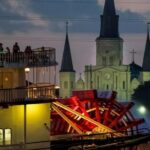
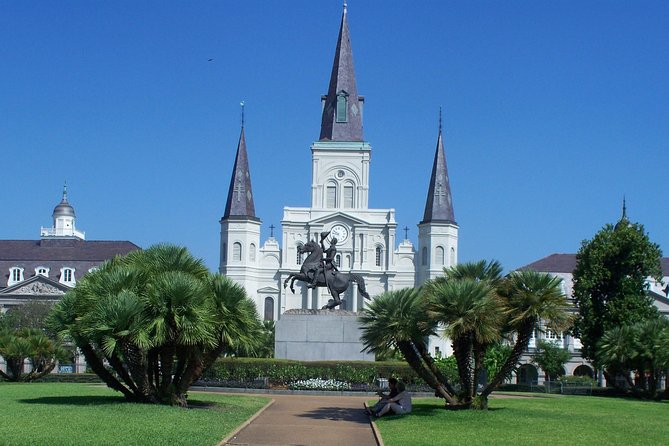
French Quarter feels different with a local guide. On this private 3-hour walk, I like the way you connect landmarks to how New Orleans actually formed and changed over time. You start at Jackson Square, then work your way through the Quarter at a relaxed pace, with stops that explain what you’re seeing instead of just pointing it out.
I especially like the private format (up to 4 people) because it keeps the conversation real and your questions in the loop. I also love the mix of big icons and small details, from St. Louis Cathedral to watching lights get made by hand at the Bevelo workshop.
One thing to plan for: this is a walking tour over uneven sidewalks, with a total distance of about 1.5 miles. If your feet get cranky fast, you’ll want good shoes and you may need to slow down.
In This Review
- Key highlights worth centering your trip on
- Why this private French Quarter walk feels more like a story than sightseeing
- Starting at Jackson Square, then tracing the Mississippi’s role in New Orleans
- St. Louis Cathedral and Cabildo: early New Orleans in two iconic stops
- Royal Street window-shopping with a purpose
- Courtyards and old alleys: where hidden space tells visible history
- The Louisiana Supreme Court stop and the fight to save the Quarter
- Pharmacy Museum and gaslight making: when the Quarter gets hands-on
- Napoleon House and Nunez House: rescue plans and the fire that changed architecture
- Price and logistics for a group of up to four
- Who should book this French Quarter walking tour
- A few practical tips before you step onto the Quarter’s uneven sidewalks
- Should you book this private French Quarter tour?
- FAQ
- How long is the private French Quarter walking tour?
- How much does the tour cost?
- Is this tour private or shared with other travelers?
- Where do we meet, and where does the tour end?
- How far do we walk?
- What’s included in the price?
- What’s not included?
- Are there admission fees at specific stops?
- What kind of activity level and footwear should I plan for?
- Is it okay if I have a service animal?
Key highlights worth centering your trip on
- Private, licensed local guide with a flexible pace for questions
- 1.5-mile walk built around major stops and quick looks into courtyards
- Jackson Square to the Mississippi edge to understand the city’s founding logic
- St. Louis Cathedral and Cabildo with clear context for early New Orleans and the Louisiana Purchase
- Bevelo gas light making factory where you can watch craftsmen at work
- French-to-Spanish architecture shift explained through the first major fire at Nunez House
Why this private French Quarter walk feels more like a story than sightseeing
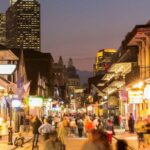
New Orleans can be noisy, crowded, and a little performative. This tour sidesteps that by keeping the group small and the walk steady, so you can actually track the plot of the city as you go. You’re not rushing from one photo spot to the next. You’re learning why the Quarter looks the way it does.
The tour runs about 3 hours and covers roughly 1.5 miles. That’s a very doable distance for most people with moderate fitness, as long as you’re okay with uneven pavement. The pacing matters here: you get time to ask questions, and the guide can adjust the order and emphasis depending on what you’re most curious about.
Best of all, the private setup means you’re not stuck with a headset. You’re talking face-to-face with your guide, and that changes everything when you want the history to connect to today.
You can also read our reviews of more walking tours in New Orleans


Starting at Jackson Square, then tracing the Mississippi’s role in New Orleans
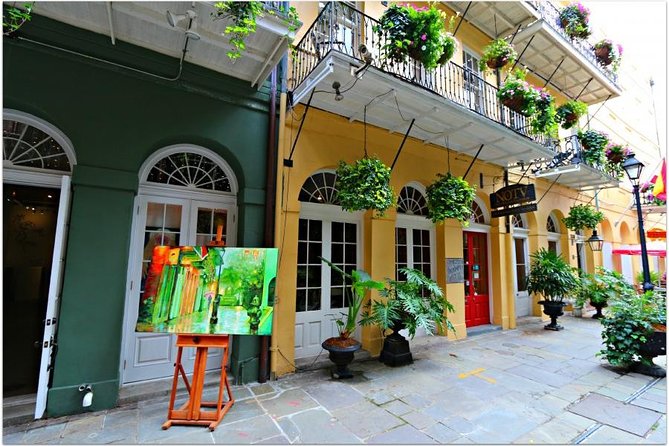
You meet near Jackson Square at Tableau by Dickie Brennan & Co., right in the heart of the Quarter. From there, you begin with a short orientation that sets the stage for the city’s origin story in 1718.
What I like about this start is that it’s not just “here’s the square.” Your guide ties the founding to the river and the waterway’s role in early growth. Then you walk toward the Mississippi’s banks, where river life isn’t a distant idea—it’s part of how the city functioned from the beginning. If you want the French Quarter to make sense instead of just impress you, this first link is huge.
Jackson Square then becomes more than a postcard. It turns into a reference point you’ll use the rest of the day, because the story you hear there shows up again in architecture, power, and street life.
St. Louis Cathedral and Cabildo: early New Orleans in two iconic stops
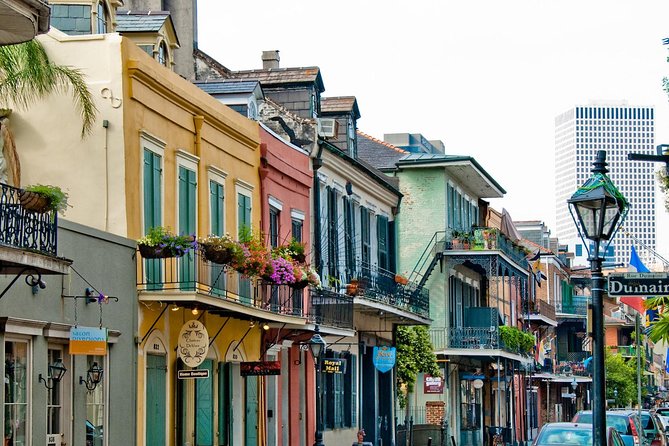
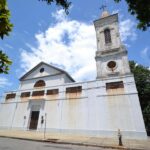
The walk takes you to St. Louis Cathedral, the oldest cathedral in the United States. You’ll spend about 15 minutes here, but the value is in the context: the building helps you understand how organized religion, community life, and identity shaped the city’s early years.
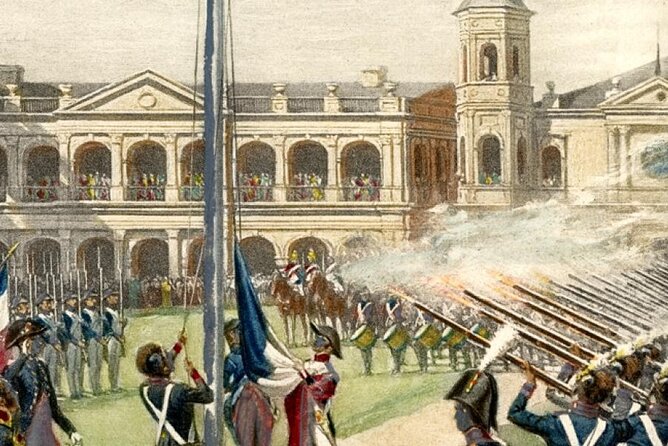
Next comes Cabildo, where the tone shifts to politics and legal moments. You’ll talk about key history that played out there, including the Louisiana Purchase ceremony. Plan for this stop’s admission: it’s listed as not included, so you may need to pay to go inside depending on how the visit works that day.
If you’re the kind of traveler who likes to know what happened in the room, not just what the building looks like, this pairing works well. Cathedral plus Cabildo gives you both the cultural center and the governmental center in a tight sequence.
Royal Street window-shopping with a purpose
Royal Street is one of those places where you can lose time fast—shops, galleries, and that easy wandering vibe. On this tour, you’re still window-shopping, but the guide uses the street to explain the people who lived there before Louisiana became a state.
You’ll spend about 30 minutes on Royal Street. That’s enough time to slow down, look closely, and ask about whatever catches your eye—without feeling like you’re being dragged.
This stop is especially good if you enjoy architecture and social history. Royal Street helps you understand that the Quarter wasn’t only entertainment and music. It was also administration, commerce, and status, with streets acting like records you can still read today.
Courtyards and old alleys: where hidden space tells visible history
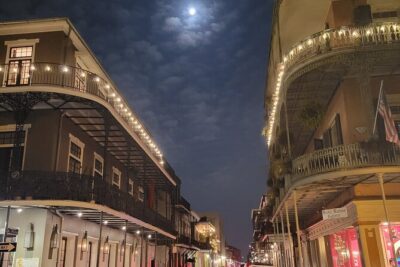
Between major landmarks, you get the quieter parts of the Quarter: tucked-away nooks, courtyards you can peek into, and alleyways like Pirate’s Alley and Exchange Alley. These parts are where the Quarter’s layout starts to feel like a living design problem—space, light, privacy, and flow.
You’ll stop at Exchange Alley and talk through conflicts between French and Americans after the Louisiana Purchase. This is one of those moments where an alley becomes a historical sentence. It’s not abstract; it’s connected to real shifts in control and community tension.
If you’ve ever walked the French Quarter and felt like you missed the “how did this happen” layer, this section helps you catch it. You’ll start noticing patterns: narrow passages, the way buildings face inward, and how the city’s different eras leave traces in layout.
You can also read our reviews of more private tours in New Orleans




The Louisiana Supreme Court stop and the fight to save the Quarter
You’ll also pause at the Louisiana Supreme Court to talk about preservation efforts aimed at saving the French Quarter from demolition. I like this stop because it reframes what people usually think of as history.
Instead of treating the Quarter as frozen in time, you see it as something people had to protect. That makes your later photos feel less like decoration and more like evidence of cultural survival.
It’s a practical kind of history lesson too. You’re learning how decisions made in more recent decades affect what you’re seeing right now on the street.
Pharmacy Museum and gaslight making: when the Quarter gets hands-on
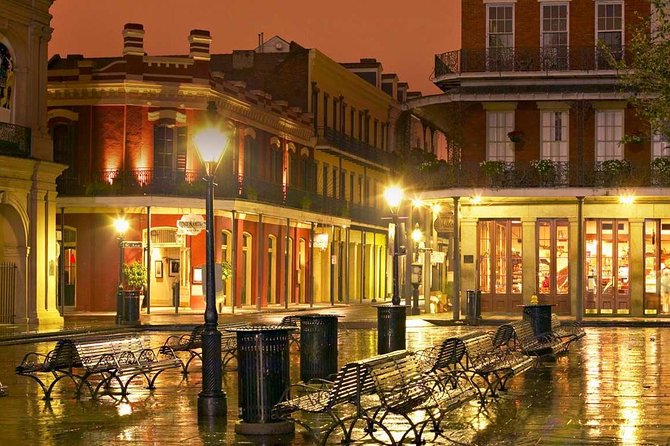
This tour does something smart: it includes sites tied to everyday life, not only power and spectacle. That’s where you get Pharmacy Museum and the Bevelo gas light making factory.
At the New Orleans Pharmacy Museum, you’ll spend about 10–15 minutes across the stops tied to it. You’ll hear about the founding of the first licensed pharmacy practice in the United States, plus details about early pharmacy professionals. One stop focuses on the first licensed pharmacist and the first female who practiced pharmacy about a century before the first licensed pharmacist. Admission here is listed as not included, so you’ll likely pay separately if you enter.
Then there’s the Bevelo gas light making factory, where you can watch craftsmen build lights by hand. You’ll spend about 15 minutes there, and the guide connects it to gaslighting history after 1803. I like this stop because it makes technology feel local, not like something that happened elsewhere and arrived as a finished product. You see the craft process and hear how it changed the city.
If your idea of a good walking tour includes real-world systems—how cities lit themselves, how medicine was regulated, how professionals worked—this is where the experience starts to feel extra worthwhile.
Napoleon House and Nunez House: rescue plans and the fire that changed architecture
Next you visit the Napoleon House. You’ll spend about 15 minutes, and you’ll hear about plans related to rescuing Napoleon Bonaparte, along with what the location is known for today. This is a classic Quarter move: big European history lands in New Orleans, then gets translated into local legend and daily life.
Finally, you stop at the Vincent Nunez House. You’ll hear about the first major fire in the city’s history and how it changed the architectural character from French to Spanish. That’s a powerful explanation because it ties a disaster (something tragic) to a lasting visual shift you can still recognize in the built environment.
I also appreciate how this ending lands. Earlier stops explain origins, power, and everyday function. The Nunez House stop connects those themes to a turning point that literally reshaped the city’s look.
Price and logistics for a group of up to four
The price is $350 per group for up to 4 people. On paper, that can look steep until you do the math. Split four ways, it’s about $87.50 per person. Split fewer ways, it climbs fast, so this tour is best if you have a small group that wants a shared guide.
The tour is private, so it’s only your group. That matters for value because private tours are often hard to justify unless you’re actually using the “private” part—asking questions, taking your time, and getting personal answers. If you and your group like to talk history and plan your next stops based on local advice, the format pays off.
Duration is about 3 hours with a leisurely pace. You’ll want to plan the rest of your day with that in mind. This isn’t a quick hit. It’s designed to leave you understanding the Quarter better when you walk away.
Who should book this French Quarter walking tour
I think this works especially well for:
- First-time visitors who want the Quarter’s story, not just its sights
- Small groups and families who want a shared experience with room for questions
- People who like city planning and how neighborhoods change with politics, technology, and disasters
- Anyone who appreciates hands-on history stops, like watching lights made by hand
It’s also a strong fit if you’ve visited New Orleans before and still feel like you missed details. Your guide can point out what you may have walked past on earlier trips.
A few practical tips before you step onto the Quarter’s uneven sidewalks
The tour is listed as requiring moderate physical fitness and notes that streets and sidewalks are uneven. That doesn’t mean it’s brutal, but you should treat it like a real walk, not a casual stroll.
Dress code is smart casual. Wear shoes you’re comfortable in for an hour-plus of city walking. Also, come prepared with at least a couple questions. Your guide explicitly invites questions, and that’s where the private format tends to shine most.
Should you book this private French Quarter tour?
I’d book it if you want more than photos. This is a tour that connects major landmarks to real explanations: founding patterns, the Louisiana Purchase era, preservation battles, and even how gaslighting and pharmacy practice shaped daily life.
I’d pause before booking if you’re traveling solo on a tight budget and you don’t plan to make full use of the private Q&A part. In that case, the per-group price might feel hard to justify for the total time.
If you go, aim to enjoy the middle parts—the alleys, the courtyards, the hands-on moments—because that’s where the French Quarter stops acting like a theme park and starts acting like a place with memory.
FAQ
How long is the private French Quarter walking tour?
It lasts about 3 hours.
How much does the tour cost?
The price is $350 per group, up to 4 people.
Is this tour private or shared with other travelers?
It’s private. Only your group participates.
Where do we meet, and where does the tour end?
You meet at Tableau by Dickie Brennan & Co., 616 St Peter, New Orleans, LA 70116, and the tour ends back at the meeting point.
How far do we walk?
The walk is about 1.5 miles (2.4 kilometers).
What’s included in the price?
It includes a narrated tour with a licensed and insured local guide.
What’s not included?
Transportation to and from attractions, food and drinks, lunch, souvenirs, and admission to unplanned attractions are not included.
Are there admission fees at specific stops?
Some stops list admission as not included, including Cabildo and the New Orleans Pharmacy Museum.
What kind of activity level and footwear should I plan for?
The tour is recommended for people with moderate physical fitness. Streets and sidewalks in the French Quarter are uneven.
Is it okay if I have a service animal?
Service animals are allowed.