REVIEW · NEW ORLEANS
New Orleans Treme’ Walking Tour
Book on Viator →Operated by French Quarter Phantoms · Bookable on Viator
Jazz has deep roots here. This guided walk through Treme connects several must-know landmarks to the sounds you hear in New Orleans today, with stops tied to early jazz, African drumming, and the neighborhood’s Black history. The format stays personal with a small group, so the stories feel like they belong on your feet, not on a poster.
I love how the tour uses music context to make history easier to remember, not just facts to skim past. I also like the small-group pacing and the fact that you’re led right from one meaningful stop to the next, including places like St Augustine’s Church and the Tomb of the Unknown Slave.
One consideration: some schedules spend more time around nearby park grounds before you get fully out into the Treme streets. If you’re hoping for nonstop neighborhood blocks from the first minutes, it helps to set your expectations for a slower start.
In This Review
- Quick hits on the Treme walk
- Entering Treme Through Storyville’s Jazz Backstory
- Storyville District: Where Jazz Grew in the Middle of Trouble
- French Quarter Phantoms Stop: Setting the Treme Frame
- Treme Streets and the Time Around Armstrong Park
- Tour Treme’: St Augustine’s Church and the Tomb of the Unknown Slave
- Congo Square: Drumming, Markets, and Cultural Continuity
- The Lost Sock @ Rampart: Laundry, Museums, and a Studio Footprint
- Why the Guide Makes a Big Difference Here
- Price and Value for a 1-Hour-45-Minute Walk
- Practical Stuff: Shoes, Camera Rules, and Walking Pace
- Should you book this Treme walking tour?
- FAQ
- How long is the New Orleans Treme walking tour?
- How much does the tour cost?
- Where does the tour start and where does it end?
- How many people are in the group?
- What’s included in the price?
- What’s not included?
- Does the tour run in bad weather?
- Can I take photos or video?
- Is the tour offered in English?
Quick hits on the Treme walk
- Max 14 people keeps the experience from feeling like a classroom line.
- Storyville (1897–1917) sets up the jazz-to-opportunity theme early in the walk.
- St Augustine’s Church and the Tomb of the Unknown Slave give the tour real emotional weight.
- Congo Square highlights how 19th-century gatherings and African drumming shaped jazz culture.
- The Lost Sock @ Rampart ties music legends to a specific recording-studio location.
- Rain or shine means you’re not stuck waiting out New Orleans weather.
Entering Treme Through Storyville’s Jazz Backstory
This tour is built around an idea that New Orleans fans love but outsiders sometimes miss: the city’s music story isn’t one straight line. It’s a chain of neighborhoods, communities, and complicated history, and Treme sits at the center of a lot of that.
It also helps that the walk begins with context instead of jumping straight into sightseeing. You’ll start with the old Storyville District and then move into the tour’s broader Treme framing, so when you reach later stops, you’ll know what each place is really pointing to.
I find that approach makes the whole experience click. If you’ve got even a basic love for jazz and blues, the walk turns that interest into understanding.
You can also read our reviews of more walking tours in New Orleans



Storyville District: Where Jazz Grew in the Middle of Trouble
Stop 1 focuses on the Storyville District, tied to New Orleans-style jazz’s early development from 1897 to 1917. The guide talks through the area as a red-light district that included brothels, bars, and dance halls where jazz artists socialized and performed.
This is a short stop (about 15 minutes), but it’s a strong opener because it explains why people later romanticized Storyville as a jazz birthplace. That matters, because the point isn’t to turn it into a theme park story. It’s to show how music and social life formed inside a specific, contested world.
A practical tip: keep an eye out for how your guide connects this past to the neighborhoods you’ll see next. If you pay attention to that thread, the walk feels like one story instead of five separate stops.
French Quarter Phantoms Stop: Setting the Treme Frame
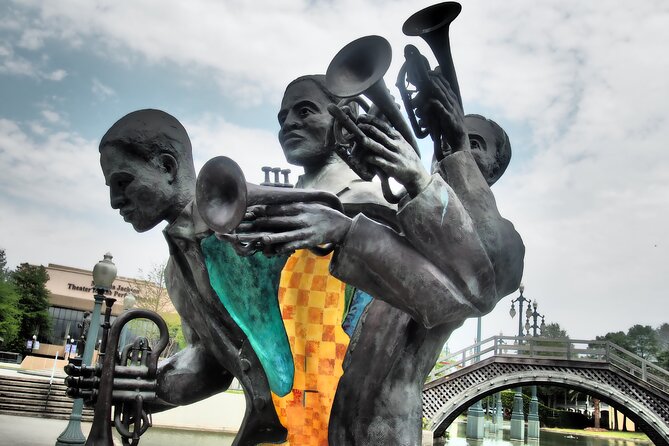
Right after the opener, you’ll hit a quick starting point stop that lays out general Treme history. Think of it like the “why this matters” section before you get into the “what you’re looking at” part.
This short segment (around 10 minutes) is useful because Treme can look like ordinary city blocks unless you know what to notice. Your guide’s job here is to help you read the neighborhood: community identity, long memory, and how music history lives in everyday places.
If you like tours that explain the lens before the details, this stop will make the rest easier to follow.
Treme Streets and the Time Around Armstrong Park
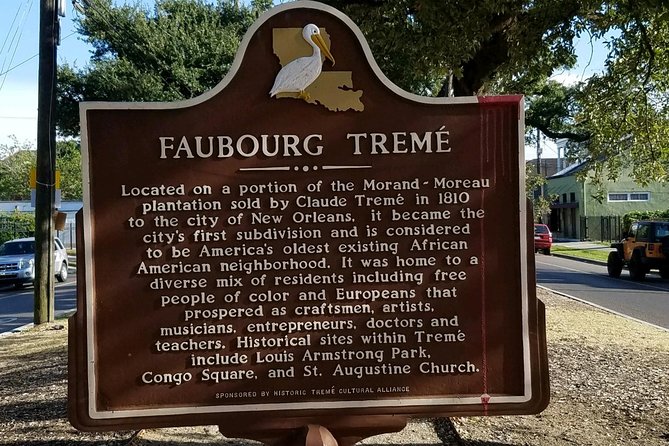
After the context stops, you’ll get into the heart of the experience under the banner of Tour Treme’. Here’s where one key consideration shows up: the pacing can include extra time around park grounds, particularly around Armstrong Park.
In plain terms, you may spend a bigger chunk of the early tour in park space before the walking becomes more street-focused. That can still be valuable, especially if the guide uses the moment to set scale and history. But if your top priority is maximum street blocks and minimal downtime, plan for a slower start.
Once you’re moving, the value is the guide’s storytelling style. In the experience’s best versions, guides use music selections and clear narration to connect what you’re seeing to what people lived, built, and endured.
If you want to maximize street time, the smartest move is to wear comfy shoes and be ready for a walk that mixes talking, landmark viewing, and occasional still moments.
Tour Treme’: St Augustine’s Church and the Tomb of the Unknown Slave
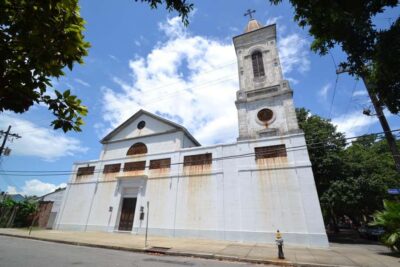
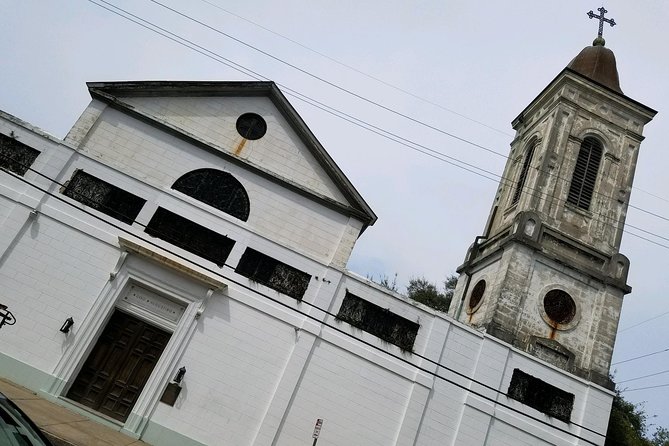
The Tour Treme’ segment runs about 50 minutes and is where the tour shifts from background to direct landmark meaning. Two stops stand out in particular: St Augustine’s Church and the Tomb of the Unknown Slave.
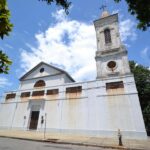
St Augustine’s Church brings spiritual and community history into focus. It’s the kind of place where you can sense how faith and neighborhood identity braid together over generations. When your guide connects it to Treme’s wider story, the stop becomes more than a photo opportunity.
Then comes the Tomb of the Unknown Slave, and this is the moment where the tour doesn’t shy away from grief and injustice. It’s a powerful stop because it forces the conversation into slavery’s legacy and the people whose names were denied but whose lives shaped the city anyway.
If you’re the type of person who likes history to feel honest instead of sanitized, this is the section most worth your full attention.



Congo Square: Drumming, Markets, and Cultural Continuity
Stop 4 is Congo Square, a landmark that’s essential for understanding how African cultural traditions helped shape New Orleans music. The guide explains that enslaved and free people of color gathered there throughout the 19th century for meetings, open markets, and African dance and drumming celebrations.
This stop is about 15 minutes, and it’s meaningful for two reasons. First, it reframes jazz origins as something built on cultural survival, not just entertainment history. Second, it shows how community gathering spaces can act like cultural engines.
You’ll likely hear the connection made between drumming traditions and later jazz development. Even if you already know the name Congo Square, the guide’s framing tends to make it feel more specific and real.
The Lost Sock @ Rampart: Laundry, Museums, and a Studio Footprint
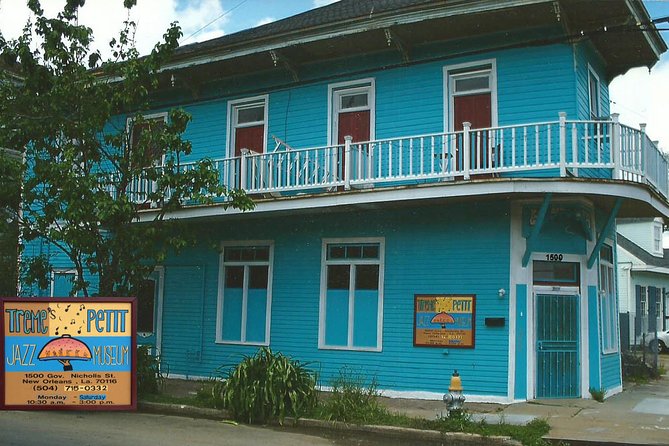
The final major stop is The Lost Sock @ Rampart, a laundry and museum area and also described as a Rock n Roll Hall of Fame location. This is a great example of how Treme-related music history isn’t only about famous concert venues.
Your guide ties the site to Cosimo’s J&M Recording Studio, described as a former home where major artists recorded early work. The names included in the tour framing are Fats Domino, Little Richard, and Professor Longhair, connected to recordings of some of their first music.
In a city where music stories are everywhere, I like that this stop anchors you to a concrete place in the chain. You’re not just hearing legends; you’re getting a location you can connect to the sound.
This stop lasts about 15 minutes, and because it sits near Rampart, it also helps you connect the Treme story to the broader New Orleans geography.
Why the Guide Makes a Big Difference Here
A tour like this rises or falls on storytelling quality, and the strongest versions rely on guides who can link music, place, and identity without sounding like a lecture.
In the experience’s standout moments, guides use music selections to match the theme of each stop. Some have styles that feel like you’re walking with a local storyteller who also understands how to explain the bigger picture.
Names you may encounter include Kwaku, Kweku, Claire, Erica, Erin, Eva, Nika, Pepe, Angelina or Angela, and Bobby. Different voices, same goal: make Treme’s story feel alive.
If you’re choosing between tours that merely point at locations, and this one that tries to explain how those locations connect to jazz and community history, that difference is the whole game.
Price and Value for a 1-Hour-45-Minute Walk
At $20.50 per person for about 1 hour 45 minutes, this tour is priced in a way that usually feels fair for a guided walk that hits multiple major stops. You’re getting a professional guide and a route that covers early jazz framing, Congo Square, a major church, a memorial, and a music-related museum/studio site.
Many “sightseeing walks” tend to stop at fewer meaningful places or spend too much time on general commentary. Here, the number of stops and the emotional range of those stops make the time feel well used.
The tour also notes mobile tickets and an English-speaking format, so you should feel set up once you arrive.
Practical Stuff: Shoes, Camera Rules, and Walking Pace
Plan around comfort first. The tour asks for comfortable shoes and it runs rain or shine. That matters because New Orleans weather can flip quickly, and you don’t want to be stuck adjusting blister strategy halfway through.
You can bring your camera, but videotaping isn’t allowed. So if you’re someone who records video while walking, you’ll need to adjust and go photo-first.
The start is at Voodoo Lounge, 718 N Rampart St, and the walk ends back at the same meeting point. The tour starts at 10:30 am, which is a smart time for a walking tour because you often beat the worst heat and crowds.
Group size is capped at 14 people, which is another reason this works well for families and people who want questions answered without waiting your turn forever.
Should you book this Treme walking tour?
Book it if you want a New Orleans experience that leans into the neighborhoods and people behind the music. This tour makes a strong case that jazz wasn’t just invented in studios or on stages, but also grew through community spaces like Congo Square and everyday institutions tied to Treme.
I’d also book it if you care about guided storytelling that gets specific, including stops like St Augustine’s Church and the Tomb of the Unknown Slave. Those aren’t quick photo moments; they carry weight.
Skip it or adjust expectations if you need nonstop street walking from the beginning. With some runs including extra time around park grounds like Armstrong Park, the first stretch may feel less “Treme streets first” than you hoped.
If you’re a music fan with curiosity and stamina for a 1-hour-45-minute walk, this is one of the better ways to spend $20.50 in New Orleans.
FAQ
How long is the New Orleans Treme walking tour?
It’s about 1 hour 45 minutes.
How much does the tour cost?
The price is $20.50 per person.
Where does the tour start and where does it end?
The tour starts at Voodoo Lounge, 718 N Rampart St, New Orleans, LA 70116, and ends back at the same meeting point.
How many people are in the group?
The tour has a maximum of 14 travelers.
What’s included in the price?
You get a professional guide. Admission for Congo Square is included, while other listed stops are free.
What’s not included?
Alcoholic drinks and food and drinks are not included, and there is no hotel pickup or drop-off.
Does the tour run in bad weather?
Yes, the tour runs rain or shine.
Can I take photos or video?
You may bring your camera. Videotaping is not allowed.
Is the tour offered in English?
Yes, the tour is offered in English.