REVIEW · NEW ORLEANS
New Orleans Culture Second Line Tour in NOLA
Book on Viator →Bookable on Viator
A brass band pulls you into the street. This New Orleans Second Line Culture tour pairs a Treme neighborhood walk with the real deal parade energy, guided by King Hollis Burton.
What I like most is the combo of hands-on fun plus clear context about where Second Lines come from, including the Mardi Gras Indians and Social Aid & Pleasure Clubs. You’ll also get included bottled water to keep you moving without constant break-hunting. One catch: plan for lots of walking and loud music, so if your goal is whisper-level narration, you may need to stay close to the guide.
In This Review
- Key things to know before you go
- Why a Second Line in Treme Changes Your New Orleans Trip
- Meet King Hollis Burton, Your Guide Through the Stories and the Noise
- Stop 1: Treme Walking Route and the Traditions Behind the Parade
- Stop 2: Join the Second Line Parade and Learn While You Party
- Price and Duration: Is $30 Worth It?
- What to Pack: Shoes, Rain Gear, and Cash for Drinks
- Route Flexibility, Group Pace, and How to Stay With Your People
- Who Should Book This Second Line Tour (and Who Might Think Twice)
- Should You Book This Tour?
- FAQ
- Where is the meeting point?
- How long is the tour?
- What language is the tour offered in?
- Is a parade ticket included?
- What should I bring?
- What happens if weather is bad?
Key things to know before you go
- You’ll be part of the parade moment rather than standing at the curb watching only
- King Hollis Burton brings Treme stories to the route so the music has meaning
- Stops can shift with the parade route, so expect a little adapting in real time
- Bottled water is included, useful when you’re out for about 2.5 hours
- Uneven streets and fast pace are part of the experience—comfortable shoes are not optional
Why a Second Line in Treme Changes Your New Orleans Trip
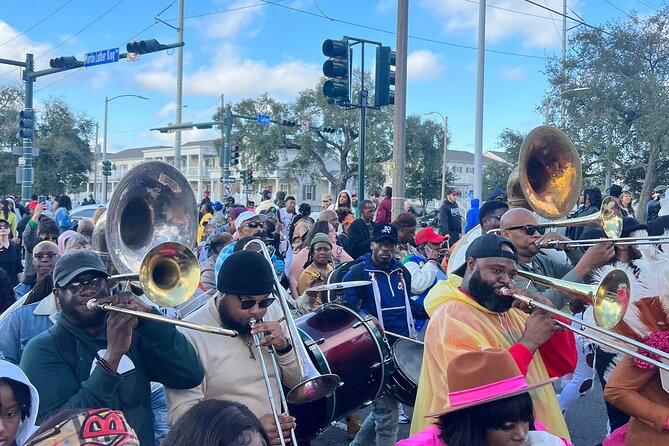
Second Line parades are one of those New Orleans traditions that only makes sense once you’re in the middle of it. The route isn’t a museum path. It’s people, movement, and brass band sound that spills into the sidewalk. You’ll feel how the city turns ordinary streets into a community stage.
I also like that this tour doesn’t treat Second Lines like a one-note party. You get the background first, then the celebration makes sense when the bands show up and people start dancing. It’s the difference between seeing fireworks and learning why that specific show exists.
The neighborhood focus matters too. Treme is where you get out of the usual postcard loop. You’re walking through an area tied to the roots of New Orleans music and social traditions, including the Mardi Gras Indians and Social Aid & Pleasure Clubs. That context helps you understand what you’re actually witnessing.
You can also read our reviews of more tours and experiences in New Orleans.

Meet King Hollis Burton, Your Guide Through the Stories and the Noise
Your guide is King Hollis Burton, and his role is a mix of cultural storyteller and parade hype-man. The tour is built around the idea that you’re not just attending—you’re understanding how the tradition connects to the community.
Based on what you’ll be told along the way, you should expect a running thread: Second Lines weren’t invented for tourists. They trace back to jazz funerals, and over time they became their own street celebration with brass bands and people dancing behind the music. That shared rhythm is what the guide helps you notice.
And yes, there’s noise. Second Lines are loud by nature. If you’re the type who likes to stop and read every detail, this isn’t that kind of tour. You’ll learn while you’re moving, and you’ll catch stories best when you stay near the front of your group.
Stop 1: Treme Walking Route and the Traditions Behind the Parade
In Treme, the tour’s first phase is about orientation and meaning. You’ll walk the historic streets with a guide who connects what you see to how the community shaped the sounds of the city.
This is where the big cultural threads come in:
- Mardi Gras Indians: legendary figures and stories tied to identity, performance, and tradition
- Social Aid & Pleasure Clubs: groups with a real community purpose that helped shape social life
- Congo Square: a place name that helps you understand how music and culture have long mattered in this area
As you move, you’ll also hear the city’s music culture in a way that feels closer than listening from a hotel balcony. It’s not just trivia. The point is to help you recognize patterns: how people gather, how the beat pulls movement forward, and how community traditions carry through generations.
One practical thing: locations can vary based on the parade route. So even if you arrive expecting a fixed script, treat this as a flexible street experience. That adaptability is part of why it feels alive instead of staged.
Stop 2: Join the Second Line Parade and Learn While You Party
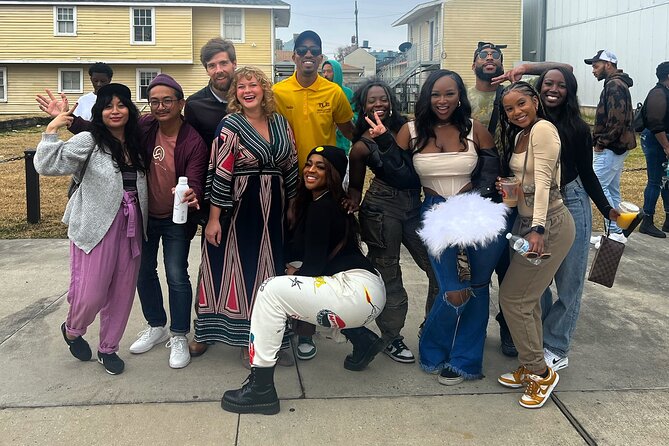
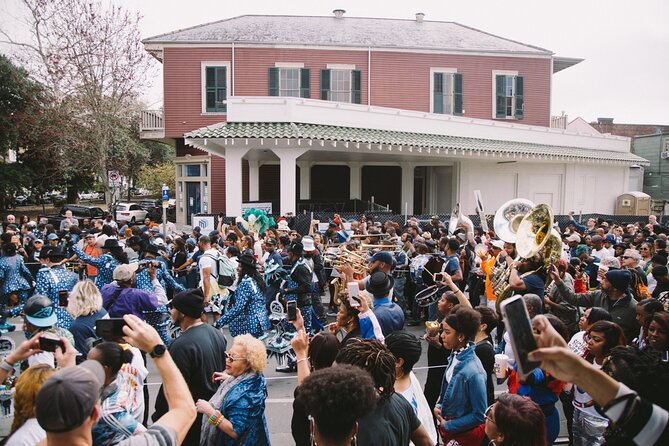
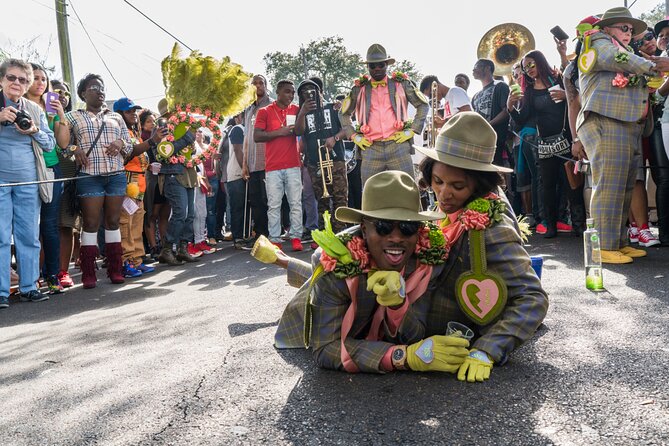
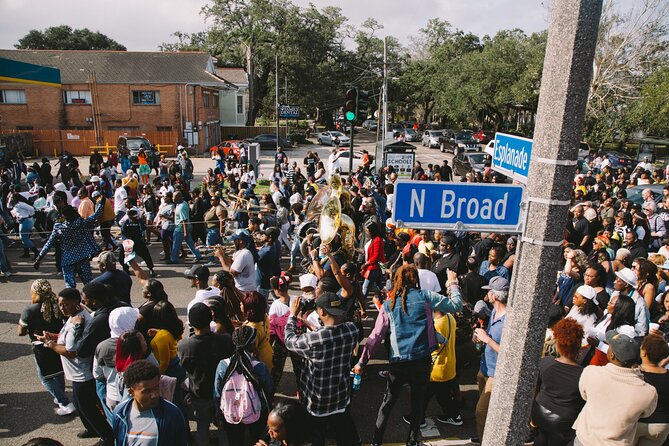
Once the parade starts, your job becomes part celebration, part following. The tour is centered on the cultural tradition of Second Line parades in Treme, often in a Sunday “funday” vibe where energy builds quickly.
Here’s what you can expect when the band arrives:
- Brass band sound that drives the march
- Dancing participants who treat the sidewalk like a stage
- A celebration that can feel spontaneous, even when people are following a shared rhythm
You’re not only watching. The tour is set up so you’re moving with the parade, which is why it’s so memorable. Reviews consistently highlight that it feels like learning the tradition while actively participating.
Also, the parade has real “in-between” moments. You may wait while participants adjust outfits, and the pace can be fast when the group needs to reposition to stay together. That’s normal for street-level celebrations, but it’s worth knowing up front so you don’t feel frustrated when the day doesn’t unfold like a timed theme park.
One more heads-up: if you’re in the middle or back of your group, you might have a harder time hearing the guide once the music kicks in. In loud crowds, the people closest to the guide get the most narration. If you care about the history part, don’t spend the whole time far away.
Price and Duration: Is $30 Worth It?
At $30 per person, this tour is priced like an experience, not a ticketed attraction. And that’s key. The parade part isn’t something you’re buying separately here—you’re paying for guided context plus access to the lived-in feel of the neighborhood.
You’re out for about 2 hours 30 minutes (approx.), which is a sweet spot for a street tour: long enough to get the stories and settle into the rhythm, not so long that you’re ruined by walking alone.
Why the value works:
- You get included bottled water, which helps on a long walk without buying something mid-route
- You’re guided through the meaning behind what you’re seeing, especially for the history threads tied to Treme and Second Lines
- The group size is capped at 50, which usually makes it more manageable than huge crowd chaos
The best comparison is this: you can attend a Second Line on your own, sure. But if you want to understand why people do what they do—why the parade matters—this kind of guided experience is what turns a loud street moment into a story you can carry home.




What to Pack: Shoes, Rain Gear, and Cash for Drinks
This is a walking-and-stand-sometimes kind of tour. Do not show up in shoes that are “almost comfortable.” You’ll want something that handles uneven ground.
Based on feedback and the tour style, here’s your packing list:
- Comfortable shoes (you’ll be on your feet a lot)
- A poncho or umbrella since it’s rain or shine
- Cash for food and drinks along the route (some vendors take cash only, and there can be alcohol available)
Also, expect a lot of movement. There can be quick walking moments to catch up with the parade, and you may need to re-form your group as the route shifts.
If you get there and feel like you’re struggling to hear the guide, that doesn’t mean the tour is wrong—it means you’re in a loud parade environment. Positioning matters. Staying close helps.
Route Flexibility, Group Pace, and How to Stay With Your People
This tour is built around real street conditions. That means route changes, crowd squeezes, and short moments where you’ll feel pulled by the parade’s momentum.
Two practical tips that make the day smoother:
- Arrive early so you’re not sprinting into a group that’s already forming
- Follow any day-of meeting updates closely, because the meeting spot information has been known to change
Once the parade begins, the pace can move quickly. If your group gets spread out, re-grouping can feel chaotic. The best move is simple: keep your eyes up and stick with the people you booked with, not strangers drifting sideways.
And remember: loud music is part of the point. This isn’t a calm, sit-down lecture. It’s a community event where you participate with your body and learn with your ears as best you can.
Who Should Book This Second Line Tour (and Who Might Think Twice)
Book this if you want:
- Cultural context while still having big fun
- A neighborhood experience outside the usual French Quarter bubble
- A guide-led approach that connects Second Lines to Treme traditions, not just the spectacle
This tour also tends to work well for people who like music and don’t mind noise. If you love the idea of being in the street when New Orleans turns into a moving party, you’ll probably have a great time.
You might want to think twice if:
- You need quiet narration and perfect audibility (crowds + music make that hard)
- You hate long walking on uneven streets
- You expect a slow, sit-and-sip style pacing
For most people, the tradeoff is worth it. The energy is real, and the tradition comes through fast once you’re in it.
Should You Book This Tour?
Yes, if your goal is to experience a Second Line with more meaning than you’d get by wandering alone. The guide-led stories, the Treme focus, and the chance to actually join the parade are the winning combo here.
If you book, go in with the right expectations: you’re buying a guided street celebration, not a quiet history lesson. Bring comfortable shoes, a rain layer, and cash for food or drinks. Arrive a bit early, stay close to your guide during the loud parts, and treat the route flexibility as part of the charm.
FAQ
Where is the meeting point?
The tour meets at 1111 Canal St, New Orleans, LA 70112, USA and ends back at the meeting point.
How long is the tour?
It runs for about 2 hours 30 minutes (approx.).
What language is the tour offered in?
The tour is offered in English.
Is a parade ticket included?
The experience includes admission ticket free for the parade part.
What should I bring?
Bring comfortable shoes, a poncho or umbrella for rain or shine, and cash for food and drinks along the route. Bottled water is included.
What happens if weather is bad?
This experience requires good weather. If it’s canceled due to poor weather, you’ll be offered a different date or a full refund.