REVIEW · NEW ORLEANS
New Orleans Creole History and Culture Ride
Book on Viator →Operated by A Street Tour Named Desire · Bookable on Viator
A great New Orleans day starts on two wheels. This 3-hour Creole culture bike ride moves at an easy pace through parks, old neighborhoods, and the riverside, then lands you at a local bar for questions and smart recommendations.
I really like the built-in structure: you get quick orientation at Washington Square Park, then you slow down in Faubourg Marigny and Bywater to see how the city’s character has shifted over time. I also like that the guide keeps it personal and conversational—Danny is known for remembering names and making it feel like a chat with locals.
One drawback to consider: it’s weather-dependent and you’ll be riding for most of the tour, so if you’re not comfortable biking or if the forecast looks rough, this might be less fun.
In This Review
- Key things I’d watch for before you go
- A 3-hour Creole bike reset with a local guide, not a checklist
- Price and what $55 buys you (bikes, water, and real time with the guide)
- The meeting point at 634 Elysian Fields Ave: why the start location helps
- Stop 1: Washington Square Park for quick orientation and a bike warm-up
- Stop 2: Faubourg Marigny—old Creole neighborhoods and a slower street-level view
- Stop 3: Bywater Historic District and the stories behind shifting New Orleans
- Stop 4: Marie’s Bar and Kitchen—where the ride turns into a conversation
- What to expect from the riding style and group energy
- Who this tour suits best (and who might not)
- Should you book it? My practical take
- FAQ
- How long is the New Orleans Creole History and Culture Ride?
- What does the tour cost?
- Where does the tour start?
- Where does the tour end?
- What time does the tour start?
- Is alcohol included in the price?
- Is the tour in English?
- How many people are in the group?
- Is the tour dependent on weather?
- Can I cancel for free?
Key things I’d watch for before you go
- Small group vibe (max 10 travelers) keeps stories and questions from getting lost
- Starter practice at Washington Square Park helps if you need a bike warm-up
- Old Creole neighborhoods on purpose in Faubourg Marigny and Bywater—not just postcard stops
- Plessy vs Ferguson case stop and riverside viewpoints give historical context you can connect to the streets
- Marie’s Bar and Kitchen as the Q&A landing spot with music schedules and food suggestions on hand
A 3-hour Creole bike reset with a local guide, not a checklist
This tour is designed to help you understand New Orleans as a living culture, not a museum display. You start in a calm green space near Frenchmen Street, then work your way through older residential areas and toward the river. That route matters. It connects the ideas the guide shares to the actual streets and neighborhoods you’re riding through.
The pacing is a big part of why people like it. You’re biking, but you’re also slowing down at key moments so you can hear the story, look around, and ask questions without feeling herded.
And the group size is small—maximum 10—so you’re more likely to get a real conversation rather than a lecture you catch bits of while coasting.
You can also read our reviews of more historical tours in New Orleans
Price and what $55 buys you (bikes, water, and real time with the guide)
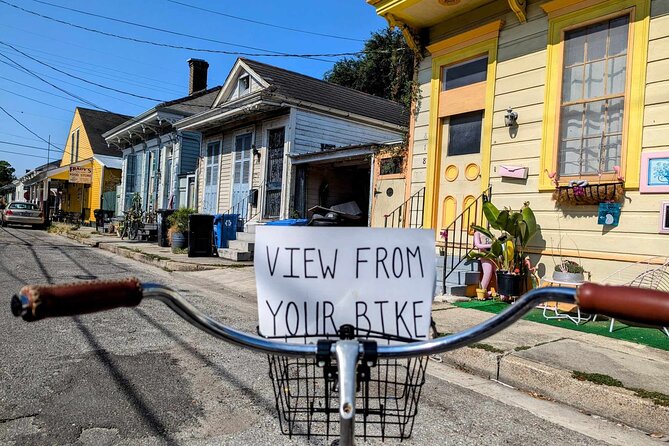
At $55 per person for about 3 hours, you’re paying for more than scenery. Your price includes the bicycle, bottled water, and a basket for small bags. That’s a practical win in a city where hauling your own gear can be annoying.
The drink stop at the end is not included, but that’s also part of the value. The bar stop is set up as a time to regroup, ask questions that came up during the ride, and get local recommendations—music schedules and food ideas are mentioned as being available. You can take it or leave it, and you won’t lose tour time to hunting for a place to ask things.
If you’re budgeting, think of the $55 as covering the bike day plus guided context. Then add whatever you want to drink at Marie’s.
The meeting point at 634 Elysian Fields Ave: why the start location helps
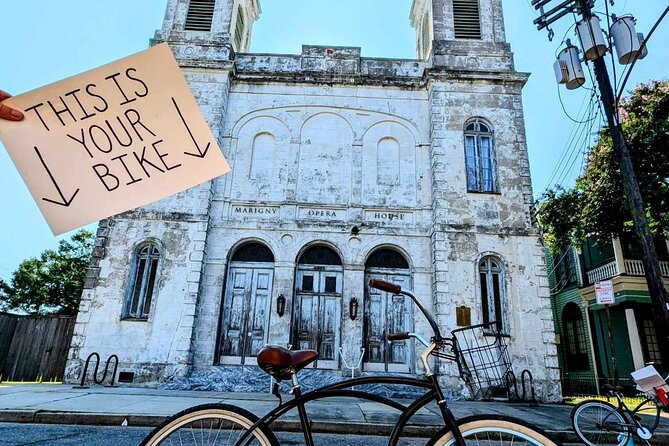
You start at 634 Elysian Fields Ave and the tour ends back at the same place. Starting here is useful because it keeps the loop tight. You’re not stuck with transportation planning at the end of a half-day ride.
The start time is 10:00 am, which helps you get into the city before your energy level drops. Also, the meeting point is near public transportation, so you can mix this tour with other sightseeing plans without overcommitting to car time.
Stop 1: Washington Square Park for quick orientation and a bike warm-up
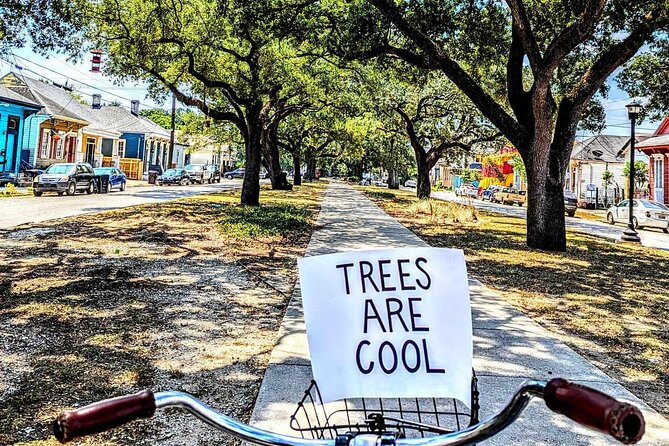
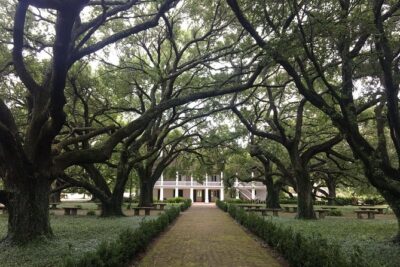
Washington Square Park is your first stop, and it’s not random. It dates back to the early 1800s and it’s lined with Louisiana’s big, old oak trees. That makes it an easy place to reset your brain when you arrive—quiet, shaded, and visually different from the loudest areas.
Since it’s next to Frenchmen Street, you also get an immediate sense of New Orleans contrast: entertainment energy nearby, but this park gives you space to listen.
Practically, this is also where you get to know each other, and it’s described as a great spot for a practice lap if you haven’t biked in a while. That matters. If you’re rusty, you’ll want your first moments on the bike to feel controlled, not chaotic.
Stop 2: Faubourg Marigny—old Creole neighborhoods and a slower street-level view
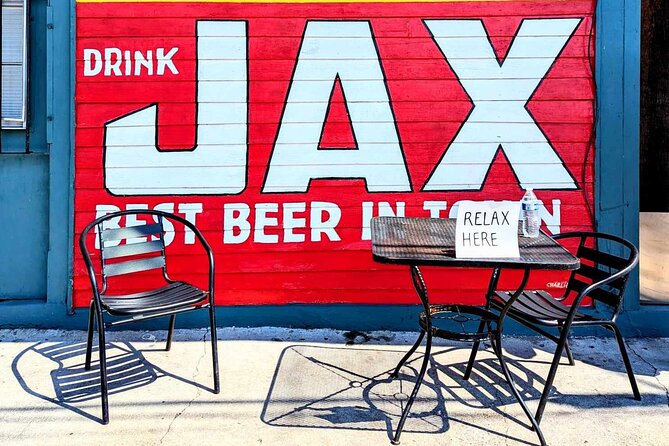
Your second stop takes you into Faubourg Marigny, described as the oldest of the suburbs surrounding the French Quarter. You ride through quiet streets and focus on the neighborhood itself—architecture and day-to-day vibe—so the culture story doesn’t float above you.
The tour frames Marigny as a place with roots going back around 200 years, and it emphasizes how the area still tries to hold onto its feel even as modern life pushes in. That’s a useful angle for first-time visitors. Instead of treating “change” as something that only happens in history books, you see it as something happening at street level.
This stop also comes with an openness vibe: it’s presented as a very local area where everyone is welcome. That’s exactly what I want from a guided ride—permission to look, listen, and connect without feeling like you’re intruding.
One small consideration: this part of the ride is about being present. If you’re someone who only likes major landmarks on the hour, you might want to mentally adjust to a neighborhood-style tour where the details are the point.


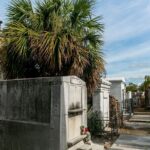
Stop 3: Bywater Historic District and the stories behind shifting New Orleans
Bywater Historic District is where the ride starts getting sharper and more specific. You’re not just appreciating buildings—you’re being pointed at places that explain who New Orleans is and how it changes.
This stop includes references to moments where the nation changed through legal and social conflict, with a specific mention of the Plessy vs Ferguson case. You’ll also see the levee wall and the Mississippi River, which is a reminder that New Orleans history isn’t only about culture—it’s also about land, water, and survival.
The tour also includes examples of local art and stops tied to music. That pairing is smart. New Orleans is one of those places where art and identity are tangled together. Seeing that connection on foot and bike-level makes it easier to remember.
There’s a practical side here too: Bywater is part of the route where the scenery helps you stay engaged. It’s not a long stretch of repeating blocks. You’re given reasons to pay attention.
Stop 4: Marie’s Bar and Kitchen—where the ride turns into a conversation
The final stop is Marie’s Bar and Kitchen. Think of it as the tour’s off-ramp: a drink and relaxation break where you can ask anything still on your mind.
This is a neighborhood tavern dating back to the 1930s. It’s also described as a place the guide knows well, and it’s set up with outdoor tables along the street—good for people-watching while you process everything you heard.
The best part is how the bar stop is treated as part of the experience, not an afterthought. The guide is said to have music schedules handy and food recommendations you can use right away. If you want to turn your sightseeing day into a more personal New Orleans night plan, this is the moment to do it.
Drinks are not included, so decide what you want to spend. If you’d rather not buy alcohol, you can still use the time. It’s also mentioned that if children are on the tour, the bar stop may shift to a different place, but the overall tone stays just as good.
What to expect from the riding style and group energy
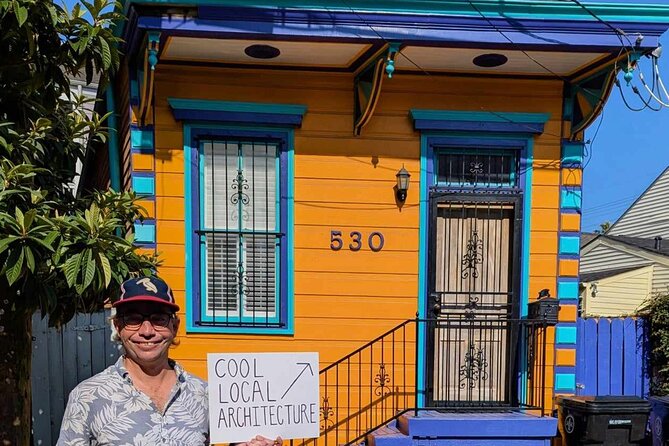
This is not a hard-core bike route. It’s described with an easy pace, with time to take everything in without feeling rushed. That pacing is key for a history-and-culture tour. If you’re sprinting between stops, the stories turn into background noise.
The tour also sets you up for participation. You’ll meet the group at the start, and the guide is encouraged to keep conversation moving. In one standout review, Danny is praised for being accommodating and for remembering all guests’ names, which is a nice sign that you won’t be treated like a number.
Another reason the vibe works: the route includes parks and neighborhoods where you can pause, not just a string of intersections.
Who this tour suits best (and who might not)
This ride is a strong choice if you want:
- A guided way to understand Creole culture’s influence on the city you’re seeing
- A break from the busiest tourist lanes, with more quiet neighborhood energy
- A manageable time commitment (about 3 hours) that still feels meaningful
It may be less ideal if:
- You can’t comfortably bike for most of the tour duration
- You’re only interested in big, famous monuments and want less neighborhood viewing
If you’re traveling with family, the tour notes that the stop may adjust for children, which suggests they’re trying to keep the experience workable across ages.
Should you book it? My practical take
I’d book this tour if you’re the type of visitor who wants context you can feel in your walk and bike route. Washington Square Park for orientation, Faubourg Marigny for the older neighborhood feel, Bywater for how the city’s story connects to the river and major national events, then Marie’s Bar to turn ideas into real plans. That flow makes sense.
If you’re hoping for a party-style Bourbon Street tour, this isn’t that. It’s a calmer, locally focused ride, built around conversation and streets rather than loud spectacle.
One more reason to consider booking: the format is built for questions. The bar stop is explicitly meant as a time to ask anything you’re still wondering. If you like getting answers while they’re still fresh, this tour fits that style well.
FAQ
How long is the New Orleans Creole History and Culture Ride?
It’s about 3 hours.
What does the tour cost?
The price is $55.00 per person.
Where does the tour start?
The meeting point is 634 Elysian Fields Ave, New Orleans, LA 70116, USA.
Where does the tour end?
The tour ends back at the meeting point.
What time does the tour start?
The start time is 10:00 am.
Is alcohol included in the price?
No. There is a drink stop, but alcoholic beverages are not included.
Is the tour in English?
Yes, it’s offered in English.
How many people are in the group?
The tour has a maximum of 10 travelers.
Is the tour dependent on weather?
Yes. It requires good weather. If it’s canceled due to poor weather, you’ll be offered a different date or a full refund.
Can I cancel for free?
Yes. You can cancel up to 24 hours in advance for a full refund.