
REVIEW · NEW ORLEANS
Glamorous Garden District Tour
Book on GetYourGuide →Operated by Unique NOLA · Bookable on GetYourGuide
The Garden District tells stories in plain sight. This 2-hour walking tour is a smart way to look beyond the French Quarter and understand how people lived, died, and watched movies here. I love the architecture-and-neighborhood context from a real local guide, and I love how the stop at Lafayette Cemetery turns a landmark visit into something you can actually picture. One drawback: it is a lot of walking and standing, so comfy shoes are not optional.
The best part is the guide attention. On tours led by guides like Barbara, Shawn, and Mikko, the explanations come through clearly, and when the group is small (I’ve seen it run with about five people), it’s easier to hear and ask questions. You also get a tour that mixes pretty streets with places that carry real meaning, like burial traditions and the old class line along Magazine Street.
Expect to start at 2800 St. Charles Avenue and move at a steady walking pace through the Garden District, Lafayette Cemetery, Magazine Street, and a short walk toward the Irish Channel. You’ll also spot current-famous residents and film locations tied to shows and movies you recognize. And yes, you’ll cover a lot in a short time.
In This Review
- Key Things You’ll Notice on This Garden District Walk
- Starting at 2800 St. Charles: How the 2-Hour Tour Flows
- The Garden District, Explained Through Its Layout and Lawns
- Lafayette Cemetery: Where Burial Traditions Become Part of the Visit
- Famous Residents and Screen-Famous Houses on the Same Streets
- Magazine Street: The Old Class Line You Can Still Read
- Irish Channel and Shotgun Houses: Small-Scale Homes, Big-Scale Story
- Price and Time: Is $37 Worth It?
- Who Should Book This Tour (and Who Might Want Another Plan)
- My Take: The Best Use of Your 2 Hours in New Orleans
- FAQ
- Where does the tour start?
- How early do I need to check in?
- How long is the tour?
- Is the tour in English?
- Does the tour run in bad weather?
- How much walking is involved?
- What places are included on the tour?
- Do you see famous residents and film locations?
- How much does it cost?
- What’s the cancellation and payment flexibility?
Key Things You’ll Notice on This Garden District Walk

- Garden District streets mapped to real history, including how it was founded in 1832 and annexed in 1852
- Lafayette Cemetery as the oldest city-owned cemetery, with burial practices and traditions explained for visitors
- Famous homes and present-day residents, including Anne Rice, Sandra Bullock, and John Goodman
- Movie and TV filming locations, such as The Curious Case of Benjamin Button and American Horror Story’s Buckner Mansion
- Magazine Street as a historical boundary, where the rich and working class once lived side by side (at different levels of power)
- A walk toward Irish Channel and shotgun houses, right after Magazine Street’s class story
Starting at 2800 St. Charles: How the 2-Hour Tour Flows

You’ll meet at 2800 St. Charles Avenue, and check-in happens 15 minutes before the start time. The time window matters because this is a walking-heavy tour. Once it begins, you’re on your feet for most of the experience, moving block to block and stopping often to look, listen, and take photos.
The pacing is built for a quick but meaningful tour. You’re not just getting a drive-by view of mansions; you’re walking the neighborhood at a human scale, so the guide can connect the streets to the people and events that shaped them. The session runs two hours, which is long enough to cover the main sights without turning it into a marathon.
One practical detail I’d plan around: the tour happens rain or shine. So think in layers and wear shoes that can handle wet sidewalks and frequent stops. If your feet fatigue easily, consider scheduling this earlier in the day when you have more energy.
You can also read our reviews of more tours and experiences in New Orleans.



The Garden District, Explained Through Its Layout and Lawns

The Garden District is famous for its looks, but the real value is what you learn while you walk. You’ll follow the neighborhood streets that were laid out when the area was founded in 1832—between St. Charles Avenue, First Street, Magazine Street, and Toledano Street. That “in-between” geography is key, because the guide uses it to explain why this area developed the way it did, and why it still reads as its own world.
In 1852, the Garden District was annexed by New Orleans. You’ll feel the significance of that change as the tour connects past civic boundaries to today’s street patterns and mansion placement. The neighborhood’s charm isn’t accidental; it’s tied to how it was planned and how power and land use evolved.
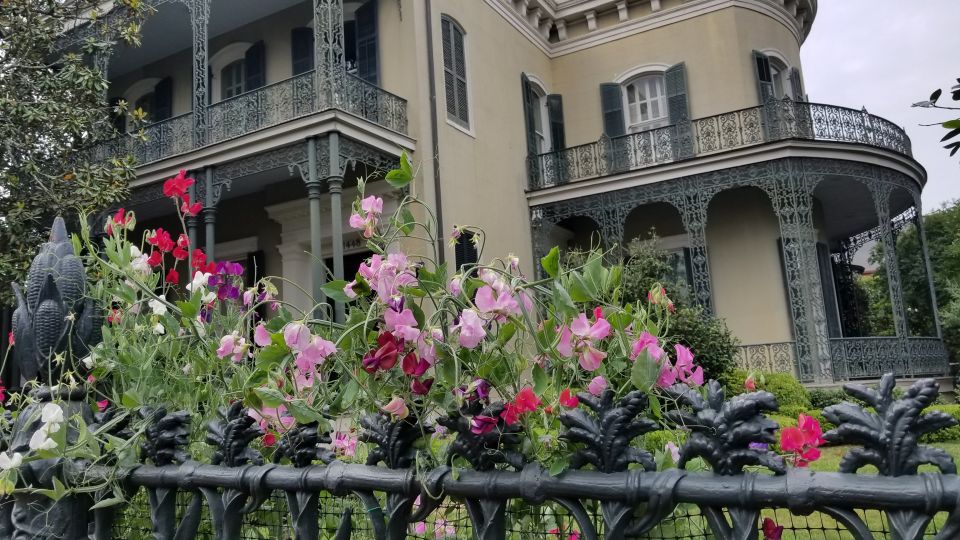
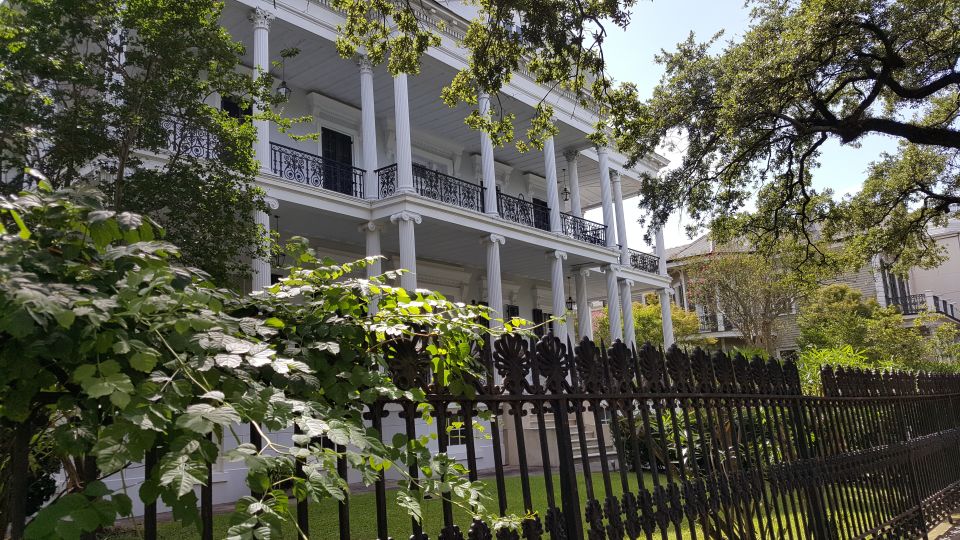
As you stroll, you’ll also notice the large, opulent lawns and the grand homes that define the district’s visual identity. The guide’s job isn’t just to point at pretty buildings. It’s to help you understand what you’re seeing: how the architecture relates to the neighborhood’s growth, and how residents used the space to project status and stability.
The Garden District works especially well if you like places where you can slow down and read details. Even if you’re not an architecture expert, you’ll learn enough to look at a facade and know what questions to ask.
Lafayette Cemetery: Where Burial Traditions Become Part of the Visit
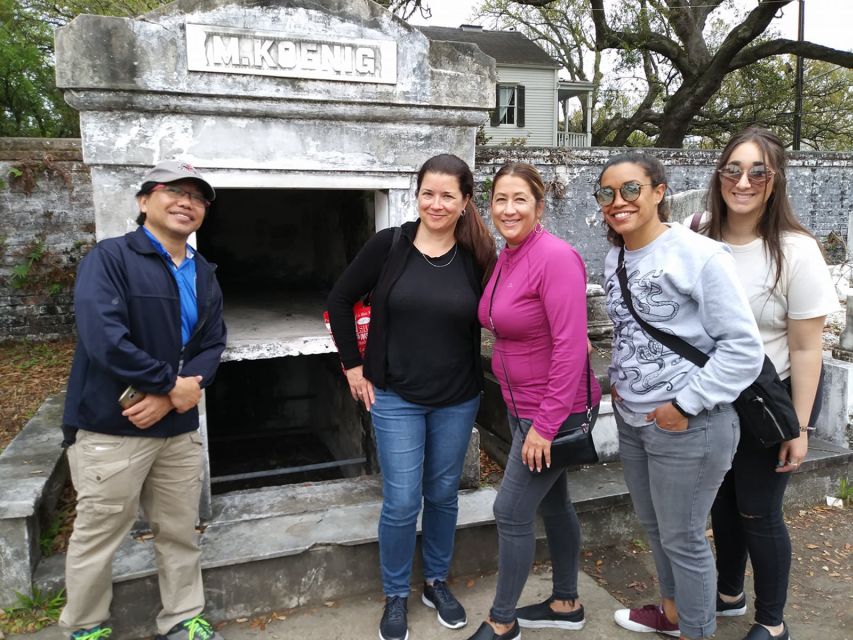
Then you head to Lafayette Cemetery, described as the oldest city-owned cemetery. This stop is one of the most important parts of the tour because it shifts the mood from postcard beauty to lived tradition.
Here’s what I like about including a cemetery on a neighborhood walk: it prevents the tour from staying surface-level. The guide explains burial practices and traditions that make New Orleans cemeteries unique, so you’re not just looking at old stone and then moving on. You learn the logic behind the cemetery’s character, which helps you understand why locals treat these places with care and meaning.
This is also a useful correction if your only idea of “history” is dates and buildings. Burial traditions tell you how a city thinks about family, remembrance, and community over time. In a place like New Orleans, that matters, and it’s worth giving it a real stop.
Practical note: you’ll likely be standing and observing during this portion. Wear shoes that can handle quiet sidewalk time. If you’re sensitive to emotionally heavy subject matter, be aware that the tour includes a cemetery stop, and it’s meant to be educational rather than casual.
Famous Residents and Screen-Famous Houses on the Same Streets
One reason this tour feels different from a standard Garden District walk is how it blends real people with pop culture. During the walk, you’ll set eyes on where current-famous New Orleanians live, including Anne Rice, Sandra Bullock, and John Goodman. Seeing those names attached to actual street locations turns celebrity into something you can map, instead of something that stays trapped in magazines.
Then the guide connects the street scene to film and TV. You’ll view locations tied to The Curious Case of Benjamin Button and American Horror Story, including the Buckner Mansion. If you’re a movie fan, this is where the tour clicks. Familiar scenes start to make sense when you stand near the setting and realize how the neighborhood’s style translates to screen.
What I appreciate is the balance. The tour doesn’t treat the celebrity or film parts as the whole point. They act like signposts. The guide uses them to help you notice what the neighborhood offers visually and historically—why filmmakers would want these streets, and why residents live with the weight of the place’s image.
If you don’t care about celebrity, you can still enjoy this portion by focusing on the streetscape and the architectural cues the guide points out. If you do care about screen locations, you’ll likely find yourself looking at lawns, verandas, and corners with a renewed attention.
Magazine Street: The Old Class Line You Can Still Read
After that, the tour brings you to Magazine Street, and this is where you get one of the most practical “understanding the city” lessons. The guide walks you through the history of Magazine Street as a boundary that separated the rich from the working class.
This is valuable because it gives you a way to interpret what you see. You stop treating the neighborhood as a set of pretty buildings and start treating it like a system. When you understand that different groups lived side by side but not with the same level of power, the street starts to feel like a living record of inequality, commerce, and movement.
You’ll get a stroll along Magazine Street, then the tour continues a few blocks into the Irish Channel. The order matters. Magazine Street first sets the story, and then the Irish Channel part shows you what that story looks like on the ground in another part of town.
If you like history that shows up in everyday space, you’ll enjoy this segment. It’s not just facts. It’s a route that helps you read the city the way locals might—by noticing where things are placed and how neighborhoods change block by block.






Irish Channel and Shotgun Houses: Small-Scale Homes, Big-Scale Story
In the Irish Channel, you’ll see the famous shotgun houses. This matters because it shifts the visual conversation away from the Garden District’s big lawns and grand scale. The change is dramatic, and the guide’s framing helps you see it as more than a style difference.
Shotgun houses become part of the tour’s larger theme: how different communities built their lives in the same city. The shift from Magazine Street’s old class line to this housing form helps you understand why New Orleans doesn’t have one single look or one single story.
Even if you only catch glimpses from the sidewalk, you get the idea quickly. This is a neighborhood tour that teaches you to compare—what changes as you move, and why those changes matter.
Also, because you’re walking, you get a natural rhythm of seeing and learning. You stop when the guide wants your attention, then you move on. It’s a pace that works for understanding the city without getting overwhelmed.
Price and Time: Is $37 Worth It?
At $37 per person for a two-hour guided walking tour, you’re buying time plus interpretation. If you were to do this yourself, you could absolutely see the Garden District, walk Magazine Street, and visit Lafayette Cemetery. The catch is you’d likely miss why those spots matter and what to look for.
That’s where the value comes from: a live guide in English connects architectural design, neighborhood formation, burial traditions, and film locations. You end up with a story you can carry with you after you leave, instead of just a set of photos.
You also get good efficiency. Two hours is long enough to cover major anchor points—Garden District streets, Lafayette Cemetery, Magazine Street, and Irish Channel—without the “all day” commitment. For many visitors, that makes it easier to fit into a larger New Orleans plan, especially if you’ve already spent time around the French Quarter and want contrast.
The main reason I’d hesitate isn’t the price. It’s the walking. If your legs are short on stamina, you might find the standing and block-to-block pace a strain. But if you can handle a walking tour, $37 feels like a fair trade for guided context.
Who Should Book This Tour (and Who Might Want Another Plan)
This tour is a great fit if you want a real sense of New Orleans beyond the usual postcard circuit. You’ll enjoy it if you like:
- Neighborhood history that shows up in street layout and city growth
- Architecture and mansion streets, paired with explanations you can actually use
- Film and TV locations, especially if you recognize The Curious Case of Benjamin Button or American Horror Story
- Cultural context, including burial traditions at Lafayette Cemetery
It’s also a good choice for couples or small groups who want more conversation than a giant-van style tour. One of the strongest signals from guides’ past experiences is how well they manage the group. On smaller groups, it’s easier to hear everything and ask questions, and that makes the educational parts land better.
If you dislike walking, or if standing in place for stops sounds exhausting, you’ll probably feel the pressure. This tour is designed for movement. It’s not the kind of outing where you can mostly sit and watch.
My Take: The Best Use of Your 2 Hours in New Orleans

The headline here is simple: you get a guided walk through multiple layers of New Orleans in just two hours. Garden District streets give you the look. Lafayette Cemetery gives you the meaning. Magazine Street and the Irish Channel give you the social map.
The film-and-celebrity angle helps too, because it gives you recognizable reference points. When the guide connects those spots to real locations, it makes the neighborhood feel current, not just old.
For me, the tour’s real strength is how it teaches you to see. After you do it, you’re more likely to notice details you’d otherwise skip: how the city developed, why certain streets mattered, and how different communities shaped their homes and traditions.
Should You Book the Glamorous Garden District Tour?
If you want to experience the Garden District with context—architecture, cemetery traditions, Magazine Street’s class history, and Irish Channel housing—you’ll probably feel like you got your money’s worth. The $37 price for a 2-hour, guided, walking-heavy tour is fair when you want interpretation instead of just sightseeing.
Book it if you’re comfortable walking and standing. Skip it if you need mostly seated time or you’re unsure your feet can handle a rain-or-shine sidewalk pace.
FAQ
Where does the tour start?
The meeting point is 2800 St. Charles Avenue, New Orleans, LA 70115.
How early do I need to check in?
You should check in 15 minutes before the tour start time.
How long is the tour?
The duration is 2 hours.
Is the tour in English?
Yes, the tour has a live guide in English.
Does the tour run in bad weather?
Yes, tours take place rain or shine.
How much walking is involved?
The tour includes a lot of walking and standing, so comfy shoes are recommended.
What places are included on the tour?
You’ll visit the Garden District, Lafayette Cemetery, and you’ll also stroll along Magazine Street and into the Irish Channel to see shotgun houses.
Do you see famous residents and film locations?
Yes. The tour includes seeing current residences of Anne Rice, Sandra Bullock, and John Goodman, plus locations tied to The Curious Case of Benjamin Button and American Horror Story (including the Buckner Mansion).
How much does it cost?
The price is $37 per person.
What’s the cancellation and payment flexibility?
You can cancel up to 24 hours in advance for a full refund, and you can use reserve now & pay later to keep travel plans flexible.