REVIEW · NEW ORLEANS
Crescent City History Tour
Book on Viator →Operated by New Orleans Drunk History Tours • Show Me New Orleans Tours · Bookable on Viator
The French Quarter tells stories on every corner. This walking tour strings together famous landmarks and the names and practices behind New Orleans voodoo lore, all at a pace that keeps you moving. You’ll end up with a clearer map of how the neighborhood’s past shows up in its architecture and street life.
I like that it focuses on a tight slice of the French Quarter instead of trying to cram in everything. I also like that the guide does the heavy lifting on context, including voodoo practice and famous figures, so you’re not left Googling at every corner.
One thing to consider: you’ll be outside for most of the experience, and the route includes walking on old, uneven streets. If you’re sensitive to heat, cold, or long pauses near busy bar stops, plan accordingly.
In This Review
- Key things to know before you go
- French Quarter 101: A guided walk built for first-timers
- Starting at 941 Bourbon: How not to miss the tour
- Lafitte’s to Jackson Square: Why the route works
- Jackson Square stops: St. Louis Cathedral, Presbytere, and Cabildo
- Beyond the square: Convent-era, house museums, and a pharmacy stop
- Voodoo focus: how the tour handles a sensitive topic
- Bar stops, photo rules, and street comfort
- Price and value: is $35 worth a 1–2 hour walk?
- Who should book this tour (and who should skip it)
- Should you book the Crescent City History Tour?
- FAQ
- Where does the tour start and where does it end?
- How long is the Crescent City History Tour?
- How much does it cost?
- Is the tour offered in English?
- Is the tour ticket mobile?
- Does the tour include drinks or entry into private locations?
- What happens if the weather is bad?
Key things to know before you go
- Meet at 941 Bourbon St (the courtyard gate), not inside Lafitte’s
- Jackson Square is your outdoor classroom with major landmarks you can actually see and reference later
- Voodoo stories are part of the narration, not a side note
- Moderate-paced walking (about 1–2 hours) means comfortable shoes matter
- No private-location entry, so expectations stay realistic
French Quarter 101: A guided walk built for first-timers
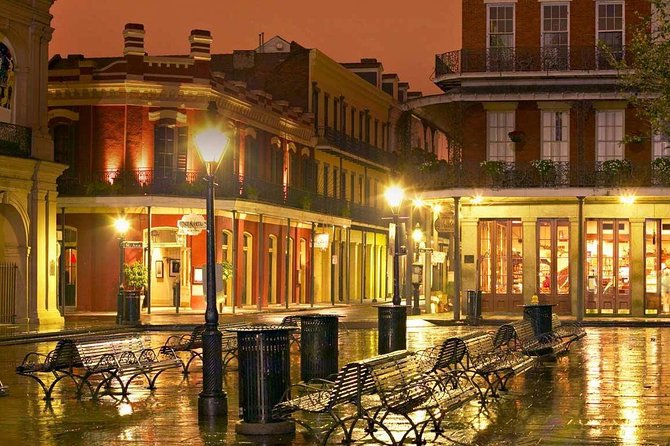
The biggest draw here is the format: a guided, moderate-paced walking tour that gives you a storyline you can follow through the French Quarter. At $35 per person for roughly 1–2 hours, you’re paying for structure. That matters in New Orleans, where streets look close together but can feel confusing once you start turning down side lanes.
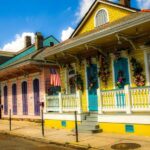
You’ll be moving through a compact area with clear “here’s what to look at” stops. The tour’s highlight list is basically your promise: French Quarter walking, historic landmarks and unique architecture, and an explanation-heavy guide who ties it together with stories of diverse cultural traditions. It also specifically calls out voodoo practice and famous figures, which is often where self-guided visitors either miss the point or stumble into the wrong tone.
I also appreciate the practical vibe of this tour. It’s not pretending you’ll get everything done inside museums and private buildings. Instead, it uses the neighborhood itself—streets, facades, and named places—to help you connect what you see with what you’re hearing.
You can also read our reviews of more city tours in New Orleans


Starting at 941 Bourbon: How not to miss the tour
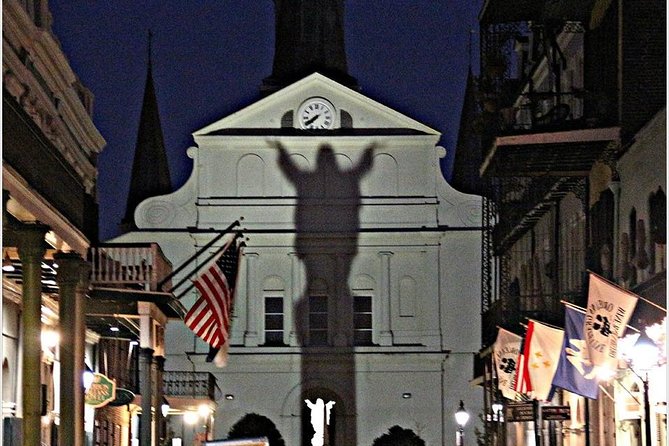
Meeting points are where tours either go smoothly or become a stress test. Here, the start is very specific: the tour meets and departs at the gate of the courtyard attached to Lafitte’s Blacksmith Shop Bar, at 941 Bourbon Street.
Important detail: tours do not meet inside Lafitte’s Blacksmith Shop Bar, and they do not meet at the corner of the streets. You’ll want to show up a few minutes early and check in at the gate area attached to the property.
The endpoint is also helpful for planning your evening: the tour concludes in the heart of the French Quarter. That’s a real convenience because you’re not left walking back out to wherever you started—your next meal, drink, or photo stop is already nearby.
The tour runs in English, and there are morning, afternoon, and evening time options. That gives you room to match it to your energy level—morning is great if you want cooler walking, while evening can feel more atmospheric if you’re already built for night streets.
Lafitte’s to Jackson Square: Why the route works
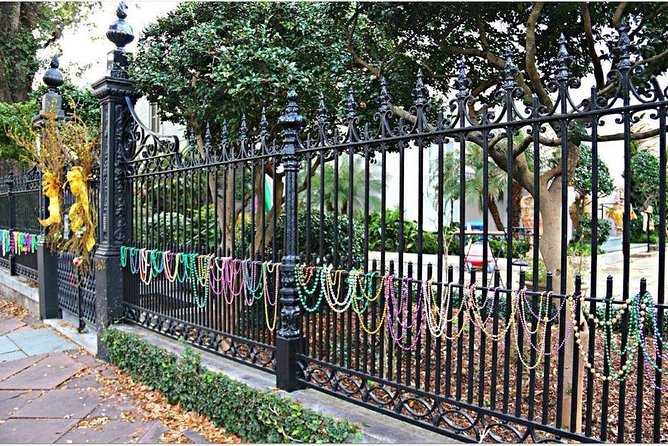
Even though Lafitte’s is mostly your meeting anchor, it sets the tone. It puts you right in the French Quarter’s “names and legends” lane, so you start the tour with the feeling that you’re stepping into a story, not just looking at buildings.
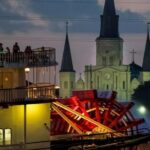
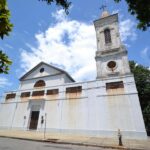
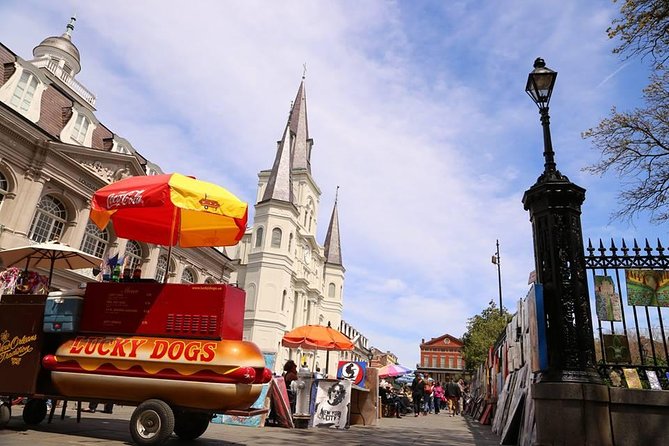
From there, the walking route is designed to steer you toward the area where the French Quarter’s major landmarks cluster: Jackson Square. The tour plan explicitly includes a walking loop that brings you around Jackson Square so you can view standout buildings such as St. Louis Cathedral, the Presbytere, and Cabildo.
Here’s why this is smart for your time: Jackson Square is the kind of place where photos are easy, but interpretation is harder unless someone points out what you’re seeing. A good guide makes that square feel like a hub rather than a random landmark you happened to pass.
The tour also includes several additional stops along the way—Old Ursuline Convent Museum, Beauregard-Keyes House, New Orleans Pharmacy Museum, and others—so you get a sense that the Quarter isn’t one-note. It’s part religious, part civic, part domestic, part quirky, and part commercial, all packed together.
Jackson Square stops: St. Louis Cathedral, Presbytere, and Cabildo
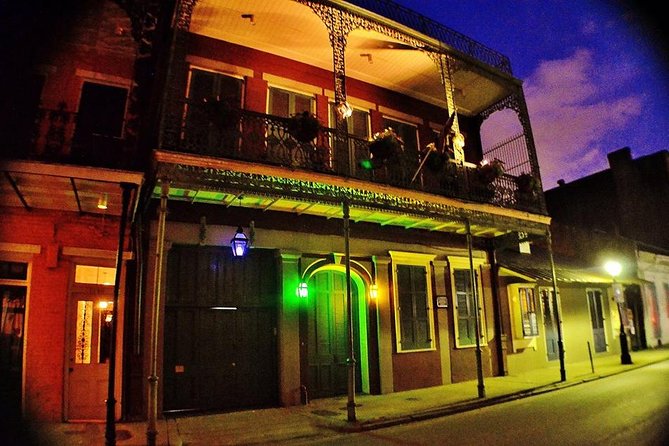
Jackson Square is the star here, and the tour uses it well. You’re walking around the square to view the buildings at the center of it, including St. Louis Cathedral, Presbytere, and Cabildo. You’ll also get a guided explanation of the significance tied to New Orleans’ diverse cultural traditions.
For me, the value of stopping at these places is not that you’re collecting trivia. It’s that you’re learning how the Quarter “talks” through its architecture. Once you connect the buildings to the stories your guide shares, you start seeing patterns. You’ll notice how the square functions like a stage—people gather, history gets interpreted, and new layers get added over time.
Another detail I’d call out: the tour is set up with viewing and learning, not making you run into private spaces. The tour info states that no entry is gained inside private locations. That keeps the experience respectful and keeps your time from getting eaten by access issues.
If you like getting your bearings fast, this is the kind of stop that makes the rest of your French Quarter wandering feel easier afterward.
Beyond the square: Convent-era, house museums, and a pharmacy stop
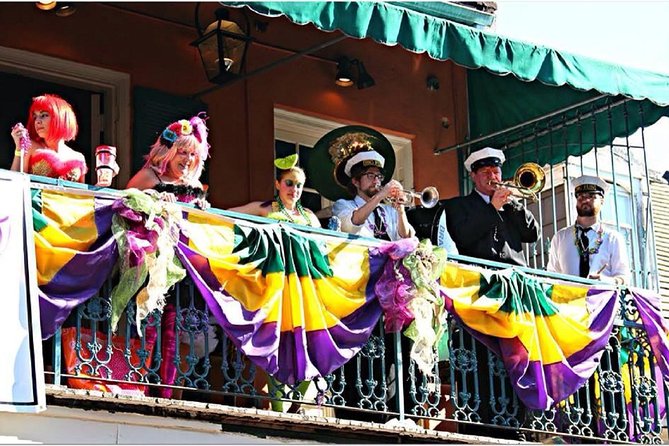
After you’ve got Jackson Square in your head, the tour continues with named stops that help you see different “types” of historic space in the Quarter.
You’ll be led past or around:
- Old Ursuline Convent Museum
- Cabildo area (already in the square orbit, but it’s part of the tour’s named cluster)
- Beauregard-Keyes House
- New Orleans Pharmacy Museum
You don’t need a museum membership to understand what these names suggest. Even without formal entry time, the tour approach helps you clock the variety—religious and civic structures close to domestic and themed museum-style sites.
One practical upside: this kind of route works even if you don’t want to spend your vacation hours waiting indoors. You get lots of storytelling, lots of street-level sightlines, and breaks that fit into a walking schedule.
A possible drawback: because it’s a walking tour with bar-adjacent stops along the way, you may find the pacing depends on how busy certain locations are. The tour terms note that some bar stops can delay the tour due to wait time inside. So if you’re on a tight dinner reservation timeline, build in a little cushion.
You can also read our reviews of more historical tours in New Orleans



Voodoo focus: how the tour handles a sensitive topic
The highlights call out learning about the practice and famous figures of voodoo. In a city like New Orleans, this topic can go sideways if a guide turns it into pure shock value. What’s reassuring here is that the tour is framed as education through a guided narrative, tied to cultural traditions rather than theatrics.
You can also use the tour style to your advantage: ask questions about how people interpret voodoo in New Orleans context—especially the difference between practice, folklore, and how pop culture often simplifies things. A good guide will keep it grounded in what the stories mean to the city.
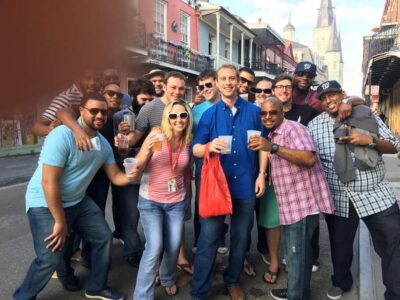
I’ll also mention something practical from what I’ve seen about how guides perform: Cody, one guide connected with this tour format, was described as super personable and able to keep the experience appropriate and engaging even for teenage boys. That suggests the narration can handle a range of ages without becoming too juvenile or too heavy.
If you’re worried about this being too spooky or too vague, the safest expectation is this: you’ll get guided context, and you’ll still be walking through real, named places.
Bar stops, photo rules, and street comfort
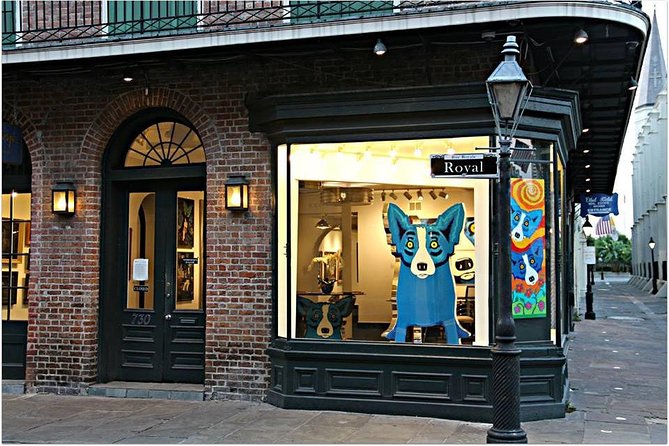
This tour includes time near Lafitte’s Blacksmith Shop Bar as the meeting point, and the route is described as French Quarter walking with bar-related moments along the way. Drinks are not included, but drinks are available to purchase along the route.
If you’re not interested in going inside bars, there’s helpful info in the tour rules: to-go bars/windows are offered along the route for anyone who prefers not to go inside. That lets you keep walking while still participating in the “vacation vibe” side of the French Quarter.
A few rules that affect your comfort:
- The pace is moderate, and the guide keeps the schedule moving.
- You can take photos, but you shouldn’t walk off the group just to shoot extra pictures. The guide can’t pause the whole group to chase individual photo stops.
- Audio/video recording devices are not allowed during the tour, while photos are encouraged.
- Expect old streets: the tour terms warn about safety around uneven and worn walkways.
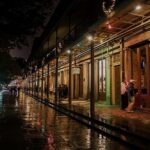
Also, this is a good moment to plan your clothing. The tour info is rain-or-shine, and New Orleans weather can flip fast. Even if it looks fine when you leave your hotel, bring a layer or a light rain option so the tour stays enjoyable.
Price and value: is $35 worth a 1–2 hour walk?
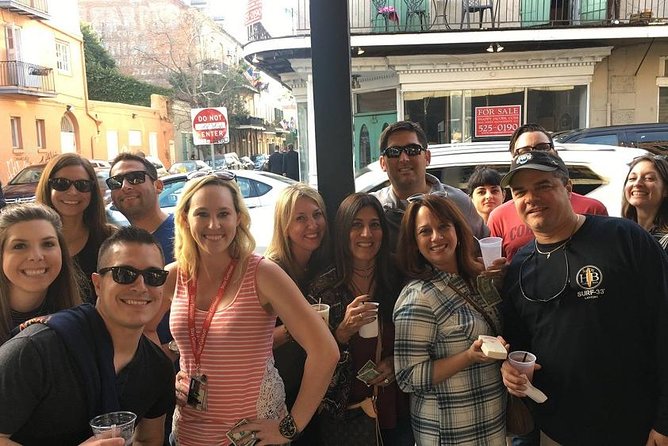
Let’s talk value, because $35 sounds like a small number until you’re in the French Quarter and everything else is charging you for entry and drinks.
Here, you’re buying:
- A live local guide (guided narration is the product)
- A planned route that hits major landmark clusters like Jackson Square
- A specific thematic thread (voodoo practice and figures)
- A time-efficient way to learn without hunting down explanations yourself
At $35 per person, this is a solid option if you want direction and interpretation. It’s also a good deal if you like walking tours but don’t want to spend time building your own itinerary.
If you’re the type who loves reading plaques, mapping your own day, and wandering without structure, you might feel less value. But if you’re spending just a day or two in New Orleans and want the French Quarter to make sense, this price point often lands well.
One more detail: the tour has a maximum capacity of up to 999 travelers. In practice, that doesn’t mean it will feel huge on your date, but it is a reminder that crowd size can vary. If you hate group noise, choose an earlier time when the Quarter may feel calmer.
Who should book this tour (and who should skip it)
This tour fits best if you:
- Want an easy, guided introduction to the French Quarter
- Like architecture and landmarks, especially around Jackson Square
- Prefer a guided explanation of voodoo practice and notable figures
- Are comfortable with a 1–2 hour walking format on uneven streets
It may be less ideal if you:
- Hate walking outside for an extended period, even in mild weather
- Need frequent, long stops to go inside places (the tour is built around scheduled walking and viewing, not free-form sightseeing)
- Want guaranteed quiet, since you’ll be in a group and you shouldn’t expect the guide to pause for off-group photo trips
Also, because drinks aren’t included, treat any bar moments as optional add-ons. Bring water and keep your plans flexible, especially if you’re touring before dinner.
Should you book the Crescent City History Tour?
If your goal is to get your bearings and learn the French Quarter story in a practical, guided way, I’d book it. The combination of Jackson Square landmarks, a structured route, and a voodoo-focused narrative is a strong mix for first-timers and repeat visitors alike.
I’d only hesitate if you’re very sensitive to weather or you’re trying to meet a strict schedule with no buffer. Otherwise, for $35 and about 1–2 hours, it’s a smart, low-commitment way to turn street wandering into something you can actually explain afterward.
FAQ
Where does the tour start and where does it end?
The tour starts at 941 Bourbon St, New Orleans, LA 70116, meeting at the gate of the courtyard attached to Lafitte’s Blacksmith Shop Bar. The tour concludes in the heart of the French Quarter.
How long is the Crescent City History Tour?
The tour runs about 1 to 2 hours approximately, and it’s a moderate-paced walking tour.
How much does it cost?
The price is $35.00 per person.
Is the tour offered in English?
Yes, the tour is offered in English.
Is the tour ticket mobile?
Yes, the tour uses a mobile ticket.
Does the tour include drinks or entry into private locations?
Drinks are not included. The tour notes that no entry is gained inside private locations.
What happens if the weather is bad?
The tour is rain-or-shine. If it is canceled, you’ll be offered a different date or a full refund.