REVIEW · NEW ORLEANS
Creole Kids Tour in New Orleans
Book on Viator →Operated by French Quartour Kids · Bookable on Viator
A kid-sized history lesson in the French Quarter. The Creole Kids Tour turns classic landmarks into a teacher-led walk meant for elementary-age attention spans, with jokes and prompts that keep kids talking instead of zoning out. I like that it uses interactive questions rather than straight lectures.
You’ll spend most of the time outdoors, and it’s still a walking tour. I like how the route breaks the story into short, kid-friendly chunks at key spots like Jackson Square and St. Louis Cathedral. The one real consideration: children must stay with an adult, and moderate fitness helps since you’re moving for about 1 hour 30 minutes.
In This Review
- Key highlights worth planning around
- Why this French Quarter tour fits kids (and keeps you sane)
- Price and value: $30 for 90 minutes of guided learning
- Where to meet, where it ends, and why that’s handy
- The guided rhythm: short stops that actually work for kids
- Stop 1: Mississippi River—trade, power, and a few big laughs
- Stop 2: Andrew Jackson statue—learning who, then why he’s here
- Stop 3: Jackson Square—shade time plus real talk about Creoles and slavery
- Stop 4: St. Louis Cathedral—Catholic influence, the Code Noir, and Mardi Gras
- The guide style: why kids stay engaged (and adults can breathe)
- Weather, clothing, and comfort tips for this specific route
- Who this tour is best for (and who it might not be)
- Quick reality check on logistics (the stuff that actually matters)
- Should you book the Creole Kids Tour in New Orleans?
- FAQ
- What is the duration of the Creole Kids Tour?
- How much does the tour cost?
- Where do I meet the guide?
- Where does the tour end?
- What time does the tour start?
- Is the tour offered in English?
- Do we need to pay entrance fees for stops?
- How big is the group?
- Do children need to be with an adult?
- Is there free cancellation?
Key highlights worth planning around
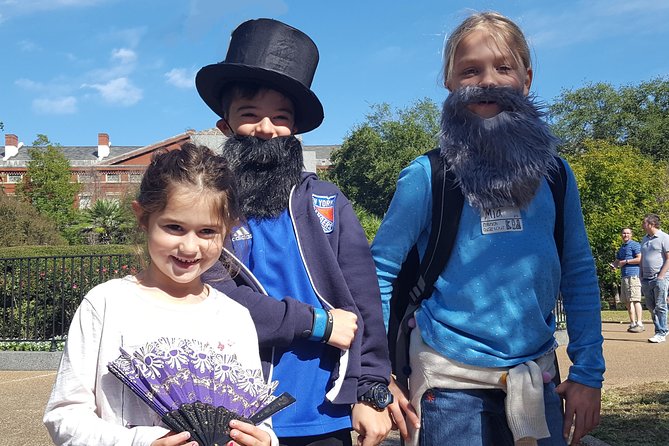
- French Quarter route, kid-built: oldest-district landmarks designed for young learners, not adults wandering aimlessly
- Teacher-led, participatory teaching: prompts, dad-jokes, and quick interactions that get kids answering
- Creole heritage explained with age-appropriate contrast: daily life comparisons for free children vs enslaved children, and Americans vs Creoles
- Landmarks tied to clear historical ideas: Mississippi River trade, Andrew Jackson, Catholic influence, and the Code Noir
- Small group feel (up to 25): more attention than many big walking tours, with a chance of near-1-on-1 moments
Why this French Quarter tour fits kids (and keeps you sane)
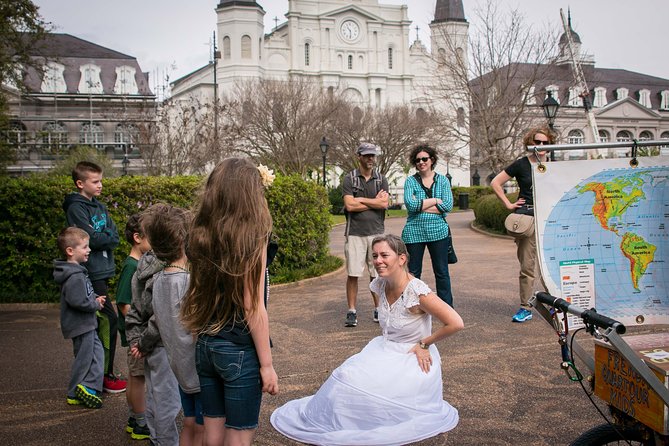
This is not a sit-and-stare “museum voice” kind of tour. It’s built for the way kids actually learn: short stops, visible places, and a guide who talks to the group like you’re all doing the same quest. In the French Quarter, where there’s plenty to look at, that approach matters. Otherwise, kids get distracted, then the adult gets the side-eye.
What I appreciate is the balance of play and purpose. The tour leans on humor and thought-provoking questions, so kids stay engaged long enough to pick up real history. And because the stops are tightly timed, you’re not dragging a kid through a long lecture while sweat wins the argument.
You can also read our reviews of more tours and experiences in New Orleans.


Price and value: $30 for 90 minutes of guided learning
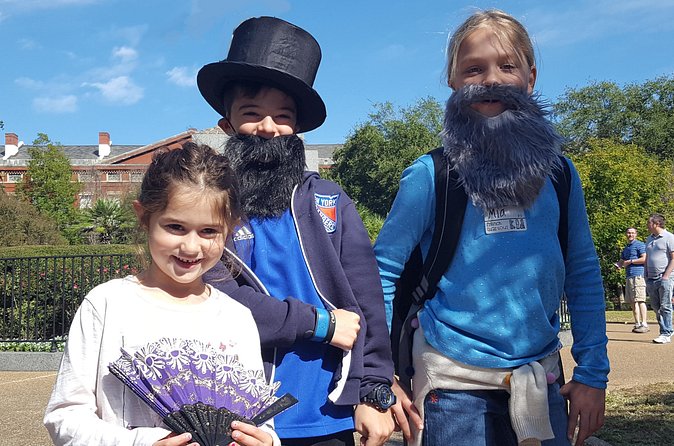
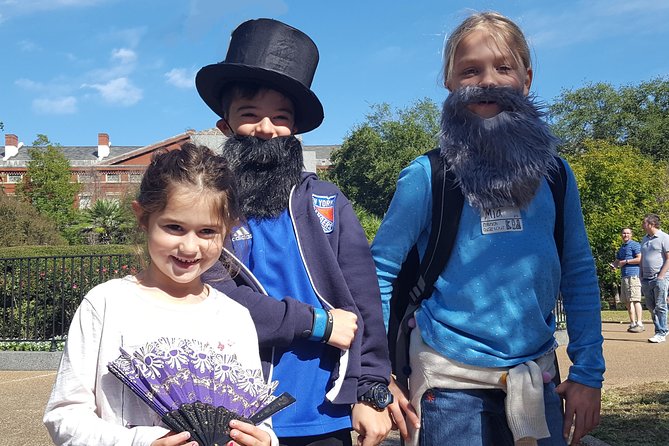
At $30 per person, this is priced like a budget-friendly add-on for a family day. You’re not paying for transport or for an all-day program. You’re paying for a guided walk with a local guide plus a professional guide, using major landmarks you’d likely pass anyway.
The value really comes from what you get in that 1 hour 30 minutes:
- A structured story arc (river → power and symbols → square → church and laws)
- Kid-friendly pacing (stops are brief)
- Free entry at the stops listed, so you’re not stacking extra tickets on top
If you’re visiting New Orleans with kids and you want them to learn something beyond street music and snacks, this price feels fair. You’re essentially buying the time and the guidance to turn familiar landmarks into a guided learning experience.
Where to meet, where it ends, and why that’s handy
The tour meets at Decatur at Dumaine, then finishes next to St. Louis Cathedral in Jackson Square (near Pirates Alley). That end point is useful. You’re dropping right into one of the most walkable areas for families: parks, shaded areas, and easy access to other nearby sights.
Start time is 10:30 am, and the schedule is built around daytime walking. If your plan includes other sights later in the afternoon, this tour works as a first big learning stop before the city’s energy ramps up.
You’ll also use a mobile ticket, which is convenient. No paper ticket hunt, no late-night printing stress.
The guided rhythm: short stops that actually work for kids
This tour keeps you moving, but it doesn’t treat walking time like “waiting time.” Each stop is short, with a clear reason it’s on the route. That matters for elementary kids. They can handle a concept when they can connect it to a specific place, then move on before boredom takes over.
The group maximum is 25 travelers, which should help the guide manage everyone. In practice, that usually means less chaos than the giant tours you see in the busiest parts of the French Quarter.
The other smart part: the guide keeps you thinking. Not just naming facts, but asking questions and prompting kids to respond. It’s the difference between hearing history and using it.
Stop 1: Mississippi River—trade, power, and a few big laughs
Your first stop anchors the whole story at the Mississippi River. This is where the tour makes sense. The river isn’t just scenery in New Orleans—it’s been a major connector for centuries, shaping how people traveled, traded, and built wealth.
For kids, the guide brings in facts about how the river was used over time. There are also dad jokes and thought-provoking questions. That combination might sound like pure entertainment, but it does a job: it lowers the pressure so kids feel comfortable answering, even if they’re not totally sure.
For parents, this stop is a win because it gives you a framework for everything that comes next. Once kids understand why the river mattered, later topics like power and laws feel less random.





Stop 2: Andrew Jackson statue—learning who, then why he’s here
Next comes the Andrew Jackson statue. This part is quick, and it works because it focuses on the essentials: who Andrew Jackson was, what he’s best known for, and why there’s a statue of him in New Orleans.
What makes this stop feel kid-friendly is the guide’s approach to role-play. Kids are invited to greet him in the way a 19th-century citizen would. That’s a simple trick, but it changes how kids connect to history. Instead of a name on a plaque, the statue becomes an interaction point.
One practical note: it’s a short stop, so if your child wants to ask extra questions, you’ll probably need to do that right there, right then. Don’t expect long wrap-up time.
Stop 3: Jackson Square—shade time plus real talk about Creoles and slavery
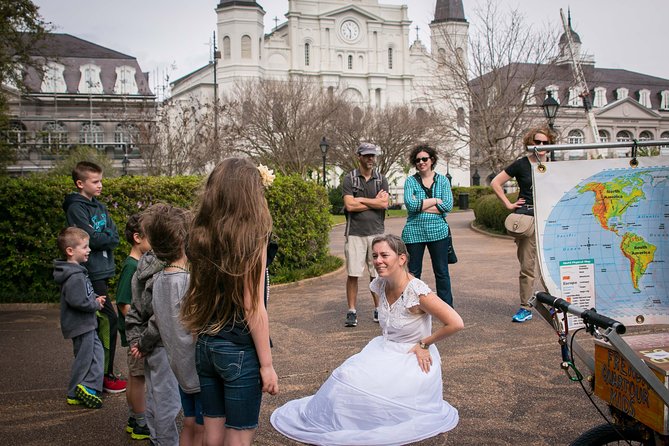
Jackson Square is the tour’s main learning space. The guide sets this segment up as a mix of sitting in the shade and thinking through how the square’s surrounding land was used since the 1600s.
Here’s what I like about this stop: it doesn’t treat the past as one-note. It talks about different groups controlling, working, and living in New Orleans—including people who were enslaved as well as people who came willingly. That’s important framing, and it keeps the story accurate instead of sanitized.
You’ll also get age-appropriate comparisons that help kids grasp the difference between:
- Free kids vs enslaved children in the 1800s
- Americans vs Creoles
- Boys vs girls and how daily life could vary
It’s not just facts. The guide weaves in thoughtful discussion while staying grounded in what kids can understand at their level.
A drawback to consider: this part is more emotionally heavy than the first two stops. The guide handles it through interactive discussion rather than shock value, but if you have a very sensitive child, you may want to prepare them gently beforehand. The plus is that kids are still learning, not just absorbing adult discomfort.
Stop 4: St. Louis Cathedral—Catholic influence, the Code Noir, and Mardi Gras
The last landmark is St. Louis Cathedral. This stop explains the role of the Catholic Church in setting up the colony and points to the Code Noir, a set of rules that governed religion and roles of enslaved people.
For kids, hearing the word “code” can be abstract. The guide’s job is to connect it to something concrete in the city’s history—religion, rules, and how society was organized.
What I also like is that the tour doesn’t leave Mardi Gras floating in the air as a fun tradition with no roots. The guide connects it to one of the most popular Catholic holidays mentioned during the stop. So kids may walk away understanding that Mardi Gras links to religious calendars and older traditions, not only costumes and street parties.
This is a great final stop because it gives the trip a “how it all connects” feeling: the river brought people and economics, the city reflected power and symbols, Jackson Square shows daily life, and the cathedral ties it together with religion and law.
The guide style: why kids stay engaged (and adults can breathe)
A lot of family tours fail because the guide can’t control the pace or the tone. Here, the structure helps. The route is timed, the stops are short, and the teaching method is built for elementary-age kids.
You’ll see a teacher-led approach with:
- Interactive prompts and thought questions
- Dad jokes to keep energy up
- Quick role-play moments, like greeting Andrew Jackson
In one small-group experience, a family with a 9-year-old described how the guide stayed shaded most of the time and kept the tour feeling personal. That’s not guaranteed for every group, but the small maximum of 25 gives the guide room to manage attention and adjust on the fly.
The upshot for you: you’re less likely to spend the hour bargaining with your kid to keep walking. That’s the real value of a kid-first plan.
Weather, clothing, and comfort tips for this specific route
This tour operates in all weather conditions, so you should treat it like a normal walk, not like a museum with indoor safety. Dress appropriately for rain or heat, and plan for a few outdoor minutes between stops.
Because Jackson Square is the main sitting-and-discussion space, bring what you normally need for outdoor time:
- Sunscreen and a hat
- Water for the walk
- A light layer if the day turns breezy
Also, bring patience for the fact that New Orleans weather can be dramatic. If you’re traveling with kids, your comfort choices directly affect their attention.
Who this tour is best for (and who it might not be)
This experience is ideal if:
- You have elementary-age children who like questions and jokes
- You want a family-friendly French Quarter walk with structure
- You prefer learning tied to real landmarks, not worksheets or audio apps
- You want Creole heritage context without turning your day into a long classroom session
It might be less ideal if:
- Your child needs a lot of quiet time and hates sitting in public spaces
- You’re hoping for a fully indoor experience (this is mostly outdoors)
- You want a very deep, adult-level historical lecture—this is designed to stay kid-accessible
Quick reality check on logistics (the stuff that actually matters)
The tour is about 1 hour 30 minutes, and the stops are short enough that you won’t feel trapped for half a day. It’s offered in English. Confirmation comes at booking, and the experience includes local and professional guiding.
Children must be accompanied by an adult. Since that’s part of the design, you’ll want to plan who’s on duty for walking, snacks, and bathroom breaks.
Should you book the Creole Kids Tour in New Orleans?
If your goal is to turn a French Quarter morning into something your kids remember—and for you to get actual educational value without a long slog—I’d book it. At $30, the time is short, the route is focused, and the teaching style is built around keeping kids engaged.
I’d skip it only if your family wants a mostly outdoor-free day, or if your child can’t handle the more serious parts of history discussed around Jackson Square. If you can handle a guided conversation that includes the reality of slavery in an age-appropriate way, this tour is a strong pick.
FAQ
What is the duration of the Creole Kids Tour?
The tour lasts about 1 hour 30 minutes.
How much does the tour cost?
It costs $30.00 per person.
Where do I meet the guide?
The tour meets at Decatur at Dumaine, New Orleans, LA 70116.
Where does the tour end?
It ends next to St. Louis Cathedral in Jackson Square (near Pirates Alley).
What time does the tour start?
The start time is 10:30 am.
Is the tour offered in English?
Yes, it is offered in English.
Do we need to pay entrance fees for stops?
The stops listed are marked as admission ticket free.
How big is the group?
The tour has a maximum of 25 travelers.
Do children need to be with an adult?
Yes, children must be accompanied by an adult.
Is there free cancellation?
Yes. You can cancel up to 24 hours in advance for a full refund.