REVIEW · NEW ORLEANS
Urban Enslavement Tour at Hermann Grima House
Book on Viator →Operated by Hermann-Grima House · Bookable on Viator
Slavery in the city had a different shape. In Hermann-Grima House’s restored 1831 rooms, I like the way the tour centers on urban enslavement and the spaces enslaved people lived in. One possible drawback: depending on the guide and what the archives support, you may notice less time spent on the enslaved people’s full humanity than you want.
The tour’s value is strong, and it gets there fast. At just about one hour, you’ll move through the Federalist-style façade, the open-hearth kitchen, and the house’s layout that separated people by power. Just go in with a clear expectation: this is a museum interpretation, so some answers are detailed while others are necessarily limited.
In This Review
- Key points you should know before you go
- Hermann-Grima House is the right setting for urban slavery stories
- What the 1-hour tour includes (and what it doesn’t)
- Stop 1: Hermann-Grima House rooms, kitchen, quarters, and the house’s built-in separation
- Federalist façade and the message of power
- The original open-hearth kitchen: labor as the heartbeat of the home
- Urban slave quarters and the reality of constrained living
- Courtyard space and the rhythm of the property
- The story isn’t only about suffering; it’s about impact
- The Exchange Shop and women-led community space in the carriage house
- Guides bring the emotional shape of the tour: Robert and Kelsy
- Price and value: $17 for an hour that uses the building itself
- Timing, weather, and small-group feel
- Who this tour is for (and who might want a different angle)
- FAQ
- FAQ
- How long is the Urban Enslavement Tour at Hermann-Grima House?
- How much does the tour cost?
- Is an admission ticket included?
- What language is the tour offered in?
- Can I get a mobile ticket, and when will I receive confirmation?
- Is the tour suitable for most people?
- Are service animals allowed?
- Do I need good weather?
- Should you book this Urban Enslavement Tour at Hermann-Grima House?
Key points you should know before you go
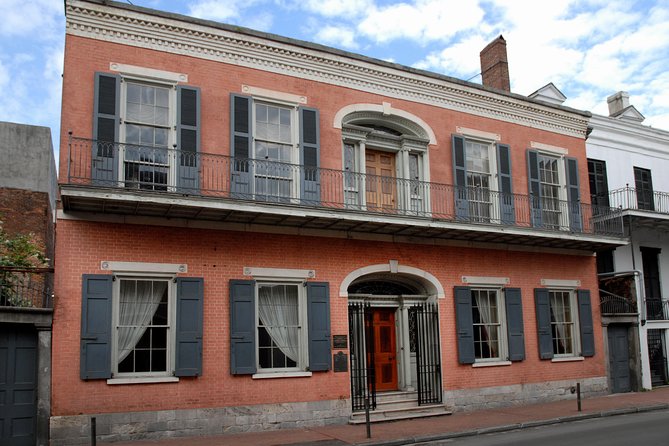
- Hermann-Grima House, built in 1831: a real French Quarter structure, not a recreated set.
- Urban enslavement focus: you’ll compare city slavery to rural patterns and look at how it shaped everyday life.
- You’ll see key spaces: the open-hearth kitchen, urban slave quarters, and the big courtyard.
- Guides matter: some guides bring a personal, human tone (like Robert), while others may spend more time on the household’s story.
- Carriage house adds an extra layer: the property includes the Exchange Shop, tied to a women-led non-profit.
Hermann-Grima House is the right setting for urban slavery stories
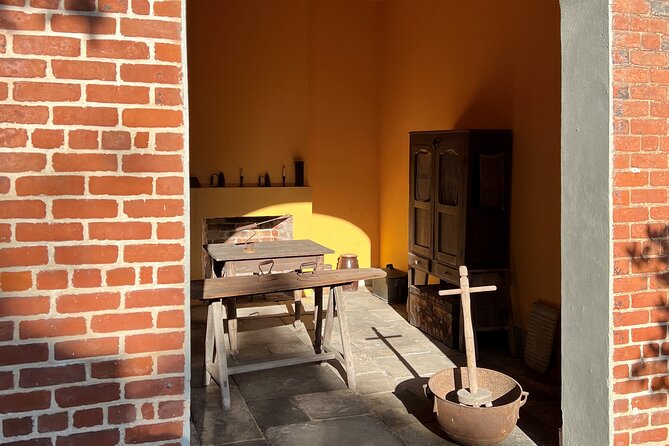
New Orleans doesn’t just have museums. It has houses that still carry their original “logic”: who could move where, who worked when, and how people were separated by design. The Urban Enslavement Tour at Hermann-Grima House uses that exact idea. The tour is built around a home—because walls have a memory, and room layouts do too.
This is also a smart angle for people who feel like most slavery history they’ve seen is always rural and always plantation-themed. Here, the emphasis is on the city. That matters, because urban enslavement meant different kinds of labor, different pressures, and a different kind of visibility—enslaved people worked and lived where the public could see them.
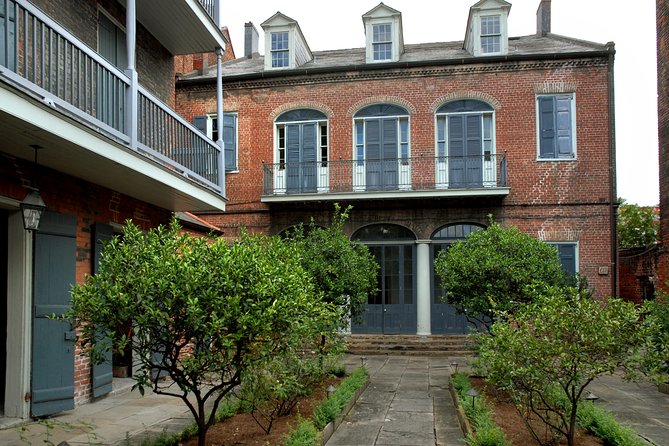
Hermann-Grima House itself is a strong anchor. The property includes a restored French Quarter home built in 1831, with a Federalist architectural façade. Inside, you get to see an original operating open-hearth kitchen and the urban slave quarters, plus expansive courtyard space. That mix of domestic life and forced labor is what makes the tour so effective.
And it’s not just story-telling. This tour is tied to a museum setting, and Condé Nast Traveler has highlighted it as one of the best tours in New Orleans and noted it as the only museum-listed tour. That reputation comes from the fact that the tour doesn’t treat slavery as an abstract theme. It connects it to specific rooms.
You can also read our reviews of more tours and experiences in New Orleans.



What the 1-hour tour includes (and what it doesn’t)
The experience runs about one hour, which is perfect if you want something meaningful without burning half your day. You also get an admission ticket included, so you’re not paying extra just to get access to the property.
What you’ll do is walk the house with a guide who explains how urban enslavement worked inside a real household. You’ll hear how enslaved life in a city differed from rural slavery, and you’ll also get the story of how people of African descent shaped New Orleans—an important thread that keeps the tour from ending at suffering alone.
What you won’t do (based on the structure of the tour) is a multi-hour, deep-documentary experience where every question has room to be answered. A few reviews point out that some guides may spend more time on the house and the people who owned it than on enslaved people’s humanity. If that’s your top priority, go in knowing the tour’s focus is urban slavery—but like any historical interpretation, it has to work with the evidence available and the route the guide chooses.
Stop 1: Hermann-Grima House rooms, kitchen, quarters, and the house’s built-in separation
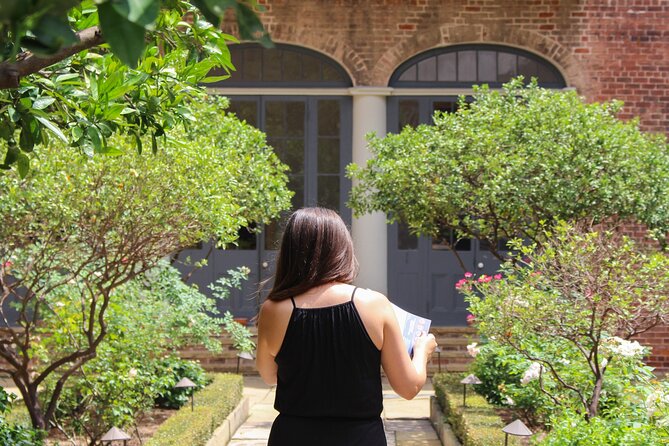
This tour’s main stop is Hermann-Grima House itself, and it’s where the details really land. You start at the 1831 French Quarter home, then work through spaces that reveal how the household functioned—and how enslaved people were placed inside that system.
Federalist façade and the message of power
You’ll see the house’s Federalist architectural façade. On the surface, that’s just style. But in a tour like this, the façade matters because it signals status to the street. It’s an early reminder that the outside world often saw wealth, while enslaved people lived inside the house’s machinery.
The original open-hearth kitchen: labor as the heartbeat of the home
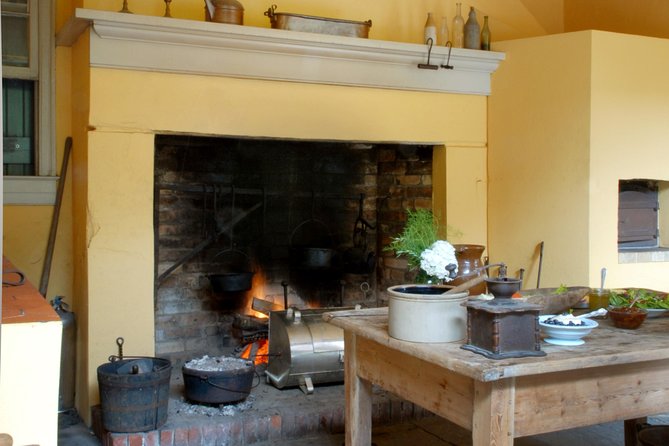
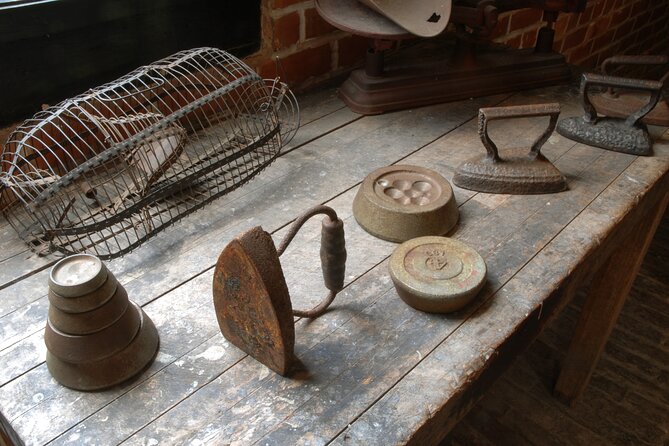
One of the biggest draws is the original operating open-hearth kitchen. In many historic house tours, the kitchen is decorative or silent. Here, it’s treated like a working space that helps explain the strain behind daily survival.
In practical terms, this is where you start building a sense of time and effort. Reviews highlight how long days and relentless repetitive work were part of urban enslavement—cooking and tasks stretched across the day, and enslaved people often handled more than one role. If you’re the kind of traveler who learns best by thinking through daily routines, the kitchen is a strong anchor.
Some visitors also mention recipes and food-related elements in the story, and one person wished they could have eaten food prepared. Even if you don’t expect a meal, the kitchen focus gives you a concrete way to imagine what work looked and sounded like.






Urban slave quarters and the reality of constrained living
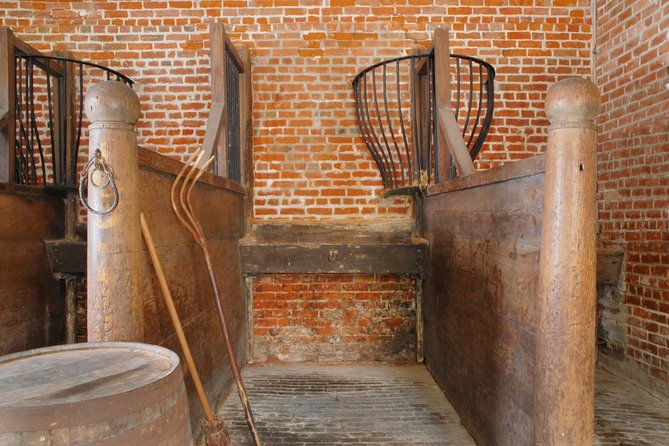
This tour includes the urban slave quarters. The quarters are essential because they keep the story from drifting away from lived space. In a city, enslaved people could be close to the main household and still be cut off from comfort, privacy, and freedom.
One review notes details like zones off-limits to enslaved people, plus porches/veranda and a giant water cistern. Those elements make the house feel less like a backdrop and more like an engineered environment. You’re seeing how the household divided people—sometimes through doors and corridors, sometimes through who was allowed to use which space.
A key contrast you’ll hear is how urban enslaved life differs from rural slavery. City slavery often meant being part of the urban economic machine—supporting household needs, managing tasks that served a public-facing world, and living under constant supervision. That’s different from rural plantations where labor could be framed as plantation-wide. Here, the house and the neighborhood are part of the story.
Courtyard space and the rhythm of the property
The house also features an expansive courtyard. Courtyards aren’t just pretty. In many historic properties, they shape movement and daily routines. In a slavery-focused tour, that open air becomes another clue: where people gathered, where work happened, and where separation could be enforced without a single speech.
The courtyard helps bring the tour into the larger property—not just rooms. That matters for understanding urban life because cities are never only indoor. Even forced work had to fit into outdoor schedules, access to water, and the constant rhythm of city days.
The story isn’t only about suffering; it’s about impact
You’ll also hear how people of African descent shaped New Orleans. That part matters because it changes the emotional ending. You don’t leave only with weight. You leave with a more complete picture—how contributions endured even under brutal conditions, and how the city’s identity was formed.
The Exchange Shop and women-led community space in the carriage house
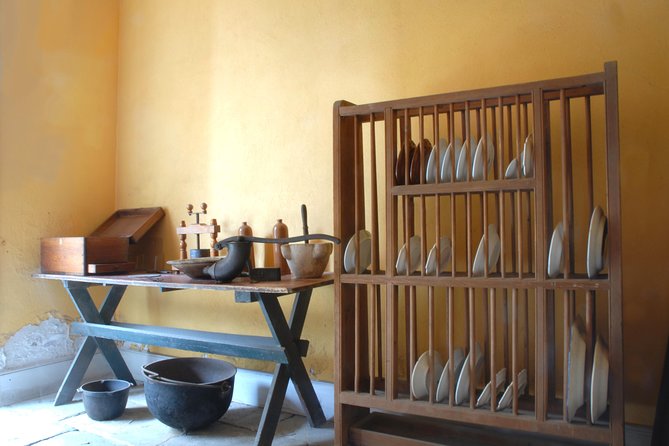
Hermann-Grima House’s 19th-century carriage house is home to The Exchange Shop. It originally was founded in 1881 by The Woman’s Exchange, described as one of the oldest women-led non-profits in the South.
This isn’t a random add-on. It gives you a second lens on the property: the house isn’t only about the antebellum period. It connects to later community structures, including women-led organization and arts support.
Some reviews mention women’s art in the carriage house and even meeting talented artists, with people picking up items to take home. That can turn the visit into a practical souvenir moment—not just a photo.
If you care about arts and community legacy, this is the part you’ll appreciate. If you mainly want the slavery narrative with no distractions, just be aware that this property includes more than one thread.
Guides bring the emotional shape of the tour: Robert and Kelsy
The guide is the steering wheel here. Two names come up again and again: Robert and Kelsy. Both seem to deliver strong storytelling, but with slightly different emphasis.
Robert is repeatedly praised for explaining urban slavery history clearly and for being open to questions. One review specifically calls out how he gave a perspective from the viewpoint of an urban slave, and another mentions Robert’s closing statements connected to his own family’s generational experience. That kind of final human connection can make the tour feel less like a lesson and more like a confrontation with real memory.
Kelsy is also singled out for letting visitors live in the past and see the contrast between opulent life of owners and the hard life of enslaved people. Another review says Kelsy was open to questions and offered a well-documented narrative.
Now, here’s the balanced note: one review didn’t feel the tour centered enslaved people as much as expected. That reviewer felt the narrative leaned toward masters of the house, the builder, and the family’s finances and wealth. That’s a legit consideration.
So how should you plan? If you want the strongest focus on enslaved people’s lives, arrive with a question ready. Ask how much time the tour spends on daily routines and personal humanity, not just on ownership and property history. Good guides can adjust within the flow of a one-hour tour.
Price and value: $17 for an hour that uses the building itself
At $17 per person for about an hour, this tour is priced like a serious add-on—but it delivers a museum-quality setting rather than a generic walking talk.
Here’s why the value makes sense:
- You’re paying for access to a restored home with real architectural and historical components, including the open-hearth kitchen and urban slave quarters.
- The admission ticket is included, which removes a common pain point where the base price feels like it covers only the speech.
- You’re getting a focused, time-efficient experience. In New Orleans, where schedules can get chaotic, an hour can be the difference between squeezing in a meaningful stop or skipping it.
Also consider demand. It’s booked on average about 13 days in advance, which suggests it’s a popular way to spend limited time in the French Quarter area. If you’re traveling in peak seasons or on weekends, I’d book ahead so you can pick a time that fits your day.
And because it’s near public transportation, you don’t have to treat it like a long taxi mission. That keeps it practical for couples, solo travelers, and families who want something educational without a full-day commitment.
Timing, weather, and small-group feel
This is an experience that depends on good weather, which matters because the property includes outdoor space like the courtyard. If rain is in the forecast, build flexibility into your day.
As for group size, one review mentions a small group—two couples. That’s not guaranteed for every departure, but it’s a helpful clue that you might get a more personal pace than the huge “herd and shuffle” style tours.
If you’re sensitive to crowds, or if you like stopping to ask questions, a smaller group can make the hour feel longer in the best way.
Who this tour is for (and who might want a different angle)
This is a strong choice if you want New Orleans history that’s grounded in a real physical setting and centered on the realities of enslaved people in the urban environment.
You’ll likely enjoy it if:
- You’re done with only plantation-style slavery narratives and want the city angle.
- You care about how architecture and room layout reflect control.
- You like tours led by guides who handle questions thoughtfully (Robert and Kelsy are frequent names in the praise).
- You want a one-hour educational stop that fits easily into a day.
You might reconsider if:
- You want a strict, uninterrupted focus on enslaved people’s personal humanity above all else. One review felt the emphasis leaned too much toward owners and house background. That doesn’t mean it’s always like that, but it’s a risk to be aware of.
- You’re expecting a food experience. The kitchen is central to the story, and recipes may come up, but a full meal isn’t promised in the details you have here.
FAQ
FAQ
How long is the Urban Enslavement Tour at Hermann-Grima House?
It runs for about 1 hour.
How much does the tour cost?
The price is $17.00 per person.
Is an admission ticket included?
Yes. An admission ticket is included.
What language is the tour offered in?
The tour is offered in English.
Can I get a mobile ticket, and when will I receive confirmation?
You’ll receive a mobile ticket, and confirmation is received at the time of booking.
Is the tour suitable for most people?
The information says most travelers can participate.
Are service animals allowed?
Yes, service animals are allowed.
Do I need good weather?
Yes. The experience requires good weather, and if it’s canceled due to poor weather you’ll be offered a different date or a full refund.
Should you book this Urban Enslavement Tour at Hermann-Grima House?
If you’re looking for one stop in New Orleans that connects slavery, space, and the city’s specific story, this is a smart booking. The house itself—the open-hearth kitchen, the urban quarters, the layout that separated people—gives you something most tours can’t: physical context you can see.
I’d especially recommend it if you want an hour that’s focused and historically grounded, and if you appreciate guides who bring the subject down to everyday reality. Just go in knowing the tour is interpretive and that one-hour routes can mean tradeoffs in which aspects get the most time. If that’s your concern, use your one chance wisely: ask your guide where the tour spends its minutes, and steer the conversation toward enslaved people’s lived experience.