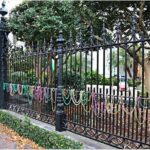
REVIEW · NEW ORLEANS
Private French Quarter and Treme Walking Tour
Book on Viator →Operated by Soul of Nola · Bookable on Viator
Two neighborhoods, one great walking route. This private French Quarter and Treme tour helps you connect street corners to the stories that shaped New Orleans. You’ll spend real time on architecture, Creole culture, and the music threads that lead to jazz.
I love the private format. You can ask questions as you go, not during a rushed group stop. I also love how the route is split—French Quarter for a full chunk of history and Treme for the music origin story—so you leave with a balanced picture, not just postcard facts. One drawback: the Treme portion is shorter, so if you want lots of neighborhood detail, you may want a second walk later.
In This Review
- Key things that make this tour worth your time
- A smart combo: French Quarter history meets Treme music roots
- Getting started at 400 Royal St (and why the end point is flexible)
- French Quarter stop: architecture, power, and why ironwork gets talked about
- Treme stop: jazz origins and how music became a map
- What a private guide changes (Cassandra, Derek, Ashley style)
- Timing and pacing: 2.5 hours that don’t feel rushed
- Price and value: $600 per group, up to 8 people
- Where to eat after: Napoleon House is a smart lunch lead
- Who should book this tour (and who might want something else)
- Quick notes on comfort and real-world logistics
- Should you book the Private French Quarter and Treme Walking Tour?
- FAQ
- How long is the Private French Quarter and Treme Walking Tour?
- How many people are in each group?
- Where does the tour start?
- Where does the tour end?
- Is the tour offered in English?
- Is admission included for stops?
- Does the tour include coffee or tea?
- What’s the weather situation?
- When will I get confirmation after booking?
- Is cancellation free?
- How far in advance is this tour commonly booked?
Key things that make this tour worth your time
- Private group of up to 8 means more question time and less waiting around.
- French Quarter architecture focus includes details like ironwork and building style.
- Treme jazz origin story gives you the music context behind the name New Orleans.
- Local guides you may meet like Cassandra, Derek, or Ashley bring history to street level.
- Easy-to-follow walk keeps the pace comfortable while still covering two areas.
A smart combo: French Quarter history meets Treme music roots
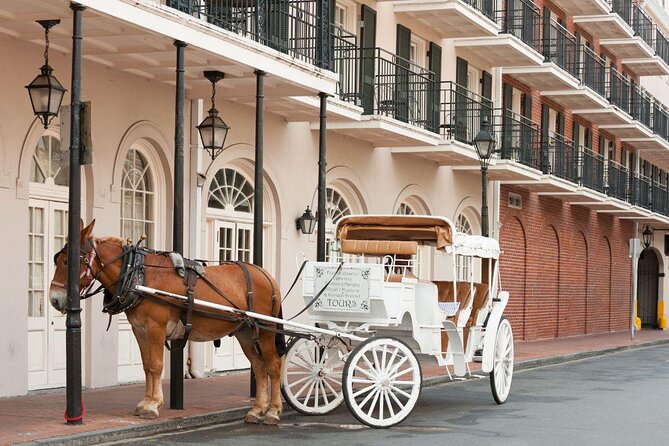
New Orleans is one of those cities where each neighborhood feels like its own chapter. If you only do the French Quarter, you learn the postcard version. If you only do Treme, you miss how the city’s geography and power centers set the stage.
This tour is built to fix that. You start in the French Quarter, then shift into Treme, so you can compare what you see with what you hear. The French Quarter part leans hard on architecture and location—why this corner of the city matters. The Treme part shifts to music and the larger story of how New Orleans became the birthplace of jazz.
That pairing matters because it teaches cause and effect. Streets aren’t random. Buildings aren’t just pretty. Music didn’t appear out of nowhere. A good guide helps you notice the links.
You can also read our reviews of more walking tours in New Orleans



Getting started at 400 Royal St (and why the end point is flexible)
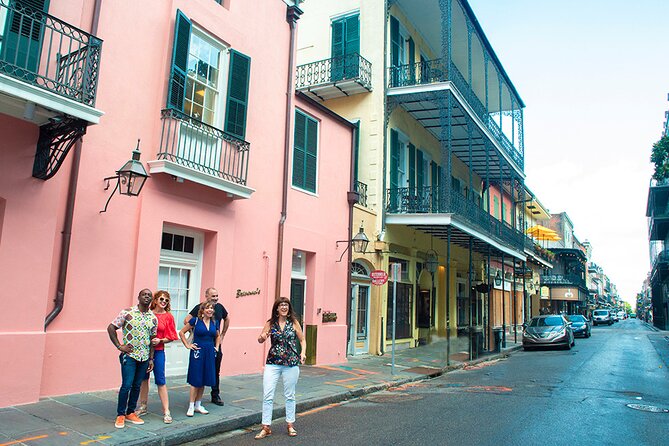
The meeting spot is 400 Royal St. That’s helpful because you have a clear anchor point right away. From there, you’ll walk through the French Quarter for about 2 hours, then head to Treme for about 30 minutes.
One practical thing: there’s no predetermined end point. That can feel odd on paper, but it often works in real life. It means you’re guided toward where it makes sense for you next—usually still within the French Quarter area—rather than being marched back to a fixed corner like a school group.
Plan for a normal walking tour setup. Bring water, wear shoes that handle uneven sidewalks, and don’t schedule anything tight right after. Two and a half hours on foot adds up, even if the route feels manageable.
French Quarter stop: architecture, power, and why ironwork gets talked about
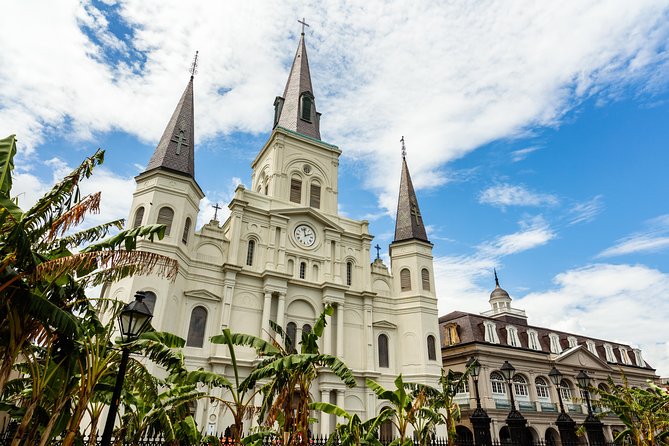
The French Quarter portion isn’t just a greatest-hits walk. It’s structured around how the neighborhood grew and how its location shaped what happened there.
You’ll spend about 2 hours discussing:
- the varied architecture you see around you
- why the Quarter’s location was significant
- how different rule changes and early settlement shaped the city
In plain terms, your guide will connect the buildings to the timeline. When you know what to look for—style differences, layout clues, and old materials—you stop treating the Quarter like a movie set and start reading it like a map.
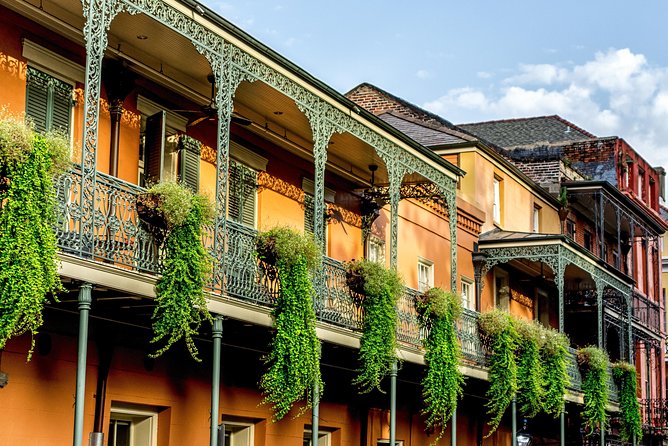
A detail I really like in this style of tour is the talk about ironwork and architectural features. Those wrought-iron balconies and gates are more than decoration. Guides can point out how materials and designs reflect the city’s history and climate.
Another plus: this stop is long enough to handle questions. In a group tour, people tend to save their questions for the end. Here, you can ask in the moment and keep the conversation moving.
Potential drawback to consider: because the French Quarter is the bigger chunk of time, you’ll finish that part feeling more “filled in” than “saturated” about the Quarter. If you’re hoping for a deep slow walk where every block gets equal time, this tour’s structure may feel a bit more focused than you expect.
Treme stop: jazz origins and how music became a map
Then you switch gears. The Treme segment is shorter—about 30 minutes—but it aims at the big idea: music and how New Orleans became the birthplace of jazz.
This is where the tour gives you the cultural context behind the sounds you’ll hear around town. You’re not just hearing trivia like a playlist of facts. You’re getting the story that helps the music make sense: who shaped it, why it mattered, and how the neighborhood connection worked.
Treme also helps correct the mental shortcut people make when they think of New Orleans as only one kind of scene. The French Quarter can feel like a spotlight. Treme is where you start to understand that the spotlight had to land somewhere—then someone had to keep the story going.
One consideration: the time is tight. So if you already know you want to go deep into Treme life—church history, local landmarks, or long-form neighborhood stories—you may want an additional walk afterward. But as a jazz-and-context primer, this segment does the job.
What a private guide changes (Cassandra, Derek, Ashley style)
The guides are a huge part of the value here. You might meet guides like Cassandra, Derek, or Ashley. What stands out from their approach is that they move beyond a lecture and into real conversation.
I like private guiding because it forces the information to match your group. If your family includes teenagers and you want the story to hold their attention, or if you want architecture and culture and you’re happy to nerd out a little, a private guide can adjust on the fly.
From what you can expect in practice:
- You’ll get lots of questions answered during the walk.
- Guides often connect the past to what you can still see today.
- The tone can shift from architecture talk to cultural commentary without losing the thread.
One review-style detail I’d treat as a strong sign: guides have been described as tailoring their presentation across ages, from infant to senior. That’s not just polite. It means the guide is likely to explain things in layers, not in one-size-fits-all terms.
I also like when a guide can share personal context. In this case, there’s mention of guides offering a real perspective on how Hurricane Katrina changed the city and how New Orleans keeps evolving. You don’t get that from a brochure.
You can also read our reviews of more private tours in New Orleans






Timing and pacing: 2.5 hours that don’t feel rushed
This tour runs about 2 hours 30 minutes. That’s long enough to connect dots, not long enough to crush your feet.
Still, treat it like a walking tour, not a sit-down museum. You’ll be outside, moving between sights, and listening. A weather-sensitive tour is common here, since good visibility helps you read architecture and details.
If you’re the type who asks a lot of questions (my favorite kind of person), a private tour is a relief. You don’t have to worry about holding up a big crowd. You just keep going at the right speed for your group.
And here’s a small practical trick: decide early what you want most—architecture, jazz/music history, or local culture—and ask those questions first. Once the guide has your priorities, the rest of the walk tends to feel smoother.
Price and value: $600 per group, up to 8 people
Let’s talk money in a way that helps you decide.
The price is $600 per group, for up to 8 people. That means your cost per person depends on how many of you book.
- If you come with 2 people, it’s pricey per head.
- If you come with 6 to 8 people, it starts to feel like a smart deal compared with paying for separate tours.
Why it’s worth considering even at $600: you’re paying for two things that are hard to replicate on your own. First, you get a guided story that helps you see what you’d otherwise miss—like ironwork and architectural clues. Second, you get conversation time. In a private setup, the value isn’t only the facts. It’s how quickly you can clarify what you’re seeing.
If you’re traveling as a couple and want the French Quarter plus Treme context with Q&A, it can still be a good spend. You just have to be honest about what you want: a guide who helps you understand, or a budget-friendly self-walk.
Where to eat after: Napoleon House is a smart lunch lead
This tour doesn’t include coffee or tea, so you’ll likely want to grab a drink or snack on your own. If you want an easy lunch suggestion, one guide recommendation that comes up is Napoleon House.
The advantage of eating after a tour like this is timing. You’ve just walked the streets and heard the city stories, so food recommendations feel more like part of the trip than a random stop. Ask your guide what fits your schedule and tastes before you scatter to your next destination.
Also, keep a little flexibility. The tour ends in the French Quarter area, but the exact finishing spot isn’t fixed. That’s another reason a nearby lunch can work well.
Who should book this tour (and who might want something else)
This private French Quarter and Treme walk fits best if you want:
- a first-time New Orleans foundation
- architecture plus music history in one outing
- a guide who can handle questions without rushing
- a clear two-neighborhood route that doesn’t require planning gymnastics
It’s also a solid pick for mixed-age groups since guides have experience explaining across generations.
You might consider a different option if:
- you want a long, detailed Treme neighborhood walk (this tour gives the Treme story, but in a shorter window)
- you’re trying to keep costs ultra-low as a small party
- you plan to cram back-to-back activities with little buffer for walking and Q&A
Quick notes on comfort and real-world logistics
This tour is for English-speaking participants and uses a mobile ticket. It’s set up so most travelers can participate, and service animals are allowed.
It’s also described as being near public transportation, which is helpful if you’re mixing this walk with other plans. Since the route is outside, good weather matters. If conditions are poor, you’ll be offered a different date or a full refund.
Should you book the Private French Quarter and Treme Walking Tour?
Book it if you want an efficient, story-driven route that connects what you see in the French Quarter to why Treme matters for New Orleans music. The private format is the real selling point: you’ll spend your money on understanding, not just on walking.
Skip it (or add something else) if your main goal is deep Treme exploration. Think of this tour as a smart primer. Then, if you catch the bug, you can spend more time where the story clicks for you.
If you can bring a larger group, the pricing gets easier to swallow. Up to 8 people is a wide sweet spot for families, friend groups, and multi-generational travel.
FAQ
How long is the Private French Quarter and Treme Walking Tour?
It runs about 2 hours 30 minutes.
How many people are in each group?
It’s private, and the group size is up to 8 people.
Where does the tour start?
The meeting point is 400 Royal St, New Orleans, LA 70130.
Where does the tour end?
It ends in the French Quarter, and there is no predetermined end point.
Is the tour offered in English?
Yes, it’s offered in English.
Is admission included for stops?
Admission ticket(s) are listed as free, and a mobile ticket is used.
Does the tour include coffee or tea?
No, coffee and/or tea are not included.
What’s the weather situation?
This experience requires good weather. If it’s canceled due to poor weather, you’ll be offered a different date or a full refund.
When will I get confirmation after booking?
Confirmation is received within 48 hours of booking, subject to availability.
Is cancellation free?
Yes. You can cancel up to 24 hours in advance for a full refund. If you cancel less than 24 hours before the start time, it won’t be refunded.
How far in advance is this tour commonly booked?
On average, it’s booked 81 days in advance.