REVIEW · NEW ORLEANS
New Orleans Hop-On Hop-Off Unlimited Sightseeing Package
Book on Viator →Operated by Basin St. Station · Bookable on Viator
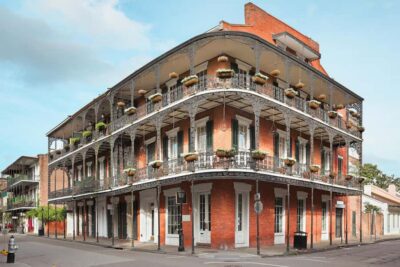
New Orleans is best when you don’t over-plan. This pass pairs live-guided bus rides with two included walking tours, so you can stitch together the big neighborhoods fast, even with a family schedule. I like the clear, stop-by-stop city context from guides such as Logan and Deidre, and I like that you’re not stuck doing one route at one fixed time. One heads-up: traffic, construction, and full buses can slow things down, so you’ll want a little buffer—especially at busier stops.
The route moves through the places that define the city: Jackson Square and the Cathedral, the French Market, Frenchmen Street music energy, cemetery history, and the big-ticket museums around Magazine Street and the WWII Museum area. It’s also designed for you to control the pace. If you want more time for coffee at Cafe du Monde or a longer look at a garden block, you can.
If you’re hoping for a perfect, always-on-time experience, temper expectations. The core idea here is smart flexibility, not a tight tour schedule with guaranteed seats.
In This Review
- Quick hits you’ll use on day one
- A 3-day pass that saves your feet (and your wallet)
- Jackson Square to French Market: the postcard start that sets your bearings
- 2200 Royal Street to Frenchmen Street: where the evening plans start
- St. Augustine and the Unknown Slave: history you can’t fake
- Basin Street, St. Louis Cemetery No. 1, and the daily walking tour meeting point
- Canal Street to Bourbon and Royal Street: the famous loop, plus the traffic tax
- Italian Piazza, Harrah’s, and the museum side trip
- Gallier Hall to the WWII Museum area: arts, churches, and big-ticket stops
- Magazine Street, Fleurty Girl, and the Garden District guided walk add-on
- St. Charles Avenue streetcar line, Fresh Market, and Uptown landmarks
- Ernest M. Morial Convention Center, Katrina Sculpture, and Mardi Gras World
- Riverwalk, Julia Street, and Outlet Collection: shopping that feels like a break
- Vue Orleans and the waterfront: aquarium options and the Creole Queen vibe
- Price and logistics: when this pass is a slam dunk
- Guide tone and pacing: choose your moments
- Should you book this New Orleans hop-on hop-off package?
- FAQ
- How many stops are on the New Orleans hop-on hop-off route?
- What are the typical bus hours?
- How long does one full rotation take if you don’t get off?
- How often does the bus arrive at each stop?
- Where do the French Quarter walking tours depart from?
- Where do the Garden District walking tours depart from?
- Do you get anything if it rains?
Quick hits you’ll use on day one

- 3 days, unlimited hopping: Ride the same route multiple times and get off where your day calls for it.
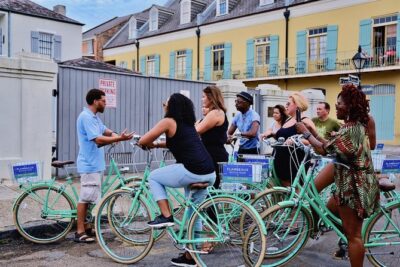
- Two guided walks included: French Quarter and Garden District add local detail beyond the bus views.
- Live on-bus narration in English: You’ll get real explanations at each stop, not just a recorded loop.
- Rain planning built in: You get a complimentary poncho if weather turns.
- App-style timing helps, but isn’t magic: In city traffic, buses can still run long.
- Route choices matter: Some stops can be harder to spot or can get crowded.
A 3-day pass that saves your feet (and your wallet)
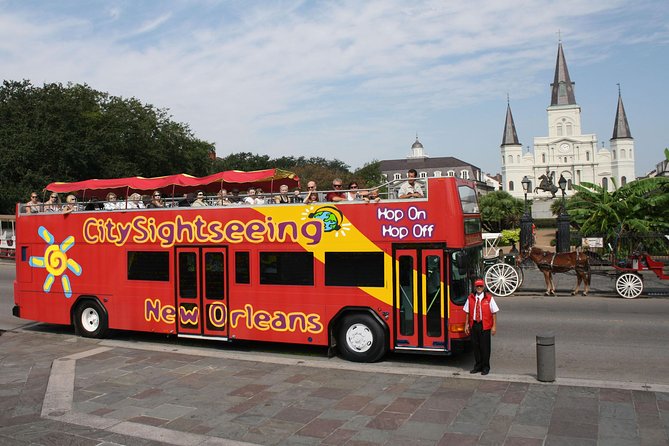
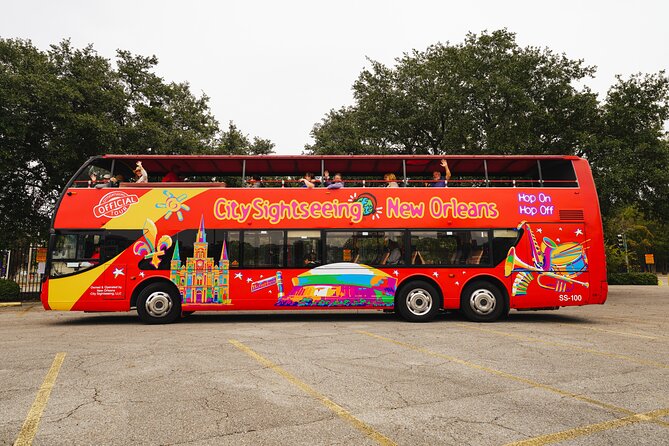
At $54 per person for about three days, this package is priced for people who want options. In New Orleans, that’s more valuable than it sounds. Distances can feel short on a map, but real streets, turns, and traffic can eat time. This pass gives you a simple rule: get on when you’re tired of walking, get off when you see something you actually want to do.
You also get two guided walking tours included (French Quarter and Garden District). That’s the kind of add-on that pushes this beyond a basic sightseeing bus. The bus helps you understand where things are. The walks help you understand why they matter and what to look for once you’re on foot.
There’s a trade-off, though. On busy days, you may wait for the next bus if one fills up. And if a route changes due to construction or a parade, you’ll need to stay flexible. The pass works best when you treat it like transportation plus orientation, not a clockwork timed tour.
You can also read our reviews of more tours and experiences in New Orleans.



Jackson Square to French Market: the postcard start that sets your bearings

You begin at the heart of the tourist core: Jackson Square near the St. Louis Cathedral and the official ticket office area across from the square. This is where the city’s “signature look” hits first. You’ll pass major landmarks by bus, and you also get a guided French Quarter walking tour that departs from 700 Decatur Street.
What I like about starting here is how it anchors everything else. Once you’ve had a guided look around the square area, you can better judge whether a side street is worth your time on foot. Cafe du Monde is right there too, which makes it easy to mix sightseeing with a real break.
Then you roll into the French Market stop, tied to shopping and that slightly chaotic “browse now, decide later” vibe. This is a good place to hop off if you want a snack run or a quick browse before you head toward the music side of town.
Possible snag: a couple people found certain stops tricky to locate. So keep your phone handy and be ready to confirm you’re at the right spot before you miss the bus you’re counting on.
2200 Royal Street to Frenchmen Street: where the evening plans start
Stop 3 is where the vibe shifts. Around 2200 Royal St, you’re positioned for the long block to Frenchmen Street and the music clubs beyond. Frenchmen Street is one of the easiest ways to feel the city’s live-music identity without needing a special ticket or a formal reservation plan (though some venues do have their own schedules).
This part of the route also connects to a “plan B” that’s smart for families or early evenings: you can mix music-area strolling with nearby parks and viewpoints like Crescent Park. And since the route lists stops tied to places like JAMNOLA and Bywater Brew Pub, you’re set up to do a mix of culture plus casual hang time.
The value here is simple: this stop helps you decide what your night should be, based on what mood you’re in when you arrive. If you want a quiet evening, you can walk the edges. If you’re ready for music, you’re in the right neighborhood already.
St. Augustine and the Unknown Slave: history you can’t fake

Stop 4 centers on the St. Augustine Church and the Tomb of the Unknown Slave. This is not a “quick photo and move on” type of stop. It’s one of those places where you’ll benefit from slowing down and reading what’s in front of you.
On a hop-on hop-off, it can be tempting to treat stops like checkboxes. This one resists that. Even if you don’t stay long, it helps balance the lighter, party-leaning reputation of the city with something heavier and more grounded.
Basin Street, St. Louis Cemetery No. 1, and the daily walking tour meeting point

Stop 5 is anchored at 501 Basin Street, with a cluster of practical benefits: a welcome area with travel counselors, plus restrooms, a gift shop, and even a coffee option. That matters because New Orleans walking days can run long, and having a real place to reset is underrated.
This is also where the St. Louis Cemetery No. 1 walking tour fits in, and the route description notes that walking tours are offered daily. If you’re doing the cemetery on foot, this is the natural meeting point.
Nearby, you also reach Armstrong Park and Congo Square. That combo is useful if you want cemetery history plus a broader sense of community spaces in the same general timing window.
Practical advice: cemeteries and cemetery-related walks can affect how long you’re outside, especially in hotter hours. If you’re traveling with kids, plan for breaks and water before you commit to the walk.






Canal Street to Bourbon and Royal Street: the famous loop, plus the traffic tax
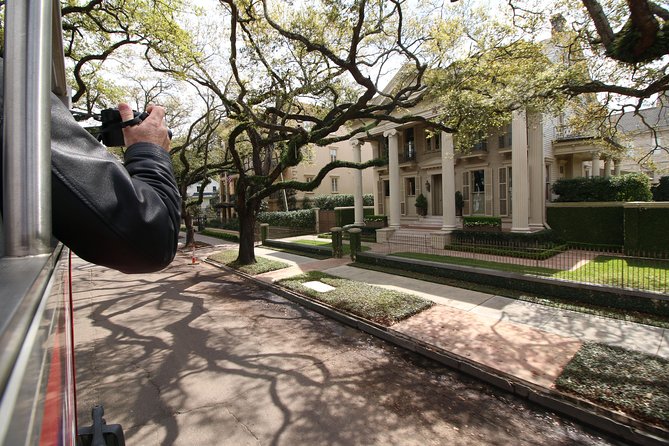
Stop 6 runs around 500 Canal Street, with easy access to Bourbon Street, Royal Street, Chartres Street, and the Canal Street hotel corridor. This is the classic “yes, I want to see it” zone.
It’s also where you learn a real New Orleans lesson: traffic and crowds are part of the experience. One review-style theme that shows up often in this kind of pass is that a bus can take a long time between points when the city is congested. Translation: if you ride the full loop once, you might not want to rely on it for the rest of your day unless you have extra time.
That’s not a reason to skip it. It’s a reason to be strategic:
- Use the bus for repositioning.
- Walk on your own feet once you’re in the zone you want.
Italian Piazza, Harrah’s, and the museum side trip
Stop 7 lists Harrah’s Casino, the American Italian Cultural Museum, and the Italian Piazza. This area works well if you want contrast. New Orleans isn’t only one style of architecture or one type of “attraction day.” This is one of the stops that widens the picture.
Stop 8 then continues with the Hyatt Regency Hotel area and the Holiday Inn Superdome side, plus places like Walk-On’s and Copper Vine. If you’re hungry, tired, or need an easy “we’ll meet back at a landmark” point, these hotel-stadium zones can be useful.
Gallier Hall to the WWII Museum area: arts, churches, and big-ticket stops

Stop 9 features Gallier Hall plus Cafe at the Square and St. Patrick’s Church of 1840. This is more “architecture and atmosphere” than party energy.
Then comes Stop 10, one of the most important for ticket-based history: Ogden Museum of Southern Art, the Contemporary Arts Center, the Confederate Civil War Museum, and the National WWII Museum – Solomon Victory Theater. If you want a museum day without spending half your trip figuring out transport, this stop is a gift.
You can use it two ways:
- Do one museum deeply.
- Or sample a couple, then return to the bus when your feet tell you it’s time.
One note for planning: museum time isn’t “one hour and done” unless you really push it. If you’re traveling with kids, pick one main destination and keep the rest as optional.
Magazine Street, Fleurty Girl, and the Garden District guided walk add-on
Stops 11 through 13 keep you centered on Magazine Street shopping and food. This is where you go when you want local browsing rather than just sightseeing. Stop 13 specifically mentions Fleurty Girl on Magazine Street, which is the kind of stop that makes the route feel personal instead of generic.
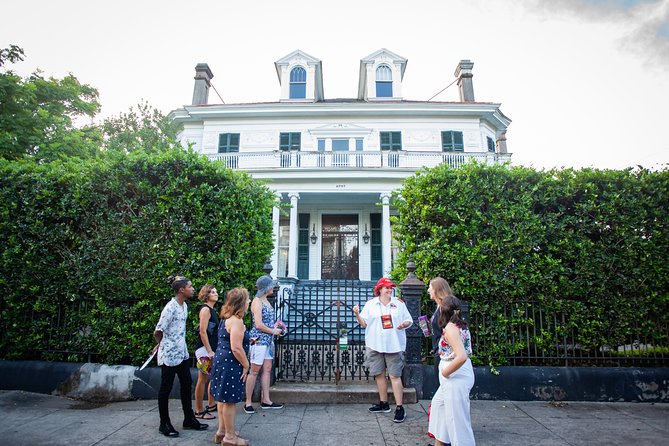
Then Stop 12 is the one you should pay attention to if you want the included guided tour. This is tied to the Garden District Walking Tour (guided). The departure point is the corner of Washington Avenue and Magazine Street at Hop-On Hop-Off Stop #12 (2727 Magazine Street).
This walking tour is where you get extra value for the whole package. The bus can show you streets. The guided walk helps you understand what to notice once you’re inside the neighborhood. Garden District blocks can look similar at first glance. A guide helps you separate “pretty houses” from the stories tied to them.
Two practical considerations from real-world experiences with this kind of setup:
- Construction and route reroutes can mess with how you find the stop. Have a plan for verifying the meeting corner.
- Walking tours move on foot, so the day you choose matters. If you’re running late with bus delays, you can lose the start window.
St. Charles Avenue streetcar line, Fresh Market, and Uptown landmarks
Stop 14 includes Fresh Market Bakery, the St. Charles Avenue streetcar line, and mentions spots like Superior Grill and Elms Mansion. If you’re trying to combine eating with transportation, this is a strong middle-of-the-day stop.
Stop 15 mentions New Orleans and Company plus the St. Charles Avenue streetcar line and the Pontchartrain Hotel. This is another easy “reference point” area. If you get turned around, these big-name landmarks help you reset quickly.
St. Charles Avenue is also a logical place to shift from bus-only to mix-and-match. You can do streetcar time, then hop back to the bus route when it makes sense.
Ernest M. Morial Convention Center, Katrina Sculpture, and Mardi Gras World
Stop 16 includes the Ernest M. Morial Convention Center, the Hurricane Katrina Sculpture, and Mardi Gras World (listed as about 10 minutes walking). This cluster is a good example of why the pass is flexible: you can build a “story day” with serious context and a very New Orleans-style attraction in the same half-day.
The Katrina Sculpture stop works best if you’re in a reflective mood. If you’re not, you can still use it as a geographic pivot point and come back later.
Mardi Gras World is the kind of attraction that’s fun even for people who think they’re not into “the parade thing.” It’s visual, it’s hands-on in its own way, and it helps explain the city’s celebration culture beyond costumes and street beads.
Riverwalk, Julia Street, and Outlet Collection: shopping that feels like a break
Stop 17 heads to the Outlet Collection at Riverwalk and Julia Street shops and galleries. This is where you can loosen your schedule. If your day has been mostly walking on historic blocks, this stop can feel like a reset: clean lanes, places to browse, and options to stop for a meal without cramming.
If you’ve been using the bus as transportation all day, this is a good place to turn the day back into something leisurely.
Vue Orleans and the waterfront: aquarium options and the Creole Queen vibe
Stop 18 at Vue Orleans brings you right back to water and family-friendly options. The route lists Paddlewheeler Creole Queen, Vue Orleans, and Audubon Aquarium & Insectarium.
This works well as your “last stop” day or a day where the weather is good and you want outdoor-to-indoor variety. The aquarium is a classic choice if you’re traveling with kids. Even if you’re not, the waterfront atmosphere and nearby stops give you another pace change.
A nice feature of finishing here is that you can plan around daylight. Waterfront time tends to feel better when the sun isn’t already fading.
Price and logistics: when this pass is a slam dunk
Here’s my value math. You pay $54 for about three days, and that includes the live-guided bus rides plus guided French Quarter and Garden District walking tours. If you were paying separately for two guided walks plus using taxis or rideshares to reposition across neighborhoods, the pass usually holds up.
Also, the practical benefits matter:
- It’s mobile ticket based.
- You can show your voucher at the stop when you board.
- You get a poncho if rain hits.
- It runs from about 9:30 AM to 5:30 PM on typical days, with schedule shifts on major events.
But you should plan for the reality of New Orleans routing:
- Traffic can stretch travel time.
- Construction can reroute the bus.
- Stops can be harder to locate than they seem from a map.
- Buses can fill up, and if that happens, you wait for the next one.
If you want a tight itinerary where every stop happens at a specific time, this is not that tool. If you want a smart way to cover the city and decide on the fly, this is a strong choice.
Guide tone and pacing: choose your moments
One theme that matters: not all onboard guides deliver the same tone. A family-friendly day benefits from a guide who keeps narration respectful and tuned to mixed ages. Some guides are praised for clarity and pacing, including Logan and Deidre, and others are mentioned alongside names like Celeste, Sam, Johnathan, Helen, and Gsry (driver plus guide pairings show up in the details).
My advice is simple: if you get on and the guide’s style isn’t a fit for your group, don’t panic. Treat it as bus transportation to get you to the next stop, then use the walking tours and museum time where you can control your schedule. If your family wants a calmer experience, time your bus rides and walking tours so the most sensitive parts of the day are guided in a way you like.
Should you book this New Orleans hop-on hop-off package?
Book it if:
- You want maximum neighborhoods covered with minimal planning stress.
- You’re using it as transportation plus orientation, and you’ll pair it with independent time.
- You’ll take both included walks. That’s where the value jumps.
Skip or adjust your plan if:
- You hate waiting. On crowded days, you might wait at stops for the next bus.
- Your trip is built around one tight area only. If you’re doing only the French Quarter, you might not need a multi-stop loop.
- You don’t want flexibility. This pass rewards people who keep a little breathing room.
If you do book, plan smart: pick a main attraction each day, ride the bus to get there, and treat the route like your city map in motion. And if weather turns, you’ll be set with the poncho so you can keep moving.
FAQ
How many stops are on the New Orleans hop-on hop-off route?
There are 19 stops along the route.
What are the typical bus hours?
Buses typically run from 9:30 AM to 5:30 PM, though major events and holidays can change scheduling.
How long does one full rotation take if you don’t get off?
One full rotation takes about 90 minutes.
How often does the bus arrive at each stop?
Buses generally arrive every 25–30 minutes.
Where do the French Quarter walking tours depart from?
They depart from 700 Decatur Street at the City Sightseeing Ticket Office across the street from Jackson Square.
Where do the Garden District walking tours depart from?
They depart from the corner of Washington Avenue and Magazine Street at Hop-On Hop-Off Stop #12 (2727 Magazine Street).
Do you get anything if it rains?
Yes. You’ll receive a complimentary poncho if it rains.