
REVIEW · NEW ORLEANS
New Orleans Garden District Architecture Tour
Book on Viator →Operated by NOLA Tours · Bookable on Viator
New Orleans has a knack for turning streets into stories. This Garden District Architecture Tour uses a walk-and-talk format to help you read the neighborhood like a living magazine: house styles, owners, and the kind of details that make you notice more on your next stroll. It also adds a quick stop in Lafayette Cemetery No. 1, where the city’s burial customs shape the mood of the block.
I like that the tour is built for attention, not rushing. You get a licensed local guide who can connect architectural clues to the people who lived there, and the small group size (max 14) keeps it personal. I also love the practical angle: you come away knowing what you’re looking at, so the Garden District stops feeling like pretty scenery and starts feeling like a readable place.
One thing to consider: cemetery access is granted by the City of New Orleans, but it can be closed if services are happening. If you’re visiting during a busy week or service time, you might not see every intended portion.
In This Review
- Quick take: what makes this tour worth your time
- A neighborhood you can read, one facade at a time
- Price and value: what $40 buys you (and what it doesn’t)
- Starting at 2727 Prytania: how to time your walk
- Lafayette Cemetery No. 1: the architecture lesson you feel, not just see
- Commander’s Palace: when a grand facade comes with a story
- Morris-Israel House: learning Italianate without a textbook
- Women’s Guild of the New Orleans Opera house: two eras, two styles
- Louise S. McGehee School: from single-family residence to school library
- Carroll-Crawford House: another Jameson example to compare
- The Rink Shopping Center: turn-of-the-century recreation, 1884 edition
- The Garden District walk: two hours of mansion-view learning
- The guide factor: why small-group storytelling hits harder here
- Photography and comfort tips that actually help
- Who this tour is best for
- Should you book the New Orleans Garden District Architecture Tour?
- FAQ
- How long is the New Orleans Garden District Architecture Tour?
- How much does the tour cost?
- What’s included in the tour price?
- Are there admission fees at the stops?
- How big is the group?
- What is the cancellation and weather approach?
Quick take: what makes this tour worth your time

- Small group pacing (maximum 14) means more chances to ask questions.
- Italianate architecture focus with Samuel Jameson-designed houses gives you clear “compare and contrast” moments.
- Cemetery culture stop at Lafayette Cemetery No. 1 adds context beyond buildings.
- Two-era building lessons at the Women’s Guild of the New Orleans Opera help you spot style shifts.
- Fun + everyday history at the Rink Shopping Center (a major skating rink back in 1884).
- Mobile ticket and a tight downtown meeting point help you start smoothly.
A neighborhood you can read, one facade at a time

If the French Quarter is your loud intro to New Orleans, the Garden District is the calm, well-dressed follow-up. The big win here is that you’re not just “looking at pretty houses.” You learn what the architectural language is saying—style, era, and sometimes the social story behind it.
The tour runs about two hours, so it’s long enough to get real texture without turning into a full afternoon production. You’ll be on foot in a neighborhood where the sidewalks and street trees can make even a short walk feel different than downtown.
And yes, the Garden District really does deliver on the postcard factor. But the goal isn’t just views. It’s pattern recognition: once you know what to look for, you’ll see those patterns everywhere you go afterward.
You can also read our reviews of more tours and experiences in New Orleans.



Price and value: what $40 buys you (and what it doesn’t)
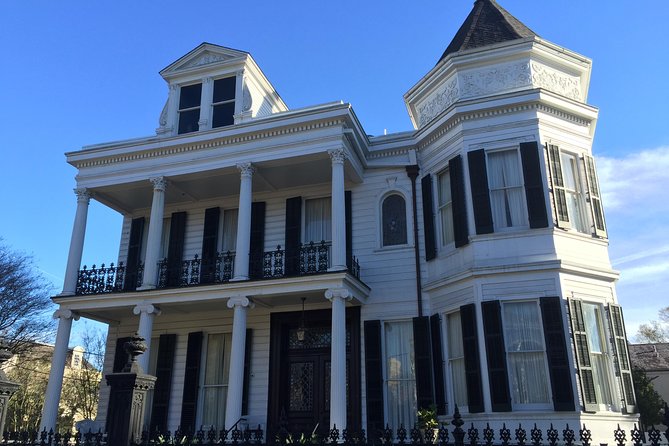
At $40 per person, this sits in the “reasonable day in New Orleans” range, especially because you’re paying for a licensed local guide and a curated route. You’re not paying for museum admissions across the board, and most stops are set up with free access for the visit.
Here’s the part I think matters most: the guide’s job is to make the neighborhood make sense fast. When a tour spends time teaching you how to identify a style (instead of only naming famous places), you get more out of every street you walk afterward.
The main extra cost risk is food-at-a-landmark expectations. For example, there’s a stop that discusses Commander’s Palace and even points toward the culinary experience, but admission isn’t included. In plain terms: you’re getting architectural and ownership history, not a ticketed meal.
Also, transportation to and from attractions isn’t included, so plan on getting yourself to the start point at 2727 Prytania St. The upside is that you’ll spend that time actually walking, not waiting for a vehicle.
Starting at 2727 Prytania: how to time your walk

You’ll meet at 2727 Prytania St and return there at the end. That simple out-and-back setup is helpful because you can plan the rest of your day without scrambling across the city.
This is the kind of tour where arriving a little early helps. If you give yourself a few minutes to settle in, you’ll start better and you’ll walk with your eyes open right from the first stop. Comfortable shoes matter here; you’re on sidewalks for most of the experience.
One more timing note: this tour is often booked ahead. On average, it’s reserved about 19 days in advance, so if your schedule is fixed, don’t wait for the last week.
Lafayette Cemetery No. 1: the architecture lesson you feel, not just see
The tour begins with Lafayette Cemetery No. 1, with a short focus on New Orleans burial customs. Even if you’ve read about the city’s “Cities of the Dead,” seeing how the cemetery fits into the urban landscape changes how you understand it.
The practical catch: entry is permitted by the City of New Orleans but the cemetery may be closed when services are being performed. So if you arrive on a day with a closure, expect the guide to adapt the emphasis.
What I like about including this stop is that it sets context. You start to understand New Orleans as a place where history isn’t separate from everyday life. It’s built into the city’s structure, including how it remembers the dead.
Commander’s Palace: when a grand facade comes with a story
Next up is a discussion centered on Commander’s Palace—the building’s architecture, the history of its owners, and how the restaurant experience fits into the larger picture.
This stop is short, but it’s the kind of stop that can unlock how you read big buildings in the neighborhood. You’ll likely notice how an impressive exterior isn’t just decoration. It’s part of a long storyline about wealth, taste, and who got to shape the city.
One drawback to flag: admission isn’t included here. That’s fine if your goal is the architecture and history lesson. If your goal is specifically a restaurant visit, you’ll need to plan that separately.






Morris-Israel House: learning Italianate without a textbook
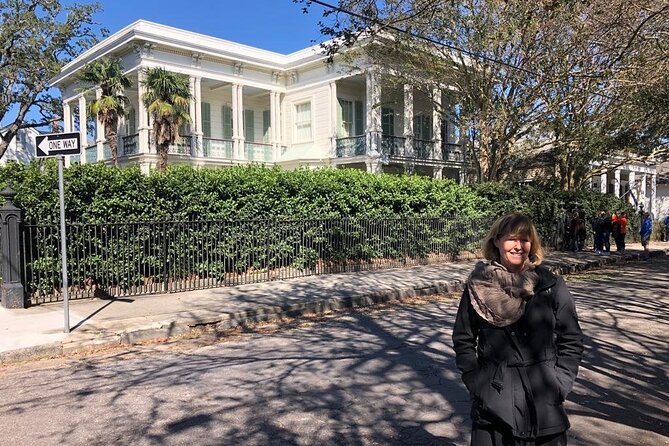
The tour takes you to the Morris-Israel House, designed by Samuel Jameson in 1869. This is a strong stop for anyone who wants a clear, repeatable way to spot an architectural style.
Italianate architecture often shows up in New Orleans with recognizable features, and this house is presented as a solid example. The guide’s real value here is interpretation: you’re shown how this style fits into what you’ll see around it, so the neighborhood doesn’t feel random.
One thing to keep in mind: houses like this can be impressive even when you only see part of the property from the sidewalk. That’s why having a guide matters. You get help connecting what’s visible with what’s historically likely part of the design thinking.
Women’s Guild of the New Orleans Opera house: two eras, two styles

This stop is one of the most teachable moments of the route. The Women’s Guild of the New Orleans Opera house is described as having been built in two different eras and two different styles.
That setup is perfect if you’ve ever wondered how a single building can look like it has a split personality. The guide helps you understand what to look for when styles change over time rather than staying frozen in one era.
It also helps you learn a bigger skill: noticing transitions. New Orleans architecture often reflects changing tastes and eras rather than neat “same decade everywhere” planning.
Louise S. McGehee School: from single-family residence to school library
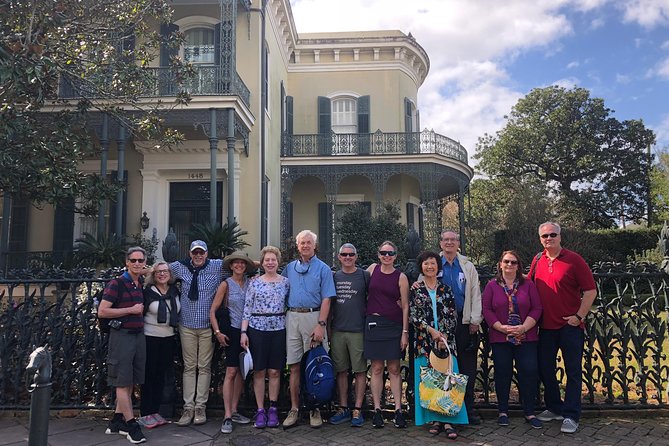
The Louise S. McGehee School stop covers a building that started as a single family residence and later became the library of the McGehee School. That change of use matters, because it shows how buildings can survive by adapting.
This is the kind of stop that makes you think about the neighborhood beyond the most famous mansions. You’ll likely end up looking at the street and thinking: who lived here first, what changed, and why did the building make sense for a new purpose?
The practical upside is that the lesson broadens your perspective. After this stop, the Garden District feels less like a showroom and more like a lived-in ecosystem.
Carroll-Crawford House: another Jameson example to compare
The Carroll-Crawford House is another Samuel Jameson design, again presented as an excellent example of Italianate style. This is smart because it gives you a second reference point.
Comparing two examples of the same architect and style helps you separate personal opinion from architectural reading. You start to see similarities and differences that you might miss if you only see one house and move on.
This also keeps the tour from feeling like name-dropping. It’s more like guided practice. Once you’ve seen the Italianate pattern in one place, you can confirm it in another.
The Rink Shopping Center: turn-of-the-century recreation, 1884 edition
Not every stop is a mansion. The route includes the Rink Shopping Center, which is tied to a recreational past: it once housed the largest skating rink in the country at the time it was built in 1884.
I like this stop because it adds a dose of normal life. Architecture isn’t only about grand homes and elite institutions. Buildings also reflect what people did for fun.
If you tend to remember history better when it comes with everyday details, this is a highlight. It breaks up the heavier architectural focus with a story you can actually picture.
The Garden District walk: two hours of mansion-view learning
The heart of the experience is the Garden District itself, with most of your time spent admiring the antebellum mansions and learning how the neighborhood developed when the houses were being built.
This is where the guide’s approach matters most. The best moments tend to happen when they point out architectural details and then connect them to the people and choices behind the construction. You’ll learn to look for the cues that help identify styles and eras, not just admire the look.
For first-time visitors, this is also your shortcut. You’ll walk away with a mental map of what to pay attention to while you explore on your own later. People often assume the Garden District is all about beauty. It’s also about design logic.
The guide factor: why small-group storytelling hits harder here
A standout thread in the guides’ styles shows up across many bookings. You’ll hear personal passion and a real willingness to answer questions.
For example, Angela, described as a 10th-generation New Orleanian, brings a strong local voice and a deep enthusiasm for the neighborhood’s history. Doug is frequently noted for mixing architecture with entertaining storytelling, including mentions of notable residents and houses connected to famous figures. Lee gets praise for being witty and charming while keeping the focus on what you’re seeing.
If you’re the type who asks questions on tours, you’ll likely like this setup. Gary is singled out for encouraging questions and even using pictures to make points clearer. That visual support is especially helpful when you’re trying to match what you see in the moment with what the guide is explaining.
And if you want extra context, Pauline is described as doing her own research into how buildings looked over decades and the commissioners and owners behind designs. That kind of effort translates into more than surface-level explanations.
In short: the architecture is the subject, but the guides decide whether it feels like a lecture or a living walk.
Photography and comfort tips that actually help
This tour is a walking experience, so plan for heat and sun like it’s a real weather event. If it’s warm, you’ll want water and shade breaks, even if the route is leisurely.
Bring shoes that handle uneven sidewalk edges. You’ll also want phone battery power, because once you start recognizing features, you’ll want photos for later comparisons.
For photos, try not to shoot only “full house portraits.” Work on detail shots too: windows, doorways, and any visible changes that hint at different eras. The tour’s style comparisons make those details easier to spot, and your future self will thank you.
Who this tour is best for
This fits you if:
- You want a stronger understanding of what you’re seeing in the Garden District.
- You like architecture lessons that include people and purpose, not just style names.
- You’d rather walk with a guide than try to decipher everything alone.
It’s also good for couples and families because the route stays varied: cemetery context, architectural examples, an opera-guild house with style changes, a school conversion story, and a recreation stop tied to skating.
If you’re visiting for only a day or two, this can serve as your orientation. After it, you’ll likely feel more confident exploring the neighborhood independently.
Should you book the New Orleans Garden District Architecture Tour?
I’d book it if you care about learning the city’s visual language while you’re walking. For $40, the value is strongest when a guide helps you connect architectural features to real stories and when the small-group pace makes questions easy.
Skip it or treat expectations lightly if you need only “big-ticket attractions” or if you’re specifically looking for paid entrances and a restaurant meal. This is not framed as an all-access ticket to everything. It’s framed as an interpretation experience.
Also, if the cemetery stop is a must for your trip, keep flexibility in mind. Lafayette Cemetery No. 1 can be closed due to services, and that could change what you see there.
If your goal is to leave with a sharper eye and a more personal feel for the Garden District, this tour is a smart, well-priced choice.
FAQ
How long is the New Orleans Garden District Architecture Tour?
It lasts about 2 hours (approx.).
How much does the tour cost?
The price is $40.00 per person.
What’s included in the tour price?
You get a licensed, insured local guide. A mobile ticket is also used.
Are there admission fees at the stops?
Most stops are listed as free, but Commander’s Palace does not include admission (the discussion is included, but not any ticketed entry). The cemetery entrance is noted as free, but it’s permitted by the City of New Orleans and may be closed during services.
How big is the group?
The tour has a maximum of 14 travelers.
What is the cancellation and weather approach?
You can cancel up to 24 hours in advance for a full refund. The tour requires good weather, and if it’s canceled due to poor weather, you’ll be offered an alternative date or a full refund.