REVIEW · NEW ORLEANS
Black History & Tremè Neighborhood Walking Tour
Book on Viator →Operated by Anansi's Daughters · Bookable on Viator
If you care about how music and freedom shaped a city, this walk hits hard. You’ll move through Treme and nearby landmarks with story-first stops: Jazz legends, Congo Square’s West African roots, the Tomb of the Unknown Slaves, and Louis Armstrong Park’s lasting impact on New Orleans culture.
Two things I really like: first, the tour is packed with big names you’ll recognize (Mahalia Jackson, Louis Armstrong, Buddy Bolden) tied to specific places you can stand in. Second, the guides lean into clear, human storytelling—so even heavy topics come with context and purpose, not just facts.
One possible drawback: it’s a walking tour with set time windows at each stop, so if you want lots of unstructured wandering or long museum-style stays, you may feel a bit rushed—especially in weather that isn’t great.
In This Review
- Key Points Worth Planning For
- Treme on Foot: Why This Tour Feels More Personal Than a Checklist
- Price and Logistics: Getting Real Value for $40
- Starting at 801 N Rampart: A Route Designed for Easy Navigation
- Stop 1: New Orleans Jazz National Historical Park and the Stories Behind the Legends
- Stop 2: Congo Square Since 1724, Where Community Life Survived and Shifted
- Stop 3: St. Augustine Church and the Tomb of the Unknown Slaves
- Stop 4: Louis Armstrong Park, Plus Why It’s Harder to Find Than You Think
- What the Guides Do That Makes the Walk Work
- Timing: How the 1 Hour 45 Minutes Actually Feels in Real Life
- Who This Tour Is For (and Who Might Prefer Something Else)
- Should You Book Black History & Treme Neighborhood Walking Tour?
- FAQ
- How long is the Black History & Tremè Neighborhood Walking Tour?
- Where does the tour start?
- What time does the tour begin?
- How much does the tour cost?
- Is the tour in English?
- Are the ticket and admission fees free at the stops?
- Is this tour suitable for most people?
- What’s the group size?
- What happens if the weather is bad?
Key Points Worth Planning For
- A tight 1 hour 45 minutes route that connects names, streets, and meaning without dragging
- Four major stops with free admission where you can actually pause and take in the setting
- Congo Square’s Sunday drum-circle legacy going back to 1724, explained in plain terms
- A respectful stop at St. Augustine’s Tomb of the Unknown Slaves, tied to Treme’s identity
- Louis Armstrong Park as a cultural crossroads, not just a photo stop
- Small group size (max 28) that keeps the walk feeling personal
Treme on Foot: Why This Tour Feels More Personal Than a Checklist
New Orleans has plenty of tours that name-drop. This one does something better: it gives you the places behind the names. You start with the music legacy that people talk about everywhere, then you walk to the grounding locations where that legacy took shape.
What makes it especially compelling is the focus on the Black experience in Treme and surrounding sites. The stories are organized enough that you don’t feel lost, but the tone stays human. You’re not just hearing history—you’re learning how it connects to daily life, worship, family life, and community gatherings.
And the pacing helps. At about 1 hour 45 minutes, you get a real route, but you’re not stuck all day. It’s also a good way to get your bearings fast if this is your first trip to New Orleans or your first time focusing on Treme.
You can also read our reviews of more walking tours in New Orleans



Price and Logistics: Getting Real Value for $40
At $40 per person, this is priced like a guided walking tour, not a museum ticket. The smart part is that the itinerary includes free admission at key stops, so your money is paying for the guided interpretation and the route.
You’ll also want to know the practical shape of the experience:
- Language: English
- Ticket style: mobile ticket
- Start time: 10:30 am
- Meeting point: 801 N Rampart St, New Orleans, LA 70116
- End point: back at the meeting spot
- Group size: maximum of 28
That matters because small-to-mid groups tend to work better in a neighborhood walk. You can ask questions. The guide can correct course if a landmark is harder to find than expected. And the whole tour stays manageable for a wide range of walkers.
Starting at 801 N Rampart: A Route Designed for Easy Navigation
You meet at 801 N Rampart St. That’s useful because it gives you a clear anchor point for the whole experience. Since the tour ends back at the meeting spot, you don’t have to worry about figuring out transportation after your last stop.
This is also near public transportation, which helps if you’re juggling multiple activities in one day. If you’re the type who likes to move efficiently—then lunch, then another neighborhood—this tour fits well.
One note on expectations: you should plan on walking through an urban neighborhood. Wear comfortable shoes and keep water handy, especially in warm months. You’re moving between sites on a schedule, not wandering at leisure.
Stop 1: New Orleans Jazz National Historical Park and the Stories Behind the Legends
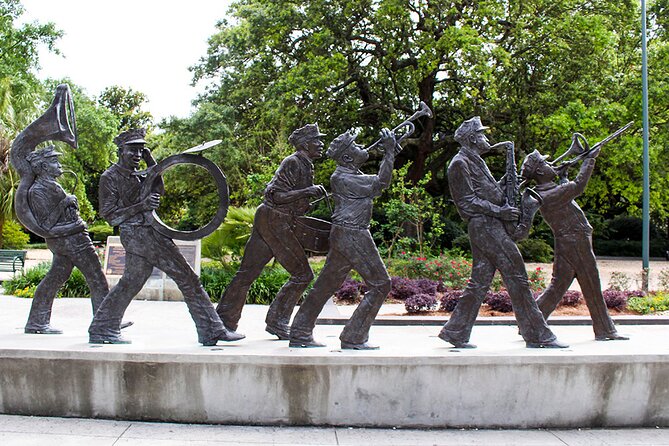
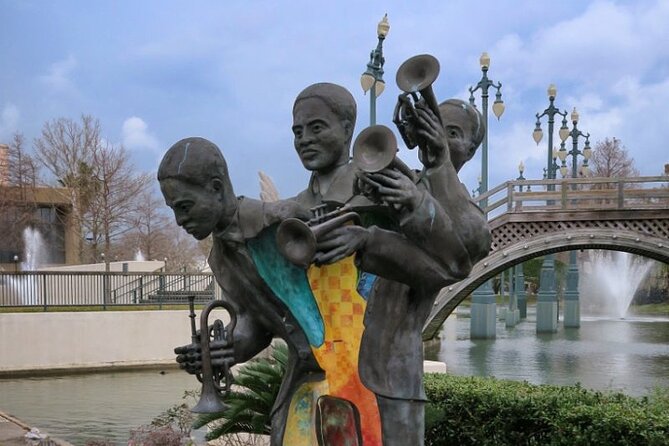
Your first stop is the New Orleans Jazz National Historical Park. You’ll spend about 30 minutes here, with free admission included.
The big value of this stop is that it turns familiar names into a map of meaning. The tour focuses on the back stories of major figures such as:
- Moses Hogan
- Mahalia Jackson
- Louis Armstrong
- Buddy Bolden
…and others connected to how New Orleans shaped music.
A good rule of thumb for this stop: don’t only listen for who someone is. Listen for how the guide explains the connections—how a person’s music fits into community life, survival, worship, and public performance. That’s where the tour really starts to feel like more than “music trivia.”
If you’re the kind of person who likes to ask questions, this is a strong place to do it. When the guide is discussing one figure, the conversation often expands into bigger themes: tradition, innovation, and the cultural power of sound in a city built on adaptation.
Stop 2: Congo Square Since 1724, Where Community Life Survived and Shifted
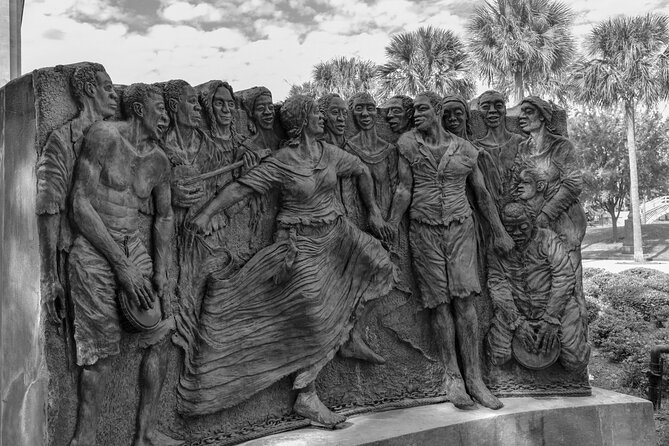
Next comes Congo Square, also about 30 minutes and free admission.
This is the stop that often makes people lean forward. The tour frames Congo Square as a physical place where West African drum circles happened every Sunday since 1724. That’s not just a fun fact. It’s a clue to how the community kept cultural memory alive—through gathering, rhythm, and shared participation.
You’ll also learn why the site mattered socially. Congo Square is described as one of the few places in the U.S. where enslaved people were allowed to mass congregate. That meant real life events could happen there: people could get married, hold religious gatherings, and trade goods.
How to get the most from this stop:
- Look at the space like a stage and a gathering point, not just a landmark.
- Pay attention to the way the guide connects African roots to what became New Orleans music and communal culture.
- Let the guide explain the contradiction: a place rooted in power and restriction, yet still used for family and community.
This is also a great “photo stop,” but don’t treat it like a quick selfie. Even if you take pictures, give yourself a few slow moments while the guide is talking. This is one of those places where standing still helps the meaning land.
You can also read our reviews of more historical tours in New Orleans






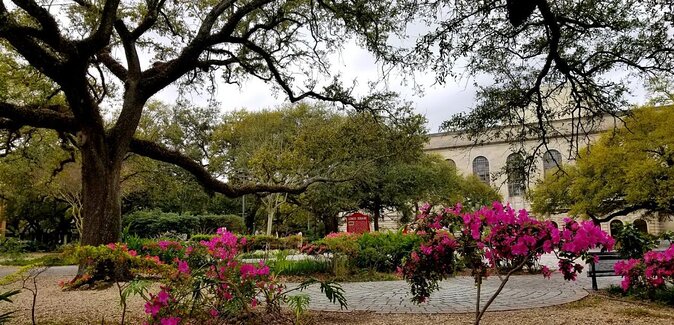
Stop 3: St. Augustine Church and the Tomb of the Unknown Slaves
Your third stop is St. Augustine Catholic Church, with time set aside for about 15 minutes and free admission.
The focus here is the Tomb of the Unknown Slaves on the church grounds. It’s tied directly to Treme and described as a place to pay respects. The tour also frames Treme as the oldest Black neighborhood in the nation, which helps you understand why this stop isn’t just symbolic. It’s part of an ongoing identity.
This is a shorter stop, but it’s not small in impact. If you’re worried about the emotional weight, go in expecting that the guide will keep it grounded and respectful. You’re not being rushed through tragedy. You’re being asked to witness and understand.
A practical tip: come ready to be quiet for a moment. Even if you’re traveling with friends, this stop tends to shift the room into a different gear.
Also, if you’re the type who likes context, this is where the guide’s tone matters. Some guides associated with Anansi’s Daughters are known for blending academic framing with lived cultural perspective, and that kind of approach can help explain why this site sits at the intersection of memory, faith, and community endurance.
Stop 4: Louis Armstrong Park, Plus Why It’s Harder to Find Than You Think

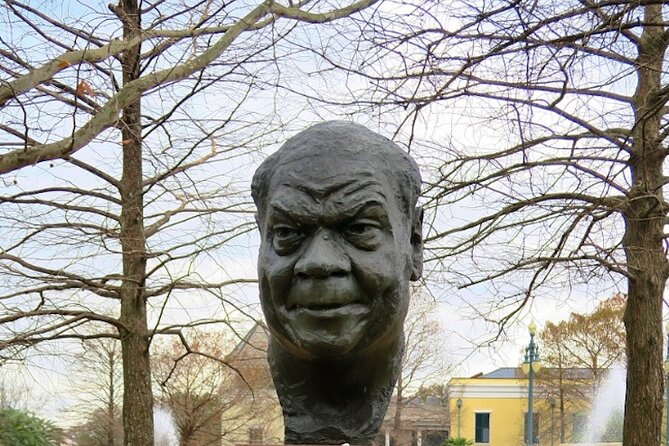
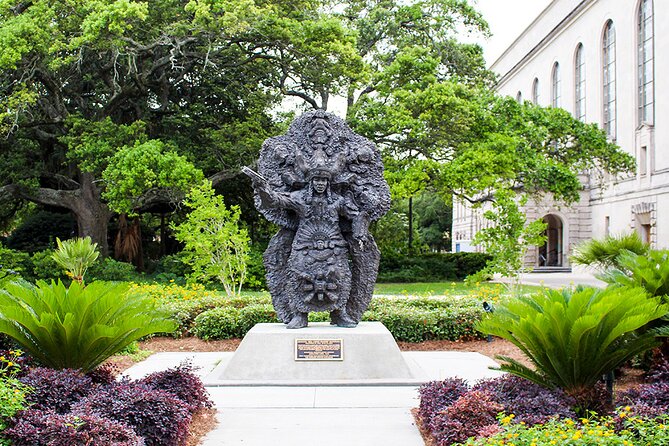
The final stop is Louis Armstrong Park, with about 15 minutes and free admission.
By the time you reach this park, you’ve already learned how music grew from community gathering, worship, and cultural preservation. Now the tour shifts to how Louis Armstrong Park connects to the foundation of New Orleans music, cuisine, architecture, and culture.
That sounds broad, but the tour point is specific: it can be surprisingly hard to find the right idea of a place unless someone explains what to look for. The guide helps you make those connections quickly—so the park feels less like a random green space and more like a piece of the city’s creative engine.
This last stop is great for:
- tying the whole walk together,
- getting one final set of big themes,
- and taking photos with a better story behind them.
If you only remember one thing from the end of the tour, make it this: in New Orleans, the arts aren’t separate from everyday life. Parks, food, buildings, and music are all connected. This stop is where that connection lands.
What the Guides Do That Makes the Walk Work
The tour is offered by Anansi’s Daughters, and the biggest reason it earns a 5-star rating with 51 reviews is the storytelling style. In plain terms: the guides do not lecture. They connect.
A few guide-style traits you may see (depending on who leads your date):
- High energy story delivery that keeps you from zoning out mid-walk
- A personal investment in Treme that shows in the way questions are handled
- A blend of humor and realism, so the mood doesn’t collapse into heaviness only
- Practical pointing-out of Black-owned homes and businesses that remain part of the neighborhood’s present-day life
On some departures, you might hear from guides such as LaToya Papillion or Malika, both of whom are described as bringing deep personal engagement to the stories, along with a strong command of the area’s cultural context. One guide is described as combining Vodou practice with academic grounding, which tells you the interpretation isn’t one-note.
If you want a tour where the guide helps you see what’s in front of you, this is a strong fit.
Timing: How the 1 Hour 45 Minutes Actually Feels in Real Life
This is a structured walk: four stops with time set aside for each. That structure is part of the value because it stops you from spending the trip guessing where to look.
Here’s the shape:
- Stop 1: about 30 minutes
- Stop 2: about 30 minutes
- Stop 3: about 15 minutes
- Stop 4: about 15 minutes
That totals to about 1 hour 30 minutes for the listed stops, with the rest going toward walking between them, brief orientation, and questions. In other words, it feels like a focused neighborhood walk, not a long slog.
Weather can also matter. The experience is described as requiring good weather. If conditions are poor, you’ll be offered a different date or a full refund. That’s worth taking seriously in New Orleans because plans can shift quickly.
Who This Tour Is For (and Who Might Prefer Something Else)
This tour is a good match if:
- you want Black history that’s tied to specific places,
- you like music and community stories that connect to geography,
- you want a guided walk that doesn’t assume you already know the neighborhood,
- you enjoy asking questions and getting answers in context.
It’s also a solid option for first-timers who want meaning fast. You’ll leave with a mental map of how Jazz and community life connect through Treme and nearby landmarks.
You might consider a different kind of tour if:
- you want more time for museums inside buildings,
- you dislike walking on a set schedule,
- you prefer a lighter tone overall. Some stops deal with slavery and memory, so it’s emotionally serious even when the guide is warm and engaging.
Should You Book Black History & Treme Neighborhood Walking Tour?
I’d book it if your goal is to understand New Orleans through the places where community life happened. The route is efficient. The stops are important. And the guides bring a storytelling approach that makes the setting feel real.
You’re paying $40 for a guided interpretation where several stops include free admission, so you’re not paying to enter a building—you’re paying for someone to help you see what you’re standing in front of.
Last decision tip: if you can handle a respectful, sometimes heavy historical lens, this walk is one of the best ways to get a quick, powerful sense of Treme and how music, faith, and freedom shaped the city.
FAQ
How long is the Black History & Tremè Neighborhood Walking Tour?
It lasts about 1 hour 45 minutes (approx.).
Where does the tour start?
The tour starts at 801 N Rampart St, New Orleans, LA 70116, USA.
What time does the tour begin?
The start time listed is 10:30 am.
How much does the tour cost?
The price is $40.00 per person.
Is the tour in English?
Yes, it’s offered in English.
Are the ticket and admission fees free at the stops?
The tour highlights include stops with admission tickets listed as free.
Is this tour suitable for most people?
Yes, most travelers can participate.
What’s the group size?
The tour has a maximum of 28 travelers.
What happens if the weather is bad?
The experience requires good weather. If canceled due to poor weather, you’ll be offered a different date or a full refund.