REVIEW · NEW ORLEANS
Self Guided Walking Tour of New Orleans’ Historic Garden District
Book on Viator →Operated by VoiceMap Audio Tours · Bookable on Viator
Garden District mansions are fun to decode. This self-guided walk pairs VoiceMap audio with turn-by-turn location prompts, so you can explore at your own tempo while learning what you’re seeing.
I like two things most: the offline maps and audio mean you’re not hunting for signal in a neighborhood full of tall trees and stone walls. And you can take it at your own pace, pause for photos, and start again without feeling rushed.
The one real consideration is pavement. Sidewalks and corners can be uneven, so if you have walking limits, plan slower stops and watch your footing—your phone battery matters too.
In This Review
- Key highlights you’ll feel fast
- Why This Garden District Walk Works on Your Time
- Start at Rink Shopping Center: Get Oriented Fast
- Briggs-Staub House and the Opera Guild Home: Architecture With Movie Cred
- McGehee School to Buckner Mansion: Where the Neighborhood Gets Serious
- Seven Sisters Lore: The Myth You’ll Hear, and Why It Matters
- Pritchard-Pigot, Carroll-Crawford, and Warwick Manor: Not Every House Tells the Same Story
- Camp and Third Street to Montgomery-Hero House: Rail Power in Plain Sight
- Walter Grinnan Robinson House: The First Indoor Plumbing Moment
- Commander’s Palace and the Finish at Lafayette Cemetery No. 1
- Price and Value for a 90-Minute Audio Stroll
- Tips That Make the Walk Smoother
- Who Should Book This Self-Guided Garden District Walk
- Should You Book This Self-Guided Garden District Walk?
- FAQ
- How long is the self-guided Garden District walking tour?
- Where does the tour start and end?
- What is the price?
- What language is the tour audio in?
- Do I need an internet connection during the tour?
- What do I need to bring with me?
- Is the tour accessible for most people?
- Is this a group tour or private for my party?
- Are service animals allowed?
- What about cancellation changes or refunds?
- When is the tour available?
Key highlights you’ll feel fast
- Offline VoiceMap access: audio, maps, and geodata available when you’re out walking
- Freedom to pause: you can stop, start, and replay prompts without waiting on a group
- Film and TV pop culture meets architecture: Django Unchained shows up, plus American Horror Story on a major mansion
- A quick hit of real civic history: Crescent City Railroad leadership and the first indoor plumbing home
- A comfortable time block: about 1 hour to 1 hour 15 minutes for the full route
Why This Garden District Walk Works on Your Time
This isn’t a “march and listen” kind of tour. It’s a self-guided loop built around a simple idea: you’re walking through the Garden District anyway, so you might as well get audio that kicks in as you reach key spots.
The duration is short enough to fit between meals or between other New Orleans plans—think around 1 to 1 hour 15 minutes. Most of the route is designed as an easy-paced stroll, and you’re not stuck with a fixed group schedule. One nice touch is that the audio prompts align with your location in the app, so you’re not constantly guessing if you’re at the right corner.
And yes, you can move slower if you want to read details on facades or linger on photo angles. This format works especially well if you want information without the pressure of keeping up.
You can also read our reviews of more walking tours in New Orleans



Start at Rink Shopping Center: Get Oriented Fast
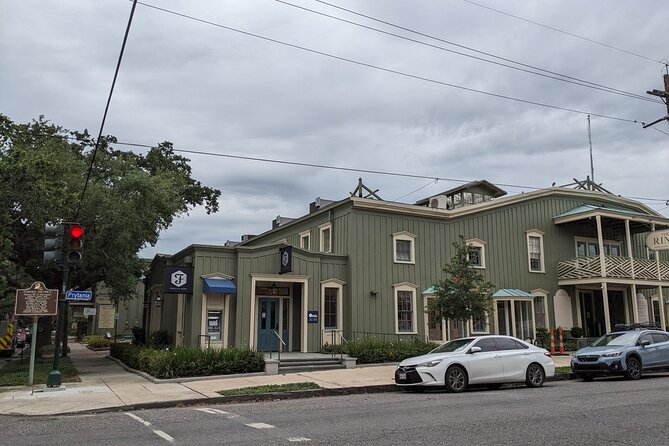
Your tour begins outside Rink Shopping Center at 2727 Prytania St. You’ll spot the Garden District sign, which makes a great “okay, I’m in the right place” moment.
From there, the directions guide you down picturesque streets with a steady flow of pass-by architecture and a handful of true focus stops. I find the opening helpful because it sets the tone: this isn’t just pretty homes. It’s a neighborhood where design details and local stories sit right on the sidewalk.
If you’re arriving from elsewhere in New Orleans, this is also a practical start point. It’s listed as near public transportation, so you can stitch this walk into a day without extra hassle.
Briggs-Staub House and the Opera Guild Home: Architecture With Movie Cred
Early on, you’ll get a preview of what the Garden District is about. You’ll pass the Briggs-Staub House, which is one of those “look up” moments. Even without a long stop, it helps you train your eyes for later details.
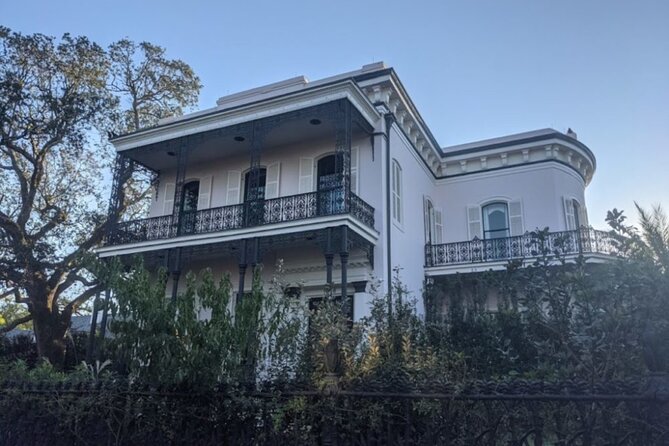
Then you reach the New Orleans Opera Guild Home, an 1850 Greek Revival double gallery. If you’re a film fan, this one has extra attention because it appeared in Django Unchained. The audio gives context while you’re standing there, so you can connect what you see on the street with the cultural moment you may recognize from the screen.
What I like here is the mix: you get architecture basics without needing a class. Greek Revival typically means you’ll notice strong lines, formal proportions, and that classical influence. In a neighborhood like this, those design choices stop feeling random.
McGehee School to Buckner Mansion: Where the Neighborhood Gets Serious
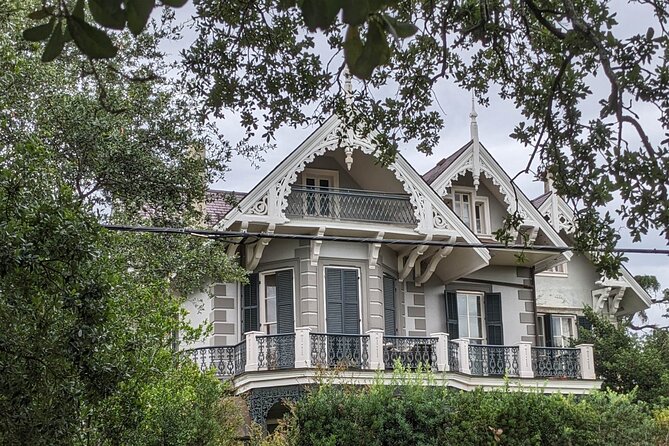
You’ll pass Louise S McGehee School, which adds an educational thread to the stroll. It’s not always what people picture when they think about Garden District “houses,” but that institutional presence helps you understand the area as a living community, not only a photo set.
A few steps later you hit Buckner Mansion. This is a major stop because it’s described as the largest house built before the Civil War. It’s also known from American Horror Story, which gives you a ready-made reason to pay close attention to scale and layout.
Here’s how I suggest you use this moment: slow down and compare what you’ve already seen. The Garden District sells elegance, but Buckner Mansion is where that elegance turns into weight and presence. Even if you’re not a history buff, it’s hard not to feel the “bigger than the rest” energy.
Seven Sisters Lore: The Myth You’ll Hear, and Why It Matters
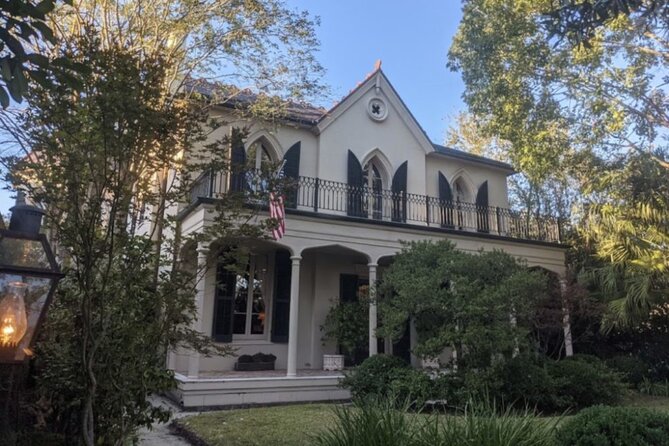
You’ll pass the Seven Sisters houses, and the audio tackles a common story about them. You’ll get a myth-busting angle that helps separate neighborhood lore from what’s more likely in how people actually built and lived in the past.
I like this stop because it models something useful for the whole walk: don’t just collect facts, also notice how stories form. In a place full of charming legends, one good reality check makes the rest of the neighborhood feel more real.
Then you’ll keep moving past more elegant residences like the Pritchard-Pigot House—which the audio notes might give off a frat-house vibe—and other architectural variations along the route.
You can also read our reviews of more guided tours in New Orleans






Pritchard-Pigot, Carroll-Crawford, and Warwick Manor: Not Every House Tells the Same Story
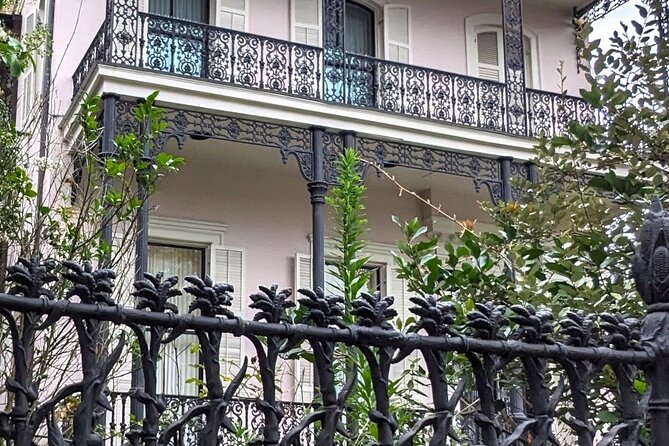
This midsection is where the Garden District stops being “one style” and starts feeling like a neighborhood with different tastes, eras, and influences.
As you walk, you’ll pass:
- Pritchard-Pigot House, framed with a playful description while still keeping it tied to architectural context
- Carroll-Crawford House, blending into the surrounding elegance in a way that makes the street look cohesive
- Warwick Manor, another distinctive residence that adds variety to the visual rhythm
These are all pass-by moments, not long museum-style stops. But the audio makes them worth it because it nudges you to look for details instead of just admiring from street level. With mansions, small things matter: symmetry, gallery shapes, rooflines, and how the facade relates to the sidewalk.
One practical tip: take a quick 10-second sweep of each facade. If you’re only looking at one spot, you’ll miss the features that the narration is trying to point out.
Camp and Third Street to Montgomery-Hero House: Rail Power in Plain Sight

You’ll walk past the corner of Camp and Third Street, which is more than a random intersection. In a walking tour like this, corners help you “feel the neighborhood grid,” and they cue you for what’s coming next.
Then comes Montgomery-Hero House, constructed for Archibald Montgomery, described as president of the Crescent City Railroad. That detail does something important: it connects a residential neighborhood to the people who shaped the city’s economic engines.
If you’re trying to understand why these homes look the way they do, these kinds of connections matter. Architecture doesn’t float in a vacuum. It reflects the wealth, ambition, and networks of the period.
Walter Grinnan Robinson House: The First Indoor Plumbing Moment
This is one of those stops you’ll remember because it’s specific. You’ll visit the Walter Grinnan Robinson House, noted as the first home to feature indoor plumbing.
Even if you don’t care about plumbing as a topic, this is a smart kind of “history lesson.” It makes everyday life part of the story. People often think of big houses as only about grand entrances and fancy parlors. Indoor plumbing is about routine. It’s about comfort. It’s about changing what daily life could look like.
I also like that the audio keeps the focus on significance and what it meant for daily living, not just the tech-sounding label.
Commander’s Palace and the Finish at Lafayette Cemetery No. 1
As you continue, you’ll pass Commander’s Palace, a famous Garden District restaurant. This is a pass-by, so you won’t be touring anything inside, but it adds a modern link: the neighborhood still matters, still attracts attention, and still anchors plans.
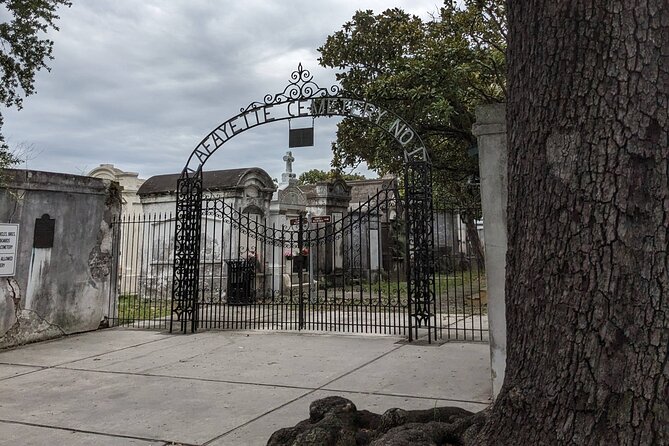
Your tour ends outside Lafayette Cemetery No. 1 at 1427 Washington Ave. That finish is a good design choice. After an hour of houses and lore, the cemetery offers a quieter button to the experience—another kind of landmark that helps you see the Garden District as a place with layers.
Price and Value for a 90-Minute Audio Stroll
The price is $7.49 per person, which is a small number that adds up to real flexibility.
Here’s why I think it’s good value:
- You get lifetime access to the tour content, so you can repeat it without paying again.
- You can use the VoiceMap app on Android and iOS.
- You get offline access to audio, maps, and geodata, which reduces stress and wasted time.
- The route is short, so you’re not paying for a half-day experience you might not need.
Is it as “hands-on” as a live guide? No. But for the cost, you’re buying a guided narrative that stays with you while you walk and look.
Tips That Make the Walk Smoother
A few small things help a lot:
- Charge your phone fully before you start. The narration and map features depend on it.
- Watch for uneven pavements at corners and along sidewalks, especially if you’re thinking about mobility aids.
- Don’t feel locked into one speed. The setup is built for stop and start pacing.
- If the narration feels a bit slow, you may be able to adjust audio speed in the app (some people prefer it that way).
Also, if you’re someone who likes humor in tour audio, you might catch playful lines in the prompts. That kind of light touch makes the walk feel less like homework.
Who Should Book This Self-Guided Garden District Walk
This tour fits best if you like:
- Couples and solo travelers who want a shared experience without managing a group
- Anyone who prefers information delivered in short chunks while walking
- People who want to spend more time where the architecture catches their eye
- Travelers who want less social pressure than a live group setting
One note for driving: it’s primarily a walking experience, and the route may include areas affected by one-way streets. If you choose to drive instead, you may need small reroutes, but the audio concept can still work if you adapt carefully.
Should You Book This Self-Guided Garden District Walk?
I’d book it if you want a Garden District overview that stays flexible. For the price, the combo of offline VoiceMap navigation and a strong set of architecture-and-story stops is a practical win, especially if you’re trying to keep your day moving.
I’d think twice if your priority is a guided “inside access” tour. This is mostly exterior viewing and pass-by moments, plus key stops on specific buildings and the cemetery finish. And if your mobility needs are sensitive, plan for sidewalk unevenness.
If you want a thoughtful, self-paced way to see the Garden District without paying for a live guide, this one is an easy yes.
FAQ
How long is the self-guided Garden District walking tour?
It takes about 1 hour to 1 hour 15 minutes to complete, depending on how often you stop.
Where does the tour start and end?
The tour starts outside Rink Shopping Center, 2727 Prytania St. It ends outside Lafayette Cemetery No. 1 at 1427 Washington Ave.
What is the price?
The tour costs $7.49 per person.
What language is the tour audio in?
The tour is offered in English.
Do I need an internet connection during the tour?
You can use offline access for audio, maps, and geodata in the VoiceMap app.
What do I need to bring with me?
You’ll need your smartphone. Headphones are not included, and the tour info specifically lists smartphone and headphones as not included.
Is the tour accessible for most people?
It notes that most travelers can participate, but the route may have uneven pavements, which could affect those with walking challenges.
Is this a group tour or private for my party?
It’s private. Only your group will participate.
Are service animals allowed?
Yes, service animals are allowed.
What about cancellation changes or refunds?
This experience is non-refundable and cannot be changed for any reason.
When is the tour available?
It lists opening hours as 12:00 AM to 11:59 PM, with the availability window shown for 01/26/2024 – 02/16/2027.