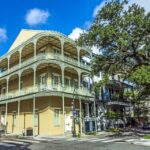
REVIEW · NEW ORLEANS
French Quarter Walking Tour
Book on Viator →Operated by New Orleans Drunk History Tours • Show Me New Orleans Tours · Bookable on Viator
Spooky stories meet major French Quarter landmarks. I like the 2-hour walking route that strings together big names like Jackson Square and the Cabildo, and I like the local guide voice that blends history with ghost, vampire, and voodoo talk plus an EMF meter. One thing to weigh: this isn’t a quiet, facts-only history stroll—it leans into the supernatural.
You start at 941 Bourbon St at the courtyard gates of Lafitte’s Blacksmith Shop Bar, then you work your way through the Vieux Carré’s postcard scenes at a moderate pace. For $35, it can be great value if you want atmosphere and stories more than museum time.
In This Review
- Key things to know before you go
- Meeting at 941 Bourbon St: Lafitte’s Blacksmith Shop is the tone-setter
- The 2-hour Vieux Carré walk: what you actually get on foot
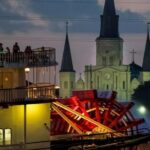
- Jackson Square and the St. Louis Cathedral area: the postcard moment with context
- Cabildo and Presbytere: where the guide’s storytelling does the heavy lifting
- Ursuline Convent: history that adds weight to all the nightlife
- St. Anthony’s Garden: a possible bonus within the walk
- EMF meter, ghost, vampire, and voodoo stories: the fun is real, the proof is not
- Price and value: is $35 a fair deal?
- Group size, pace, and the real-world issues that can change everything
- Should you book the French Quarter walking tour?
- FAQ
- How long is the French Quarter walking tour?
- Where do we meet for the tour?
- What languages is the tour offered in?
- What’s included in the $35 ticket price?
- Can I use the EMF meter or other paranormal equipment?
- If the tour gets canceled, do I get a refund?
Key things to know before you go
- Meet at Lafitte’s Blacksmith Shop courtyard gates on Bourbon Street.
- You’ll see major landmarks like Jackson Square, Cabildo, Presbytere, Ursuline Convent, and St. Louis Cathedral from the walk.
- EMF meter and paranormal equipment are part of the act, but activity isn’t promised.
- You don’t go inside the landmarks, and the route can change.
- Wait time at bars can stretch your tour, so build in a little flexibility.
- Group size is limited (maximum 28), which helps the pacing stay controlled.
Meeting at 941 Bourbon St: Lafitte’s Blacksmith Shop is the tone-setter
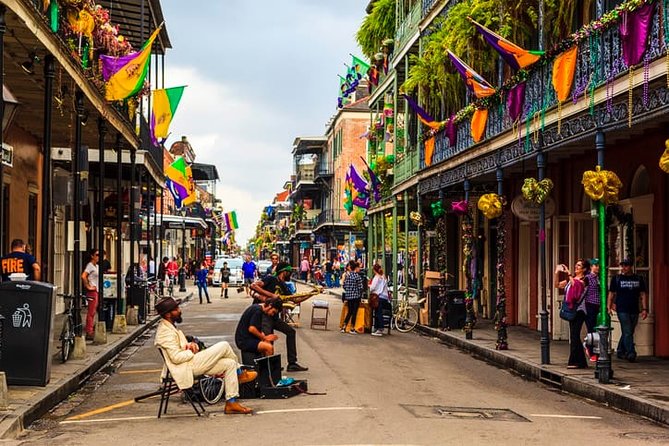
The tour’s starting point is easy to find and it sets expectations fast: you meet at 941 Bourbon St at the gates of the courtyard attached to Lafitte’s Blacksmith Shop Bar. The building itself has serious credentials—designated a National Historic Landmark in 1970 and built between 1772 and 1791 in a French Colonial style (Louis XV townhouse construction using briquette-entre-poteaux techniques). Even if you don’t care about architecture trivia, this matters because it frames what you’re about to hear: the French Quarter has layers, and this tour leans into them.
One practical detail: the tour doesn’t meet inside the bar. You’ll check in at the courtyard gate area, and you should arrive a few minutes early. If you’re late, the guide starts on time and won’t wait. That’s worth planning for on Bourbon Street—your phone battery will be fine until it suddenly isn’t.
You can also read our reviews of more walking tours in New Orleans


The 2-hour Vieux Carré walk: what you actually get on foot
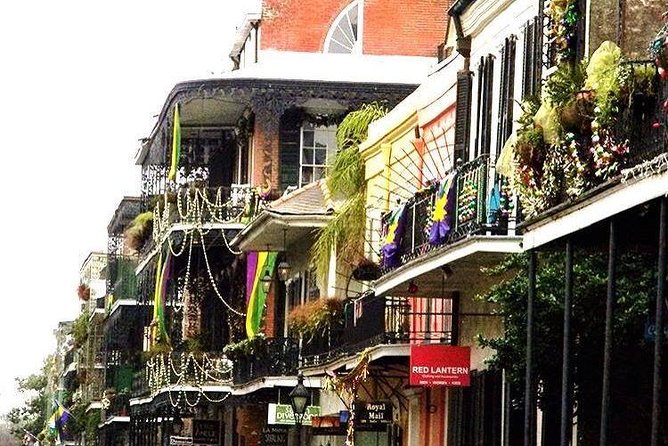
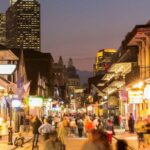
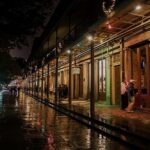
This is a 1–2 hour walking experience on a moderate pace, and it’s designed around seeing several landmark stops in a single loop rather than going deep in one place. You’ll spend time on the Vieux Carré streets—19th-century building lines, Spanish moss–draped trees, and the small plazas that make the neighborhood feel calmer than the surrounding noise.
The big “value move” here is that you get a guide who connects the dots: how the Quarter evolved from its earlier era into today’s nightlife identity. The stories aren’t just entertainment. They’re meant to help you understand why the architecture, street layout, and famous public spaces look the way they do.
You’ll also have chances to view the Quarter’s famous sights without getting stuck in ticket lines—because no entry is gained inside the landmark locations. That keeps the experience moving, though it also means you won’t get the kind of inside, step-by-step interpretation you’d get in a museum or a formal guided museum visit.
Jackson Square and the St. Louis Cathedral area: the postcard moment with context
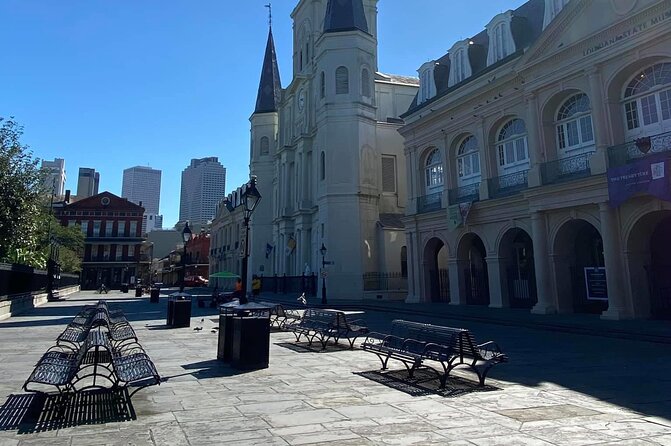
Jackson Square is the kind of place you’ll recognize immediately—open public space, iconic skyline backdrop, and the feeling that people are always there for a reason. On this walk, it’s not treated like a quick stop for photos. It’s used as a story anchor, with your guide connecting the Square to the neighborhood’s bigger timeline.
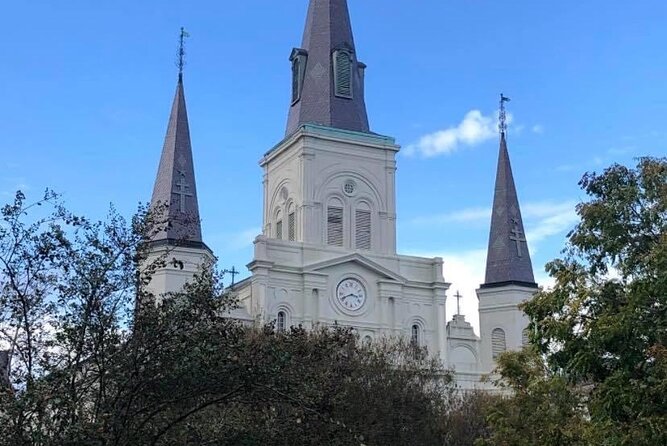
The tour also includes the St. Louis Cathedral as part of the landmark mix. You’ll see it as you pass through the area rather than as a long museum visit, so you’ll want to bring your “street-level observer” mindset. Think: look up, notice the facades, and listen for how the guide explains what you’re seeing.
A small consideration: because this is a walking format with multiple stops, you won’t linger for 30 minutes at one location. If you want slow, photo-heavy time, plan to arrive early to the Quarter later in your trip and revisit on your own.
Cabildo and Presbytere: where the guide’s storytelling does the heavy lifting
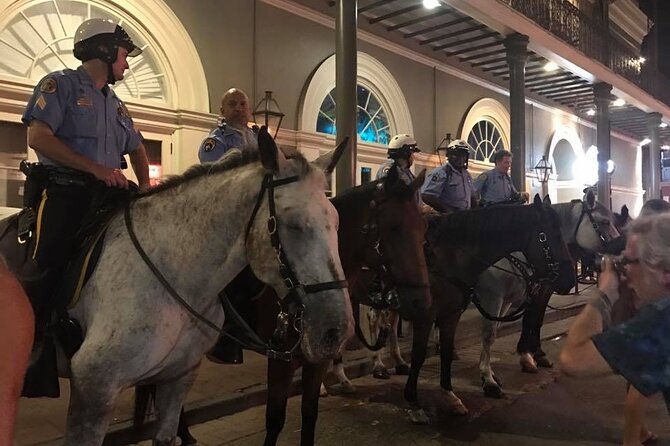
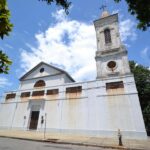
The Cabildo and Presbytere are the kind of landmarks you can walk past on your own and still not fully understand. On this tour, they’re treated like explanation points—stops where your guide gives you the “why it matters” behind what the buildings represent.
Here’s what makes these stops valuable for your trip planning: they help you decode the Quarter’s public history. The French Quarter isn’t just a vibe; it’s governance, faith, and community life stacked over time. When you hear those connections out loud while standing nearby, you’ll remember them later when you’re walking independently.
Also, because the route focuses on viewing from the street, you get the learning payoff without the time penalty. The tradeoff is that if you love close-up, inside-the-room detail, you’ll still want to pair this walk with another activity later—something more hands-on.
Ursuline Convent: history that adds weight to all the nightlife
The Ursuline Convent stop brings a different energy to the tour. If the rest of the French Quarter is loud by nature, this is where your guide can help you feel the contrast—how the neighborhood held onto structure and faith even as the Quarter’s modern reputation grew.
This stop matters for your understanding of the Quarter’s identity. Without it, the French Quarter can start to feel like a single-note party map. With it, you get a reminder that the Vieux Carré has institutional roots, not just entertainment history.
You’ll see it as part of the walking sequence, not as an inside visit. That means you’ll likely appreciate it more if you let the guide’s framing guide your attention. When the history lands while you’re standing outside a historic site, it tends to stick better than reading a paragraph later.



St. Anthony’s Garden: a possible bonus within the walk
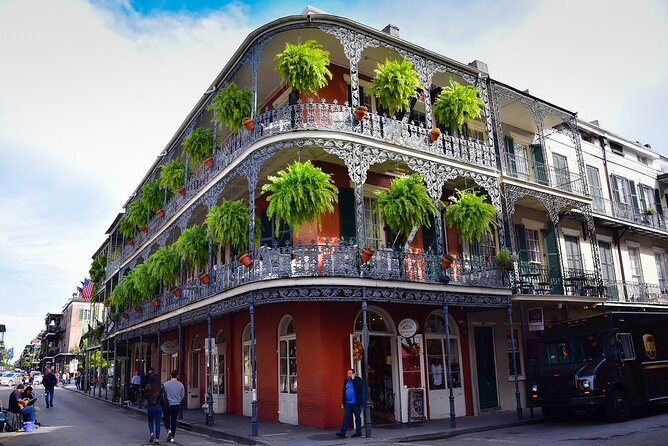
One note that can help you time your day: the tour doesn’t meet at St. Anthony’s Garden, but you may still get to visit St. Anthony’s Garden during the tour. This is the kind of “nice-to-have” extra that can make the walk feel more than a standard landmark checklist.
Because the route can change, don’t treat this as guaranteed. But if you’re the type who likes getting a surprise stop, this is a reason to keep the rest of your schedule light that day.
EMF meter, ghost, vampire, and voodoo stories: the fun is real, the proof is not
This tour is also known as the New Orleans Drunk History Tour, and that name hints at the style: playful, theatrical, and story-driven. The guide uses an EMF Meter (ghost/paranormal detector) during the tour, and you’ll hear ghost, vampire, and voodoo-type stories along the way.
Here’s the key expectation you should hold: paranormal activity isn’t guaranteed. The experience is entertainment, realistic in tone, and designed to spark goosebumps, not to produce evidence you can bring home in a lab.
If you’re tempted to bring your own “proof gear,” you should know the tour’s approach is more structured. Paranormal equipment is allowed during the tour, but it has to be checked out and returned to staff before you leave. Equipment is marked and tracked, and there’s a stated fee if something gets lost or damaged. Also, video recording isn’t allowed during the tour, though photos are encouraged.
So go for the atmosphere. Treat the EMF meter as a prop that guides the narrative, not as a promise.
Price and value: is $35 a fair deal?
At $35 per person, this tour competes well for what you get: a professional guide plus a local guide (per the tour info), multiple major landmarks in a single walk, and the added entertainment layer of the EMF-style paranormal segment.
What you’re not getting is also important. Drinks are not included. Alcohol may be available to purchase along the route, and some stops include places like bar windows or take-out options rather than requiring you to be inside for long.
If you want pure architecture touring, you might feel like you’re paying for a show. If you want the French Quarter to make sense as a place—plus a little spooky fun—then the price can feel right.
The most “value-sensitive” factor is time. Since the tour can last closer to the upper end when bar stops get busy, you should schedule this when you can afford a slight delay.
Group size, pace, and the real-world issues that can change everything
The group cap is 28 travelers, which helps keep it from turning into an endless conga line on narrow sidewalks. The pace is described as moderate, and the tour is designed to fit the allotted time without slow walking.
But New Orleans is not “controlled environment” travel. Streets are old and uneven, and you should expect that. The tour info also warns that guides can’t be responsible for injuries caused by unsafe walking on dilapidated streets, so wear shoes that work on uneven pavement.
One more reality check: there have been reports of problems like late guides and last-minute cancellations in the feedback tied to this experience. That doesn’t mean it will happen to you, but it is a good reason to:
- confirm you have working contact info for day-of updates
- keep your plans flexible that evening
- have an easy backup plan nearby (coffee, a second self-guided walking loop, or a different museum block)
If you’re the type who gets stressed by uncertainty, this is where you’ll feel it. If you travel with a sense of humor and a Plan B, you’ll likely handle it fine.
Should you book the French Quarter walking tour?
Book it if you want a short, high-impact way to see the French Quarter’s famous landmarks—Jackson Square, St. Louis Cathedral, Cabildo, Presbytere, and the Ursuline Convent—while getting a guide narrative that makes the neighborhood’s evolution click. It’s also a good fit if you enjoy spooky story formats and don’t mind that the EMF meter is part of the entertainment style, not a guaranteed paranormal detector.
Skip it (or book a different style tour) if your main goal is straight history with less theatrics. This walk clearly mixes history with ghost, vampire, and voodoo stories, and that focus can feel mismatched if you’re after a quiet academic tour.
FAQ
How long is the French Quarter walking tour?
It lasts about 1–2 hours, with the time possibly stretching longer depending on wait times at bar stops and the tour’s pacing.
Where do we meet for the tour?
You meet at 941 Bourbon St, New Orleans, LA 70116, at the gates of the courtyard attached to Lafitte’s Blacksmith Shop Bar.
What languages is the tour offered in?
The tour is offered in English.
What’s included in the $35 ticket price?
The ticket includes a professional guide and a local guide. Drinks are not included.
Can I use the EMF meter or other paranormal equipment?
Yes, paranormal equipment is allowed, but it must be checked out at the beginning of the tour and returned before you leave the tour. Photos are allowed, but video recording is not.
If the tour gets canceled, do I get a refund?
The tour is non-refundable for guest cancellations. If the operator cancels due to minimum passenger numbers, the info says you’ll be offered an alternate tour or a full refund.
If you want, tell me when you’re going (month + day of week) and whether you care more about history or ghost stories, and I’ll help you decide if this is the right match for your French Quarter plan.