REVIEW · NEW ORLEANS
Walking the Tremé: A Self-guided Audio Tour of New Orleans
Book on Viator →Operated by VoiceMap Audio Tours · Bookable on Viator
Tremé sings loud through headphones. This self-guided VoiceMap walk uses location-aware audio so the narration starts as you reach key spots, turning a simple stroll into a real sequence of stories.
I love the way the route threads culture and music together. You’ll see Backstreet Cultural Museum treasures like Mardi Gras Indian costumes and second line umbrellas, then keep rolling into the Mahalia Jackson Theater and Louis Armstrong Park themes.
One possible drawback: app tech can be finicky. If the download screen freezes for you, you may miss the start, so it helps to plan for a little troubleshooting time.
You start at 801 N Rampart St and finish back at Saint Augustine Catholic Church on Governor Nicholls. It’s a self-paced route in Tremé, listed at about 1 hour, with offline audio and maps built in.
In This Review
- Quick hits before you go
- Tremé through headphones: what this 1-hour GPS route is really doing
- From 801 N Rampart to Governor Nicholls: getting the app working
- War of the Pews at Saint Augustine and why the church matters
- Backstreet Cultural Museum and the African American Museum grounds
- Mahalia Jackson Theater and Louis Armstrong Park in one walking arc
- Street-level notes: when GPS guides you and when you must watch
- Is $9.99 worth it? Value, timing, and who should go
- Should you book Walking the Tremé?
Quick hits before you go
- GPS-triggered narration starts when you’re at each stop
- Backstreet Cultural Museum highlights Mardi Gras Indian costumes and second line umbrellas
- African American Museum grounds connect you to the Tremé Villa Meilleur area
- Mahalia Jackson Theater ties New Orleans roots to gospel fame
- Louis Armstrong Park adds context for Satchmo’s childhood around Tremé
- Offline access helps when cell service gets patchy
Tremé through headphones: what this 1-hour GPS route is really doing
Tremé is the kind of neighborhood where places matter. This tour leans into that idea. Instead of giving you a museum lecture, it places you outdoors and times the audio to where you stand.
The big win here is the structure. You get a guided narrative that moves from religion and community space, to cultural expression, to the stage-world of Mahalia Jackson and the global reach of Louis Armstrong. The result feels like a “story walk,” not a list of landmarks.
Even better, it’s built for wandering at your own speed. The app includes offline audio, maps, and geodata, so you can keep going without constant signal hunting. That matters in New Orleans, where service can be uneven block to block.
You can also read our reviews of more walking tours in New Orleans



From 801 N Rampart to Governor Nicholls: getting the app working

You’ll begin at 801 N Rampart St, New Orleans, LA 70116 and end at Saint Augustine Catholic Church, 1210 Governor Nicholls St, New Orleans, LA 70116. The tour takes place in Tremé and is listed as about 1 hour.
You’ll need your own smartphone—smartphone isn’t included. What is included: the VoiceMap application plus offline access to audio, maps, and geodata, plus directions to the starting point so the route can kick in when you’re standing in the right place.
Two practical tips that can save your day:
- Give yourself extra time at the start to open the app and get the download/connection done before you step off.
- If your phone is overheating or stuck on a download screen, stop trying repeatedly for a long stretch. Switch networks if you can, restart the app, and move closer to where the directions drop you.
Also note the “small group” limit is 10 travelers max, even though this is self-guided. The point: it’s not a crowded, bus-style production.
War of the Pews at Saint Augustine and why the church matters
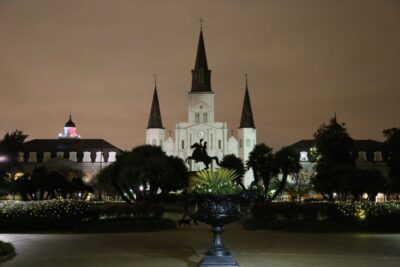
The tour’s opening stop centers on Saint Augustine’s Church and something called the War of the Pews. In 1842, Creoles of color began purchasing pews inside the church for their families’ Sunday worship. Soon after, a campaign emerged among white people to buy pews for their own families.
That’s not just trivia. It explains how worship space became a public battleground. As you walk, the audio framing helps you see the neighborhood through the lens of who had access, who was pushed out, and how community members claimed space even under pressure.
One practical consideration: since the stop involves a church location, you’ll want to be respectful with how you linger outside. The best experience comes from taking the narrative in, then stepping aside so others can pass through.
Backstreet Cultural Museum and the African American Museum grounds
Backstreet Cultural Museum is the “wow” stop. The narration points you toward the museum’s collection of Mardi Gras Indian costumes and second line umbrellas, plus photographs that once lived on Tremé’s backstreets.
Here’s what to watch for as you listen:
- The costumes aren’t random eye-candy. They’re part of a living cultural tradition tied to community identity and street performance.
- Second line umbrellas carry a visual language too, and the route helps you connect the objects to the stories behind them.
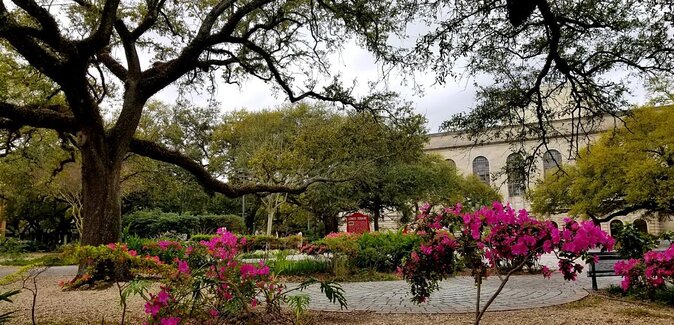
Next you’ll move to the New Orleans African American Museum grounds, described as tree-shaded. The audio points out the Tremé Villa Meilleur’s original kitchen dependencies and several homes that reflect a range of local building styles.
This stop is valuable because it grounds the big stories in everyday architecture. You’re not only hearing about culture and fame—you’re seeing how homes and outbuildings shaped life in Tremé. Even if you don’t go inside every structure, the route gives you a sense of scale and place that photos usually miss.
Mahalia Jackson Theater and Louis Armstrong Park in one walking arc

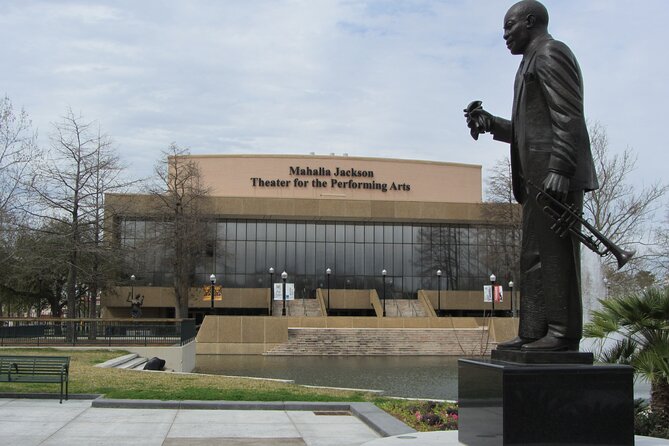
After the museum segment, the tour shifts to music and performance. Mahalia Jackson takes center stage through The Mahalia Jackson Theater of the Performing Arts. The narration explains that she cut the highest-selling gospel song in history, reached an international stage, and never forgot her New Orleans roots.
This is a smart pairing for Tremé. Mahalia’s story turns gospel from a local sound into a worldwide voice, while still anchoring it back to where she came from. As you walk, the arc feels like a reminder that fame didn’t erase community.
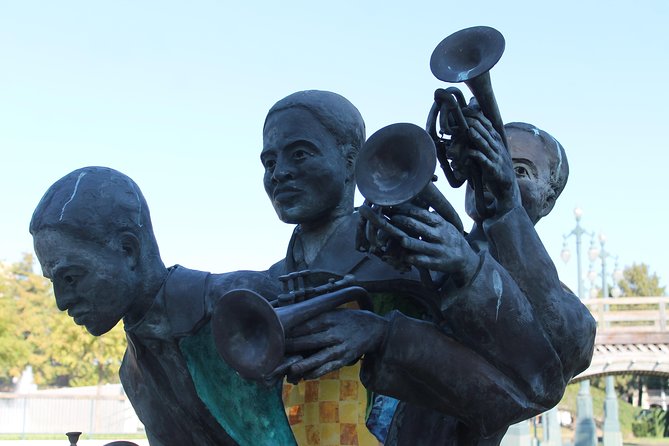
Then you connect to Louis Armstrong Park and Armstrong’s local beginnings. The late Louis Armstrong is described with two nicknames—Satchmo and Pops—and a birth year of 1901, just outside Tremé. The audio also frames his upbringing among churchgoers, hustlers, pimps, and musicians.
That mix matters. It’s a reminder that Tremé wasn’t one single “type of story.” It held contradictions, creativity, survival, and swagger—all in the same neighborhood orbit.
You can also read our reviews of more guided tours in New Orleans






Street-level notes: when GPS guides you and when you must watch
VoiceMap uses GPS to detect your location and start the right narration for where you are. That makes the walk feel interactive without you needing to press buttons every few minutes.
Still, you should stay street-smart:
- One segment may route you across areas where the crossing is not ideal for pedestrians. Don’t assume the road will magically provide a safe crossing point. Use the safest crossing you can find.
- GPS links can be temperamental. If your phone map view or the tour trigger feels off, pause, make sure location services are on, and verify you’re near the stop point.
If the tour refuses to start at the beginning, take it seriously but don’t panic. One reported fix was to contact VoiceMap support at [email protected] with details of the account used to redeem the tour, since they can help troubleshoot based on your redemption.
Is $9.99 worth it? Value, timing, and who should go
At $9.99 per person, this is one of the more affordable ways to get a story-driven route through Tremé without booking a guided group. The value isn’t only the price. You also get lifetime access to the Walking the Tremé tour, plus offline audio and maps.
The downside of low cost is that you carry the tech load. You’ll need your own smartphone, and you’ll need to be willing to manage a self-guided app on city sidewalks.
This tour fits best if you:
- Want an easy, roughly 1-hour walk with a clear narrative flow
- Like cultural stops tied to places you can actually see
- Prefer to go at your own pace instead of syncing with a group schedule
It might be a weaker fit if you hate GPS-triggered audio or you’re traveling with a phone that has spotty download reliability.
If you do go, I’d treat it like a “headphone scouting walk.” Listen first, look second, then let your feet do the rest of the exploring after the narration fades.
Should you book Walking the Tremé?

I think it’s a strong pick for a short, high-impact Tremé experience—especially if you want Mardi Gras Indian visual culture, gospel-level storytelling, and Armstrong-era context all within one self-guided route.
Book it if you’re comfortable using VoiceMap on the street and you can spare a little time at the start to make sure the app properly downloads. Skip it if your plan depends on the tour starting instantly every time no matter what, since tech glitches can happen and can delay the beginning.