REVIEW · NEW ORLEANS
Private Soul of NOLA 3-Hour Citywide Tour
Book on Viator →Operated by Soul of Nola · Bookable on Viator
Want a one-stop city loop? This private 3-hour ride strings together classic neighborhoods and major photo streets with an air-conditioned vehicle, so you’re not stuck overheating between stops. I like that the guide keeps the focus on what you’re seeing as you pass landmarks and then explains how the city got here.
Two things I’d especially flag: the chance to see City Park’s mature live oaks without the long walk slog, and the way the guide can steer the tour toward your interests, whether that means architecture, music, or the harder parts of New Orleans’ story after Katrina. One consideration: with only three hours, you’re making quick stops for photos and orientation rather than lingering for long museum visits or big walking tours.
In This Review
- Key highlights worth caring about
- Why this 3-hour private NOLA tour works in real life
- Where you meet: 400 Royal St and the feel of an easy start
- French Quarter first: color, edges, and street-level stories
- Marigny and Bywater: downriver neighborhoods with real change
- Bayou St. John and City Park: live oaks, shade, and a breather
- Up St. Charles Avenue to the Garden District: mansions and that slow southern rhythm
- Passing Canal Street: Warehouse Arts, the WWII Museum zone, and downtown edges
- Comfort, pace, and how the guide keeps it from feeling scripted
- Price and value: $450 for up to 4 people
- Who this tour suits best (and who should consider alternatives)
- Should you book Soul of NOLA’s 3-hour citywide tour?
- FAQ
- How long is the Private Soul of NOLA citywide tour?
- Is this tour private or shared?
- Where does the tour start and end?
- Is pickup available from hotels or vacation rentals?
- What language is the tour offered in?
- Do I get a mobile ticket?
- What areas are covered during the tour?
- When will I get confirmation after booking?
- Are service animals allowed?
- What happens if the tour is canceled due to bad weather?
- Is the tour refundable if I cancel for other reasons?
Key highlights worth caring about
- Private, group-only touring with a vehicle for the full 3 hours
- French Quarter to Garden District in one shot, so you get bearings fast
- City Park live oaks and Bayou St. John viewed in a practical, low-effort way
- Marigny and Bywater with a clear sense of how the city’s story changed over time
- St. Charles Avenue through the University area and up to the Garden District
- Music and history talk that can feel conversational, with guides like Cassandra, René, and Carl named by prior groups
Why this 3-hour private NOLA tour works in real life
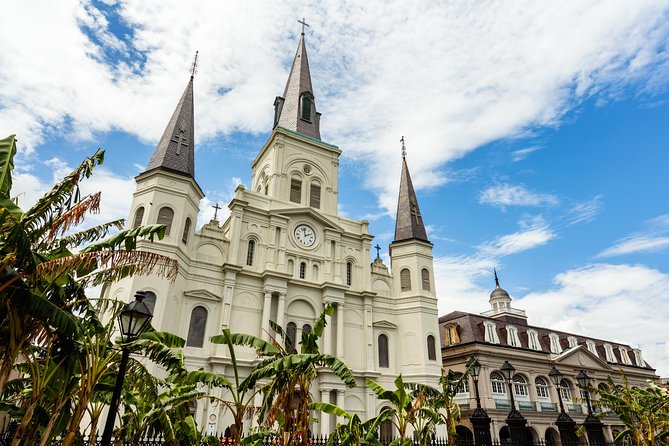
New Orleans has a funny way of expanding on you. One turn leads to a surprise street, then another, and suddenly you’ve wandered into somewhere you didn’t plan to be. A private driving tour solves that problem with structure. In about three hours, you get a wide, usable overview: the French Quarter, downriver neighborhoods, City Park, St. Charles, and the Garden District—plus you pass through the Warehouse Arts District and the Central Business District edge near Canal Street.
What makes this tour especially practical is the transportation style. You’re in an air-conditioned vehicle for long stretches, with a local guide narrating the scene as you go. That matters in New Orleans. Heat, humidity, and afternoon sun can be exhausting fast, even when you’re excited.
And because it’s private (up to four people), you’re not trapped in a one-size-fits-all pace. If your group wants more talking time at a certain stop or prefers shorter photo stops elsewhere, you can typically steer the balance. That’s the kind of freedom that makes a tour feel like it belongs to your day, not theirs.
You can also read our reviews of more private tours in New Orleans



Where you meet: 400 Royal St and the feel of an easy start
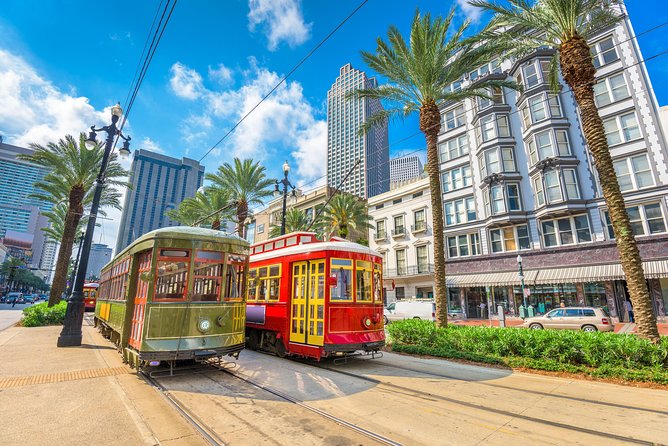
You’ll meet at 400 Royal St. The tour ends back at the meeting point, so you don’t need to worry about getting stranded across town after the last stop.
Pickup is offered, and you can select your hotel or vacation rental from a list or enter your address if it’s not on the list. In some cases, the operator may set a predetermined meetup location instead. If you’re staying just off a main route, I’d treat this as a heads-up to double-check where the van will actually pick you up.
For me, the best part is how straightforward it is: you’re not piecing together public transit routes, you’re not dragging luggage through crowded streets, and you’re not relying on spotty rideshare timing in peak hours. Near public transportation is also listed, but practically, you’ll probably enjoy this most with the car plan working smoothly.
French Quarter first: color, edges, and street-level stories
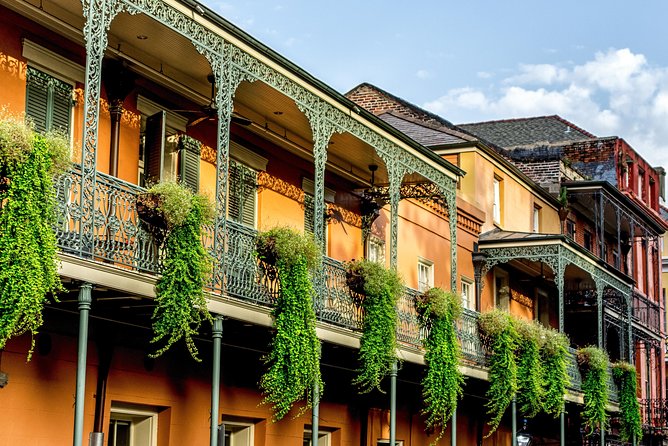
Most good NOLA trips start with the French Quarter. This one does, and for a reason. It’s the city’s earliest signature—brick, balconies, courtyards, street life, and that distinctive sense that the city keeps layering past and present.
Because you’re doing this early in the tour, the French Quarter becomes your visual baseline. When you later see changes in neighborhood layout and architecture style, you’ll recognize what’s different and why. The guide also sets the tone by explaining the neighborhood’s story and what to look for as you move.
One practical perk: groups have mentioned the ability to get out for photos in the French Quarter and then return to the car without turning the day into a long walking marathon. If you want a few clean shots—street signs, ironwork, corner light, balcony angles—this is the kind of moment that works well.
A quick consideration: the French Quarter is not a place where you can see everything in three hours. Think of it as orientation and atmosphere. If you want big-ticket sightseeing inside specific sites, plan for a separate, slower outing on another part of your trip.
Marigny and Bywater: downriver neighborhoods with real change
From the French Quarter, the tour moves downriver into the Marigny and Bywater area. This is where New Orleans starts telling you a different kind of story—more residential, more creative, and more “neighborhood as character” than “monument as centerpiece.”
The best value here is the guided framing. You’ll get a sense of how these neighborhoods’ identities have shifted over the centuries and again in the years after Hurricane Katrina (the tour explicitly mentions the 14 years since Katrina). That doesn’t have to feel heavy, but it does add meaning to what you see. Without context, you might notice just houses, murals, and street rhythm. With context, you notice patterns and changes.
I also like that this leg is built into the loop rather than treated as a separate excursion. Many first-time visitors think they need to “go somewhere else” to understand New Orleans beyond the Quarter. This tour shows you how close that “else” is. Marigny and Bywater are not far, but they feel like a different chapter.
Because time is limited, expect brief stops for photos and viewpoints rather than long strolls. If your group loves wandering, you’ll still want follow-up time on your own.
Bayou St. John and City Park: live oaks, shade, and a breather
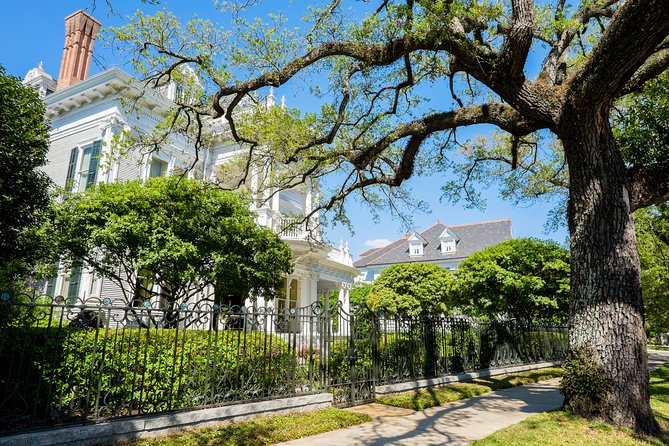
Then you head toward Bayou St. John and City Park, one of the nation’s oldest urban parks. If you’ve ever arrived in New Orleans and felt like you needed a reset, City Park is the kind of place that does that. The tour’s standout detail here is the focus on the world’s largest stand of mature live oak trees.
That may sound like a trivia point, but it changes the whole experience. Live oaks in this setting aren’t just background scenery. They shape the light, the shade, and the mood. A mature oak canopy makes the city feel calmer, like you’re watching life under a ceiling of branches instead of under relentless sun.
A practical win: you’re seeing this in a way that’s easier on your legs. Even if City Park is tempting for a long walk, this tour gets you the big visual payoff quickly. If you’re traveling with mixed ages or different mobility levels, that matters.
What to watch for: when your guide points out the oaks and park edges, you’ll start noticing how trees and park design influence the neighborhood experience. That helps a lot later, when you realize New Orleans’ “outdoor rooms” are just as important as its streets.






Up St. Charles Avenue to the Garden District: mansions and that slow southern rhythm
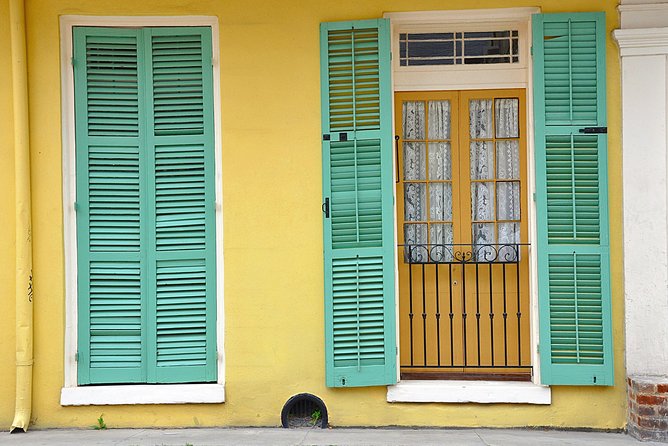
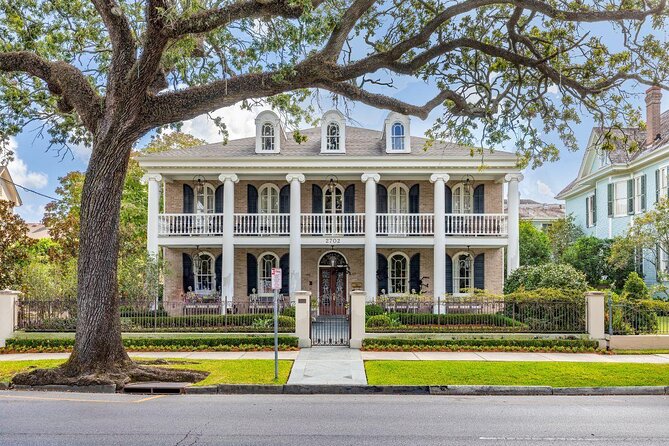
From City Park, the route moves upriver along St. Charles Avenue through the University area into the Garden District. This part of the tour is basically the postcard New Orleans loves to show you: stately homes, wide avenue sightlines, and a feeling of grand scale.
But the value isn’t only in the visuals. It’s how a guide connects streetscape details to the city’s growth. St. Charles Avenue is the backbone here, and your guide uses it to show you where different neighborhoods sit in the city’s hierarchy—where people lived, how the city expanded, and how the architectural style developed.
This is also where you’ll likely get the most memorable “photo street” moments. Expect opportunities to stop, look, and capture angles that are hard to get if you’re trying to drive and shoot at the same time. If your group enjoys architecture, this leg is often the highlight.
One consideration: the Garden District rewards slower time. A three-hour loop can’t replace wandering the side streets at your own pace. If you love historical homes, plan at least one additional self-guided walk afterward. Use the tour to pick your favorite blocks.
Passing Canal Street: Warehouse Arts, the WWII Museum zone, and downtown edges
Approaching Canal Street, the tour passes through the Warehouse Arts District, near the World War II Museum, and through the Central Business District.
This segment works as your “map making” moment. Up to now, you’ve been focusing on neighborhood texture and big visual streets. Passing these districts helps you understand where the city’s civic and commercial muscle sits, and how the Quarter and uptown areas connect.
I like that you’re not forced into a museum stop here. Even if you plan to visit the WWII Museum on a separate day, seeing the area from the road gives you a better sense of distance, direction, and city layout. It also helps you avoid the common first-time trap: spending too much time in one zone and then realizing the rest of the city is harder to reach than you expected.
If you’re the type who hates time pressure, just know that this is a pass-through. It’s a glimpse and orientation, not a deep visit.
Comfort, pace, and how the guide keeps it from feeling scripted
A driving tour can either feel like a lecture from a bus window, or like a guided conversation with stops. The way this tour is described by prior groups leans heavily toward the second option.
People have highlighted guides such as Cassandra and René, plus Carl in at least one group experience, with strong personality and local depth. One guide’s background was described as including music, and another as having a meteorology background useful for explaining Hurricane Katrina. That kind of mix helps history land in a human way: you’re not just hearing facts, you’re hearing how someone thinks about the city.
You can also expect the tour to flex based on your interests. Some groups have worked in additional photo time and even mention a stop idea like Café du Monde for beignets. Others have arranged stops near places like Hotel Henrietta and dinner destinations later in the day. That points to a real operating style: the guide isn’t treating this like a rigid checklist.
That’s good news for you, because it means you can treat this as your “set the day’s theme” tour. Like, if you want music, you can ask questions that pull you toward Frenchmen Street or jazz venues. If you want architecture, you can request more time on St. Charles and Garden District details.
Just keep expectations aligned: it’s still a 3-hour loop. You’ll get great context and memorable stops, but you won’t finish the city in one sitting. Think of it as your head start.
Price and value: $450 for up to 4 people
Let’s talk money without the hand-waving. The price is $450 per group (up to 4) for about 3 hours.
If you’re traveling solo or as a couple, the cost per person can feel high. But the math changes fast with four people. At full group size, that’s about $112.50 per person for a private vehicle and a guided, citywide route.
What you’re really buying is time efficiency plus comfort. You’re not spending your vacation learning routes, figuring out where to park, or walking under the sun for every transfer. You’re also buying a local perspective in a concentrated format. For many people, that’s the difference between enjoying the trip and feeling like you’re constantly managing logistics.
For best value, I’d book this if:
- your group wants a first-day orientation,
- you’d rather ride than walk for long stretches,
- you’re traveling with mixed ages or mobility levels,
- you want a guide’s perspective while you’re seeing multiple neighborhoods.
If you’re the type who wants to spend the whole day wandering on your own and you’re comfortable with public transit, a private car tour might feel unnecessary. But for most first-timers, this is one of the smarter ways to build a foundation for the rest of the trip.
Who this tour suits best (and who should consider alternatives)
This private citywide format is ideal when you want breadth fast. It’s especially good if your itinerary includes multiple neighborhoods you might not be comfortable tackling in a short window.
It also makes sense if you’re traveling with a range of ages. One group experience mentioned a multi-generational party, and a vehicle that’s easy to get in and out of was called out as a comfort factor. If your group includes someone who tires quickly, this kind of pacing can be a win.
It may be less ideal if you’re planning to do a lot of indoor ticketed attractions during the tour itself. The tour is structured around driving and short stops. You can absolutely use it to identify what you want to return to later, but it’s not designed to replace a museum day.
Also, because the experience requires good weather, I’d plan this for a day when rain won’t wreck your mood. If weather goes sideways, the operator may offer a different date or a full refund if the cancellation is due to poor weather.
Should you book Soul of NOLA’s 3-hour citywide tour?
Book it if you want a private, air-conditioned overview that hits French Quarter, Marigny/Bywater, City Park live oaks, St. Charles, and the Garden District within one easy loop. It’s a smart value when split among a small group, and it’s a great way to learn what to revisit later.
Skip or rethink it if you’re craving a slow, on-foot day focused on a single neighborhood. This tour is about orientation and context, not about deep, lingering exploration.
If you’re on the fence, here’s the deciding trick: ask yourself whether you want your first New Orleans day to feel like a guided introduction or like a free-for-all. This tour is built for the guided introduction side—and it does it with comfort and personality.
FAQ
How long is the Private Soul of NOLA citywide tour?
It lasts about 3 hours.
Is this tour private or shared?
It’s a private tour/activity. Only your group will participate.
Where does the tour start and end?
The meeting point is 400 Royal St, New Orleans, LA 70130, and the activity ends back at the meeting point.
Is pickup available from hotels or vacation rentals?
Yes. Pickup is offered. You’ll select your hotel/vacation rental from the list or enter the name and address, and in some cases you’ll be met at another predetermined location.
What language is the tour offered in?
The tour is offered in English.
Do I get a mobile ticket?
Yes, a mobile ticket is included.
What areas are covered during the tour?
You’ll start in the French Quarter, continue through Marigny and Bywater, go toward Bayou St. John and City Park, ride along St. Charles Avenue through the University area into the Garden District, and pass through the Warehouse Arts District near the World War II Museum and the Central Business District approaching Canal Street.
When will I get confirmation after booking?
Confirmation is received within 48 hours of booking, subject to availability.
Are service animals allowed?
Yes, service animals are allowed.
What happens if the tour is canceled due to bad weather?
The experience requires good weather. If it’s canceled due to poor weather, you’ll be offered a different date or a full refund.
Is the tour refundable if I cancel for other reasons?
No. The experience is non-refundable and cannot be changed for any reason.