REVIEW · NEW ORLEANS
New Orleans: Daytime City Helicopter Tour
Book on GetYourGuide →Operated by Heli Co New Orleans · Bookable on GetYourGuide
New Orleans by helicopter is the quickest way to change your sense of scale. I love the window-seat views over the Mississippi and key sights like Jackson Square and Caesar’s Superdome, and I also love how the pilot narration turns what you’re seeing into a simple story you can remember. The main drawback to know up front: it’s short, so you’ll want to pick the route that matches how many places you want to spot.
You’ll start at New Orleans Lakefront Airport, get a safety briefing, put on noise-cancelling headsets, and then look down as the city unfolds fast. If you want the biggest wow factor per minute, this tour is built for exactly that.
In This Review
- Key Points That Make This New Orleans Helicopter Tour Worth It
- New Orleans Lakefront Airport: Where This Starts (and Why It Matters)
- Choosing the Right Route: City Tour vs City and Swamp
- The 15-mile City Tour (about 7 to 9 minutes)
- The 30-mile City and Swamp option (about 18 to 22 minutes)
- From the Runway to the Air: What Happens Before You See Anything
- The French Quarter From Above: Jackson Square, Cathedral, Bourbon Street
- Canal Street, the Central Business District, and Superdome Views
- City Park From the Air: Museums, Golf, and Big Layout Clarity
- Fair Grounds and the Events You Can Recognize
- The Swamp Option: Lake Borgne, Marsh Views, and a Few Odd Surprises
- The Pilot Narration: How to Turn Fast Views into Real Learning
- Price and Value: Is $150 Worth It for 8 to 20 Minutes?
- Practical Details: Headsets, ID, Weight Limits, and What to Bring
- Who This Tour Fits Best (and Who Might Skip It)
- Should You Book This New Orleans Helicopter Tour?
- FAQ
- How long is the New Orleans helicopter tour?
- Where do I meet for the helicopter tour?
- What do I get with the ticket?
- Are photos included?
- What identity do I need to bring?
- How does the weight limit work?
- Is the tour suitable for wheelchair users?
- FAQ
- Is the tour narration in English?
- What should I do if the flight is canceled due to weather?
Key Points That Make This New Orleans Helicopter Tour Worth It
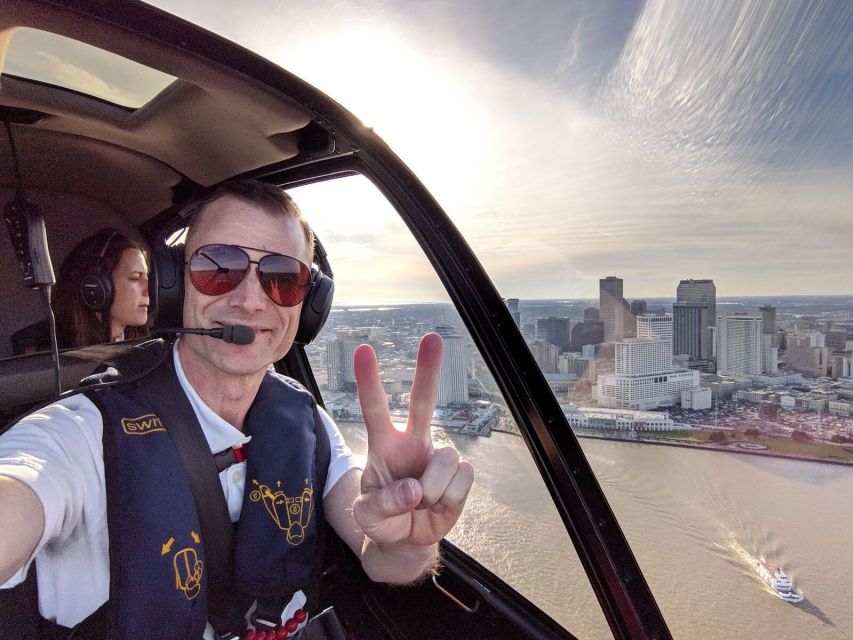
Every seat is a window seat
You’re not stuck in the middle with a partial view. Your seat is the view.
Pilot-led narration in English
It’s not just scenery. You get live context as you fly.
Two route choices
The short City Tour focuses downtown and parks, while City and Swamp adds Lake Borgne and more landmarks.
French Quarter + Mississippi in one flight
You get aerial angles on Bourbon Street and the river that you simply can’t recreate on the ground.
Smooth, confidence-building staff
Multiple check-in and in-air experiences highlight professional, safety-minded guidance.
Noise-cancelling headsets included
That helps you actually hear the pilot while you take photos.
New Orleans Lakefront Airport: Where This Starts (and Why It Matters)

This tour begins at New Orleans Lakefront Airport in the main terminal, in the same building as Messina’s at the Terminal. That’s a practical setup because you’re close to the action—about 15 minutes from the French Quarter—so you’re not burning half a day just to reach the airport area.
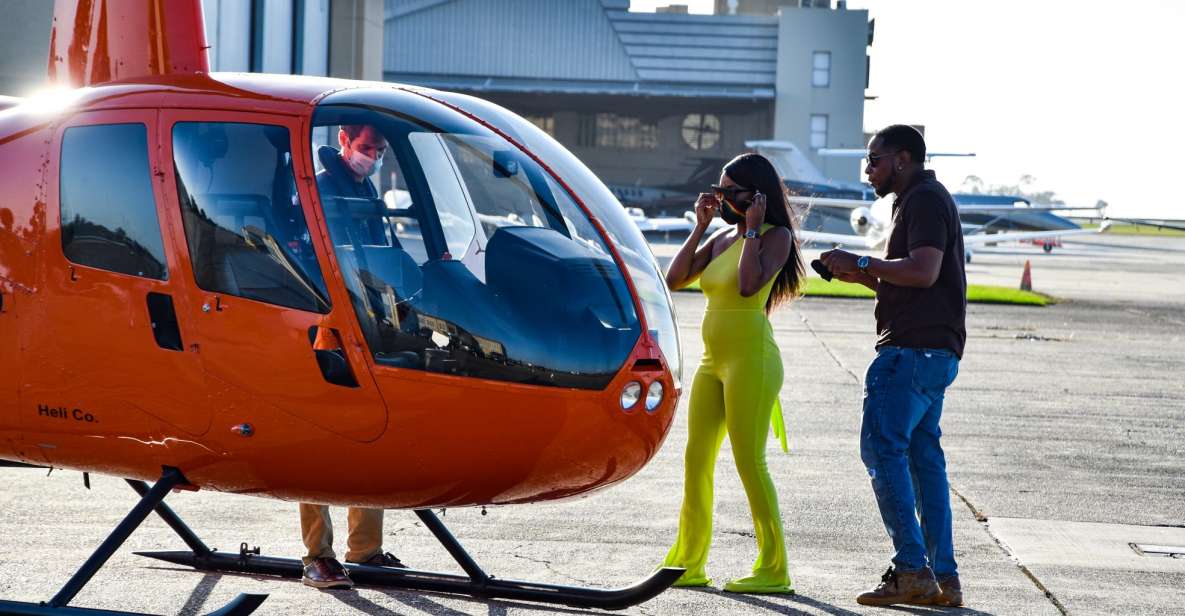
Before you fly, you’ll do a safety briefing and get fitted with noise-cancelling headsets. Then it’s straight to the helicopter, where you’re handed the best seat on the plane: every passenger has a window seat. For a short flight, that detail matters more than people expect. You’re trying to spot streets, landmarks, and river bends fast, and windows turn the minutes into real memories.
One more thing you’ll feel right away is pacing. The whole experience is built around minutes, not hours. If you’re the type of traveler who likes to linger, you may find the duration a little too tight unless you pick your route carefully.
You can also read our reviews of more city tours in New Orleans


Choosing the Right Route: City Tour vs City and Swamp
You effectively choose your “New Orleans chapter” when you choose your route.
The 15-mile City Tour (about 7 to 9 minutes)
This option is designed for the highlights. You’ll fly over the French Quarter area (including Jackson Square, St. Louis Cathedral, the French Market, and Bourbon Street) and then continue over the city’s core: Canal Street, the Central Business District, and Caesar’s Superdome.
Then you move out toward the big green spaces—City Park—with aerial views that make it easier to understand how these areas connect. You’ll also pass by Fair Grounds, a place tied to major local events.
If you’re short on time or you’re mainly after famous New Orleans landmarks from above, this route is the cleanest choice.
The 30-mile City and Swamp option (about 18 to 22 minutes)
This is the longer flight and the bigger story. You still get downtown landmarks, but you also add the swamps along Lake Borgne and some surprising sights on the way.
Along this route, you may spot an abandoned theme park, a NASA rocket building facility, and then the swampland views that give you the Louisiana feel beyond the city. On the return, you fly past Chalmette Battlefield and follow the Mississippi River back toward the French Quarter and Central Business District.
If you’re the type who wants contrast—city textures plus marshy water plus river bends—this is the one.
From the Runway to the Air: What Happens Before You See Anything
After you arrive at Lakefront Airport, you’ll check in and go through the brief process that includes safety instructions. You’ll also be weighed at check-in, because the tour has strict weight limits to keep the aircraft within safe operating parameters.
The rules are clear: each passenger has a strict individual limit of 295 pounds, and the total combined weight for groups of 2–3 people can’t exceed 575 pounds. All passengers are weighed at check-in for weight and balance.
That can feel a bit intense if you’re used to casual check-ins, but it’s also exactly what you want with aviation. This is one of the reasons people talk about feeling safe during the flight, and it’s backed up by feedback naming pilots and praising how professional and reassuring the process felt.
Bring a passport or ID card, and plan to arrive with enough time to handle check-in without stress.
You can also read our reviews of more tours and experiences in New Orleans



The French Quarter From Above: Jackson Square, Cathedral, Bourbon Street

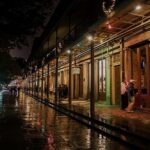
Once you’re in the air, the French Quarter portion is where most first-time helicopter riders instantly “get it.” You’re no longer scanning street corners. You’re looking at patterns—blocks, diagonals, and the way the Quarter sits relative to the river and the larger city grid.
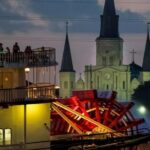
You’ll see Jackson Square and the St. Louis Cathedral from above, plus the French Market and Bourbon Street. From the ground, these places feel separate. From the air, they feel like one tight system—like the Quarter is a compact stage set.
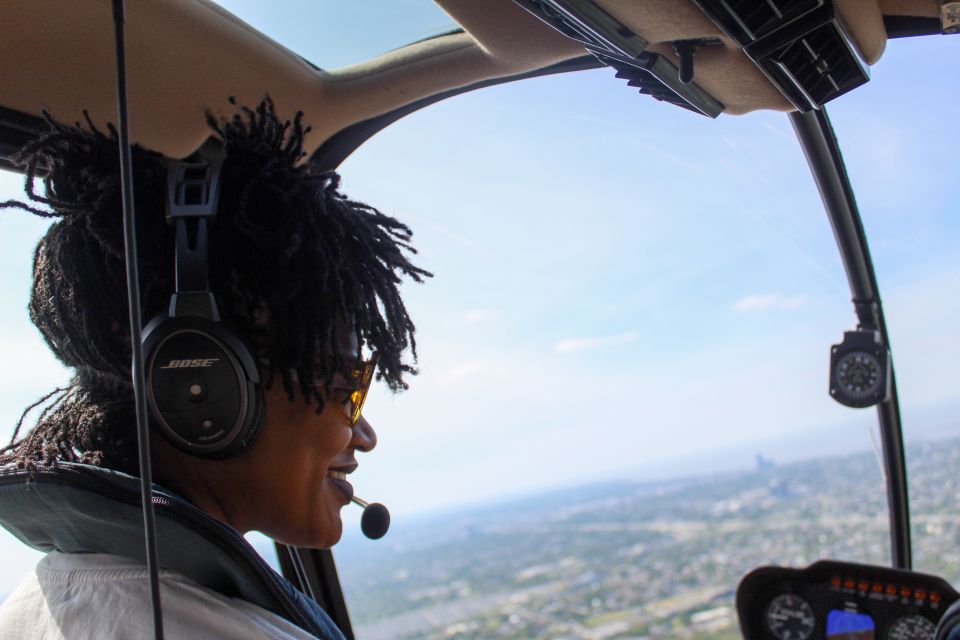
This is also where the pilot narration becomes especially useful. If you can hear the guide clearly through the included headsets, you’ll learn what you’re looking at instead of guessing. That’s the difference between a photo you can crop later and a memory you understand right now.
Possible drawback: if you’re hoping for a long, detailed flyover of only the Quarter, the City Tour is short. You’ll spot the big points, but you won’t get time to “orbit” your favorites.
Canal Street, the Central Business District, and Superdome Views
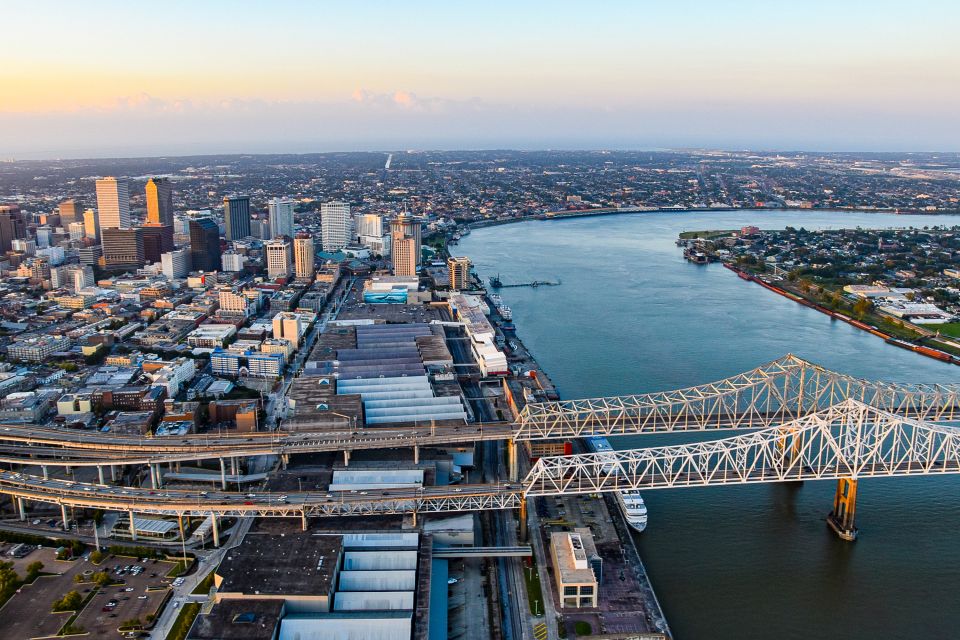
After the French Quarter highlights, the flight swings toward the denser parts of the city. You’ll pass over the Central Business District and Canal Street, and you’ll see Caesar’s Superdome from above.
This section is valuable because it shows you New Orleans as more than neighborhoods. It helps you understand where the shopping and office core sits relative to the tourist zones you already walked on foot.
Superdome views are also one of those practical aerial moments. From the ground, it’s easy to recognize a stadium. From above, it’s easy to understand approach roads, parking areas, and the surrounding layout—useful if you plan to visit events or just want better orientation for your next day on foot.
If you’re prone to motion sickness, the City Tour is often just long enough to get the “wow” without turning it into a test. Feedback also commonly describes the ride as smooth, which gives you some confidence going in.
City Park From the Air: Museums, Golf, and Big Layout Clarity
Next you’ll fly over City Park, and the aerial view is a gift to anyone who’s ever walked in circles or tried to remember where everything is. From above, City Park reads like an organized patchwork, not a tangle of paths.
You may spot the New Orleans Museum of Art, Louisiana’s Children’s Museum, and the Bayou Oaks golf course. The key here isn’t just spotting buildings. It’s seeing how these landmarks share space with open areas.
That’s why this stop feels useful even if you don’t plan to spend hours in the park right away. You come back to the ground with a mental map, and that can make your walking day much easier.
In a short flight, City Park also balances the tour. You get a break from dense streets and big event spaces. It’s a calmer visual palette.
Fair Grounds and the Events You Can Recognize
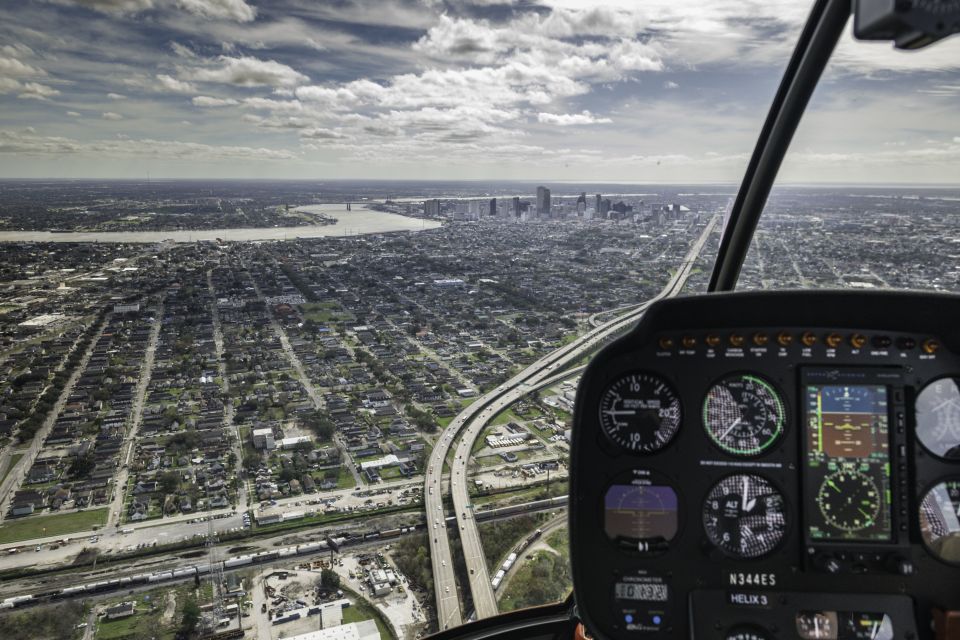
Aerial flyovers also give you a neat way to connect landmarks to calendar moments. The flight passes by Fair Grounds, known for the Louisiana Derby and the New Orleans Jazz and Heritage Festival.
From ground level, these places are easy to admire but hard to visualize as one continuous complex. From above, you can better understand where the grounds sit and how the surrounding areas line up.
Even if you aren’t visiting during those specific events, it’s a nice context boost. You end up feeling like you’re watching New Orleans not just as a static photo spot, but as a city that runs on seasons and schedules.
The Swamp Option: Lake Borgne, Marsh Views, and a Few Odd Surprises

If you choose the City and Swamp route, you’re adding a big emotional change to the flight. The city is one type of texture—streets, roofs, and buildings. The swamps bring a different kind of beauty: water channels, thin lines of land, and wide open space.
You’ll fly along Lake Borgne, and the route may include views of an abandoned theme park and a NASA rocket building facility before you get into the swampland. That combination is part of the appeal. New Orleans isn’t only French Quarter romance. It’s also Louisiana industry, science, and the weird-in-a-fun-way mix of uses that exist near the water.
On the way back, you pass Chalmette Battlefield and then track the Mississippi River back toward the French Quarter and Central Business District. This return path is important because it ties the whole trip together: city first, Louisiana edge second, river as the final ribbon.
One consideration: the longer route means more time in the air. That’s great for views, but you’ll want to be ready for about 18 to 22 minutes of flying instead of under 10.
The Pilot Narration: How to Turn Fast Views into Real Learning

This tour is built around the idea that you should understand what you’re seeing. You’ll get live narration from your pilot in English, and the best part is how the pilot can respond to questions during the flight experience.
Feedback highlights pilots who were both professional and friendly, and specific names come up: Lauren is described as enthusiastic and safety-minded; Mark is praised as professional while keeping the tour interesting; Russell is noted for being knowledgeable and for keeping things easy and calm.
You don’t need to be a history buff. What you need is a reason to pay attention for a few minutes at a time. The headsets make it practical, and the pilot narration makes it easier to remember what you saw after you land.
Price and Value: Is $150 Worth It for 8 to 20 Minutes?
Let’s talk value plainly. At $150 per person, you’re paying for speed, perspective, and comfort—plus the cost of a helicopter and a trained pilot.
The reason it can feel worth it: this is one of the few activities in New Orleans that turns a complicated city into a simple visual map in minutes. You’re not just buying a thrill. You’re buying an aerial orientation tool. When you walk the city afterward, you’ll often understand where things sit relative to the river and each other.
The City Tour is the best value if you mainly want the famous downtown set—Jackson Square, Bourbon Street area views, Canal Street, Superdome, and major park landmarks. The City and Swamp option is a better value if you want the contrast of marshland and the extra route stops like Lake Borgne and Chalmette Battlefield.
If you’re comparing this to expensive day trips or long guided excursions, helicopters look pricey at first glance. But they win on time-per-memory. You’ll get something genuinely different than what you can easily do by foot or by streetcar.
Practical Details: Headsets, ID, Weight Limits, and What to Bring
Here’s what you should plan for so the day feels smooth.
What’s included
- Noise-cancelling headsets
- Live narration from your pilot
- Window seat for each passenger
- On-site parking
- Taxes and fees
What’s not included
- A digital photo package (available for $25)
What to bring
- Passport or ID card
Weight limits you must follow
- Strict individual passenger limit of 295 pounds
- Group of 2–3 people can’t exceed 575 pounds combined
- Passengers will be weighed at check-in
- The activity isn’t suitable for wheelchair users
This is also a good place to mention that weather can affect whether you fly. If weather or safety conditions cancel your flight, you can reschedule or receive a full refund.
Who This Tour Fits Best (and Who Might Skip It)
This New Orleans helicopter tour is a smart fit if you:
- Want window-seat aerial views without hours of travel time
- Like getting your bearings fast before you commit to ground plans
- Want either a classic “greatest hits” route or a city-plus-swamp contrast
It may be less ideal if you:
- Need long, slow sightseeing windows (this experience is intentionally short)
- Don’t meet the strict weight requirements
- Use a wheelchair, since it’s not suitable for wheelchair users
If you’re traveling with a small group, you can also appreciate the private or small group availability, which often makes it easier to keep the focus on your experience rather than a large crowd.
Should You Book This New Orleans Helicopter Tour?
I’d book it if you want a fast, high-impact view of New Orleans and you’re choosing the route that matches your time. The City Tour is the move for downtown and landmark spotting, while City and Swamp is the better choice if you want Louisiana scenery beyond the city grid.
Skip it only if the short duration is a dealbreaker for you or if you’re concerned about the strict weight limits. If you can meet the requirements and you’re excited about real aerial perspective—this is one of those rare “short but unforgettable” experiences.
FAQ
How long is the New Orleans helicopter tour?
The tour duration is about 7 to 9 minutes for the City Tour option, and about 18 to 22 minutes for the City and Swamp option.
Where do I meet for the helicopter tour?
You meet at Lakefront Airport in the Main Terminal, in the same building as Messina’s runway cafe.
What do I get with the ticket?
You get noise-cancelling headsets, tour narration from your pilot, a window seat for each passenger, on-site parking, and taxes and fees.
Are photos included?
No. A digital photo package is available for $25.
What identity do I need to bring?
Bring a passport or ID card. A valid photo ID or passport is required.
How does the weight limit work?
There is a strict individual passenger weight limit of 295 pounds. For a group of 2–3 people, the combined weight must be 575 pounds or less, and you’ll be weighed at check-in.
Is the tour suitable for wheelchair users?
No. It is not suitable for wheelchair users.
FAQ
Is the tour narration in English?
Yes, the live tour narration is in English.
What should I do if the flight is canceled due to weather?
If your flight is canceled due to weather or safety of flight reasons, you can reschedule or receive a full refund.